Chronic knee pain caused by advanced osteoarthritis can severely restrict daily mobility and diminish quality of life. When conservative treatments—such as physical therapy, lifestyle modifications, and intra-articular injections—no longer provide sufficient pain relief, knee arthroplasty (knee replacement surgery) becomes a valuable surgical option. Today, modern advances in medical technology allow orthopedic surgeons to utilize robotic-assisted systems to aid in precise surgical planning, customized bone preparation, and optimal implant positioning. At Turan Turan Health Group in Bursa and Istanbul, Turkey, international patients have access to state-of-the-art Robotic-Assisted Knee Arthroplasty in Istanbul Turkey. It is essential to understand that robotic technology serves as an advanced assistive tool—it does not independently perform the surgery; the ultimate outcomes rely on the skill, judgment, and expertise of the orthopedic surgeon.
Quick Summary: Robotic-Assisted Knee Arthroplasty
Key Aspect
Summary Details
Primary Focus Keyword
Robotic-Assisted Knee Arthroplasty in Istanbul Turkey
Featured Center
Turan Turan Health Group (Istanbul / Bursa, Turkey)
Typical Cost Range (USD)
$7,000 – $14,000 USD (Depending on total vs. partial, implant brand, & stays)
Average Hospital Stay
2 to 4 days
Recommended Total Stay
10 to 14 days (For postoperative monitoring and early rehabilitation)
Surgical Role
Surgeon-led procedure with real-time robotic guidance & sub-millimeter precision
Primary Candidates
Patients with advanced joint degeneration, chronic severe knee pain, and reduced mobility
Global Knee Osteoarthritis Prevalence & Surgical Trends
Knee osteoarthritis (OA) is one of the leading causes of physical disability worldwide. As life expectancy increases and global populations age, the demand for joint reconstruction surgeries has grown steadily. Robotic assistance in joint replacement has seen rapid international adoption, offering surgeons advanced tools to optimize mechanical alignment and individualize surgical execution.
Global Knee Replacement Volume Trends & Robotic Adoption Share (%)
Global proportion of knee arthroplasty procedures utilizing robotic assistance continues to expand. Source: OECD Health Statistics & American Academy of Orthopaedic Surgeons (AAOS).
Featured Orthopedic Center in Turkey
Selecting an experienced healthcare institution with dedicated surgical infrastructure is vital when planning robotic joint replacement overseas. Below is a featured provider specializing in robotic-assisted knee arthroplasty in Istanbul and Bursa, Turkey:
Turan Turan Robotic Surgery Center and Orthopedic Clinic
Location: Bursa / Istanbul, Turkey
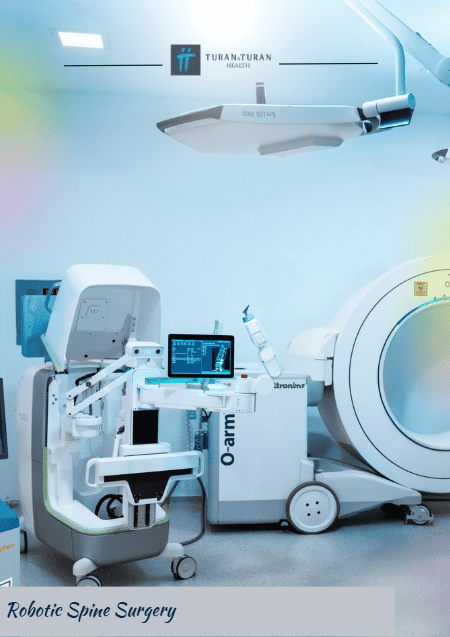
Turan Turan Health Group is a pioneer in robotic orthopedic procedures in Turkey. Equipped with advanced robotic surgical platforms, the center delivers personalized joint replacement solutions, complete rehabilitation services, and comprehensive medical coordination for international patients.
Knee arthroplasty, commonly called knee replacement, is a surgical procedure designed to resurface a damaged, arthritic knee joint. The surgeon removes compromised cartilage and bone from the ends of the thigh bone (femur) and shin bone (tibia), replacing them with specially engineered metal and durable plastic components to restore smooth joint movement.
Depending on the extent of disease, the surgeon may recommend either:
Total Knee Replacement (TKR): Resurfacing all three compartments of the knee joint (medial, lateral, and patellofemoral).
Partial Knee Replacement (PKR): Replacing only the damaged compartment while preserving healthy cartilage and ligaments in the uninjured parts of the knee.
What Is Robotic-Assisted Knee Replacement?
Robotic-assisted knee replacement integrates sophisticated computer software, 3D anatomical modeling, and robotic guidance tools into the surgical process. Prior to or during the procedure, the system compiles precise measurements of the patient's joint geometry and ligament tension. During surgery, the robotic arm provides real-time feedback, helping the surgeon prepare bone cuts and position implants within sub-millimeter parameters.
Crucial Clinical Reality: The robotic platform does not operate autonomously. It acts purely as a precision instrument guided entirely by the hands, expertise, and clinical decisions of the operating orthopedic surgeon.
Who May Consider Robotic-Assisted Knee Replacement?
Robotic-assisted knee arthroplasty in Istanbul, Turkey may be evaluated for individuals who experience:
Advanced knee osteoarthritis confirmed via X-rays or MRI diagnostic imaging.
Persistent pain that severely limits daily activities like walking, standing, or negotiating stairs.
Joint deformities (such as bow-legged or knock-kneed alignment) caused by progressive cartilage loss.
Why Knee Replacement May Become Necessary
Common Causes of Knee Pain and Joint Damage
Degenerative joint disease degrades the smooth hyaline cartilage that cushions the ends of bones. Common underlying conditions include primary osteoarthritis, rheumatoid arthritis, post-traumatic arthritis following previous injuries, and avascular necrosis.
When Non-Surgical Treatment Is No Longer Enough
Conservative management is always the first line of care for knee osteoarthritis. However, as cartilage degradation progresses, non-surgical options may become less effective:
Medications & Injections
NSAIDS or intra-articular corticosteroids/hyaluronic acid may provide only brief, temporary relief.
Physical Therapy
Strengthening exercises maintain surrounding muscle tone but cannot restore eroded cartilage.
Unloader Bracing
Orthotic braces shift load away from damaged joint areas, but effectiveness wanes in severe disease.
Severe resting pain or pain that disrupts sleep regularly.
Inability to walk short distances without significant discomfort or assistance.
Chronic joint stiffness and loss of range of motion.
Significant loss of independence in carrying out daily tasks.
How Robotic-Assisted Knee Replacement Works
Before Surgery: Planning the Procedure
Detailed Patient Assessment
Comprehensive evaluation begins with medical history review, physical gait assessment, joint range-of-motion testing, and standing X-rays to assess weight-bearing alignment.
Personalized Surgical Planning
Using advanced digital modeling, the surgical team maps out the exact sizing, placement, and rotational alignment of the prosthetic components customized to the patient's unique anatomical structure.
Does Robotic-Assisted Knee Surgery Require a CT Scan?
It depends on the specific robotic platform used. Some platforms rely on pre-operative CT scans to generate 3D anatomical models. Other modern systems utilize image-less technology, collecting real-time anatomical surface landmarks intraoperatively without exposing the patient to radiation from preoperative CT imaging. Centers like Turan Turan utilize platforms tailored to clinical needs.
During Surgery: Where Robotic Assistance Adds Precision
Real-Time Mapping & Precise Bone Preparation
Intraoperatively, optical sensors track movement and feed real-time visual and haptic data to the surgeon. The robotic arm establishes active boundaries (virtual haptic zones) that prevent bone cuts beyond the planned area, helping protect healthy bone tissue and surrounding soft tissues.
Implant Positioning and Ligament Balance
Proper ligament tension is critical for a knee replacement to feel natural and function smoothly. Robotic software calculates joint tension throughout the full range of motion, enabling fine adjustments before permanent implants are secured.
Potential Benefits of Robotic-Assisted Knee Arthroplasty
Personalized Surgical Planning
Implant alignment is customized precisely to patient anatomy rather than relying on standardized average reference lines.
Sub-Millimeter Cut Precision
Robotic guidance limits deviations during bone resection, optimizing contact between bone surfaces and prosthetic components.
Soft Tissue Protection
Haptic boundaries help prevent unintended trauma to surrounding ligaments, tendons, and vascular structures.
Optimized Joint Balance
Dynamic feedback assists surgeons in balancing soft tissue tension, supporting joint stability during extension and flexion.
Robotic-Assisted vs. Conventional Knee Replacement
Both conventional and robotic-assisted knee replacements are effective procedures. Understanding their key differences helps set clear expectations:
Surgical Factor
Robotic-Assisted Knee Replacement
Conventional Knee Replacement
Surgical Planning
Software-assisted 3D anatomical modeling
Preoperative 2D X-ray template planning
Anatomical Assessment
Real-time intraoperative digital data tracking
Standard visual and physical intraoperative assessment
Varies; potential for reduced early tissue inflammation
Varies based on patient health and rehabilitation compliance
Recovery After Robotic-Assisted Knee Replacement
Postoperative recovery is a structured process requiring active patient participation. While individual healing rates differ, typical rehabilitation stages include:
Immediate Postoperative Phase (Days 1–3): Focus on multi-modal pain management, wound care monitoring, and early mobilization supervised by physical therapists.
Walking and Mobility: Patients typically begin standing and taking assisted steps using a walker or crutches within 24 hours after surgery.
Physical Therapy & Rehabilitation: Guided exercises build quadriceps strength, improve knee flexion/extension range, and retrain normal gait patterns.
Return to Activities: Light daily tasks resume around 4–6 weeks, while high-impact activities are generally restricted long-term to protect implant life.
Risks and Important Considerations
Knee replacement is a major surgical procedure. Although robotic technology enhances precision, it does not completely eliminate general surgical risks:
Potential Surgical Risks Include:
Infection at the surgical site or deep joint space
Deep vein thrombosis (DVT) or blood clots
Nerve damage or local numbness
Joint stiffness or residual postoperative pain
Long-term mechanical implant wear or loosening requiring revision
Thorough preoperative evaluation by experienced orthopedists helps screen for underlying risk factors such as bone quality, body mass index, and systemic health conditions.
Why Choose Turan Turan Health Group for Robotic Knee Replacement?
When undergoing robotic-assisted knee arthroplasty in Istanbul, Turkey, selecting Turan Turan Health Group provides several key patient advantages:
Robotic Expertise
Surgeons trained specifically in computer-assisted and robotic joint reconstruction procedures.
Multi-lingual patient coordinators handling airport transfers, hotel bookings, and translation services.
Cost of Robotic Knee Replacement in Istanbul, Turkey
The overall cost for robotic knee arthroplasty in Turkey is generally significantly lower than in the United States or Western Europe, while maintaining rigorous international quality standards.
This illustration represents the typical progression of an international patient's robotic-assisted knee arthroplasty journey. Actual steps, timing, and treatment requirements vary according to individual medical evaluation.
How to Prepare for Medical Travel to Istanbul
Planning for surgery abroad requires key preparation steps:
Medical Documents: Bring full paper and digital copies of recent X-rays, MRI scans, medical history reports, and current medication lists.
Companion Planning: Travelling with a family member or caregiver is recommended to provide personal support during hotel recovery days.
Postoperative Clothing: Pack loose-fitting trousers or shorts that easily fit over knee dressings and surgical bandages.
Flight Arrangements: Plan for a stay of at least 10–14 days in Turkey before flying home, ensuring medical clearance from your operating surgeon.
Frequently Asked Questions About Robotic Knee Replacement
1. What is robotic-assisted knee replacement?
Robotic-assisted knee replacement is an advanced joint reconstruction procedure where the orthopedic surgeon utilizes 3D digital planning and a robotic guidance arm to perform bone cuts and place knee implants with sub-millimeter precision.
2. Is robotic knee replacement better than traditional knee replacement?
Robotic assistance provides enhanced precision in implant positioning and bone preparation. However, both techniques yield excellent outcomes when performed by skilled surgeons. Robotic technology is an assistive tool that supports, but does not replace, surgical expertise.
3. Does robotic-assisted knee replacement hurt less?
Because robotic systems help protect surrounding soft tissues and ligaments during surgery, some patients experience less early postoperative swelling and inflammation, which may contribute to a more comfortable initial recovery.
4. Is a CT scan required before robotic knee replacement?
Not always. While some robotic platforms require preoperative CT scans to build 3D joint models, image-less robotic platforms map anatomical landmarks directly during surgery, eliminating the need for a CT scan.
5. How long does robotic-assisted knee replacement surgery take?
The surgical procedure typically takes between 60 to 90 minutes, depending on individual joint anatomy and whether total or partial knee arthroplasty is performed.
6. When can I walk after robotic knee replacement?
Most patients begin standing and taking assisted steps with physical therapy guidance within 12 to 24 hours after surgery.
7. How long does recovery take after robotic knee replacement?
Initial recovery and resumption of light daily activities usually take 4 to 6 weeks. Full strength and complete recovery typically continue over 6 to 12 months.
8. How long does a knee replacement implant last?
Modern knee prosthetic implants are designed for durability, with clinical studies indicating that 85% to 90% of implants function well for 15 to 20 years or longer.
9. What are the main risks of robotic-assisted knee replacement?
Risks include standard surgical complications such as infection, blood clots, stiffness, nerve irritation, or persistent pain. Robotic technology reduces alignment errors but does not eliminate general surgical risks.
10. How much does robotic knee replacement cost in Turkey?
Comprehensive robotic knee replacement packages in Turkey generally range between $7,700 and $14,500 USD, depending on surgical details, hospital stay, and implant selection.
11. Why choose Istanbul for robotic knee replacement?
Istanbul features internationally accredited hospitals, highly experienced orthopedic specialists trained in robotic procedures, competitive package pricing in USD, and seamless international patient care infrastructure.
12. Can international patients receive robotic knee replacement at Turan Turan?
Yes, Turan Turan Health Group welcomes international patients regularly, providing dedicated medical travel coordination, language support, hospital care, and rehabilitation planning.
Explore Robotic-Assisted Knee Arthroplasty in Istanbul, Turkey
Chronic knee pain does not have to restrict your mobility forever. Contact Turan Turan Health Group to receive a personalized orthopedic review and discuss whether Robotic Joint Replacement in Turkey is right for you.
Disclaimer: The information provided in this document is intended solely for educational and informational purposes and does not constitute medical advice, diagnosis, or treatment recommendations. Any decisions regarding surgical procedures, including robotic-assisted knee arthroplasty, must be made in direct consultation with a qualified orthopedic surgeon following a thorough clinical examination and radiological evaluation.
OverviewExplore robotic-assisted knee arthroplasty in Istanbul, Turkey, including precision technology, treatment benefits, recovery, and patient care options.
Request your Free Quote
×
Trusted Medical Tourism Platform Since 2007
60+
Countries
2k+
Clinics
19.5k+
Reviews
2.5k+
Qualified Doctors
1.1M+
Patients Served Since 2007
Unlock the Best Robotic Surgery Packages Just for You
Discover the ultimate Robotic Surgery packages designed to meet your health and wellness goals. Choose the perfect fit for your journey.
Turan Turan Robotic Surgery Center and Orthopedic Clinic in Turkey
Robotic Surgery
Istanbul,Bursa, Turkey
Robotic Surgery Solutions Near You: Explore Top Medical Centers
Discover how Robotic Surgery is transforming lives at leading medical centers in , Turkey. Dive into center profile, specialties, doctors, reviews, etc. and explore the best options tailored to your needs in this region.
Transformative Robotic Surgery Experiences: Dive into Procedure Insights
Discover the power of Robotic Surgery through compelling patient experiences. Uncover detailed insights into procedures, recovery journeys, and life-changing results.
Explore Robotic Surgery: Stories, Testimonials, and Procedures
Watch in-depth videos covering everything from Robotic Surgery success stories to detailed procedure explanations. Learn what to expect and hear from real patients.











.png)
.png)
















Share this listing