
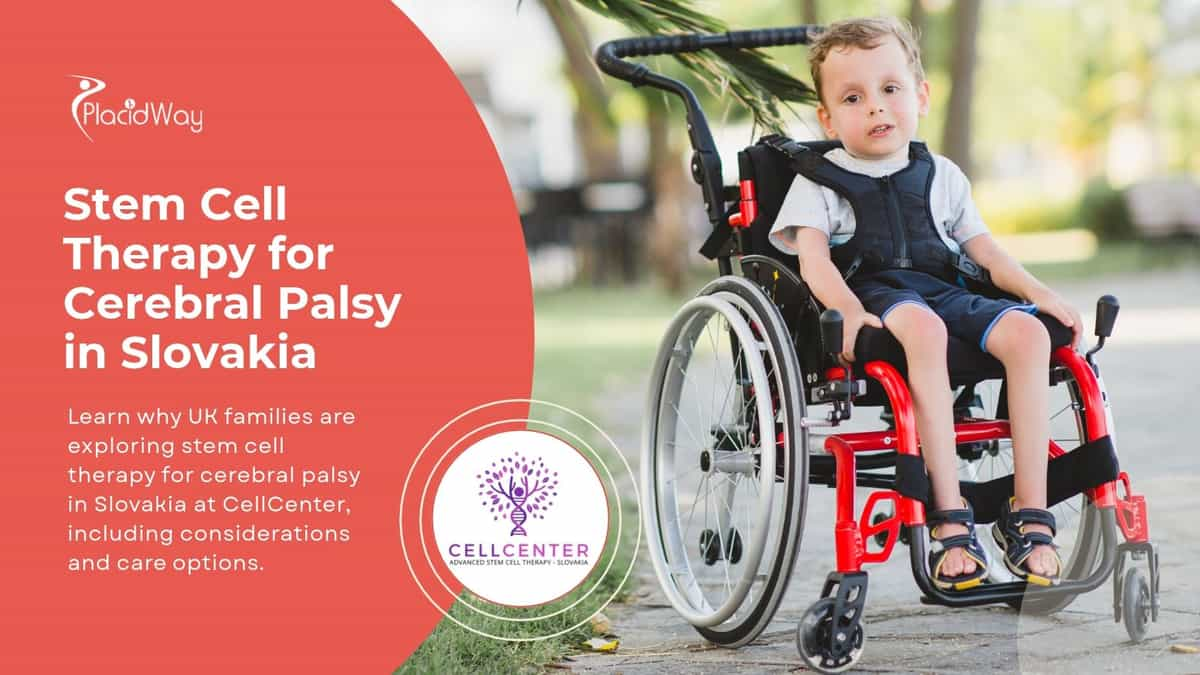
A Comprehensive Guide for UK Families
Cerebral Palsy Care Options: Stem Cell Therapy in Slovakia
Understanding clinical evidence, safety considerations, candidate eligibility, and international care pathways for children with cerebral palsy.
01 · Everyday Realities
When Parents Start Looking Beyond Conventional Cerebral Palsy Care
For families raising a child with cerebral palsy, the daily routine often centers on a structured schedule of physiotherapy, occupational therapy, speech and language sessions, and specialist medical checkups. While these interventions form the cornerstone of long-term rehabilitation, many parents hit a plateau where developmental milestones slow down or functional gains remain limited. Daily challenges—such as persistent muscle stiffness, motor planning difficulties, balance issues, and communication barriers—continue to affect the child’s comfort and independence.
Caregiving under these circumstances presents substantial emotional, physical, and financial demands. Families often find themselves balancing intensive home care routines with school support, equipment management, and constant medical coordination. Frustration naturally arises when, despite strict adherence to recommended care programs, a child continues to struggle with basic self-care tasks or pain associated with spasticity.
It is crucial to differentiate between managing symptoms and addressing underlying neurological injury. Standard rehabilitation works by building compensatory strategies and improving joint mobility, but it does not repair damaged neural pathways. As stem cell research and regenerative medicine continue to evolve, many parents begin investigating whether cellular interventions might offer complementary physiological support alongside established rehabilitation frameworks.
Exploring non-standard or international medical options does not indicate that conventional care has failed. Rather, it represents a natural effort by parents to gather comprehensive information regarding emerging therapies while continuing the essential daily therapies their child relies upon.
02 · Individual Profiles
Understanding Cerebral Palsy: Why Every Child Needs an Individualized Approach
Cerebral palsy describes a group of non-progressive motor disorders caused by injury to the developing brain during pregnancy, childbirth, or early infancy. Because brain injuries vary in location and severity, the condition manifests differently in every child. The primary classification includes spastic (characterized by stiff, tight muscles), dyskinetic (involving involuntary, uncontrollable movements), ataxic (affecting coordination and balance), and mixed forms.
Clinicians assess gross motor capabilities using the Gross Motor Function Classification System (GMFCS), which categorizes functional mobility across five distinct levels:
- Level I: Walks without restrictions; limitations present only in advanced gross motor skills.
- Level II: Walks with limitations in outdoor environments or crowded spaces.
- Level III: Walks using hand-held mobility devices; requires wheeled mobility for long distances.
- Level IV: Self-mobility limited; transported in a manual wheelchair or uses powered mobility.
- Level V: Severe limitations in head and trunk control; requires total assistive technology and manual transport.
Furthermore, associated conditions such as epilepsy, cortical visual impairment, swallowing difficulties, and communication disorders can significantly alter a child's clinical needs. Consequently, two children sharing the same GMFCS level may require vastly different care plans. Medical suitability for any proposed procedure must always be tailored to the child's specific neurological profile rather than generalized assumptions.
03 · International Considerations
Why UK Families Are Considering Treatment Options Abroad
Families residing in the United Kingdom frequently explore options outside the National Health Service (NHS) when seeking specialized or emerging treatments. While NHS pediatric services provide exceptional acute and routine rehabilitation support, access to novel biological therapies or clinical research protocols can be constrained by strict commissioning guidelines, long waiting lists, and complex regulatory approval timelines.
Online patient communities, published preliminary trials, and global clinic registries often prompt UK parents to research European healthcare facilities offering experimental therapies. However, travelling abroad for medical procedures requires rigorous objective scrutiny. A treatment offered in another country is not inherently superior, more advanced, or safer simply because it is accessible outside the UK system.
Planning Framework · UK Care vs. Overseas Evaluation
NHS / Local Care Baseline
Focus: Long-term functional adaptation & stability
Access: Standard clinical guidelines & physical therapies
Continuity: Ongoing local GP & therapy integration
Overseas Clinic Evaluation
Focus: Investigational regenerative approaches
Access: Private self-funded medical programs
Continuity: Requires detailed coordination with UK team
Always consult your child's NHS pediatric neurologist or specialist care team before committing to overseas medical arrangements.
04 · Biological Mechanisms
How Stem Cell Therapy Is Being Investigated for Cerebral Palsy
Scientific interest in stem cell therapy for pediatric neurological conditions stems from the potential to influence inflammatory responses, secrete protective growth factors, and support neuroplasticity. Researchers study various cell types—including Mesenchymal Stromal Cells (MSCs) derived from umbilical cord tissue, bone marrow, or adipose tissue, as well as umbilical cord blood stem cells—to understand their physiological interactions within injured central nervous tissue.
Proposed biological mechanisms focus primarily on paracrine signaling: stem cells release cytokines and neurotrophic factors that may reduce chronic brain inflammation, improve local blood flow (angiogenesis), and encourage endogenous repair mechanisms. Administration routes vary between intravenous (IV) infusion and intrathecal injection (into the cerebrospinal fluid). However, a plausible biological mechanism does not equal established clinical proof; ongoing clinical trials are essential to verify whether these physiological actions lead to measurable functional improvements.
05 · Evidence Analysis
What Does Current Clinical Research Actually Tell Parents?
Parents researching clinical literature will find a growing body of published studies on cell-based interventions for pediatric brain injuries. Evaluating these publications requires distinguishing between high-level meta-analyses, randomized controlled trials (RCTs), and uncontrolled observational reports.
For instance, a 2025 individual participant data meta-analysis examining autologous and allogeneic umbilical cord blood infusions noted modest average improvements in Gross Motor Function Measure (GMFM-66) scores at 6- and 12-month follow-up intervals among analyzed patient cohorts. Similarly, a 2025 systematic evidence review focused on MSC applications reported variable improvements in muscle spasticity and motor scores across select trials.
However, systematic reviews consistently emphasize major methodological limitations in current evidence:
- Variability in cell origin, cell count dosage, and infusion schedules across clinical centers.
- Small sample sizes and short follow-up periods in many published trials.
- Difficulty separating motor improvements caused by natural development and co-administered intensive physiotherapy from cellular effects.
- Lack of universal consensus regarding optimal delivery methods (intravenous vs. intrathecal).
Consequently, medical authorities view biological treatments as investigational options requiring further controlled research rather than established, standardized cures.
06 · Clinical Evaluation
Medical Assessments Required Before Considering Treatment
Before planning medical travel for Stem Cell Therapy for Cerebral Palsy in Slovakia, families must undergo comprehensive preliminary assessments to determine baseline health status and evaluate potential contraindications.
A thorough pre-treatment evaluation protocol should always incorporate:
- Formal Medical Record Review: Recent pediatric neurology reports, GMFCS classification, joint range-of-motion assessments, and developmental notes.
- Neuroimaging Verification: Updated Brain MRI scans to confirm structural status and rule out active progressive pathologies.
- Co-morbidity Screening: Assessment of active seizure disorders (electroencephalogram records), respiratory capacity, feeding/swallowing status, and active systemic infections.
- Medication & Surgical History: Detailed documentation of prior orthopaedic surgeries, selective dorsal rhizotomy (SDR), baclofen pump placement, or recent botulinum toxin injections.
Remote screening conducted via document review serves only as a preliminary step. A definitive medical decision can only be made following a direct face-to-face evaluation by qualified pediatric specialists at the treating medical facility.
07 · Provider Evaluation
Exploring Medical Providers in Slovakia
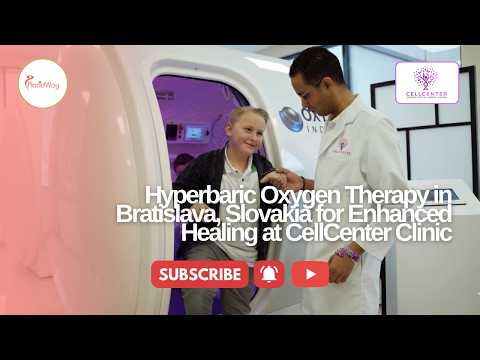
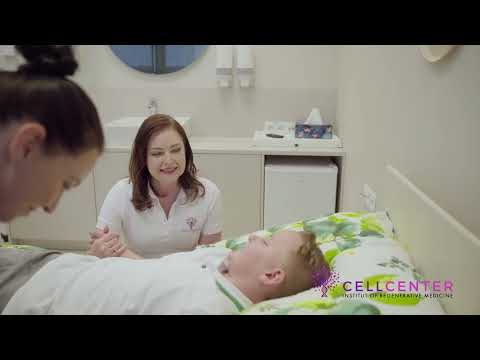
When investigating options for Cerebral Palsy Treatment in Slovakia, families will encounter specialized medical listings and clinical centers operating within Central Europe. One provider operating in this region is CellCenter Slovakia, which lists clinical neurological and regenerative treatment protocols across its facility locations in Bratislava and Malacky.
Provider Profile & Verification
CellCenter - Stem Cell Clinic in Bratislava and Malacky, Slovakia
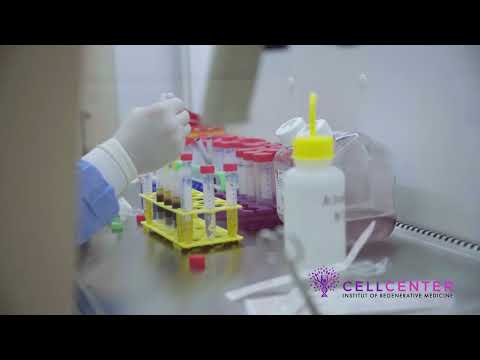
CellCenter offers neurological stem cell administration listings, operating in technical cooperation with hospital facilities such as Malacky Hospital. Parents evaluating this center should independently review treatment protocols, pediatric care arrangements, and regulatory accreditations.
Clinic Location Profile
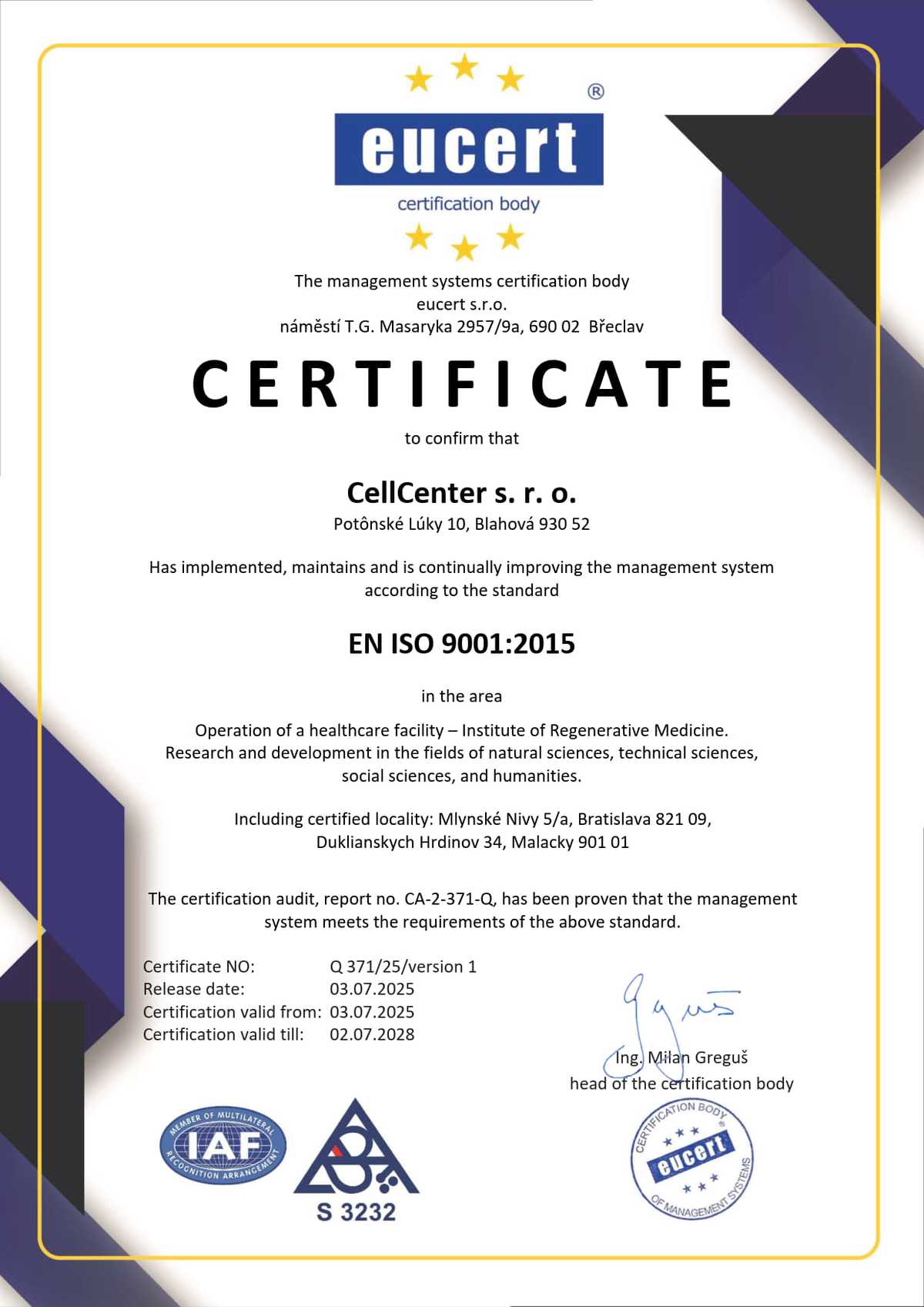
CellCenter Certificate
Listing Reference: View CellCenter Profile on PlacidWay
Parents researching overseas medical facilities should request written details covering the following critical areas before making any commitments:
- The exact cellular source used (e.g., autologous vs. allogeneic umbilical cord tissue MSCs) and laboratory processing protocols.
- The precise route of administration, dosage calculations, and safety testing standards (sterility, viability, endotoxin screens).
- Qualifications and credentials of attending pediatric neurologists, anesthesiologists, and rehabilitation specialists.
- Hospital partnership details and emergency transfer protocols in the event of acute medical complications.
08 · Financial Budgeting
Cost Considerations and Financial Planning
Understanding the costs associated with exploring Stem Cell Treatment for Cerebral Palsy in Slovakia requires distinguishing between broad clinic package benchmarks and individualized medical quotes.
Published clinic listing estimates offer a general baseline for medical procedures in the region. The table below outlines published reference ranges for context:
| Treatment Category Listing | Indicative Price Benchmark (USD) | Important Inclusions & Notes |
|---|---|---|
| CellCenter Neurological Stem Cell Treatment Listing | $8,700 | Indicative listing; requires personalized pediatric quote |
| CellCenter General Neurological Disorder Package Listing | $8,100 | Broader neurological reference benchmark |
| CellCenter Musculoskeletal Stem Cell Listing | $6,500 | Targeted orthopaedic/joint listings |
| CellCenter Endocrine Disorder Treatment Listing | $6,000 | General metabolic reference listing |
Important Note: The listed figures ($8,100–$8,700) serve as indicative reference points for neurological treatment listings and must not be interpreted as guaranteed or fixed quotes for pediatric cerebral palsy care.
When preparing a total travel budget, UK families must factor in non-medical travel and accommodation expenses:
| Expense Category | Budget Planning Considerations |
|---|---|
| Medical Procedure | $8,100–$8,700 indicative reference range (confirm with itemized quote) |
| Return Travel from UK | Flights/trains from London, Manchester, or Birmingham to Bratislava/Vienna |
| Accommodation | Wheelchair-accessible hotel/apartment for child and caregivers |
| Daily Expenses & Transport | Accessible ground transit, meals, and emergency reserve funds |
09 · Patient Safety
Safety Guidelines, Risk Management, and Mandatory Questions
Safety is the primary consideration when evaluating experimental or novel therapies for children. Potential risks associated with stem cell procedures include local injection site reactions, transient fever, headache following intrathecal administration, infection, immune responses, or unexpected cell proliferation.
Essential Safety Checklist for Parents:
- What exact cellular product will be administered to my child, and what is its biological origin?
- What preclinical or clinical data supports this specific procedure for cerebral palsy?
- Is the procedure conducted within an approved clinical trial or authorized hospital pathway?
- Which board-certified pediatric specialists will oversee the administration and sedation?
- What emergency management protocols exist if immediate adverse reactions occur?
- What formal follow-up monitoring plan will be provided upon returning to the UK?
Parents should exercise caution regarding clinics offering absolute guarantees, promising total cures, or urging fast financial deposits before conducting full clinical evaluations.
10 · Logistics & Travel
Planning Travel from the UK to Slovakia with a Child
Organizing an international journey with a child who has mobility limitations or complex care needs requires careful preparation. Direct flights connect major UK hubs (London Gatwick, Stansted, Manchester, Birmingham) to Bratislava Airport (BTS) or nearby Vienna International Airport (VIE), located approximately 40 minutes from Bratislava by accessible road transport.
Key Travel Planning Checklist:
- Travel Assistance: Request airport wheelchair assistance and specialized boarding arrangements at least 48 hours prior to departure.
- Equipment & Medication: Obtain official medical letters detailing prescribed medications, enteral feeding supplies, and mobility devices for security checks.
- Accommodation Accessibility: Confirm ground-floor access, roll-in showers, and wide doorways at hotels in Bratislava or Malacky prior to confirming flight bookings.
11 · Post-Treatment Care
Post-Treatment Continuity and Rehabilitation in the UK
Following any international procedure, ensuring continuity of care upon returning home is essential. Families should request complete, translated medical documentation from the treating facility prior to discharge—including detailed administration notes, batch numbers, dosage, and post-procedure monitoring guidelines.
Upon return, parents should share these records with their child's NHS GP, pediatric neurologist, and local therapy team. Established physical, occupational, and speech therapies must continue uninterrupted. Biological interventions are designed to complement ongoing rehabilitation routines, not replace functional training.
12 · Decision-Making
Making an Informed Decision as a Family
Deciding whether to pursue medical evaluation abroad involves balancing potential benefits against financial costs, travel stresses, and medical uncertainties. Families deserve clear factual information, unhurried consultations, and sufficient time to evaluate options thoroughly.
Choosing not to pursue investigational treatments abroad does not mean giving up on a child's progress. Consistent evidence-based rehabilitation, supportive family environments, and tailored educational programs remain fundamental to helping children with cerebral palsy achieve their maximum functional independence.
Frequently Asked Questions
Common Questions From Parents
1. Why are UK families considering stem cell therapy for cerebral palsy in Slovakia?
UK families often explore treatments in European facilities like Slovakia to investigate investigational therapies that are not currently standard offerings on the NHS, or to seek alternative options when local developmental progress plateaus.
2. Can stem cell therapy cure cerebral palsy?
No. Stem cell therapy is not a cure for cerebral palsy. Cerebral palsy involves structural injury to brain tissue. Cellular treatments are investigational approaches aimed at supporting neuroprotection or functional gains alongside rehabilitation.
3. What types of stem cells are being investigated for cerebral palsy?
Researchers predominantly investigate Mesenchymal Stromal Cells (MSCs) sourced from umbilical cord tissue, bone marrow, or adipose tissue, as well as mononuclear cells from umbilical cord blood.
4. Can stem cell therapy improve a child's walking or motor function?
Some clinical trials report modest improvements in motor function scales (such as GMFM scores) or muscle tone reduction in subset groups. However, outcomes vary significantly and cannot be guaranteed for individual patients.
5. At what age can a child receive stem cell therapy for cerebral palsy?
Age criteria depend on specific clinic protocols and clinical trial parameters. Many pediatric trials evaluate children between 1 and 12 years of age, but eligibility must be individually assessed by medical specialists.
6. How much does stem cell therapy for cerebral palsy cost in Slovakia in USD?
Published clinic listings for neurological stem cell procedures in Slovakia generally range from $8,100 to $8,700 USD. However, total costs depend on personalized treatment plans, diagnostic requirements, and travel expenses.
7. Does CellCenter offer a specific cerebral palsy treatment package?
CellCenter provides general neurological stem cell treatment listings ($8,100–$8,700 USD). Families must request a written, direct evaluation from the provider to confirm specific pediatric cerebral palsy protocols.
8. Is stem cell therapy for cerebral palsy approved in Slovakia?
Medical treatments within Slovakia operate under national regulations and European Medicines Agency (EMA) frameworks. Specific biological treatments may be offered under hospital-exempt or investigational pathways; parents must independently verify regulatory compliance.
9. How long should UK families stay in Slovakia for treatment?
Most clinic schedules involve a stay ranging from several days to two weeks, allowing time for pre-treatment evaluations, cellular administration, post-procedure observation, and initial rehabilitation clearance.
10. Can children continue physiotherapy after stem cell treatment?
Yes. Continuous physical, occupational, and speech therapy is considered essential to support motor development and maximize any potential functional benefits following stem cell administration.
11. What medical records should parents prepare before travelling?
Parents should compile comprehensive medical records, including recent pediatric neurology summaries, MRI brain scans (on CD/digital format), GMFCS assessments, current medication lists, and recent lab results.
12. What follow-up care is available after returning to the UK?
Follow-up care typically involves ongoing monitoring by your child's NHS GP and pediatric team. Parents should ensure the international clinic provides clear written discharge reports to share with local care providers.


















Share this listing