

Robotic Knee Replacement in Turkey at Turan Turan Health Group
Robotic knee replacement in Turkey combines surgeon-led total knee arthroplasty with digital planning and robotic guidance designed to improve the accuracy of bone preparation and implant positioning. For people living with advanced knee osteoarthritis, persistent pain, stiffness, deformity, or reduced mobility after non-surgical treatment, this approach may provide a more individualized surgical plan. At Turan Turan Health Group in Turkey, robotic technology is used as a precision tool while the orthopedic surgeon remains in control throughout the operation. This guide explains the benefits, candidacy, risks, recovery, estimated cost, and patient journey for robotic knee replacement surgery in Istanbul, Turkey.
Robotic Knee Replacement in Turkey Quick Summary
- Purpose: Replace damaged knee joint surfaces when severe arthritis or joint damage causes persistent pain and loss of function.
- How robotics helps: Digital mapping, patient-specific planning, real-time feedback, and controlled bone preparation can improve surgical alignment accuracy.
- Who controls the procedure: The orthopedic surgeon. The robotic system does not independently perform the operation.
- Potential advantages: More precise implant positioning, individualized planning, controlled bone preparation, and improved consistency in alignment.
- Recovery: Walking with assistance commonly begins early, while strength and function continue improving over several months.
- Estimated cost: Approximately $7,500-$11,500 USD for unilateral surgery and $13,500-$18,500 USD for bilateral surgery.
- Important limitation: Robotic assistance improves technical precision, but it does not guarantee a better outcome for every patient or remove the usual risks of knee replacement surgery.
What Is Robotic Knee Replacement Surgery in Turkey?
Robotic knee replacement is a form of total knee arthroplasty in which the surgeon uses computer-assisted planning and robotic guidance to prepare the damaged joint and place the knee implant. Depending on the robotic system used, the procedure may involve preoperative CT-based planning or intraoperative anatomical mapping.
The technology helps the surgeon understand the patient's anatomy in three dimensions, evaluate alignment and soft-tissue balance, and guide bone preparation within a planned surgical area. The robotic platform acts as a precision tool rather than an autonomous surgeon.
How Robotic Assistance Works During Knee Replacement
- Preoperative imaging and assessment: Imaging or intraoperative mapping is used to understand the shape and alignment of the knee.
- Patient-specific surgical planning: The surgeon plans implant size, position, alignment, and intended bone resections.
- Soft-tissue and ligament assessment: Joint stability and ligament balance are evaluated before final bone cuts and implant placement.
- Robotic-guided bone preparation: The system helps the surgeon work within defined boundaries established by the surgical plan.
- Trial assessment: Trial components may be used to assess alignment, range of motion, and joint balance.
- Final implant placement: The permanent components are positioned according to the surgeon's final intraoperative assessment.
Key point: The robot does not make independent surgical decisions. The orthopedic surgeon plans, directs, and performs the procedure.
Why Patients May Need Knee Replacement Surgery
Knee replacement is generally considered when structural joint damage becomes severe enough to cause ongoing pain, stiffness, deformity, and reduced mobility despite appropriate non-surgical care. Osteoarthritis is one of the most common reasons for total knee replacement because progressive cartilage loss can eventually lead to painful bone-on-bone contact and difficulty with everyday activities.
Knee Osteoarthritis and Progressive Joint Damage
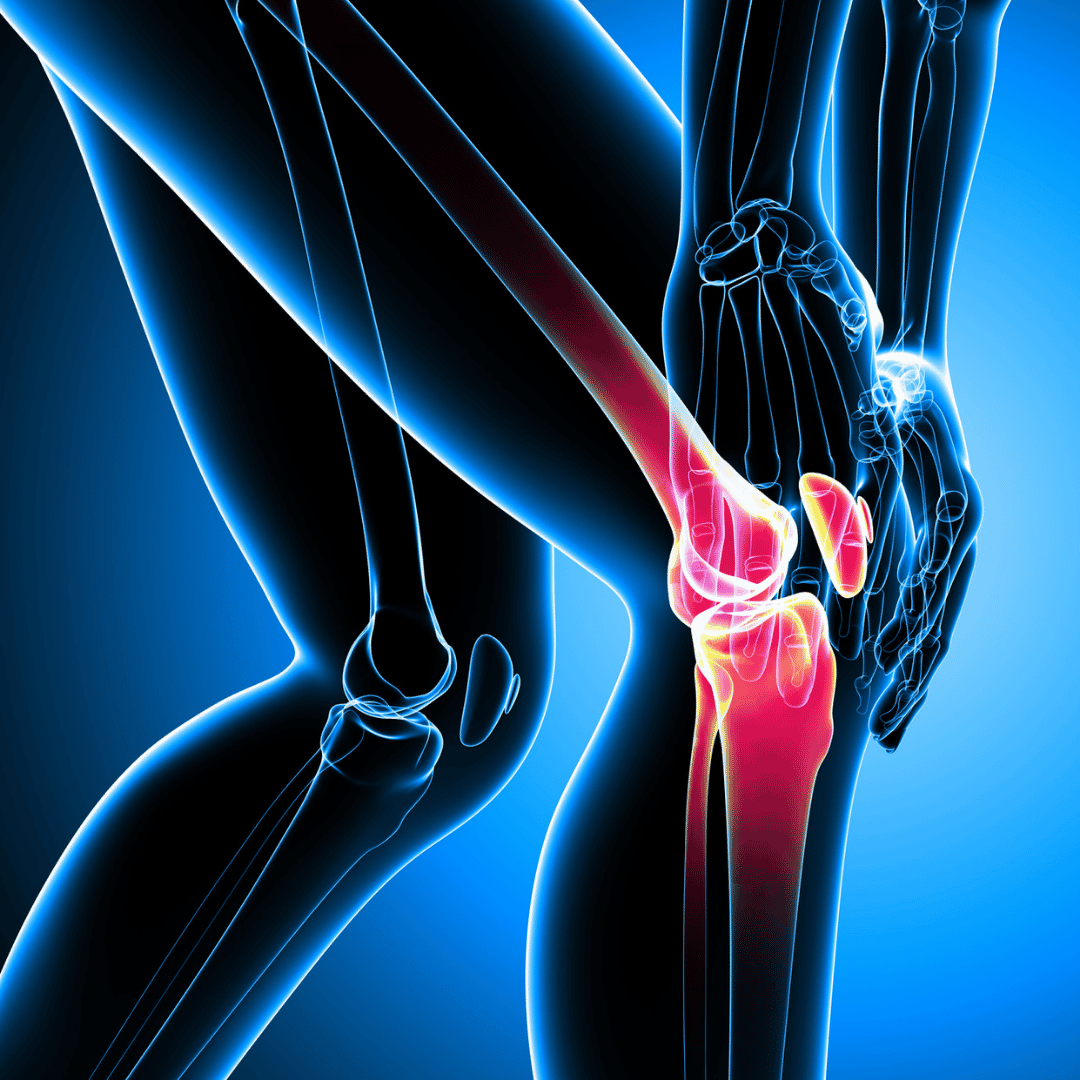
Healthy articular cartilage helps the knee move smoothly and absorb load. With osteoarthritis, cartilage gradually breaks down and other joint tissues may also become affected. People can develop pain during walking, stiffness after rest, swelling, reduced range of motion, and changes in leg alignment such as a bow-legged or knock-kneed appearance.
When Non-Surgical Treatment Is No Longer Enough
Before knee replacement is considered, management may include:
- Pain-relieving or anti-inflammatory medicines when medically appropriate.
- Physical therapy and strengthening exercises.
- Weight management to reduce load on the knee.
- Bracing or supportive footwear in selected patients.
- Joint injections when clinically appropriate.
- Activity modification and other conservative measures.
Global Burden of Knee Osteoarthritis
Osteoarthritis is a major cause of pain and disability worldwide, and the knee is one of the most frequently affected joints. The condition becomes more common with age and can substantially reduce mobility, independence, and quality of life.
For people with severely affected knees, joint replacement can be considered when pain and loss of mobility remain substantial despite conservative care. Rehabilitation remains an important part of treatment before and after surgery.
Top Benefits of Robotic Knee Replacement for Patients
More Precise Surgical Planning
Three-dimensional or digital planning can help the surgeon evaluate knee anatomy and plan implant positioning before final bone preparation.
Patient-Specific Implant Positioning
Robotic planning can be tailored to the patient's anatomy rather than relying only on standard mechanical landmarks.
Controlled Bone Preparation
Robotic guidance can help keep bone preparation within the boundaries defined by the surgeon's plan.
Improved Alignment Accuracy
Robotic-assisted knee replacement can support more consistent implant alignment and positioning compared with standard manual techniques.
Soft-Tissue Assessment
Real-time measurements can assist the surgeon when evaluating ligament tension and overall joint balance.
Potential Tissue Preservation
Controlled preparation may help limit unnecessary disruption to surrounding bone and soft tissue in appropriate cases.
Structured Early Rehabilitation
Patients typically begin mobility exercises and assisted walking early after surgery as part of a planned rehabilitation program.
Detailed Surgical Data
Digital planning and intraoperative measurements give the surgical team additional information when making positioning and balancing decisions.
Important to know: Robotic-assisted total knee replacement may improve the accuracy of implant alignment and surgical planning. However, recovery and long-term results still depend on factors such as joint condition, overall health, surgical expertise, implant selection, and rehabilitation.
Robotic Knee Replacement at Turan Turan Health Group
Turan Turan Robotic Surgery Center and Orthopedic Clinic
Location: Bursa, Turkey
Turan Turan Health Group provides orthopedic care that includes robotic-assisted joint replacement, complex orthopedic procedures, and physical rehabilitation. Its robotic knee replacement pathway combines digital planning, surgeon-controlled robotic guidance, orthopedic evaluation, hospital care, and postoperative rehabilitation.
Treatment planning is individualized around factors such as age, knee anatomy, bone quality, deformity, previous knee procedures, general medical condition, and mobility goals.
The care pathway can involve orthopedic surgeons, anesthesia specialists, rehabilitation therapists, orthopedic nursing staff, and international patient coordinators.
Who May Be a Candidate for Robotic Knee Replacement?
Robotic knee replacement may be considered for patients who require total knee arthroplasty because of advanced joint damage.
- Advanced knee osteoarthritis.
- Rheumatoid arthritis or post-traumatic arthritis affecting the knee.
- Persistent knee pain that limits walking, work, sleep, or daily activities.
- Severe stiffness or reduced range of motion.
- Progressive knee deformity.
- Joint damage visible on diagnostic imaging.
- Symptoms that no longer respond adequately to medication, physical therapy, injections, or other conservative treatment.
- Complex anatomy where patient-specific digital planning may be useful.
Who May Need a Different Treatment Approach?
Knee replacement may not be appropriate when arthritis is mild enough to be managed without surgery, when there is an active infection, or when another medical or neurological condition substantially changes the risk-benefit balance. Some patients may be better suited to continued conservative care or another orthopedic procedure depending on the pattern and severity of joint damage.
What Happens Before Robotic Knee Replacement Surgery?
Orthopedic Consultation
The surgeon reviews pain, mobility, medical history, previous treatments, and the effect of knee symptoms on daily life.
Diagnostic Assessment
Evaluation may include weight-bearing X-rays, CT imaging when required by the robotic platform, and preoperative laboratory testing.
Patient-Specific Surgical Plan
The surgeon plans implant size and position, bone preparation, alignment targets, and other procedure-specific details.
What Happens During Robotic-Assisted Knee Replacement?
On the day of surgery, anesthesia is administered according to the patient's medical needs and the anesthesia plan. The exact workflow depends on the robotic platform and the patient's anatomy.
- Anatomical registration: The surgical team records knee landmarks so the system can relate the patient's anatomy to the digital plan.
- Joint and ligament assessment: The surgeon evaluates alignment, motion, and soft-tissue balance.
- Robotic-guided bone preparation: Damaged joint surfaces are prepared according to surgeon-defined boundaries.
- Trial implant assessment: Trial components are used to evaluate stability, alignment, and range of motion.
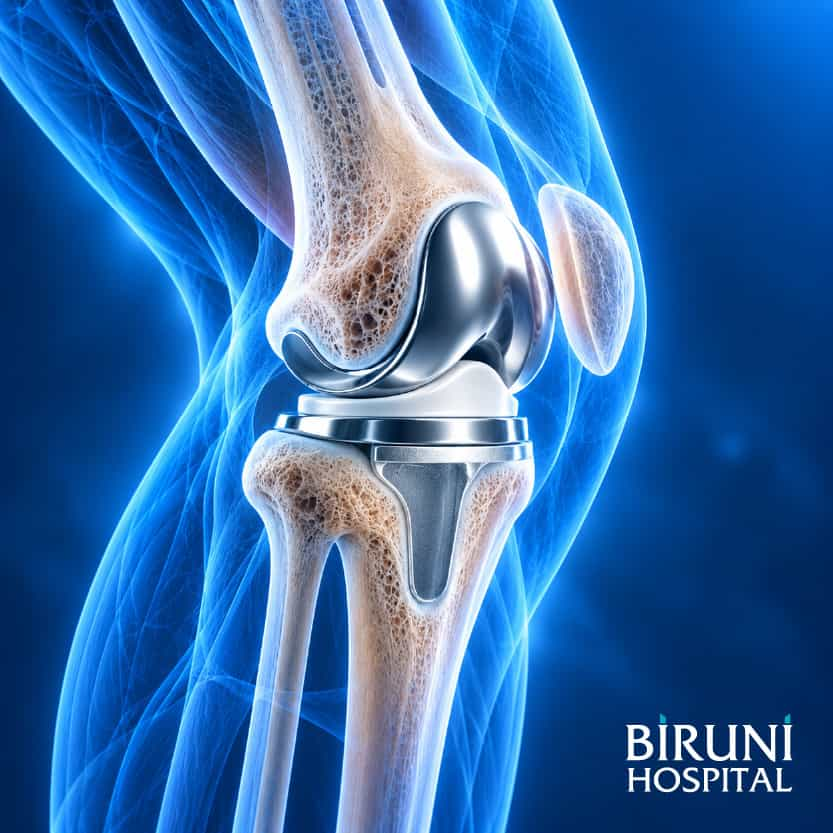
- Final implantation: Permanent components are secured and the knee is reassessed before closure.
Robotic Knee Replacement Recovery Timeline
| Recovery Phase | Typical Milestones | Rehabilitation Focus |
|---|---|---|
| First 24 Hours | Pain control, monitoring, standing, and early assisted walking when appropriate. | Ankle movement, quadriceps activation, transfers, and early mobility. |
| Days 2-5 | Walking with a walker or crutches, wound checks, and progressive mobility. | Knee flexion and extension, gait training, and functional exercises. |
| Weeks 2-6 | Progressive independence with walking and gradual return to routine activities. | Strengthening, range of motion, gait quality, and endurance. |
| Months 3-12 | Ongoing improvement in strength, mobility, and function. | Low-impact exercise, muscle conditioning, mobility, and long-term joint care. |
Recovery varies according to age, preoperative mobility, medical conditions, muscle strength, surgical complexity, and adherence to rehabilitation. Some people progress more quickly than others.
Risks and Limitations of Robotic Knee Replacement
Robotic knee replacement remains major orthopedic surgery. Robotic guidance can improve technical accuracy, but it does not eliminate the complications associated with total knee arthroplasty.
General Surgical Risks
Potential complications include infection, bleeding, blood clots, anesthesia-related complications, and injury to nearby nerves or blood vessels.
Knee and Implant Risks
Possible issues include stiffness, persistent pain, instability, implant wear, loosening, or the need for revision surgery in the future.
Technology Limitations
Robotic systems assist surgical execution but cannot control biological healing, rehabilitation participation, infection risk, or long-term implant wear.
Robotic Knee Replacement vs Conventional Knee Replacement
Both robotic-assisted and conventional knee replacement are surgeon-performed procedures. The main difference is how surgical planning, bone preparation, and implant positioning are guided.
| Feature | Robotic-Assisted Knee Replacement | Conventional Knee Replacement |
|---|---|---|
| Planning | Digital or 3D patient-specific planning. | Preoperative imaging combined with conventional surgical planning. |
| Bone Preparation | Robotic or computer-guided boundaries. | Manual cutting guides and standard instrumentation. |
| Alignment Accuracy | Provides additional digital guidance for implant positioning and alignment. | Depends on conventional instrumentation and surgical technique. |
| Surgeon Control | Surgeon-controlled. | Surgeon-controlled. |
| Rehabilitation | Required after surgery. | Required after surgery. |
| Surgical Risks | Standard knee replacement risks remain. | Standard knee replacement risks remain. |
Why International Patients Consider Turkey for Robotic Knee Replacement
Turkey is an established destination for international medical travel, including orthopedic procedures. Patients may consider treatment in Turkey because of access to specialist orthopedic services, modern hospital infrastructure, international-patient coordination, and package-based treatment planning.
Orthopedic Infrastructure
Robotic and computer-assisted joint replacement technology is available at selected orthopedic centers.
Specialist Care
Patients can access orthopedic teams focused on joint replacement and postoperative rehabilitation.
International Patient Support
Some centers provide coordination for appointments, translation, transfers, accommodation planning, and follow-up.
Package-Based Pricing
Treatment packages can combine hospital services, surgery, imaging, rehabilitation, and logistical support.
Robotic Knee Replacement Cost at Turan Turan Health Group
The total cost of robotic knee replacement in Turkey depends on whether one or both knees are treated, implant selection, case complexity, imaging requirements, hospital stay, rehabilitation, and other services included in the treatment package.
What Can Affect the Total Cost?
- Unilateral versus bilateral knee replacement.
- Implant brand, model, and material.
- Severity of deformity and surgical complexity.
- Length of hospital stay.
- Preoperative imaging and laboratory tests.
- Number of physical therapy sessions.
- Transfers, accommodation, or other international-patient services included in the package.
| Procedure | Typical Inclusions | Estimated Cost Range |
|---|---|---|
| Unilateral Robotic Knee Replacement | Consultation, imaging or 3D planning, surgery, hospital stay, rehabilitation, and selected transfers. | $7,500-$11,500 USD |
| Bilateral Robotic Knee Replacement | Bilateral surgery, extended hospital care, rehabilitation, and selected transfers. | $13,500-$18,500 USD |
Prices are estimates and can vary according to the individual treatment plan, implant choice, hospital stay, and package inclusions.
Patient Journey for Robotic Knee Replacement at Turan Turan
- Initial inquiry: Medical history, knee symptoms, and available imaging are submitted for review.
- Medical record review: The orthopedic team assesses the case and determines whether knee replacement evaluation is appropriate.
- Consultation: The surgeon discusses the proposed treatment plan, expected recovery, risks, and rehabilitation.
- Travel planning: International-patient coordination may include appointment scheduling, transfers, and accommodation planning.
- In-person assessment: Physical examination, preoperative testing, and additional imaging are completed after arrival.
- Surgery: Robotic-assisted knee replacement is performed by the orthopedic surgical team.
- Hospital recovery: Pain control, wound care, assisted walking, and rehabilitation begin.
- Discharge and local recovery: The patient continues rehabilitation and receives postoperative instructions.
- Follow-up: Recovery may be monitored through scheduled postoperative reviews and remote communication after the patient returns home.
Questions International Patients Should Ask Before Robotic Knee Replacement
- Which robotic knee system will be used for my surgery?
- Is the procedure total knee replacement or partial knee replacement?
- Which implant is planned and why is it suitable for my anatomy?
- How many days of hospital care and physical therapy are included?
- What medical conditions could increase my surgical or anesthesia risk?
- How will blood-clot prevention and postoperative pain management be handled?
- When can I safely fly after surgery?
- What follow-up support is available after I return home?
- Which services are included in the quoted package price?
Frequently Asked Questions About Robotic Knee Replacement in Turkey
What is robotic knee replacement surgery?
Robotic knee replacement is knee arthroplasty performed by an orthopedic surgeon using computer-assisted planning and robotic guidance to support bone preparation and implant positioning.
Is robotic knee replacement better than traditional knee replacement?
Robotic systems can provide greater precision in surgical planning and implant alignment. Overall results still depend on the patient's condition, surgical expertise, rehabilitation, and other clinical factors.
What are the main benefits of robotic knee replacement?
Potential advantages include individualized surgical planning, more accurate implant positioning, controlled bone preparation, real-time alignment information, and assistance with soft-tissue balancing.
Does the robot perform the knee replacement?
No. The orthopedic surgeon remains responsible for surgical decisions and controls the procedure. The robotic system is a guidance and precision tool.
Who may be a candidate for robotic knee replacement?
Candidates commonly have advanced knee arthritis, persistent pain, reduced mobility, stiffness, deformity, and symptoms that have not improved adequately with non-surgical treatment.
How long does robotic knee replacement recovery take?
Early walking usually begins soon after surgery, while functional recovery progresses over weeks and months. Strength, endurance, and confidence with the joint can continue improving for 6 to 12 months.
How much does robotic knee replacement cost in Turkey?
Estimated ranges are approximately $7,500-$11,500 USD for unilateral robotic knee replacement and $13,500-$18,500 USD for bilateral treatment. Actual pricing depends on the case and package inclusions.
What are the risks of robotic knee replacement?
Risks can include infection, blood clots, bleeding, stiffness, persistent pain, nerve or blood-vessel injury, implant-related problems, anesthesia complications, and the possibility of future revision surgery.
Will I need physical therapy after robotic knee replacement?
Yes. Rehabilitation is an important part of recovery after knee replacement and focuses on range of motion, strength, walking, balance, and return to everyday activities.
Can international patients receive treatment at Turan Turan Health Group?
The treatment pathway includes international-patient coordination around medical review, travel planning, hospital care, rehabilitation, and postoperative follow-up.
How long should an international patient stay in Turkey?
Many patients may remain in Turkey for approximately 10 to 14 days for hospital recovery, early rehabilitation, follow-up assessment, and travel clearance, although the appropriate stay varies by recovery progress.
Explore Robotic Knee Replacement in Turkey
If you are comparing robotic-assisted knee replacement options in Turkey, explore Turan Turan Health Group and available orthopedic treatment options through PlacidWay.
Medical Disclaimer: This content is for educational and informational purposes only and does not replace medical advice, diagnosis, or individualized treatment planning. Knee replacement is major surgery and outcomes vary according to joint condition, age, overall health, surgical complexity, rehabilitation, and other patient-specific factors.


























Share this listing