
If you are considering Apatone IV or curcumin therapy in Mexico because conventional breast cancer treatment has been difficult, caused significant side effects, or has stopped controlling your disease, the most important question is not whether a treatment is described as “natural.” You need to know what has actually been studied in people with breast cancer, what remains experimental, and whether delaying proven treatment could affect your prognosis.
Apatone is a research name used for a combination of ascorbate, or vitamin C, and menadione, commonly described as vitamin K3. Human Apatone evidence is very limited and does not establish it as a breast cancer treatment. Curcumin has been studied more extensively, including alongside chemotherapy, but current evidence is still insufficient to recommend it as a replacement for surgery, radiation, chemotherapy, endocrine therapy, HER2-targeted therapy or other evidence-based breast cancer treatments.
Quick Summary of Apatone and Curcumin Therapy in Mexico
- Apatone: The research combination generally refers to vitamin C plus menadione, or vitamin K3. Published human evidence is sparse and does not establish Apatone as a standard breast cancer therapy.
- Apatone IV: The small published human Apatone cancer trial used an oral vitamin C/vitamin K3 combination in prostate cancer. If a clinic offers an intravenous product under the Apatone name, ask exactly what is infused and what regulatory authorization applies.
- Curcumin: Curcumin comes from turmeric and has shown anticancer activity in laboratory research. Some breast cancer clinical studies have evaluated it as an adjunct, but it is not an established substitute for standard treatment.
- Current NCI assessment: Evidence from curcumin cancer trials remains insufficient to recommend curcumin-containing products for cancer treatment or routinely as adjunctive cancer therapy.
- Breast cancer treatment: Treatment should be selected according to stage, tumor grade, hormone-receptor status, HER2 status, menopausal status, genetic or molecular findings and previous therapy.
- Mexico regulation: COFEPRIS regulates medicines and health products. Products intended to treat disease require appropriate regulatory status; ordinary dietary supplements are not authorized to treat cancer.
- Safety: Supplements and high-dose nutrient therapies may interact with oncology treatment or present additional risks. Your oncology team should review every product before you use it.
- Cost: There is no authoritative standardized national price for Apatone or curcumin-based breast cancer treatment in Mexico. Obtain an itemized quotation and clarify whether the treatment is experimental, complementary or part of a registered study.
What Are Apatone and Curcumin Therapies for Breast Cancer?
Apatone and curcumin are very different interventions despite sometimes appearing together in alternative cancer programs. Apatone is a name used in research for a combination of ascorbate and menadione sodium bisulfite, while curcumin is a plant-derived compound extracted from Curcuma longa, commonly known as turmeric.
Both have generated laboratory interest because they can influence cellular pathways involved in oxidative stress, apoptosis, inflammation and cancer-cell signaling. Laboratory activity, however, does not automatically mean that a treatment improves survival, prevents recurrence or controls metastatic breast cancer in people.
| Approach | What It Contains | Breast Cancer Evidence | Current Role |
|---|---|---|---|
| Apatone | Vitamin C/ascorbate plus menadione, commonly called vitamin K3 | Preclinical research includes breast cancer cell models, but convincing breast-cancer-specific human outcome data are not established. | Investigational |
| Curcumin | Curcuminoid derived from turmeric | Laboratory, animal and some human adjunctive studies exist, but evidence remains insufficient for routine cancer treatment recommendations. | Complementary/investigational in oncology |
| Standard breast cancer therapy | Surgery, radiation, endocrine therapy, chemotherapy, HER2-targeted therapy, immunotherapy and other molecularly selected treatments | Supported by large clinical trials and risk-specific treatment evidence. | Established care when medically indicated |
What Does Research Actually Show About Apatone for Breast Cancer?
Apatone has a biological rationale but extremely limited human cancer evidence. Research commonly describes Apatone as a combination of ascorbate and menadione that can increase oxidative stress within cancer cells.
A 2025 laboratory study continued investigating how the vitamin C/menadione combination influences cellular redox systems. Earlier experimental work also showed effects in breast cancer cell models such as MCF7 cells. These experiments provide mechanistic information, not proof that Apatone treats breast cancer in patients.
What Human Apatone Research Exists?
The best-known published human Apatone oncology study was a small open-label phase I/IIa study published in 2008. It involved only 17 men with prostate cancer who had experienced biochemical progression after standard local treatment.
Importantly, the study evaluated oral Apatone rather than a standardized intravenous breast cancer protocol. It measured changes in prostate-specific antigen kinetics and did not establish breast cancer effectiveness.
What This Means if a Mexican Clinic Offers “Apatone IV”
- Ask whether the infusion actually contains ascorbate plus menadione.
- Request the exact chemical and generic names of every component.
- Ask whether the formulation is the same intervention studied in published research.
- Request human breast cancer trial evidence for the exact intravenous protocol.
- Ask whether the product has a current COFEPRIS registration or research authorization.
- Request information about manufacturing, sterility and pharmacy preparation.
- Ask how kidney function, blood counts and other safety parameters are monitored.
What Does Current Evidence Show About Curcumin for Breast Cancer?
Curcumin has substantially more cancer research behind it than Apatone, but the evidence still does not support using curcumin as a replacement for standard breast cancer therapy. Curcumin has been studied for its effects on inflammation, cell signaling, apoptosis, tumor proliferation and drug resistance.
A 2026 systematic review and meta-analysis of animal breast cancer studies reported reduced tumor volume and tumor weight in experimental models. Animal results are useful for developing future therapies but cannot establish clinical benefit in women with breast cancer.
Human research is emerging. A randomized study published in 2025 evaluated curcumin as an adjunct to standard chemotherapy in women with locally advanced or metastatic breast cancer and reported improved response measures in the curcumin arm. This study is noteworthy, but a single trial does not make curcumin an established treatment or prove that it should replace standard therapy.
| Evidence Level | What Curcumin Research Shows | What It Does Not Establish |
|---|---|---|
| Laboratory studies | Effects on signaling, proliferation, inflammation and apoptosis | Patient survival or clinical effectiveness |
| Animal studies | Antitumor effects in experimental models | Equivalent benefit in human breast cancer |
| Early human studies | Feasibility, tolerability and possible adjunctive effects | Enough evidence for curcumin to replace proven treatment |
| 2025 randomized breast cancer study | Reported better response outcomes when oral curcumin was added to standard chemotherapy | Independent confirmation, universal effectiveness or alternative-treatment status |
| NCI evidence assessment | Recognizes ongoing cancer research | NCI states current evidence remains inadequate to recommend curcumin-containing products as cancer treatment or adjunctive treatment routinely. |
Why Breast Cancer Subtype Matters Before Considering Alternative Therapy in Mexico
Breast cancer is not one disease. Treatment changes substantially according to stage and molecular subtype, particularly estrogen receptor, progesterone receptor and HER2 status.
A therapy marketed simply as “breast cancer treatment” without evaluating these factors does not reflect modern oncology practice. Before considering any complementary or investigational treatment, you should know your precise diagnosis.
| Breast Cancer Finding | Why It Matters | Established Treatment Categories May Include |
|---|---|---|
| Hormone receptor-positive | Tumor growth is influenced by estrogen and/or progesterone signaling. | Endocrine therapy, CDK4/6 inhibitors and other stage-specific therapies |
| HER2-positive | HER2 overexpression creates a therapeutically targetable pathway. | HER2-targeted therapies, often combined with chemotherapy or other drugs |
| Triple-negative | ER, PR and HER2 are absent, requiring different systemic-treatment strategies. | Chemotherapy, immunotherapy and selected targeted treatments depending on stage and biomarkers |
| Localized disease | Potentially curative local and systemic treatment may be available. | Surgery, radiation and risk-adapted systemic treatment |
| Metastatic disease | Cancer has spread beyond the breast and regional lymph nodes. | Subtype-directed systemic therapy and symptom-directed treatment |
What Are the Safety Concerns With Apatone, IV Vitamin C and Curcumin?
“Natural” does not mean risk-free. High-dose nutrient products behave differently from nutrients consumed in ordinary food, particularly when they are concentrated, combined with medicines or administered intravenously.
NCI notes that intravenous vitamin C can reach much higher blood concentrations than oral vitamin C. It has generally been tolerated in clinical research, but serious complications may occur in people with certain kidney conditions, glucose-6-phosphate dehydrogenase deficiency or hemochromatosis.
Curcumin also requires caution. NCI's 2025 evidence review notes reports of severe liver toxicity associated with some curcumin-containing products, although contamination, adulteration and individual susceptibility may contribute.
| Potential Concern | Why It Matters | What to Ask |
|---|---|---|
| Kidney function | High-dose IV ascorbate may be inappropriate in certain renal conditions. | Was kidney function assessed before infusion? |
| G6PD deficiency | High-dose IV vitamin C may create serious risk in affected patients. | Is G6PD screening required? |
| Drug interactions | Supplements can influence metabolism, bleeding risk or treatment effects. | Has your medical oncologist reviewed every supplement? |
| Curcumin product quality | Formulations can differ in purity and bioavailability. | What exact product, manufacturer and regulatory category are being used? |
| Liver toxicity | Rare liver injury has been reported with some curcumin products. | Are liver tests monitored during treatment? |
| Treatment delay | The greatest risk may be postponing treatment already known to improve outcomes. | What evidence supports delaying or replacing standard therapy? |
How Are Curcumin and Vitamin-Based Cancer Treatments Regulated in Mexico?
COFEPRIS, Mexico's Federal Commission for Protection against Health Risks, regulates medicines and other health products. Its regulatory category matters because a nutritional supplement is not the same as a medicine authorized to treat cancer.
COFEPRIS states that dietary supplements are intended to supplement dietary intake and are not products intended to treat, cure, prevent or alleviate disease. It also specifies that injectable solutions are not permitted as ordinary dietary supplement forms.
A product marketed for cancer treatment therefore needs to be evaluated according to the applicable medicine, biologic, investigational or other health-product framework rather than relying on its classification as a supplement.
| What to Verify in Mexico | What to Request |
|---|---|
| Clinic or hospital authorization | Applicable sanitary license or operating documentation |
| Medication status | COFEPRIS registration number and therapeutic indication |
| Experimental treatment | Research protocol, ethics authorization and clinical-trial registration when applicable |
| IV formulation | Exact active ingredients, manufacturer, sterility controls and preparation information |
| Treating oncologist | Professional license and relevant oncology specialty credentials |
What Do Recent Breast Cancer Statistics in Mexico Show?
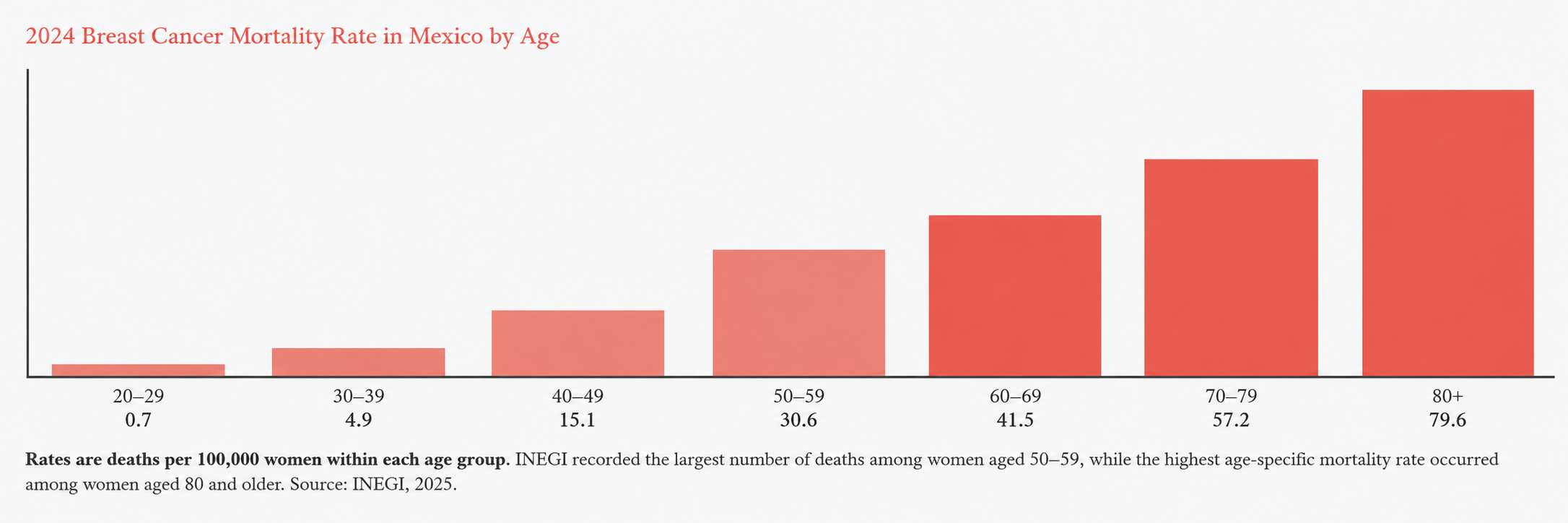
Breast cancer remains a major public-health concern in Mexico. INEGI reported that 8,451 deaths were attributed to breast cancer in 2024. Of these deaths, 8,384 occurred in women and 67 in men.
INEGI also reported that the breast cancer mortality rate among women aged 20 and older increased from 15.69 deaths per 100,000 in 2015 to 18.68 in 2024. These figures describe population mortality and do not measure the effectiveness of Apatone, curcumin or any particular treatment.
Breast Cancer Mortality Rate in Mexican Women, 2015–2024
Rates per 100,000 women aged 20 years and older. Values: 2015 15.69; 2016 16.34; 2017 16.54; 2018 17.21; 2019 17.53; 2020 17.92; 2021 17.93; 2022 17.57; 2023 17.88; 2024 18.68. Source: INEGI, 2025; 2024 information reported as preliminary in the publication.
Who Travels to Mexico for Health Treatment and Breast Cancer Care?
There is no recent authoritative national dataset identifying the age, diagnosis and country of origin specifically for international patients traveling to Mexico for Apatone, curcumin or breast cancer treatment. Presenting such figures would require assumptions.
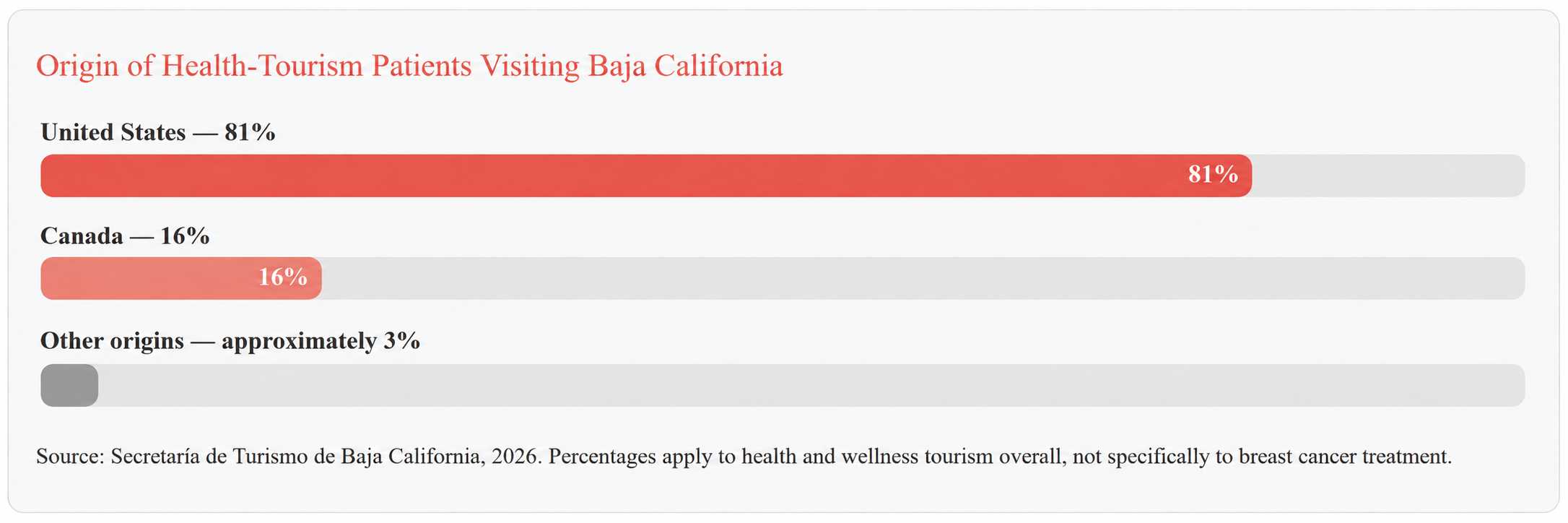
Official Baja California tourism information does provide useful broader context because the region includes Tijuana and a large cross-border healthcare market. In 2026, Baja California reported approximately 2.8 million annual health and wellness visitors across specialties that include oncology.
According to the same official source, 81% of health-tourism patients came from the United States, particularly California, Arizona and Nevada, while 16% came from Canada. These numbers describe health tourism overall and are not breast-cancer-specific.
Patients may explore treatment abroad because they are looking for another opinion after recurrence, access to an investigational intervention, different supportive-care models, geographic convenience or different private-care pricing. None of these reasons establishes that an alternative therapy is medically superior.
How Should You Choose an Integrative Cancer Clinic in Mexico?
The safest way to evaluate a clinic is to examine its medical infrastructure and evidence standards rather than how strongly it promotes a particular therapy. A responsible oncology program should be willing to discuss conventional treatments, investigational status and uncertainties.
Verify the Facility in Mexico
- Applicable government sanitary authorization
- Issuing regulatory authority
- On-site pharmacy or infusion controls
- Emergency transfer arrangements
- Laboratory testing capabilities
- Access to imaging and pathology
- Infection-control procedures
- Written complication-management protocol
Verify the Oncology Team
- Mexican professional license
- Medical oncology or relevant specialty training
- Recognized specialty-board certification where applicable
- Experience with your breast cancer subtype
- Ability to interpret ER, PR and HER2 findings
- Experience managing metastatic disease if relevant
- Communication with your home oncologist
- Clear long-term follow-up responsibility
How Much Do Apatone and Curcumin Treatments Cost in Mexico?
No authoritative national pricing database establishes a standard USD cost for Apatone IV or curcumin-based breast cancer treatment in Mexico. Prices can differ significantly according to the formulation, number of infusions, diagnostic testing, hospital location and whether other therapies are included.
An “all-inclusive cancer program” also may not include emergency hospitalization, pathology review, imaging, medications required for complications, accommodation extensions or follow-up after returning home.
| Potential Cost Component | Why It May Apply | Pricing Guidance |
|---|---|---|
| Oncology consultation | Review of diagnosis and treatment options | Provider-specific |
| Pathology review | Confirmation of tumor type, grade, ER, PR and HER2 | Varies |
| Laboratory tests | Organ function and safety assessment | Varies by protocol |
| IV vitamin-based treatment | If part of the proposed program | Patient-specific quotation required |
| Curcumin product or infusion | Depends on formulation and regulatory category | No standardized national cancer-treatment price |
| Imaging | Assessment of treatment response or progression | Varies by modality |
| Emergency care | Unexpected toxicity or complications | Often excluded from package pricing |
| Follow-up | Monitoring disease and treatment safety | May continue after return home |
What Should You Plan Before Traveling to Mexico for Breast Cancer Therapy?
Your most important preparation is continuity of oncology care. A clinic abroad should not operate as an isolated treatment destination without a plan for your oncologist at home to understand what was given and how your cancer will be monitored.
Before Traveling to Mexico
- Obtain your complete pathology report.
- Confirm ER, PR and HER2 status.
- Bring genomic or molecular results if performed.
- Collect imaging files, not only radiology summaries.
- Document every previous cancer treatment.
- Request a second oncology opinion.
- Ask whether the proposed treatment is standard or experimental.
- Verify COFEPRIS status where applicable.
- Request an itemized written quotation.
Before Returning Home
- Obtain exact treatment names and dates.
- Request infusion records.
- Obtain laboratory results.
- Record any adverse events.
- Request the discharge summary.
- Clarify warning symptoms.
- Confirm the next oncology assessment.
- Send records to your home medical team.
- Clarify who manages complications after travel.
Frequently Asked Questions About Apatone and Curcumin Therapy in Mexico
Is Apatone a proven treatment for breast cancer?
No. Laboratory research has investigated combinations of vitamin C and menadione in cancer models, including breast cancer cells, but current human evidence does not establish Apatone as an effective standard treatment for breast cancer.
What exactly is Apatone therapy?
Apatone is a research name commonly used for a combination of ascorbate, or vitamin C, and menadione, often described as vitamin K3. Its proposed anticancer activity involves changes in cellular oxidative stress, but clinical evidence remains limited.
Has intravenous Apatone been tested in women with breast cancer?
Published evidence supporting a standardized intravenous Apatone protocol for breast cancer is not established. The small historic human Apatone cancer study frequently cited in the literature involved oral treatment in men with prostate cancer.
Can curcumin treat breast cancer?
Curcumin has demonstrated anticancer effects in laboratory and animal research and has been studied as an adjunct in some human trials. Current evidence remains insufficient to recommend it as a substitute for established breast cancer treatment.
Can curcumin be used with chemotherapy?
Some studies have evaluated curcumin alongside chemotherapy, including recent breast cancer research. However, combining supplements with oncology medicines should be reviewed by the treating oncologist because formulations, interactions and patient risks can differ.
Is IV vitamin C approved as a cancer treatment?
IV vitamin C continues to be studied in cancer care, but the U.S. FDA has not approved intravenous vitamin C as a cancer treatment. Patients should also understand medical risks associated with kidney disease, G6PD deficiency and other conditions.
Are natural cancer therapies safer than chemotherapy?
Not necessarily. The safety profile depends on the exact substance, dose, route of administration and patient health. An inadequately tested therapy may also create indirect risk if it delays treatment already known to improve breast cancer outcomes.
How can I verify alternative cancer therapy in Mexico?
Ask for the exact generic ingredients, COFEPRIS registration or research authorization where applicable, clinic licensing information, physician credentials, published clinical evidence and written documentation explaining whether the proposed treatment is standard, complementary or experimental.
How much does Apatone IV treatment cost in Mexico?
No authoritative standardized national price is available. Costs can vary by formulation, clinic, testing, number of infusions and additional therapies. Request a written itemized estimate and clarify what is excluded from the treatment package.
Should I stop chemotherapy before receiving Apatone or curcumin?
Do not discontinue prescribed breast cancer therapy based solely on information from an alternative-treatment provider. Changes to chemotherapy, endocrine therapy, targeted therapy or other treatment should be discussed with the oncology team managing your cancer.
Should I get a second opinion before alternative breast cancer treatment in Mexico?
A second opinion is particularly useful when a treatment is experimental or being proposed instead of established therapy. Ask an independent medical oncologist to review your stage, pathology, biomarkers, treatment history and the evidence supporting the proposed intervention.
What documents should I send to a breast cancer clinic in Mexico?
Send your pathology report, ER/PR/HER2 results, imaging, staging records, previous treatment summaries, current medication list, recent laboratory results and relevant genomic testing. These records help determine whether the proposed treatment fits your actual diagnosis.
Compare Breast Cancer Treatment Options in Mexico With PlacidWay
If you are researching Apatone, curcumin or other integrative breast cancer treatments in Mexico, PlacidWay can help you request information from healthcare providers, compare proposed treatment plans, understand estimated costs and organize questions about evidence, regulatory status and physician credentials.
Before proceeding, discuss any alternative or complementary treatment with a qualified oncologist who understands your breast cancer subtype and current treatment plan.
Medical Disclaimer for Alternative Breast Cancer Therapy
Disclaimer: This information is for educational purposes only and does not replace professional medical advice. Always consult a qualified healthcare provider before making medical decisions.
References for Apatone, Curcumin and Breast Cancer Treatment
- Breast Cancer Treatment (PDQ) – National Cancer Institute
- Curcumin and Cancer (PDQ) – National Cancer Institute
- Intravenous Vitamin C and Cancer – National Cancer Institute
- Phase I/IIa Apatone Study in Prostate Cancer – PubMed
- Ascorbate and Menadione Redox Research – Free Radical Biology and Medicine, 2025
- Curcumin as an Adjunct to Standard Chemotherapy in Advanced Breast Cancer – PubMed, 2025
- Dietary Supplement Regulation – COFEPRIS
- Breast Cancer Statistics in Mexico – INEGI, 2025






















Share this listing