

The inspector’s notebook · Colombia
Checking stem cell, PRP and exosome care in Colombia before you book
An anonymized provider dossier shows what a Canadian patient should be able to verify, what deserves another question and what should stop a booking.
The first page of the checklist
A clinic name is not enough to begin
On the reviewer’s desk is a proposed appointment in Bogotá. The description says “regenerative joint treatment,” but the Canadian traveller has asked about osteoarthritis and needs to know which treatment is actually on offer. PRP made from their own blood is not the same intervention as an injected cell product. Neither is interchangeable with an exosome-based product. Before discussing flights or a deposit, the useful task is to separate those claims.
For this notebook, call the clinic Provider A. Provider A and the patient scenario are composites created to show how an evaluation could work. No real clinic is being described as approved, rejected or previously reviewed by PlacidWay. The sample documents and responses below are examples of what to request, not records we claim to have received.
The patient’s starting point is familiar: months until a specialist appointment, uncertain provincial coverage for a private PRP injection and an online offer that appears to provide quicker access. Speed does not answer the central question. The checklist begins with a precise diagnosis, a named procedure, the proposed injection site and the reason this clinician thinks it may help this particular patient. If the offer changes from PRP to “stem cells” during a sales conversation, the review starts again with the new product.
Before paying a deposit
Does the facility have permission to provide this service?
The first lookup is not an accreditation badge. In Colombia, healthcare providers and their enabled services can be checked through the Registro Especial de Prestadores de Servicios de Salud, usually called REPS. Search for the facility’s legal name or identification details, then compare the listed address, location, status and enabled services with the written proposal. A Bogotá consultation address should not quietly become a different site for the injection. If Provider A says a procedure takes place at a separate surgical or outpatient facility, that location needs its own check.
A REPS listing addresses the provider and its authorized service categories. It does not, by itself, approve an exosome vial, establish that a particular cell preparation can be marketed for osteoarthritis or prove that a proposed treatment works. Those are separate questions. Similarly, voluntary healthcare accreditation can be useful context, but it must be verified with the issuing organization and its scope. Do not treat a logo on a website as a substitute for a current facility record.
A Canadian can repeat this check
Ask for the provider’s exact registered legal name, tax identification number, treatment address and the name of any second facility. Open the Colombian Ministry of Health’s REPS public consultation from an official government site. Match the results to the quotation, save a copy and ask the clinic to explain anything that does not match. If the search is difficult, request a live screen-share rather than accepting a cropped screenshot.
For Provider A, a mismatch would pause the file, not trigger a guess about why it happened. Names may differ because a brand uses a separate legal entity. The provider should be able to document that relationship. If it cannot establish where the procedure will occur and which registered organization is responsible, there is no sound basis for booking.
The name behind the needle
Who decides that the injection is appropriate?
A reassuring conversation with a coordinator is valuable, but it is not a clinical assessment. The dossier should identify the treating professional by full name and professional registration details. Colombia’s Registro Único Nacional del Talento Humano en Salud, or ReTHUS, is a public route for checking registered health professionals. Ask how to find the clinician’s record and confirm that the name supplied for the consultation is the person expected to evaluate and treat you. Relevant specialty training and experience with the particular joint or injury matter more than a general claim to work in “regenerative medicine.”
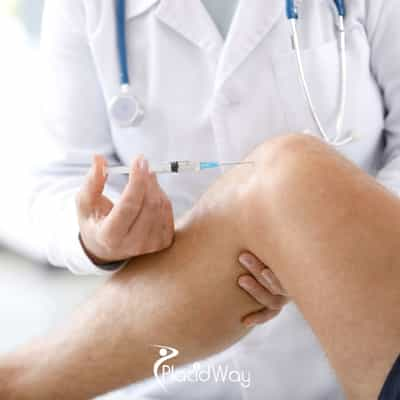
For a knee injection, for example, the questions extend beyond the act of injecting. Who reviews the examination and imaging? Who checks for infection, bleeding risks, medicines and reasons the proposed treatment may not suit the patient? Is image guidance planned, and if so, who performs it? A patient with hip pain, a previously replaced joint or a complex sports injury may need a different assessment. A written candidacy decision should explain why the proposed option fits the diagnosis rather than relying on age or pain alone.
Credentials can be checked without treating a registry result as a personal endorsement. Match the clinician’s full name to ReTHUS, request documentation for any claimed specialty and ask who provides cover if that clinician is unavailable. If Provider A supplies only a lead physician’s biography but cannot name the person performing the injection, the file remains incomplete. The traveller deserves to know whose judgement and hands are involved before committing to time off work and an international trip.
The product question
“Regenerative” is not a product identity
Suppose Provider A initially proposes PRP. The practical record should state whether blood is drawn from the patient, where it is processed, whether the preparation is used in the same visit and how the clinic records the kit and procedure. It should also specify the expected number of injections and whether a different formulation would change the price. PRP research is condition-specific and protocols vary. A clinician should describe the likely uncertainty for this patient, alternatives such as rehabilitation or established orthopaedic care and what improvement would be reasonable to measure.
Now suppose the same email offers an exosome add-on. That is a new assessment, not a minor upgrade. Ask for the product’s manufacturer or source, how it was made and stored, its lot or batch identification, documentation of quality testing and the specific Colombian regulatory basis for supplying and using it for the proposed purpose. Colombia’s Instituto Nacional de Vigilancia de Medicamentos y Alimentos, or INVIMA, is a key regulator to consult about products under its remit. A general statement that a laboratory is “certified” does not answer whether the particular product and use have the necessary authorization. Exosome-based treatments for joint pain should not be presented as established care on the strength of testimonials.
Cell-based proposals require equally exact language. “Stem cell therapy” may refer to very different cell sources, collection methods, processing steps and routes of administration. A sample dossier would request the source of the cells, the facility handling them, the chain of custody, donor screening when applicable, release and sterility information, storage and transport conditions, and the regulatory explanation for the specific intervention. If the clinic refers to a clinical trial, ask for the protocol, oversight details and consent documents. Participation in research must not be implied merely because a treatment is described as innovative.
The line in the notebook
A traceable product is not automatically an effective one. Evidence for the patient’s condition and authorization for the proposed use need their own answers.
The patient-communication test
What happens when the questions get specific?
A useful test email to Provider A would come from the standpoint of a Canadian with knee osteoarthritis, recent imaging and a limited window away from work. It would ask for a clinician review before a treatment recommendation, a written explanation of the exact product, a complete quote, the treatment address and a plan for problems after returning home. The point is not to demand an instant medical opinion by email. It is to see whether the clinic knows which questions require a clinician and whether it will provide clear documents before a deposit.
A helpful response
Explains what information is needed for screening, identifies who reviews it and distinguishes clinical advice from scheduling.
An incomplete response
Sends a package price and asks for a deposit, but omits product details, the treating clinician and the full treatment site.
A useful follow-up
Requests the missing documents in writing and gives the provider a reasonable chance to clarify before drawing a conclusion.
Consent is part of this communication test. A patient should receive an understandable discussion of expected benefits, uncertainty, ordinary procedure risks, product-specific risks, other options and the possibility of no meaningful improvement. Ask whether consent materials are available in English if that is the language you use for medical decisions. Translation should preserve the substance, not turn uncertainty into a promise.
For Canadians, one extra question is especially revealing: “What information will my clinician at home receive if I have persistent swelling or pain?” A workable answer includes the procedure note, product or kit identifiers where relevant, medicines given, follow-up instructions and a contact route that still works after the patient leaves Colombia. A polite reply alone is not an aftercare plan.
The quote beside the flight search
What is the entire cost, not just the injection price?
The quoted currency matters. The figures below are approximate US-dollar ranges, not Canadian-dollar prices or promises of availability. Ask Provider A for a written, itemized quote showing the currency of payment and what happens if the clinician decides against treatment after an in-person assessment. Your credit card’s exchange rate and foreign-transaction charges may change the final amount in Canadian dollars.
| Location | Orthopaedic PRP session | Exosome-based session | Cell-based orthopaedic protocol |
|---|---|---|---|
| Bogotá | About $150–$500 | About $1,000–$4,000 where offered | About $5,000–$20,000 |
| Medellín | About $140–$450 | About $900–$3,500 where offered | About $4,500–$18,000 |
| Cali | About $120–$400 | Comparable published data are insufficient | Comparable published data are insufficient |
| Canada | About $300–$900 | No comparable routine baseline | No comparable routine baseline |
Ranges vary substantially by diagnosis, joint, biologic source, processing, imaging, number of sessions and what a package includes. Colombian cell-based figures generally exclude flights and accommodation and remain subject to physician evaluation and regulatory verification. In Canada, authorization, availability, clinical indication and provincial coverage vary. Many non-transplant cell interventions and exosome offerings are not routine insured care.
A complete travel budget also accounts for consultations, imaging, medicines, local transport, a companion if needed, hotel nights, a changeable return ticket and care if recovery does not follow the expected course. Provincial health coverage should not be assumed to pay for elective treatment abroad or every complication. Check your province’s rules and the exclusions in any travel policy before leaving. Price alone cannot resolve differences in authorization, product preparation or evidence.
A comparison, not a ranking
Two offers can look alike until the paperwork arrives
Keep Provider A’s proposed dossier beside a second, purely illustrative offer from Provider B. Provider B is also fictional and is not a second clinic we claim to have evaluated. This comparison shows why a low headline price or polished website would not decide the matter.
Provider A · dossier under review
Supplies a legal name and address for registry checks, identifies the treating clinician, separates PRP from any cell or exosome proposal and offers a written quote. Each claim still needs independent verification. A complete-looking file is a starting point, not a pass.
Provider B · illustrative incomplete offer
Advertises one price for “stem cells or exosomes,” provides no product identity and names a coordinator but not a treating clinician. The sensible next step is a document request. If essential details remain unavailable, the offer should not advance to booking.
The comparison is deliberately narrow. It does not establish clinical quality, predict an outcome or rank Bogotá above Medellín or Cali. A provider in any of these cities would face the same questions about its own facility, staff, products, indication, cost and aftercare.
The return-ticket test
Can the plan survive a delayed flight home?
For a Canadian travelling through Bogotá’s El Dorado airport, the clinic appointment is only one part of the trip. There may be a connection through Toronto, Montréal or another hub, a long period seated and a final journey from the Canadian airport to home. Even a relatively simple injection can leave a joint sore. More invasive collection or treatment may require a different recovery plan. Provider A should explain when the patient can reasonably travel, what symptoms call for urgent assessment, who will check the treatment site before departure and how a changed flight affects follow-up.
The answer must be individualized. A clinician should consider the procedure, the patient’s mobility, medical history and risks associated with prolonged travel. A traveller should not infer from a marketing itinerary that flying the next morning is medically appropriate. Ask the treating clinician and, if relevant, your Canadian clinician about activity limits, pain control and precautions during the journey. Seek urgent medical assessment for concerning symptoms rather than waiting for an international email reply.
The handoff to Canada
Before travelling, ask your family doctor, nurse practitioner or relevant specialist whether they can review the proposed records and what follow-up they could realistically provide. They may not be able to supervise an unfamiliar intervention or obtain a product unavailable in Canada. Before leaving Colombia, request the procedure note, product identifiers when applicable, discharge instructions and a direct contact for the treating team.
If the traveller lives far from a major Canadian centre, a same-day return followed by a long drive may be harder than the international flight itself. Leave room in the itinerary for an in-person check, unexpected soreness or a change in treatment recommendation. Flexible travel plans are not a sign that something will go wrong. They give the patient a way to respond sensibly if the clinical plan changes.
When the review stops
Some gaps cannot be solved by a reassuring call
An unanswered question may call for clarification. An essential fact that cannot be verified, or a claim that conflicts with the documents, calls for a different response. In this illustrative review, Provider A would not move toward a booking recommendation if any of the following remained unresolved after a fair request for evidence.
Stop · Identity
The treatment site or responsible clinician cannot be identified and matched to the relevant public records.
Stop · Product
A cell or exosome product lacks a clear source, traceability records or a credible explanation of its regulatory basis.
Stop · Consent
The offer guarantees joint repair, dismisses meaningful uncertainty or pressures the patient to pay before screening.
Other reasons to stop include a refusal to provide an itemized quote, a proposed intervention that changes without a new clinical explanation or no credible route for urgent problems and follow-up. This is not a finding against any named Colombian clinic. It is a boundary a patient can use when deciding whether an offer has supplied enough information to justify travel.
The limits of a good file
What vetting cannot promise
A careful document review can identify missing records and unsupported claims. It cannot guarantee that an injection will help, that a person will qualify after examination or that an adverse event will not occur. A registry entry can change. A facility can have authorization for one service without every proposed product or indication being authorized. A clinician’s credentials do not eliminate uncertainty in the evidence for a treatment.
Vetting also cannot replace an independent medical opinion. PRP has a different evidence profile from cell-based and exosome-based interventions, and findings for one joint or diagnosis cannot automatically be carried over to another. Published studies may use different preparations and patient groups. If a clinic describes an intervention as experimental or investigational, ask what that means for oversight, consent, costs and follow-up. If it describes the intervention as established, ask for evidence relevant to your specific condition.
Finally, no pre-travel review can promise that a Canadian clinician will assume responsibility for follow-up or that an insurer will cover an unexpected expense. The patient’s own clinician should help interpret medical suitability, and the traveller must confirm coverage and contingency arrangements directly. These limits are reasons to make a better-informed decision, not reasons to assume every provider or every treatment is alike.
Keep your own copy of the dossier
The checks worth doing yourself
Begin with the written proposal rather than a social-media post. Record the facility’s legal name and treatment address, the clinician’s full name, the proposed treatment and product details, the total quote and the planned dates of assessment and follow-up. Then check the facility through REPS and the clinician through ReTHUS. For a claim about a regulated product, seek the relevant product information through INVIMA and ask the provider to explain how that information applies to the exact use proposed for you. These are different checks, and none should be substituted for another.
Take the proposal to your Canadian clinician, especially if you have recent imaging, take blood thinners, have a complex medical history or are weighing treatment against surgery or rehabilitation. Ask what records would help them assess you after the trip. Get the clinic’s cancellation and refund terms in writing. Confirm your provincial coverage and travel insurance terms rather than relying on assumptions about care outside Canada. If your flight involves a long connection or you will travel alone, discuss those details during the clinical assessment.
This example ends without awarding Provider A a pass. A responsible decision would depend on real documents, current registry results, a clinician’s assessment and answers tailored to the individual patient. The point of the notebook is to make those requirements visible before an appealing appointment date becomes a commitment.
Closing note: Provider A, Provider B and the traveller in this piece are composites. They are not accounts of actual PlacidWay reviews or findings about real clinics.
References
Colombian Ministry of Health · REPS provider consultation
https://prestadores.minsalud.gov.co/habilitacion/
SISPRO · Colombian health information and ReTHUS access
https://www.sispro.gov.co/
INVIMA · Colombian health-product regulator
https://www.invima.gov.co/
Health Canada · Health products and safety information
https://www.canada.ca/en/health-canada.html
























Share this listing