
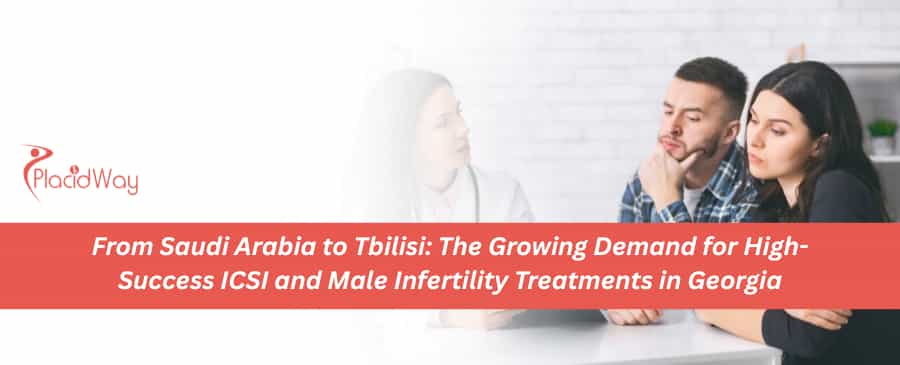
Over the past decade, the landscape of global reproductive medicine has shifted dramatically, with a notable migration of patients seeking care beyond their domestic borders. For many couples facing reproductive challenges, finding high-success ICSI in Georgia has become a viable and attractive alternative. The country has quietly positioned itself as a premier destination for specialized reproductive healthcare, drawing particular interest from couples residing in the Middle East.
Patients from Saudi Arabia are increasingly navigating toward Tbilisi to access sophisticated male infertility treatments in Georgia. This movement is largely fueled by the combination of stringent privacy standards, cutting-edge embryology laboratories, and a regulatory environment that supports advanced reproductive techniques. Understanding this trend requires looking closely at how international healthcare standards are successfully integrated within accessible geographical regions.
What Drives the Growing Demand for Male Infertility Treatments in Tbilisi
The decision to pursue cross-border reproductive care is rarely made lightly. For many couples facing male-factor reproductive hurdles, the search for highly specialized medical tourism in Georgia stems from a desire for comprehensive, multi-disciplinary diagnostic approaches. Domestic wait times, cultural sensitivities regarding male infertility, and the high financial burden of multiple failed cycles often prompt patients to seek care elsewhere.
Tbilisi has emerged as a beacon for advanced fertility care in Georgia due to its concentrated investment in reproductive technology. The clinical environments in the capital city are frequently updated to mirror the latest European protocols. Furthermore, the supportive infrastructure dedicated to international patients plays a crucial role in alleviating the inherent stress of medical travel.
- Availability of leading-edge micromanipulation tools for sperm selection.
- Implementation of European Society of Human Reproduction and Embryology (ESHRE) guidelines.
- Highly trained embryologists with international certifications.
- Strict adherence to patient confidentiality and anonymity.
Evaluating Success Rates for Advanced ICSI Procedures in Georgia
When investigating cross-border healthcare, clinical outcomes are understandably the primary concern for prospective patients. While medical science can never guarantee a positive outcome, the statistics emerging from fertility clinics in Georgia are compelling. Clinics in Tbilisi typically report fertilization rates that align closely with, and occasionally exceed, standard international benchmarks for complex male-factor cases.
It is crucial to approach success rates with a grounded perspective. Outcomes are heavily dependent on individual biological factors, predominantly the maternal age and the quality of the retrieved gametes. However, the use of highly specialized diagnostic criteria to select the most morphologically normal sperm prior to injection generally optimizes the chances of viable embryo development for couples undergoing ICSI in Tbilisi.
Patient Experience Summary
A couple traveling from Riyadh shared that after three unsuccessful traditional IVF attempts locally, their transition to specialized ICSI care in Tbilisi provided them with a more comprehensive understanding of their underlying male-factor issues. They noted that the advanced sperm selection protocols gave them renewed hope and ultimately resulted in a successful clinical pregnancy.
Analyzing the Affordable ICSI Cost in Georgia Compared to Saudi Arabia
Financial predictability is a major catalyst for the shift in medical travel patterns. The affordable ICSI cost in Georgia presents a stark contrast to the premium pricing models found in the Gulf region. Patients are often surprised to find that securing top-tier medical expertise in the Caucasus region comes at a fraction of the domestic price, without compromising the standard of care or technological capabilities.
The transparent IVF pricing in Tbilisi allows couples to budget effectively for multiple cycles if necessary, or to include adjunctive procedures such as genetic screening or surgical sperm retrieval without facing prohibitive financial barriers. Below is a realistic market range comparison illustrating the economic advantage of this medical tourism route.
| Procedure Name | Average Cost in Georgia (USD) | Average Cost in Saudi Arabia (USD) |
|---|---|---|
| Standard ICSI Cycle (Excl. Meds) | $3,500 - $4,800 | $7,000 - $10,000 |
| Surgical Sperm Retrieval (TESE/PESA) | $800 - $1,200 | $2,000 - $3,500 |
| Advanced Semen Analysis & DNA Fragmentation | $150 - $300 | $400 - $800 |
| Sperm Freezing and Initial Storage | $300 - $500 | $800 - $1,500 |
Comprehensive Diagnostics for Male Infertility Available in Tbilisi
Proper treatment begins with precise diagnosis. The centers catering to international patients offer exhaustive male fertility evaluation in Georgia. Moving beyond the traditional semen analysis, specialists in Tbilisi utilize high-magnification morphology assessments and DNA fragmentation indexing to identify the subtle cellular abnormalities that frequently cause fertilization failures.
This rigorous diagnostic phase is essential for tailoring the subsequent treatment protocol. By identifying the specific molecular or structural deficits in the sperm, andrologists and embryologists can determine whether standard ICSI, or a more advanced variant like PICSI (Physiological ICSI), is the most clinically appropriate pathway for the patient.
The Step-by-Step Patient Journey for ICSI in Georgia
Navigating cross-border healthcare requires a clear understanding of the clinical timeline. The ICSI procedure steps generally follow a structured, carefully monitored pathway. It begins with preliminary remote consultations, allowing the couple to complete baseline testing in Saudi Arabia before finalizing their travel dates, thereby minimizing their required time abroad.
Once in Tbilisi, the female partner undergoes controlled ovarian stimulation while the male partner may provide multiple samples or undergo necessary retrieval procedures. The critical phase occurs in the laboratory, where the embryologist meticulously executes the micro-injection. After a typical culture period of three to five days, the resulting embryos are evaluated for transfer or cryopreservation as part of standard fertility treatments in Tbilisi.
Patient Experience Summary
A patient from Jeddah expressed deep satisfaction with the organized nature of her treatment. She highlighted how the clinic coordinated her stimulation protocol with her local gynecologist in Saudi Arabia, meaning she only had to travel to Georgia for the final critical 12 days of the egg retrieval and embryo transfer process.
Safety Protocols and Medical Standards for IVF and ICSI in Tbilisi
Ensuring patient safety is the cornerstone of responsible medical tourism. Patients seeking safe IVF clinics in Georgia will find that top-tier facilities operate under strict quality management systems. These institutions typically hold accreditations that mandate rigorous laboratory air quality controls, uninterrupted power supply protocols, and meticulous gamete chain-of-custody tracking to prevent any handling errors.
The clinical environment is governed by protocols designed to minimize risks, such as Ovarian Hyperstimulation Syndrome (OHSS) in the female partner, through the careful titration of medications. The commitment to maintaining these international standards is a primary reason why medical professionals globally frequently acknowledge the high quality of reproductive care available in the region.
Cultural Comfort and Anonymity for Middle Eastern Patients in Georgia
Addressing the psychological comfort of patients is just as vital as the medical intervention. For many Middle Eastern patients in Georgia, privacy is paramount. Cultural stigmas surrounding male infertility often lead couples to seek treatment where their anonymity is strictly preserved. Clinics in Tbilisi are highly attuned to these sensitivities, often providing private waiting suites and confidential consultations.
Furthermore, the geographical proximity and the availability of direct flights from major cities in Saudi Arabia make Tbilisi a highly convenient destination. The local medical facilitators are typically well-versed in cultural nuances, ensuring respectful interactions, providing translation services, and facilitating a stress-free environment that allows couples to focus entirely on their treatment.
Patient Experience Summary
A couple traveling for complex male infertility treatments noted the profound relief they felt regarding privacy. They appreciated the discrete nature of the clinical staff in Tbilisi and the provision of an Arabic-speaking patient coordinator, which significantly eased their anxiety during complex medical discussions.
Common Contraindications and Risks Associated with ICSI Treatments
While reproductive technologies offer immense hope, they are not universally suitable for every individual. Understanding the ICSI risks and contraindications is a mandatory part of the pre-treatment phase. Medical professionals will generally advise against proceeding if there are severe underlying systemic illnesses in either partner that could make pregnancy life-threatening, or if there are active, untreated pelvic infections.
Additionally, patients must be fully informed of the potential risks. These typically include the risk of multiple pregnancies if more than one embryo is transferred, a slight increase in the risk of transmitting certain genetic anomalies related to male infertility to male offspring, and the potential for fertilization failure despite the direct injection technique.
Strict contraindications for the female partner undergoing stimulation for ICSI include uncontrolled hormone-dependent tumors, severe cardiovascular disease, and severe bleeding disorders. A comprehensive medical clearance is mandatory prior to initiating any hormonal or surgical protocols.
Combining Male Infertility Treatments with Intracytoplasmic Sperm Injection
For cases involving azoospermia (the complete absence of sperm in the ejaculate), traditional conception methods are entirely ineffective. In these scenarios, clinics in Georgia frequently employ a TESE and ICSI combination. Testicular Sperm Extraction (TESE) or Percutaneous Epididymal Sperm Aspiration (PESA) are minor surgical interventions performed by specialized urologists to retrieve viable sperm directly from the reproductive tract.
Once the microscopic amounts of viable sperm are surgically extracted, they are immediately transferred to the embryology lab for the ICSI procedure. This coordinated, multi-disciplinary approach allows men with severe obstructive or non-obstructive azoospermia to potentially achieve biological fatherhood—a prospect that was largely considered impossible before the advent of these combined techniques.
Preparing for Your Medical Tourism Journey to Tbilisi
Logistical preparation is critical to ensuring a smooth experience. Planning your medical travel to Tbilisi involves coordinating medical records, managing flight schedules, and ensuring that any necessary prescreening tests are completed well in advance. Patients are generally advised to compile all previous fertility treatment records, operative notes, and recent blood panels to provide the Georgian medical team with a comprehensive medical history.
Furthermore, setting realistic expectations and planning for adequate rest is essential. The stimulation and retrieval processes require frequent clinic visits, so selecting accommodation within a reasonable distance from the medical facility is highly recommended to minimize daily transit stress during the critical phases of treatment.
Post-Procedure Care and Monitoring for International Fertility Patients
The journey does not conclude immediately after the embryo transfer. Effective post-ICSI care in Georgia requires a carefully outlined follow-up plan before the patient returns to Saudi Arabia. Medical teams typically provide detailed instructions regarding necessary progesterone support medications, dietary guidelines, and activity restrictions for the crucial two-week wait before a pregnancy test can be administered.
Clinics are generally proactive in establishing remote communication channels. This ensures that once the patient returns home, their local obstetrician can seamlessly take over the monitoring of early pregnancy milestones. Clear handover documentation and digital access to the embryology reports play a vital role in ensuring continuity of care.
Patient Experience Summary
A patient commended the thorough discharge process after her ICSI cycle. She was provided with an extensive medical summary and a clear medication schedule translated into Arabic, which allowed her local doctor in Dammam to effortlessly manage her early pregnancy care upon her return.
How PlacidWay Assists Your ICSI Medical Tourism Journey in Georgia
Embarking on a cross-border healthcare journey requires reliable guidance and support. Medical tourism platforms are designed to bridge the gap between international patients and certified global healthcare providers, streamlining the complex process of securing specialized treatments abroad.
By focusing on value-based medical facilitation, PlacidWay helps prospective patients navigate the clinical landscape of Georgia with confidence and clarity.
- Provides direct access to verified, internationally accredited reproductive specialists and clinics in Tbilisi.
- Facilitates transparent communication and the procurement of customized, detailed medical quotes based on your specific diagnostic needs.
- Assists in the secure transfer of medical records between your local healthcare provider and the international medical team.
- Offers comprehensive educational resources to help patients understand treatment modalities, realistic outcomes, and clinical protocols.
- Provides a dedicated platform to read verified patient reviews and assess clinical facility capabilities before making informed healthcare decisions.
Frequently Asked Questions About Male Infertility Treatments in Georgia
Why are Saudi couples choosing Georgia for ICSI treatments?
Couples generally choose Georgia due to the availability of advanced European-standard fertility technology, high privacy standards, and significantly more affordable treatment costs compared to domestic healthcare options.
How long do patients typically need to stay in Tbilisi for ICSI?
Most patients typically plan to stay in Tbilisi for about 15 to 21 days. This allows adequate time for ovarian stimulation, egg retrieval, the ICSI procedure, and the embryo transfer process.
Is a visa required for Saudi citizens traveling to Georgia for medical reasons?
Currently, Saudi Arabian citizens generally enjoy visa-free entry to Georgia for short stays. However, immigration policies can change, so it is always advised to verify the latest visa requirements prior to travel.
What is the typical success rate for ICSI procedures?
Success rates vary widely based on maternal age, sperm quality, and overall health. While outcomes cannot be guaranteed, clinics employing advanced ICSI protocols generally report success rates aligned with international European averages.
Are there any strict contraindications for undergoing ICSI?
Yes, contraindications typically include severe unmanaged systemic diseases, certain genetic anomalies that pose extreme risks to offspring, and active pelvic infections. A thorough medical evaluation is required before approval.
Can male patients undergo TESE/PESA on the same day as egg retrieval?
Yes, surgical sperm retrieval methods like TESE or PESA are often coordinated to occur on or slightly before the day of the female partner's egg retrieval to ensure optimal freshness of the gametes.
What happens if fertilization does not occur after ICSI?
While ICSI significantly increases the chances of fertilization, complete fertilization failure can occasionally happen. In such cases, the medical team will analyze the cycle data to recommend alternative protocols for future attempts.
Is cultural privacy maintained for Middle Eastern patients in Tbilisi clinics?
Yes, fertility centers in Georgia are highly accustomed to international patients and typically prioritize strict confidentiality, offering private waiting areas and culturally respectful care for couples from the Middle East.
Are medications included in the estimated ICSI cost?
The estimated costs for the clinical procedure generally cover lab work and medical fees, but hormonal stimulation medications are usually billed separately as dosages vary significantly from patient to patient.
How soon can a patient travel back home after an embryo transfer?
Most fertility specialists advise waiting 24 to 48 hours after the embryo transfer before taking an international flight, allowing the patient to rest and minimize initial physical stress.
Ready to explore your options for high-quality ICSI treatments in Georgia? Let PlacidWay guide you toward reputable clinics and specialized fertility care.
References
- World Health Organization (WHO). Infertility. https://www.who.int/news-room/fact-sheets/detail/infertility
- American Society for Reproductive Medicine (ASRM). Intracytoplasmic Sperm Injection (ICSI). https://www.asrm.org/practice-guidance/practice-committee-documents/intracytoplasmic-sperm-injection-icsi-for-nonmale-factor-indications-a-committee-opinion-2020/
- Mayo Clinic. In vitro fertilization (IVF) - Risks and What You Can Expect. https://www.mayoclinic.org/tests-procedures/in-vitro-fertilization/about/pac-20384716




.png)




.png)
.png)






.jpg)
.jpg)









Share this listing