


US Women Seek TNBC Dendritic Cell Vaccines in Tijuana
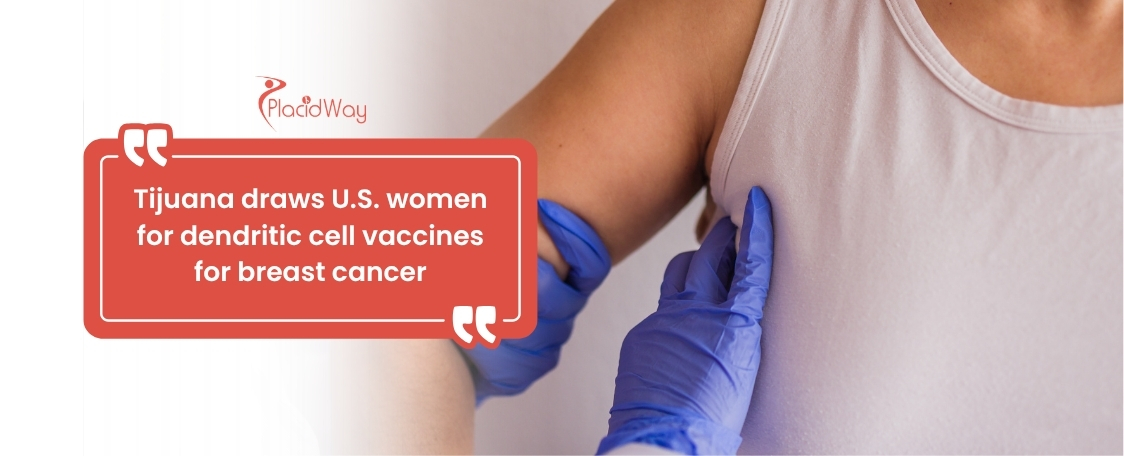
Facing limited domestic options, a growing number of US patients are pursuing Dendritic Cell Vaccines for Triple-Negative Breast Cancer in Tijuana. In 2024, this cross-border trend offers advanced immunotherapy and hope for those battling aggressive malignancies at a fraction of US costs.
The Urgent Need for Advanced Triple-Negative Breast Cancer Therapies
Triple-Negative Breast Cancer (TNBC) represents one of the most formidable challenges in modern oncology. Unlike other forms of breast cancer, TNBC lacks the three primary biological receptors—estrogen, progesterone, and human epidermal growth factor receptor 2 (HER2)—that serve as targets for conventional hormone therapies and targeted drugs. Because of this distinct biological profile, patients diagnosed with TNBC are frequently left with generalized systemic treatments, primarily traditional chemotherapy, radiation, and surgery. While these standard-of-care protocols can be effective in the short term, they are notoriously harsh on the body and often fall short in preventing the cancer's high rate of recurrence and aggressive tendency to metastasize to the brain, lungs, and liver.
As American women face the harrowing realities of a TNBC diagnosis, the urgent demand for innovative, targeted treatments has skyrocketed. Many patients, seeking to prevent a recurrence or manage advanced stages of the disease, are looking beyond the scope of traditional cytotoxic drugs. However, accessing cutting-edge cellular therapies in the United States often requires navigating a labyrinth of rigid clinical trial criteria, geographical limitations, and astronomical financial burdens. Consequently, a significant demographic of proactive patients is looking toward international borders, catalyzing a surge in demand for specialized alternative cancer treatments in Tijuana, where modern immunotherapy protocols are rapidly becoming accessible to the global public.
Did You Know?
Triple-Negative Breast Cancer accounts for approximately 10% to 15% of all breast cancer diagnoses globally. Despite being a minority subset, it is responsible for a disproportionately high percentage of breast cancer-related mortality due to its rapid growth rate and the historical lack of targeted therapeutic options available in conventional medicine.
How Personalized Dendritic Cell Vaccines Revolutionize Oncology?
At the forefront of the new oncology landscape is the deployment of Dendritic Cell (DC) Vaccines, a highly sophisticated form of personalized immunotherapy designed to awaken the body's innate defense mechanisms. Dendritic cells serve as the immune system's master sentinels and antigen-presenting cells. In a healthy immune response, they identify foreign invaders—such as viruses or rogue cancer cells—and present the unique protein markers (antigens) of these invaders to T-cells, effectively programming the immune system to hunt and destroy the threat. However, aggressive malignancies like TNBC possess an insidious ability to cloak themselves, evading detection by dendritic cells and proliferating unchecked.
The science behind the Dendritic Cell Vaccine circumvents this cloaking mechanism. The process begins with apheresis, where a patient's own white blood cells are extracted and transported to an advanced biotechnology laboratory. These precursor cells are cultivated into mature dendritic cells and exposed to specific tumor antigens derived either from the patient's own biopsied tumor tissue or synthesized peptide markers associated with TNBC. Once these dendritic cells are fully "educated" to recognize the precise molecular signature of the cancer, they are injected back into the patient's lymphatic system. This personalized approach essentially uploads a highly specific target code to the immune system, transforming a generalized defense into a precision strike force capable of actively hunting Triple-Negative Breast Cancer cells while leaving healthy tissue entirely unharmed.
Why Tijuana Has Emerged as a Global Hub for Immunotherapy?
The geographic and regulatory landscape of Baja California has uniquely positioned it as the premier destination for advanced oncological care in North America. Situated just minutes from the international border crossing in San Diego, Tijuana offers U.S. patients unparalleled accessibility to world-class medical infrastructure without the need for exhaustive transcontinental travel. Over the past decade, billions of dollars have been invested in developing hyper-modern medical towers and specialized biogenetic laboratories in this vibrant border city, establishing a healthcare ecosystem specifically designed to cater to international medical tourists seeking therapies not yet widely commercialized in their home countries.
Crucially, the rise of immunotherapy for breast cancer in Mexico is facilitated by a progressive, yet strictly regulated, medical framework. The Mexican health regulatory authority, COFEPRIS, provides a legal pathway for licensed specialists to administer safe, advanced cellular therapies under compassionate use protocols much faster than the decade-long, multi-phase clinical trial process mandated by the U.S. FDA. This regulatory agility does not equate to a compromise in quality; instead, it allows highly credentialed oncologists and immunologists to implement peer-reviewed, scientifically backed cellular vaccines immediately, giving patients real-time access to life-saving innovations precisely when they need them the most.
Breaking Down the Cost: U.S. Clinical Trials vs. Tijuana Immunotherapy
Financial toxicity is a widely documented side effect of cancer treatment in the United States. While standard chemotherapy may be covered by domestic insurance policies, experimental and advanced personalized immunotherapies are almost entirely excluded. Even if a patient manages to secure a highly coveted spot in a U.S. clinical trial for dendritic cell therapy, they are often subjected to massive ancillary costs, including extensive travel, out-of-network facility fees, and the potential risk of being placed in a placebo control group. For those attempting to access similar bespoke cellular therapies off-trial at private U.S. or European biotech clinics, the out-of-pocket invoices can easily surpass $100,000 to $150,000, creating an insurmountable barrier for the average family.
By contrast, the cost of dendritic cell therapy in Mexico is radically more accessible due to systemic economic efficiencies. Lower operational overhead, heavily subsidized medical education, and competitive real estate allow elite Mexican biotechnology labs and oncology centers to offer these custom-tailored vaccines at a fraction of the global premium. Furthermore, the pricing models across the border are intrinsically transparent. International patients are provided with comprehensive, all-inclusive medical quotes that encompass laboratory culturing, physician fees, administration, and associated holistic therapies, completely eliminating the terrifying unpredictability of domestic medical billing.
The Comprehensive Cross-Border Patient Experience
Undertaking international medical travel for cancer treatment involves meticulous logistical coordination. To alleviate the stress associated with navigating a foreign healthcare system, the premium oncology centers in Baja California have perfected the concierge medical model. Patients do not merely book a clinical appointment; they secure a comprehensive therapeutic journey tailored specifically to their physical and emotional needs. The emphasis is on creating a holistic, healing environment that fundamentally contrasts the sterile, deeply bureaucratic nature of conventional domestic hospital systems.
When American women pursue Dendritic Cell Vaccines for Triple-Negative Breast Cancer in Tijuana, they are enveloped in an end-to-end ecosystem of premium care. A standard integrative treatment package generally encompasses:
- Virtual Multi-Disciplinary Consultations: Prior to crossing the border, patients submit their oncology reports for review by a board of immunologists, oncologists, and nutritionists to determine eligibility and customize the vaccine protocol.
- Seamless VIP Transportation: Facilities provide dedicated, medically trained bilingual chauffeurs who greet patients at the San Diego International Airport and escort them swiftly across the border via expedited medical lanes.
- State-of-the-Art Apheresis Collection: Upon arrival, the initial step involves a comfortable, closely monitored blood filtration process in specialized clean-room environments to harvest the crucial white blood cells.
- Luxury Recovery Accommodations: Patients and their companions are housed in boutique medical wellness resorts or partnered luxury hotels that offer custom dietary menus tailored to support immune function.
- Long-Term Follow-Up Protocols: Treatment does not end at the border. Comprehensive packages include ongoing virtual monitoring, post-treatment blood panel analyses, and potential booster vaccine schedules to ensure sustained immunological memory against TNBC.
"Patients battling aggressive conditions like TNBC cannot always afford to wait for domestic regulatory bottlenecks. The rise of immunotherapy medical tourism in Tijuana demonstrates a critical shift: patients are empowered to access safe, cutting-edge cellular therapies across borders, guided by verified platforms that prioritize absolute transparency and clinical excellence."
— Pramod Goel, CEO of PlacidWay
Safety, Regulation, and Biotech Infrastructure in Baja California
A primary concern for any patient venturing abroad for highly complex medical procedures is the standard of safety and quality control. The modern reality of Tijuana’s specialized medical sector profoundly shatters outdated geographical stigmas. The handling, culturing, and administration of advanced biologicals like dendritic cells require immense technical precision, which is why the top-tier medical facilities in the region have invested heavily in creating environments that mirror—and often exceed—international laboratory standards.
The cell culturing processes take place within stringent ISO-certified Class 10,000 cleanrooms equipped with positive pressure HEPA filtration systems to guarantee absolute sterility. Furthermore, the leading practitioners operating within these hubs are not merely general practitioners; they are deeply specialized, board-certified oncologists, hematologists, and immunologists. Many of these medical leaders possess dual-board certifications, having completed extensive fellowships in the United States or Europe, and maintain active memberships in prestigious global scientific organizations. Their adherence to international best practices, combined with rigorous oversight by COFEPRIS, ensures that every customized vaccine is synthesized with maximum safety and therapeutic potency.
Did You Know?
Tijuana’s expansive medical sector generates an estimated $2 billion annually. This booming economy is heavily driven by specialized fields like regenerative medicine and oncology, drawing well over 2.5 million health-focused visitors across the border each year in search of high-quality, specialized care.
Integrating Conventional and Alternative Cancer Treatments in Tijuana
One of the most defining characteristics of the medical tourism oncology model is the commitment to integrative medicine. While Dendritic Cell Vaccines are a powerful weapon, elite international oncologists understand that combating Triple-Negative Breast Cancer requires a multi-pronged, comprehensive strategy. Rather than forcing patients to choose strictly between conventional allopathic medicine and holistic therapies, the medical centers in Baja California skillfully bridge the gap, creating a synergistic treatment environment that targets the cancer from every conceivable angle.
In practice, a dendritic cell protocol is frequently administered alongside an array of complementary modalities designed to optimize the body's internal terrain. This customized Triple-Negative Breast Cancer treatment in Tijuana may involve localized regional hyperthermia, which uses targeted heat to weaken tumor cell walls, making them highly susceptible to the newly trained immune cells. Additionally, protocols heavily feature intravenous Vitamin C, ozone therapy to oxygenate tissues, and metabolic therapies designed to starve cancer cells of glucose. By combining these advanced alternative cancer treatments in Tijuana with the precision of personalized immunotherapy, patients receive a robust, 360-degree biological defense strategy that prioritizes not just tumor reduction, but systemic whole-body healing and enhanced quality of life.
Navigating the Journey: The Strategic Role of PlacidWay
While the life-saving potential of cross-border cellular therapy is undeniable, the process of independently identifying safe, legitimate, and highly accredited biotechnology centers in a foreign country can be daunting for patients already burdened by a cancer diagnosis. The digital landscape is densely packed with marketing claims, making it incredibly difficult for individuals to verify facility accreditations, track verifiable clinical outcomes, or guarantee the authenticity of the specialized laboratories culturing their dendritic cells. This profound information gap is exactly where the strategic intervention of dedicated medical tourism facilitators becomes absolutely vital.
PlacidWay serves as the critical, independent bridge connecting vulnerable patients to world-renowned oncological care. By leveraging a meticulously vetted global network of premier healthcare providers, the platform empowers patients to bypass the noise and focus entirely on their recovery. Through PlacidWay, individuals can securely compare options, review transparent, all-inclusive pricing structures, and evaluate verified patient testimonials without the stress of navigating international borders alone. By acting as a patient advocate, PlacidWay ensures that women seeking advanced immunotherapy have the logistical support, objective data, and direct access needed to secure life-changing therapies with absolute confidence.







.png)
.png)
.png)











Share this listing