


Spine Surgery Crisis Drives EU Patients to Turkey
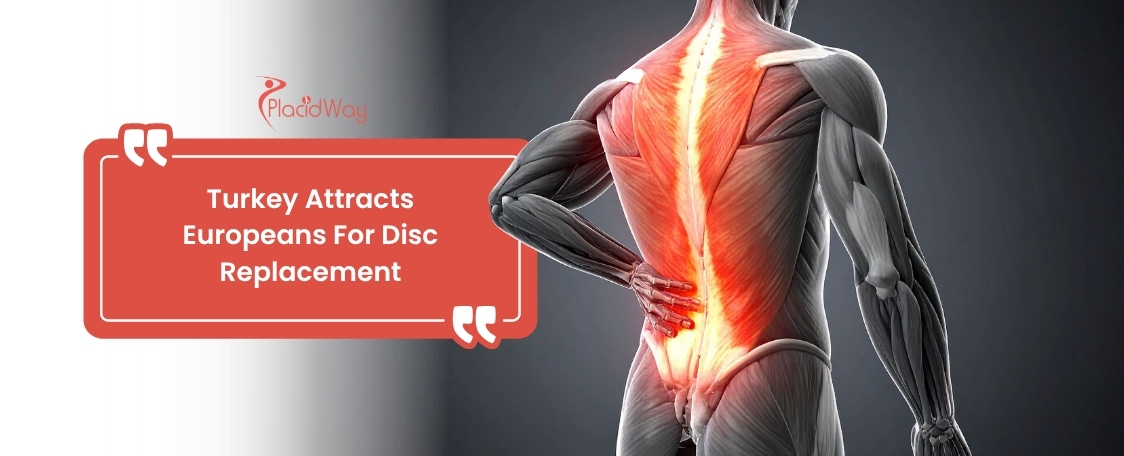
Driven by escalating healthcare costs and massive public waitlists, Europeans are fueling a surge in demand for a Cervical Disc Replacement in Turkey. In 2024, thousands are traveling to this transcontinental medical hub to access advanced spine care without agonizing delays.
The European Spine Care Crisis: Waitlists and Skyrocketing Costs
Across Western Europe, the public healthcare system is buckling under the weight of unprecedented post-pandemic backlogs and severe staffing shortages. Patients suffering from debilitating spinal conditions, such as cervical radiculopathy and degenerative disc disease, are increasingly left in medical limbo. In nations like the United Kingdom, it is not uncommon for a patient to wait upwards of 18 to 24 months merely to receive an initial neurosurgical consultation through the NHS, let alone secure a date for a complex operation like an artificial disc replacement. During this prolonged waiting period, patients endure severe nerve pain, numbness, and a drastic reduction in their overall quality of life, often risking permanent neurological damage due to nerve compression.
For those attempting to bypass the public system, the private healthcare sector offers a bleak alternative. In Germany, France, and the UK, the out-of-pocket costs for private spine surgery have skyrocketed due to inflation, exorbitant hospital facility fees, and the high premium placed on specialized neurosurgical implants. Domestic insurance providers frequently classify motion-preserving artificial disc replacements as "unnecessary upgrades" compared to traditional, cheaper spinal fusions, refusing to cover the price difference. This leaves desperate patients facing invoices that can easily exceed €25,000 to €35,000, forcing a massive exodus of healthcare consumers seeking high-quality, cross-border medical alternatives.
Did You Know?
The European spine surgery market wait times have increased by over 40% in the last three years alone. This systemic bottleneck is currently pushing over 1.5 million European patients to seek orthopedic, neurosurgical, and rehabilitative care across international borders annually.
Why Spine Surgery in Turkey is the Ultimate Solution for Europeans?
Turkey has rapidly ascended to the pinnacle of global medical tourism, fundamentally disrupting the international healthcare market. Geographically, it presents an irresistible proposition for European patients. With short, direct flight times ranging from three to four hours from major hubs like London, Berlin, and Paris, cities like Istanbul and Antalya are highly accessible. This proximity minimizes the physical toll of travel on patients already suffering from severe spinal discomfort. Furthermore, the ability to travel across borders with minimal visa friction allows Europeans to schedule emergency or elective spine surgeries within a matter of weeks, completely circumventing their domestic public health delays.
Beyond geographical convenience, the economic landscape heavily favors the international patient. Favorable exchange rates, combined with aggressive government subsidies aimed at boosting the medical tourism sector, allow Turkish medical facilities to operate with significantly lower administrative and real estate overhead than their European counterparts. However, these cost savings are not achieved through compromised quality. Instead, the savings are passed directly to the consumer, allowing them to access elite, internationally accredited healthcare environments, premium FDA-approved surgical implants, and luxury recovery protocols at a fraction of the cost they would incur at a private hospital in London or Munich.
Inside Turkey’s Ultra-Modern Neurosurgical Infrastructure
The physical medical infrastructure in Turkey rivals, and often surpasses, the aging facilities commonly found in Western Europe. Over the past decade, a multi-billion-dollar influx of healthcare investments has led to the creation of monumental "Medical Cities." These sprawling healthcare campuses are designed explicitly with the international patient in mind, boasting Joint Commission International (JCI) accreditations that ensure strict adherence to the highest global standards of patient safety, hygiene, and clinical excellence. Within these hyper-modern complexes, patients find dedicated international departments staffed by multilingual medical coordinators who seamlessly bridge any cultural or linguistic gaps.
Inside the neurosurgical suites, technology is paramount. High-volume international demand ensures that Turkish facilities can continually invest in the latest surgical innovations. Operating rooms are equipped with state-of-the-art neuro-navigation systems, continuous intraoperative neuromonitoring (IONM) to safeguard spinal cord integrity, and highly advanced 3D O-arm imaging technology. This level of technological integration allows surgeons to perform artificial cervical disc replacements with microscopic precision, minimizing trauma to surrounding muscle tissue, reducing operative times, and dramatically accelerating the patient's post-operative recovery trajectory.
Board-Certified Expertise: The Elite Standard of Turkish Spine Surgeons
The cornerstone of Turkey's success in complex orthopedic and neurosurgical tourism lies in the exceptional caliber of its medical professionals. The pathway to becoming a highly specialized spine surgeon in this region requires undergoing one of the most rigorous academic and clinical training programs in the world. Following comprehensive medical schooling, prospective surgeons complete exhaustive residencies and are highly encouraged to pursue international fellowships. Consequently, a vast majority of the leading neurosurgeons catering to European patients have spent years honing their craft in top-tier medical institutions across the United States, Germany, and Switzerland before returning to practice.
This cross-pollination of global medical knowledge results in a highly progressive approach to spine care. Unlike some conservative European public systems that default to motion-restricting spinal fusions, top Turkish surgeons heavily favor motion-preserving artificial disc replacements whenever clinically viable. Furthermore, due to the sheer volume of international and domestic patients flowing through these medical hubs, leading Turkish spine surgeons frequently perform more complex disc replacement procedures in a single year than many Western surgeons perform in an entire decade. This unmatched repetition and specialization breed a level of surgical mastery that translates directly into superior clinical outcomes and minimized complication rates.
"European patients are no longer willing to endure debilitating spinal pain while waiting months, or even years, for domestic treatment. The massive surge in demand for cervical disc replacement in Turkey represents a fundamental shift in healthcare consumerism. By offering immediate access to elite, technologically advanced neurosurgical care at a fraction of Western prices, this transcontinental medical hub has established itself as the premier lifeline for international orthopedic patients."
— Pramod Goel, CEO of PlacidWay
Cost Comparison: Europe vs. Turkish Spine Surgery Packages
One of the most profound frustrations for European patients exploring private healthcare domestically is the fragmented and opaque billing system. A patient will often receive separate, exorbitant invoices for the primary surgeon, the anesthesiologist, MRI scans, the artificial implant itself, and the nightly hospital room rate. This makes financial planning nearly impossible and often leads to crippling hidden costs. The Turkish medical tourism model completely eradicates this anxiety by operating on a transparent, bundled-package pricing structure.
When comparing the comprehensive costs, the financial viability of traveling for care becomes undeniable. Even when factoring in the cost of premium airfare, luxury hotel accommodations for an accompanying family member, and extended post-operative physical therapy, patients routinely save between 50% to 70% by choosing the international route. The table below illustrates the stark economic contrast driving this cross-border medical migration.
Did You Know?
The premium artificial cervical discs used in leading Turkish facilities are the exact same globally recognized, FDA and CE-approved implants (such as Mobi-C or ProDisc-C) utilized in top-tier German and British private hospitals, ensuring absolute zero compromise on material quality despite the massive financial savings.
Anatomy of an All-Inclusive Spine Surgery Medical Package
To cater to the logistical needs of individuals flying in with limited mobility, top-tier medical tourism providers have engineered a completely frictionless, concierge-level experience. These comprehensive bundles are meticulously designed to eliminate the stress of navigating a foreign country. When securing an elite package, European patients can expect a robust suite of services:
- Extensive Virtual Pre-Evaluation: Patients send their localized MRI and CT scans via secure portals for a comprehensive review by a board-certified neurosurgeon, ensuring they are a clinical candidate for disc replacement prior to booking any flights.
- VIP Airport and Ground Transfers: Upon arrival, patients are greeted by dedicated bilingual chauffeurs who transport them in comfortable, medically accommodating vehicles between the airport, the hotel, and the hospital.
- Dedicated Personal Care Coordinators: Patients are assigned a 24/7 personal assistant who translates medical jargon, assists with hospital admission paperwork, and ensures all dietary and personal needs are met during the stay.
- Luxury Recovery Accommodations: Packages include extended stays at partnered 4 or 5-star hotels that are specifically equipped for post-surgical patients, providing a serene environment essential for neurological healing.
- Immediate Post-Operative Physiotherapy: Initial mobilization protocols and guided physical therapy sessions are conducted within the hospital to ensure the new artificial disc is functioning properly and the patient is confident in their movement.
- Comprehensive Aftercare Planning: Before departure, patients receive detailed fit-to-fly certificates, translated medical records, imaging CDs, and a structured remote follow-up schedule to monitor long-term recovery.
The Critical Role of PlacidWay in Your Medical Journey
While the financial and clinical benefits of cross-border spine surgery are immense, independently navigating the expansive global healthcare market carries inherent risks. The digital landscape is saturated with aggressive marketing, making it incredibly difficult for an individual patient to verify a facility's true clinical accreditations, validate a surgeon's international fellowships, or accurately compare holistic pricing structures. This critical information gap is exactly where dedicated medical tourism facilitators become absolutely indispensable to patient safety.
Acting as a powerful, independent connector, PlacidWay curates an exclusive network of intensely vetted, globally recognized neurological and orthopedic providers. By utilizing this platform, European patients can seamlessly bypass the noise and directly compare elite facilities. PlacidWay ensures full transparency by providing access to verified patient testimonials, unedited surgeon profiles, and direct channels for risk-free virtual consultations. By managing the complexities of credential verification and cross-border logistics, PlacidWay empowers patients to make highly informed decisions, allowing them to focus entirely on eliminating their chronic pain and reclaiming their mobility.
Post-Operative Recovery and Returning Home Pain-Free
The primary clinical advantage of an artificial cervical disc replacement over a traditional spinal fusion is the preservation of natural neck motion and the dramatically accelerated recovery timeline. Because the surgery typically involves a small anterior incision in the neck, muscles are gently parted rather than cut, minimizing post-operative tissue trauma. Most patients are encouraged to stand and walk within just a few hours after waking from anesthesia. The immediate relief from chronic radicular pain—the radiating nerve pain down the arms—is frequently described by patients as instantaneous and life-changing.
Following discharge from the medical facility, patients generally spend an additional 4 to 7 days relaxing in their luxury hotel in Istanbul or Antalya. This crucial buffer period allows the surgical team to conduct in-person follow-up examinations, manage any mild post-surgical discomfort, and ensure the incision is healing flawlessly. Once the final clearance is granted, the patient is fully fit to board their brief flight back to Europe. Armed with comprehensive medical documentation and restored spinal function, patients return home not just free of debilitating pain, but free from the oppressive medical waitlists that previously controlled their lives.






.png)
.png)
.png)
.png)













Share this listing