

Let’s be honest—gravity eventually catches up with all of us, but that certainly does not mean you have to pay a small fortune to turn back the clock. This affordable face lift package in Mexico offers a comprehensive rhytidectomy starting at $6,200, combining top-tier surgical expertise with a much-needed, restful getaway. Ideal for healthy individuals seeking to smooth deep wrinkles and lift sagging facial tissues, this package typically requires a 7 to 10-day stay for safe monitoring and initial recovery. Please keep in mind that final eligibility, precise surgical techniques, and exact pricing will be determined only after a thorough medical assessment by your chosen board-certified surgeon.
At a Glance
- Starting Cost: Verified packages begin at an accessible $6,200, offering significant savings compared to North American or European averages.
- Clinical Standards: Procedures take place in globally recognized facilities, often holding accreditations such as the Joint Commission International (JCI) or national equivalent health ministry certifications.
- Patient Qualifications: Ideal for non-smoking adults in good general health with noticeable facial sagging but retaining some inherent skin elasticity.
- What to Expect: A multi-layered surgical approach that addresses not just the surface skin, but the underlying muscle structures for a natural, un-pulled appearance.
- Pre-Travel Requirement: Patients must undergo remote digital consultations and submit comprehensive medical histories for preliminary surgical clearance before booking flights.
Global Cost Comparison for Rhytidectomy
Understanding the financial aspect of elective surgery is crucial. Mexico has emerged as a leading destination for medical travel because it offers exceptional care at a fraction of the cost found in other regions. Below is a general comparison of average facelift costs across popular home countries.
| Country / Region | Estimated Average Cost (USD) | Potential Savings |
|---|---|---|
| United States | $12,000 - $18,000+ | Baseline |
| Canada | $10,000 - $15,000+ | Baseline |
| United Kingdom | $11,000 - $14,000+ | Baseline |
| Mexico (This Package) | Starting at $6,200 | Up to 50-65% Savings |
Detailed Surgical Cost Breakdown
Note: The breakdown below is an estimated representation of how costs are allocated within the starting package price. Final pricing is always pending a direct medical assessment.
| Procedure Item / Service | Estimated Allocation | Description of Service |
|---|---|---|
| Pre-Operative Consultations | Included | Initial physical examination and surgical planning with the doctor. |
| Surgeon & Medical Team Fees | Included | Compensation for the primary board-certified plastic surgeon and assisting nurses. |
| Anesthesia Services | Included | Administration of general anesthesia or IV sedation by a certified anesthesiologist. |
| Operating Facility & Materials | Included | Use of the sterile operating theater, medical equipment, sutures, and dressings. |
| Post-Operative Recovery Care | Included | Immediate post-surgical monitoring in the clinic and standard follow-up visits. |
| Total Estimated Starting Price | $6,200 | Comprehensive base package price for standard rhytidectomy. |
Package Inclusions
- Surgeon's professional fees
- Anesthesiologist fees and anesthetic medications
- Operating room and standard medical supplies
- Pre-operative clinical consultation in Mexico
- Standard post-operative clinic follow-ups
- Basic medical garments or initial facial wraps
Package Exclusions
- International airfare and travel expenses
- Hotel accommodations and daily meals
- Complex pre-operative lab tests (if required to be done locally)
- Prescription medications for at-home recovery (painkillers, antibiotics)
- Complication insurance or extended medical stays
- Additional cosmetic procedures (like eyelid surgery or neck lift) unless explicitly bundled
Who is the Ideal Candidate for Rhytidectomy in Mexico?
A facelift is a highly individualized procedure. While it can produce remarkable rejuvenation, it is not a one-size-fits-all solution. Ideal candidates are generally individuals who are experiencing noticeable signs of facial aging but remain in good overall health to safely undergo anesthesia and a surgical healing process.
Physicians carefully evaluate potential patients based on physical anatomy and lifestyle habits. You may be an excellent candidate if you meet the following criteria:
- Skin Elasticity: You possess some natural skin flexibility. While the skin is trimmed, having underlying elasticity helps the skin drape smoothly over the newly repositioned facial contours.
- Strong Bone Structure: A well-defined underlying bone structure provides better support and yields more satisfying, natural-looking results after the tissue is lifted.
- Good General Health: You do not have medical conditions that impair wound healing, such as uncontrolled diabetes, severe high blood pressure, or bleeding disorders.
- Non-Smoker: You are a non-smoker, or willing to completely stop smoking (and all nicotine use) for at least four to six weeks before and after surgery. Nicotine severely constricts blood vessels, drastically increasing the risk of tissue necrosis and poor scarring.
- Realistic Expectations: You understand that while a facelift turns back the clock, it does not stop the aging process permanently, nor does it completely alter your fundamental appearance.
Essential Medical Records for Your Pre-Surgical Assessment
Because you will be traveling internationally for medical care, your Mexican surgical team needs to thoroughly review your health status before you arrive. This ensures your safety and confirms that you are cleared for general anesthesia.
Prior to formalizing your booking, you will typically be asked to provide:
- Comprehensive Medical History: A detailed account of past surgeries, chronic illnesses, and previous adverse reactions to anesthesia.
- Current Medication List: A complete inventory of all daily medications, over-the-counter drugs, and herbal supplements (especially those that act as blood thinners like aspirin, ibuprofen, or Vitamin E).
- Recent Blood Work: Standard preoperative labs, typically including a Complete Blood Count (CBC), basic metabolic panel, and coagulation profile (PT/PTT), usually taken within 30 days of the planned surgery.
- Electrocardiogram (ECG/EKG): Frequently required for patients over the age of 45 or 50, or those with a history of cardiovascular concerns, to evaluate heart health.
- High-Resolution Photographs: Clear, unedited photos of your face and neck from multiple angles (front, profile, 45-degree) for the surgeon to evaluate your anatomy and plan the surgical approach.
Step-by-Step Guide: How Your Mexican Facelift is Performed
A modern facelift goes far beyond simply stretching the skin—a technique that often resulted in a "windblown" or artificial look in decades past. Today's board-certified plastic surgeons in Mexico employ advanced techniques that address the deeper muscular layers of the face, known as the SMAS (Superficial Musculoaponeurotic System). This provides a more natural, longer-lasting rejuvenation.
While the exact technique varies depending on whether you are having a traditional facelift, a mini-facelift, or a lower facelift, the standard procedure typically follows these essential steps:
Step 1: Anesthesia and Comfort
To ensure your complete comfort and safety, the procedure begins with the administration of medications. Most traditional facelifts utilize general anesthesia, meaning you will be completely asleep. In some specific, less extensive cases, intravenous sedation combined with local anesthesia may be used.
Step 2: Strategic Incisions
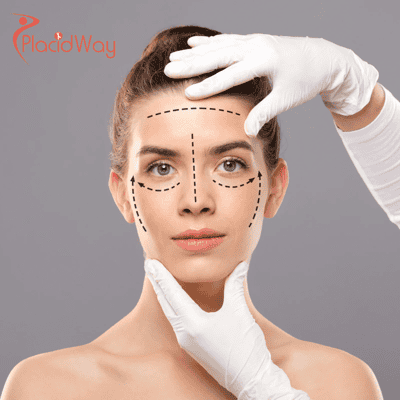
The surgeon creates incisions designed to hide post-operative scars within your natural contours. A traditional facelift incision typically begins in the hairline at the temples, continues downward around the front of the ear, and ends in the lower scalp behind the ear. If the neck requires attention, a small secondary incision may be made under the chin.
Step 3: Tissue Repositioning (The SMAS Layer)
Once the incisions are made, the surgeon carefully lifts the skin to access the underlying muscle and connective tissue. This deeper SMAS layer is lifted, tightened, and secured with internal sutures. Repositioning this foundational structure is what restores youthful volume to the cheeks and defines the jawline without relying on skin tension.
Step 4: Skin Redraping and Trimming
After the foundational tissues are secure, the overlying skin is gently redraped over the new facial contours. The surgeon then meticulously trims away any excess, sagging skin to eliminate heavy jowls and deep creases. The skin is not pulled tightly; it is simply laid smoothly over the rejuvenated framework.
Step 5: Closing the Incisions
Finally, the incisions are closed using fine sutures or surgical clips. Surgeons pay meticulous attention to closing the wounds with minimal tension to promote highly discreet scarring. Small drainage tubes may be temporarily placed under the skin to prevent fluid buildup, and your face will be gently wrapped in bandages.
Your Aesthetic Journey: A Detailed Facelift Treatment Timeline
Planning a medical trip requires an understanding of how your days will be structured. While individual schedules adjust based on flight times and clinical protocols, a typical international facelift itinerary unfolds as follows:
- Weeks Prior: Virtual Planning You will finalize your digital consultations, submit all required medical records, coordinate your travel dates, and receive explicit pre-operative instructions (such as adjusting medications and halting alcohol/tobacco use).
- Day 1: Arrival in Mexico You arrive at the destination airport, settle into your chosen hotel or recovery house, and rest. We advise against scheduling surgery on the exact day you fly to allow your body to decompress.
- Day 2: In-Person Pre-Op Consultation You will visit the medical center to meet your surgeon face-to-face. The doctor will perform a physical evaluation, draw surgical markings, review the procedure plan, and finalize paperwork. Final blood work may be drawn if needed.
- Day 3: Surgery Day You will arrive at the clinic fasting. The procedure typically takes between 2 to 5 hours. Following surgery, you will remain in the clinic's recovery area. Many packages require a one-night overnight stay at the hospital for close monitoring by nursing staff.
- Days 4–6: Initial Recovery You will rest at your hotel or recovery boutique. Swelling and bruising will peak during this window. You will attend a follow-up appointment where the surgeon will check your incisions, change bandages, and remove any drainage tubes.
- Days 7–9: Healing and Suture Removal As you begin to feel significantly better, you will have a final post-operative visit. The surgeon will likely remove the initial sutures, evaluate your healing trajectory, and issue formal medical clearance for air travel.
- Day 10+: Journey Home Once medically cleared, you safely fly home to continue your longer-term healing process in the comfort of your own environment.
Expected Recovery Time and Length of Stay in Mexico
One of the most critical aspects of medical tourism is allowing sufficient time for immediate recovery before boarding a pressurized aircraft. Rushing home too soon significantly elevates the risk of complications, such as deep vein thrombosis (DVT) or post-surgical bleeding.
Please consider the following guidelines when planning your time off work and away from home:
- Mandatory In-Country Stay: Most board-certified surgeons require patients to remain in the city for a minimum of 7 to 10 days post-surgery.
- Medical Clearance is Final: Travel clearance is entirely dependent on the treating physician’s assessment of your individual recovery. If you experience unexpected swelling or healing delays, your doctor may require you to stay slightly longer.
- Social Downtime: While you can fly home after a week to 10 days, you will likely still have visible bruising and swelling. Most patients require 2 to 3 weeks of "social downtime" before returning to professional environments or social events without obvious signs of surgery.
Post-Operative Care: Stages of Facelift Recovery and Healing
Recovering from a rhytidectomy is a gradual process requiring patience and adherence to your surgeon's specific instructions. Knowing what to expect during each stage can drastically reduce post-operative anxiety.
The First 72 Hours: This is the most intense period. Swelling and bruising will reach their maximum. You may feel a tight, numb, or tingling sensation across your face and neck. Pain is typically manageable with prescribed oral analgesics. You must sleep with your head elevated on several pillows to encourage fluid drainage and reduce swelling.
Weeks 1 to 2: Swelling begins to noticeably subside, and bruising will change colors (often turning yellow or green) before fading. Your sutures will be removed during this window. By the end of the second week, many patients feel comfortable going out in public with the aid of light, doctor-approved camouflage makeup. However, the face may still feel slightly stiff.
Weeks 3 to 4: You will start to see the beautiful, emerging contours of your new profile. Most residual swelling resolves, and normal sensations begin to return as nerve endings heal. At this stage, your surgeon may clear you to resume light cardiovascular exercise, though heavy lifting must still be avoided.
Months 3 to 6 (Long-Term Healing): While you will look fantastic within a month, the subtle, microscopic healing processes continue beneath the skin for several months. Incision lines will transition from pink to white, eventually fading into very fine, nearly imperceptible lines hidden in your natural hair and ear contours. Final, settled results are typically evaluated around the six-month mark.
Understanding the Potential Risks and Complications
All surgical procedures carry inherent risks. While choosing a highly qualified, board-certified plastic surgeon and following all pre- and post-operative instructions drastically minimizes these risks, it is vital to enter your procedure fully informed. The following list is not exhaustive, and your physician will discuss your individualized risk profile during your consultations.
- Hematoma: A collection of blood under the skin that causes swelling and pressure. It is the most common complication following a facelift and usually occurs within the first 24 hours, requiring prompt surgical drainage.
- Nerve Injury: Temporary numbness is common, but in rare cases, injury to the nerves controlling facial muscles can occur, leading to temporary or (very rarely) permanent facial weakness or asymmetry.
- Poor Scarring: While incisions are placed to be hidden, genetics and smoking can lead to thickened, red, or widened scars that may require secondary treatments.
- Infection: Surgical site infections are rare due to sterile protocols and prophylactic antibiotics, but remain a baseline surgical risk requiring medical management.
- Skin Loss (Necrosis): More prevalent in patients who smoke or use nicotine products, restricted blood supply can cause localized skin tissue to die, prolonging healing and impacting the final cosmetic result.
- Anesthesia Risks: Adverse reactions to general anesthesia range from temporary nausea to severe cardiovascular events, underscoring the necessity of comprehensive pre-operative medical clearance.
Realistic Expectations: What a Facelift Can and Cannot Achieve
Clear communication and realistic expectations are the foundations of cosmetic surgery satisfaction. A facelift is designed to restore a youthful, rested version of yourself—not to transform you into a different person or pause the natural aging process indefinitely.
- What It Can Do?: The procedure typically excels at removing severe facial tissue sagging, lifting deep folds around the nose and mouth (nasolabial folds), eliminating jowls to restore a crisp jawline, and correcting loose skin on the neck (if a neck lift is included).
- What It Cannot Do?: A facelift does not typically alter your fundamental bone structure. It does not cure fine surface wrinkles, sun damage, or age spots—these are skin quality issues better addressed by chemical peels or laser resurfacing. Furthermore, it does not address sagging eyelids or heavy brows unless paired with a blepharoplasty or brow lift.
- Longevity of Results: While results vary based on individual anatomy, genetics, and lifestyle (especially sun exposure and diet), a well-executed SMAS facelift often yields rejuvenating effects that last a decade or more. You will continue to age, but you will typically always look younger than if you had never had the procedure.
Frequently Asked Questions (FAQs)
Why is a facelift so much cheaper in Mexico than in the United States?
The cost difference is driven by macroeconomic factors, not a reduction in medical quality. Mexico has a lower cost of living, lower overhead for maintaining medical facilities, reduced administrative and malpractice insurance burdens, and favorable currency exchange rates. You receive comparable medical care at a fraction of the structural cost.
Is it safe to travel to Mexico for cosmetic surgery?
Yes, thousands of international patients travel safely to Mexico for surgery each year. Safety depends largely on choosing appropriately accredited facilities and verified, board-certified surgeons. Furthermore, utilizing established medical tourism destinations ensures access to robust infrastructure tailored to recovering patients.
Is the procedure excessively painful?
Most patients are surprised to find that a facelift involves more discomfort than severe pain. You will experience a sensation of tightness and heavy swelling. Pain is typically well-managed with oral medications prescribed by your surgeon for the first few days.
Can I combine my facelift with other procedures?
Absolutely. It is highly common to combine a facelift with an eyelid lift (blepharoplasty), a brow lift, or facial fat grafting. Combining procedures into one surgical session is often more cost-effective and means you only undergo one period of general anesthesia and one recovery phase. However, this must be cleared by your surgeon to ensure the total surgery time remains safe.
How obvious will my scars be?
Plastic surgeons are experts at concealing scars. Facelift incisions are strategically placed within the hairline and in the natural creases around the ears. Once fully healed and faded (usually over several months), these scars are typically very difficult for the average person to detect.
What happens if I have a complication after returning home?
This is why the 7 to 10-day mandatory stay is enforced—most immediate surgical complications occur within this window. If a minor issue arises once home, reputable clinics offer ongoing virtual support to advise you. For any urgent, immediate medical distress at home, you would need to visit your local healthcare provider.
Do men get facelifts in Mexico?
Yes, male facelifts are increasingly common. Surgeons utilize slightly different techniques for male patients to preserve masculine facial aesthetics, such as protecting the sideburns and ensuring a natural beard line is maintained when redraping the skin.
How do I eat immediately after the surgery?
Your jaw will feel stiff, and chewing may be uncomfortable due to swelling. Patients are usually advised to stick to a liquid or soft-food diet (soups, smoothies, yogurt, mashed vegetables) for the first few days before gradually transitioning back to a normal diet as comfort allows.
Will a facelift pull my skin too tight?
Modern techniques focus on lifting the underlying muscle layer (the SMAS) rather than relying on skin tension to achieve the lift. This deeper repositioning avoids the overly stretched, "wind-tunnel" appearance, resulting in a refreshed, natural look.
How do I know if I need a full facelift or a "mini" facelift?
A mini-facelift uses shorter incisions and focuses primarily on the lower cheeks and jowls, ideal for younger patients with early signs of aging. A full facelift addresses more advanced sagging, including the mid-face and neck. Your surgeon will recommend the best approach during your initial digital assessment based on your anatomy and goals.
Take the Next Step in Your Aesthetic Journey
Ready to explore if this affordable face lift package is right for you? Connect directly with our patient coordinators for a confidential, no-obligation medical review and secure your personalized treatment plan.
Medical Disclaimer: The information provided on this page is for general informational and educational purposes only. It does not constitute medical advice, diagnosis, or guaranteed treatment outcomes. Always consult with a qualified healthcare professional regarding any medical condition and to determine if a specific surgical procedure is appropriate for you.
References:
- American Society of Plastic Surgeons (ASPS) - Facelift Surgery Overview and Safety Information
- Mayo Clinic - Patient Guide to Face-lift (Rhytidectomy) Expectations and Risks
- StatPearls via NIH NCBI - Clinical Anatomy and Techniques of Rhytidectomy (Facelift)
- Cleveland Clinic - Medical Insights on Facelift Procedure Details and Recovery Phases
- Centers for Disease Control and Prevention (CDC) - Health and Safety Guidelines for Medical Tourism





















Share this listing