



They say the eyes are the windows to the soul, but there is no rule stating those windows need heavy, sagging drapes. If you are considering eyelid surgery (blepharoplasty) to refresh your appearance or improve your field of vision, Tijuana, Mexico, offers world-class, board-certified surgical care at a fraction of standard North American costs. Starting at an estimated $2,200, this comprehensive medical travel package covers your primary surgical needs, expert consultations, and dedicated support for an anticipated 4-to-7-day stay just across the border. Please keep in mind that final eligibility, appropriate surgical approaches, and exact pricing are determined only after a thorough, personalized medical assessment by your treating physician.
Essential Insights
- Estimated Investment: Packages begin at approximately $2,200, offering significant savings compared to typical out-of-pocket costs in the United States and Canada.
- Regulatory Standards: Surgeries are performed in modern, well-equipped facilities that adhere to the stringent guidelines set forth by the Mexican Council of Plastic, Aesthetic and Reconstructive Surgery (CMCPER).
- Ideal Candidates: Healthy adults experiencing drooping upper eyelids, puffy under-eye bags, or visual field obstruction due to excess skin are generally excellent candidates.
- Anticipated Experience: Patients should expect a minor outpatient procedure typically performed under local anesthesia with sedation, followed by a manageable recovery period with minimal acute pain.
- Travel Readiness: A valid passport is required for entry into Mexico, and most patients are medically cleared to travel home within 5 to 7 days post-operation.
Global Cost Analysis for Eyelid Surgery (Blepharoplasty)
Understanding international healthcare economics is vital for medical tourists. The table below illustrates how the cost of eyelid surgery in Tijuana compares to average out-of-pocket expenses in major source countries for medical tourism.
| Country / Region | Estimated Average Procedure Cost | Primary Travel Motivation |
|---|---|---|
| United States | $4,500 – $7,500+ | Seeking relief from high out-of-pocket costs for elective procedures. |
| Canada | $4,000 – $6,500+ | Bypassing long public health wait times for non-essential surgeries. |
| United Kingdom | £3,000 – £5,500+ | Avoiding expensive private healthcare sector premiums. |
| Tijuana, Mexico | Starting at $2,200 | High-quality, affordable care directly bordering the US. |
Detailed Treatment Investment Breakdown
The following table provides a transparent breakdown of what the base treatment encompasses. Please note that this is an estimated baseline cost; individual anatomical needs, combined procedures (such as adding lower eyelid surgery to an upper eyelid package), and final medical assessments will dictate your exact financial requirement.
| Procedure Item / Service | Estimated Cost Allocations | Service Description |
|---|---|---|
| Surgeon & Specialist Fees | $1,100 | Compensation for the primary board-certified plastic surgeon and assistants. |
| Operating Room & Facility | $600 | Use of the sterile surgical theater, equipment, and medical supplies. |
| Anesthesia Services | $400 | Local anesthesia with IV sedation administered by a certified anesthesiologist. |
| Pre-op Consultation & Post-op Visit | $100 | Initial in-person surgical assessment and follow-up suture removal. |
| Total Estimated Starting Price | $2,200 | Comprehensive base package price for international patients. |
Comprehensive Package Inclusions
To ensure a seamless experience for medical tourists, this treatment package bundles the most critical medical and logistical services required for your surgery.
- Pre-operative medical consultation and physical evaluation with your surgeon.
- Standard surgical facility fees and operating room time.
- Local anesthesia combined with intravenous sedation.
- The primary eyelid surgery (upper, lower, or both depending on finalized quote).
- Standard medical supplies, dressings, and sutures used during the procedure.
- Post-operative check-ups and in-clinic suture removal before you travel home.
Package Exclusions to Plan For
Transparency is key to medical travel. Be aware that the following items and services are generally not included in the base surgical quote and will require separate budgeting.
- International airfare or cross-border ground transportation to Tijuana.
- Hotel accommodations and meals for the duration of your recovery stay.
- Pre-operative laboratory tests (such as blood work or EKGs) if required by the surgeon.
- Post-operative prescription medications (antibiotics, pain relievers, specialized eye drops).
- Complication insurance or fees associated with unforeseen medical emergencies.
Who Benefits Most from Blepharoplasty Treatment?
Eyelid surgery is highly customizable, addressing both functional impairments and cosmetic concerns. However, not everyone is an immediate candidate for this procedure. A responsible surgical protocol requires patients to meet specific physical and psychological criteria. You may be highly suitable for this treatment if you align with the following profiles:
- Individuals with excess, drooping skin on the upper eyelids that interferes with peripheral vision.
- Patients struggling with persistent under-eye bags or puffiness that does not respond to sleep or hydration.
- Non-smokers, or those willing to strictly abstain from nicotine for several weeks before and after surgery, as smoking severely inhibits healing.
- Individuals without serious underlying ocular conditions like severe dry eye syndrome, uncontrolled glaucoma, or detached retinas.
- Patients with realistic expectations who understand that surgery rejuvenates the eye area but does not stop the natural aging process.
Essential Medical Records for Preliminary Assessment
To ensure your safety and streamline your consultation process before you travel, the surgical team will request specific health data. Providing thorough documentation allows the physician to accurately assess your candidacy and mitigate surgical risks.
- A comprehensive medical history detailing past surgeries, chronic conditions (especially thyroid disease or diabetes), and known allergies.
- A complete, current list of all medications, vitamins, and herbal supplements you are actively taking.
- Clear, well-lit, high-resolution photographs of your face and eyes from multiple angles (front, left, right profile) without makeup.
- Recent standard blood test results (Complete Blood Count and coagulation profile) if you are over a certain age or have pre-existing conditions.
- Clearance from an ophthalmologist or optometrist if you have a history of complex eye disorders or severe visual impairment.
Step-by-Step Eyelid Surgery Procedure Guide
Blepharoplasty in Mexico is a delicate, precise outpatient procedure. While the exact techniques vary depending on whether you are treating the upper eyelids, lower eyelids, or both, the general process is highly structured to prioritize patient safety and natural-looking results. Here is what to expect on the day of your surgery in Tijuana.
- Pre-Operative Marking and Preparation: Before any medication is administered, the surgeon will carefully measure and mark the exact lines and creases of your eyelids while you are sitting up. This precise mapping ensures symmetrical and natural outcomes.
- Anesthesia Administration: You will be brought into the surgical suite. The anesthesiologist will administer local anesthesia to numb the eye area completely, accompanied by intravenous (IV) sedation. This combination ensures you are comfortably relaxed and feel no pain, without the heavier risks associated with general anesthesia.
- The Upper Eyelid Incision (If Applicable): The surgeon makes a precise incision hidden within the natural fold of the upper eyelid. Through this tiny opening, they remove excess skin, reposition or remove bulging fat deposits, and occasionally tighten the underlying muscle.
- The Lower Eyelid Incision (If Applicable): For the lower eyelid, the incision is typically made just below the lash line or entirely inside the lower eyelid (a transconjunctival incision). The surgeon removes or redistributes excess fat to eliminate under-eye bags and trims away sagging skin if necessary.
- Incision Closure: Once the delicate contouring is complete, the surgeon closes the incisions using ultra-fine sutures or surgical adhesives. Because the incisions follow the natural structures of the eye, resulting scars are designed to be virtually invisible once fully healed.
- Immediate Recovery: You are moved to a comfortable recovery room where medical staff monitor your vital signs as you wake up from the sedation. Cooling compresses are applied to your eyes to minimize initial swelling.
Anticipated Treatment and Travel Timeline
Planning your medical itinerary correctly reduces travel stress and promotes better healing. A standard timeline for international patients traveling to Tijuana for eyelid surgery follows a structured path.
Day 1: Arrival and Consultation
You cross the border into Tijuana and settle into your hotel. You will attend your mandatory pre-operative consultation with the surgeon, finalize the surgical plan, review instructions, and sign consent forms.
Day 2: The Surgical Procedure
You arrive at the clinic fasting. The surgery takes roughly 1 to 2.5 hours. After a brief observation period, you return to your hotel to rest with an accompanying adult.
Days 3 to 5: Monitored Recovery
You will spend these days resting in your hotel. Expect swelling, mild bruising, and tightness. You will apply cold compresses and use prescribed eye drops. The clinic staff is available for support.
Day 6 or 7: Suture Removal and Departure
You return to the clinic for a final evaluation. The surgeon removes the non-dissolvable sutures, checks your healing progress, and provides medical clearance for your journey home.
Recommended Length of Stay
While blepharoplasty is an outpatient procedure, international travel immediately after surgery is not advised due to the risk of complications and the need for follow-up care. Keep these points in mind regarding your stay:
- A minimum stay of 5 to 7 days in Tijuana (or the immediate San Diego area) is strongly recommended.
- Travel clearance is strictly dependent on the treating physician's assessment of your initial healing and the safe removal of sutures.
- Flying too soon can increase swelling due to cabin pressure changes, so driving across the border is often the preferred initial transit method.
Navigating Recovery and Aftercare
Proper post-operative care is just as crucial to your final results as the surgical skill itself. Recovery from eyelid surgery happens in progressive stages, and patience is your best asset during this time.
The First 48 Hours: This is when swelling and bruising peak. Your eyes will feel tight, sensitive to light, and easily fatigued. You must rest with your head elevated on several pillows, strictly apply cold compresses as directed, and avoid using screens or reading to prevent eye strain.
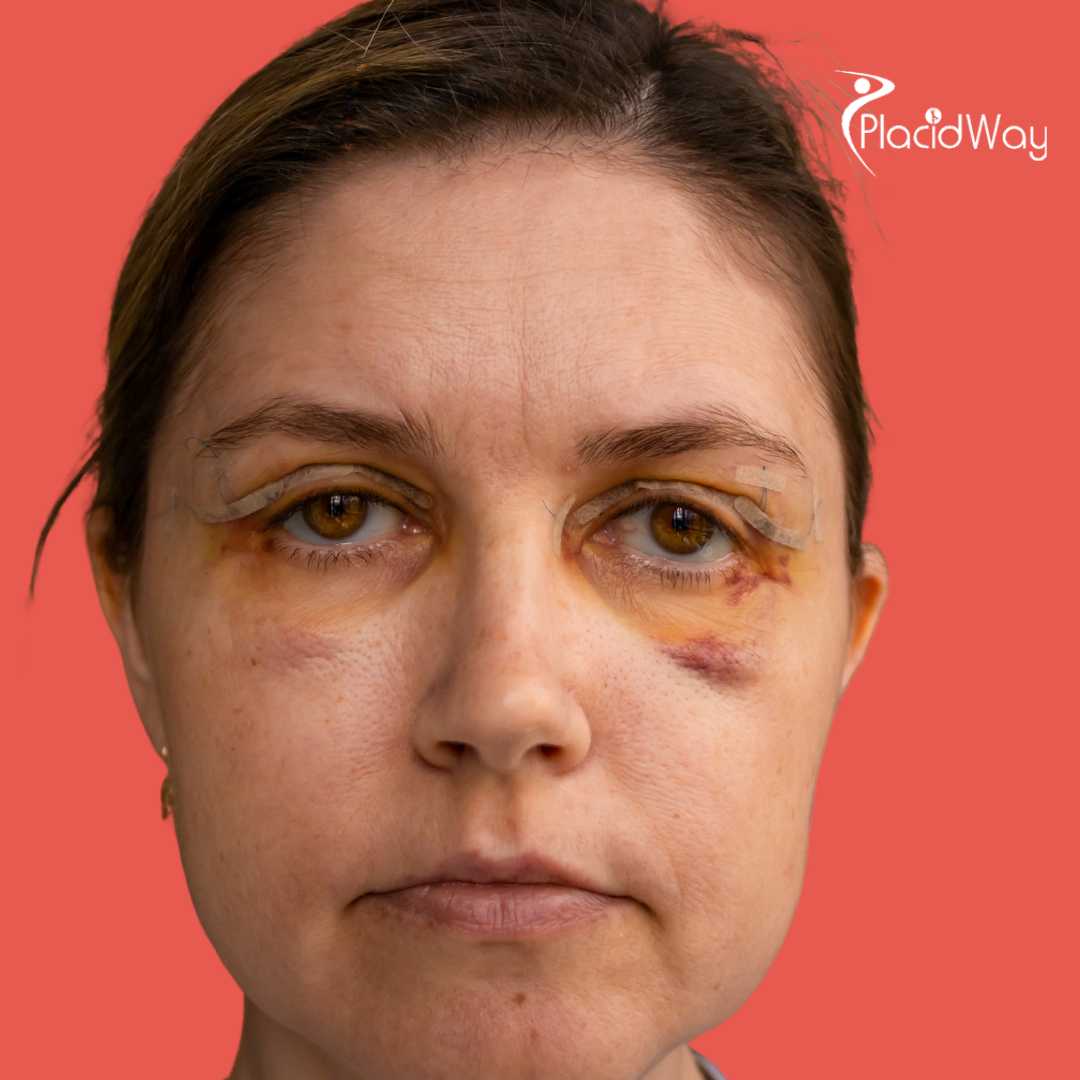
Weeks 1 to 2: Bruising will begin to fade, often turning yellow or green before disappearing. Sutures are removed during the first week, relieving much of the pulling sensation. You can usually return to non-strenuous work within 7 to 10 days, though you may still wish to wear dark sunglasses outdoors to protect your eyes from wind and sun.
Weeks 3 and Beyond: The majority of the visible swelling subsides, revealing the refreshed contours of your eyes. However, residual, subtle swelling can take up to several months to completely resolve. Contact lenses and eye makeup can typically be reintroduced after two weeks, pending your surgeon's approval. Strenuous exercise should be avoided for at least three to four weeks to prevent blood pressure spikes that could cause late-stage bleeding.
Understanding Risks and Possible Complications
All surgical procedures, regardless of how routine they seem, carry inherent medical risks. It is vital to make an informed decision. While serious complications from eyelid surgery are rare when performed by a qualified professional, they can occur. Please note this list is not exhaustive, and your physician will discuss your individualized risk profile during consultation.
- Infection and Bleeding: Standard surgical risks that can usually be managed with antibiotics and proper wound care, but rarely may require secondary intervention.
- Dry Eye Syndrome: You may experience temporary or, in rare cases, prolonged dryness and irritation of the eyes requiring lubricating drops.
- Asymmetry or Overcorrection: Healing is unpredictable. One eye may heal differently than the other, or too much skin may be removed, potentially causing difficulty closing the eyes fully (lagophthalmos).
- Scarring: While incisions are hidden in natural creases, abnormal scarring can occasionally occur.
- Vision Changes: Temporary blurred or double vision is common immediately after surgery, but permanent vision loss is an extremely rare, albeit severe, complication.
Setting Realistic Expectations for Your Results
The primary goal of blepharoplasty is to create a more rested, alert, and rejuvenated appearance by addressing redundant tissues. Patients typically experience a wider, unobstructed field of vision if upper eyelid sagging was severe. However, it is important to understand what the surgery cannot do.
- The procedure often yields long-lasting improvements, but it does not stop the aging process; skin will naturally continue to lose elasticity over the decades.
- Eyelid surgery typically does not erase crow's feet, lift drooping eyebrows, or remove dark circles caused by pigmentation rather than shadowing.
- Final results may take up to six months to fully manifest as the last micro-swelling dissipates and the tissues settle into their permanent position.
Frequently Asked Questions
Is it safe to travel to Tijuana for plastic surgery?
Yes, thousands of international patients safely travel to Tijuana daily for medical care. Safety largely depends on choosing vetted, board-certified surgeons operating in accredited facilities, and adhering to standard travel precautions when navigating the border and city.
Will the procedure be excessively painful?
Most patients report that the procedure itself is entirely painless due to the local anesthesia and sedation. Post-operative pain is typically described as mild discomfort, tightness, or a gritty sensation, which is well-managed with standard over-the-counter or prescribed pain relievers.
Can I have upper and lower eyelids done at the same time?
Yes, combining upper and lower blepharoplasty is a very common practice. Performing them together means a single recovery period and one session of anesthesia, though it will increase the total cost and surgery time.
How long do the results of a blepharoplasty last?
Results are highly durable. Upper eyelid surgery results often last 5 to 7 years or more before natural aging causes skin to drape again. Lower eyelid surgery results are rarely repeated, as the removed fat pads do not typically return.
Are the surgical scars highly visible?
Surgeons are trained to place incisions in locations where they are easily concealed—within the natural crease of the upper lid and just beneath the lash line or inside the lower lid. Once fully healed, scars are usually imperceptible to the casual observer.
What happens if I experience a complication after returning home?
Reputable clinics maintain open lines of communication for post-operative support via telehealth. However, in the event of an acute medical emergency upon returning home, you must seek immediate care at your local hospital or primary care physician.
Do I need someone to travel with me?
It is highly recommended that you travel with a responsible adult companion. You will be sedated during surgery and your vision will be temporarily blurred and swollen afterward, making independent navigation and self-care difficult in the first 48 hours.
How do I cross the border back into the US after surgery?
You will cross back through standard border checkpoints (like San Ysidro). Many clinics can arrange for a medical pass (Medical Lane) to expedite your border crossing. You must present your valid passport and may be asked to show documentation of your medical procedure.
Why is surgery so much cheaper in Mexico?
The cost difference is largely driven by macroeconomics. Mexico has significantly lower costs of living, reduced administrative overhead, lower malpractice insurance premiums, and more affordable labor costs, allowing facilities to offer care at reduced prices without sacrificing medical standards.
Ready to Explore Your Options?
Taking the first step toward refreshing your appearance doesn't have to be overwhelming. Reach out today for a pressure-free consultation to discuss your goals, verify your eligibility, and receive a customized quote tailored exactly to your anatomical needs.
Request Free QuoteMedical Disclaimer: The content provided on this page is for general informational and educational purposes only and does not constitute medical advice. Always consult with a qualified, licensed healthcare provider regarding medical conditions, personalized treatment plans, and individual surgical risks.
References
- MedlinePlus - Eyelid Surgery Medical Encyclopedia
- National Library of Medicine (StatPearls) - Blepharoplasty Techniques and Risks
- Centers for Disease Control and Prevention (CDC) - Health Information for Travelers to Mexico
- National Eye Institute - Understanding Dry Eye Syndrome
- World Health Organization (WHO) - Global Patient Safety Standards
.png)



.png)

.png)


.png)
-(1).png)
.png)
.png)








Share this listing