


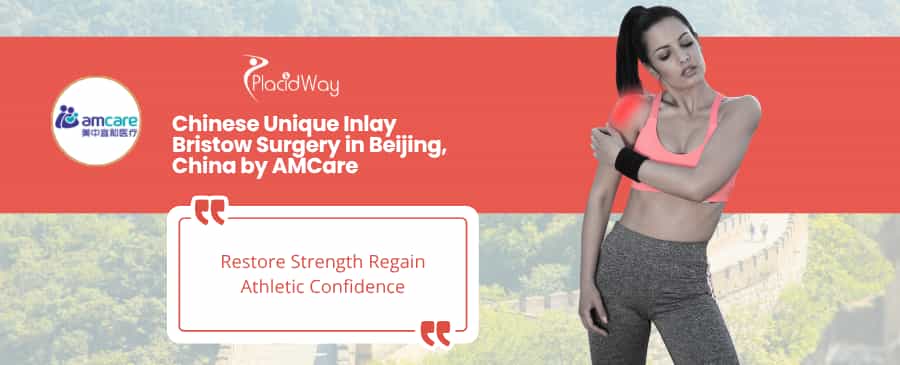
An All-Arthroscopic Solution for Professional and Active Individuals
Summary
The shoulder joint is one of the most mobile joints in the human body, but its stability is relatively poor. Consequently, the incidence of dislocation is significantly higher than that of other joints, accounting for more than 40% of all joint dislocations, and it is especially common among young, active individuals. Anterior dislocation is the most frequent type of shoulder dislocation, often resulting in structural damage that predisposes the joint to recurrent dislocation with minor trauma, a condition known as “anterior shoulder instability.”
When conservative treatment for anterior shoulder instability yields unsatisfactory results, surgical intervention is generally indicated. The coracoid transfer procedure is one of the commonly performed surgeries, particularly suitable for patients with relatively large glenoid bone defects and those with high functional or athletic demands. By transferring the coracoid process together with the conjoint tendon to the anterior inferior glenoid, the procedure provides both a bony and a soft tissue block to prevent recurrent anterior instability. Depending on the placement of the bone block, the procedure is classified as either the Bristow or the Latarjet procedure.
Traditionally, the coracoid graft has been fixed with screws. However, this approach is associated with a series of problems, including incomplete bone healing, graft resorption, graft fracture, screw loosening or breakage, and complications related to impingement with the humeral head.
To address these issues, Boileau et al. introduced the use of a suture-button device for coracoid transfer, a technique referred to as “elastic fixation” in contrast to the rigid metallic fixation provided by screws. In subsequent studies, Boileau and his team reported a bone union rate of 91% for the Latarjet procedure using elastic fixation, compared to only 74% for the Bristow procedure.
To improve the bone union rate of the traditional Bristow procedure, Professor Guoqing Cui’s research group incorporated the Inlay mortise-tenon structure, inspired by traditional Chinese architecture, into the Bristow procedure. They named this technique the “Chinese unique Inlay Bristow or Cuistow Surgery in Beijing, China using suture button fixation.”
Mid-term follow-up results have confirmed its reliability and superiority. The intraoperative creation of this Inlay structure increases the contact area between the transferred graft and the glenoid, thereby enhancing postoperative graft healing—a finding of particular clinical significance when elastic fixation is used.
Cuistow Surgery Using Suture Button Fixation – All-Arthroscopic Inlay Coracoid Transfer at AMCare, Beijing, China
Regain shoulder stability, return to the sports you love, and experience a world-class surgical solution with our exclusive shoulder instability package at AMCare – Orthopedic & Sports Medicine in Beijing.
Designed specifically for professional athletes and active individuals, this package features the all-arthroscopic Chinese Unique Inlay Bristow (Cuistow surgery) using suture button fixation—a procedure that combines the reliability of the Inlay concept with the safety of metal-free elastic fixation.
If recurrent shoulder dislocation has limited your athletic performance, caused chronic pain, or prevented you from confidently engaging in high-demand sports, this advanced approach offers a definitive pathway to recovery.
Choosing AMCare in Beijing means entrusting your shoulder to a premier institution specializing in complex arthroscopic and reconstructive procedures for athletes. Our facility combines cutting-edge technology with advanced surgical techniques to maximize graft healing, restore stability, and facilitate a rapid, safe return to sport.
For a comprehensive, transparent price, you receive not only a state-of-the-art surgical procedure but also a complete care plan—from initial consultation through surgery and structured rehabilitation—ensuring a seamless and successful medical journey in the heart of China.
Why Choose AMCare for Your Anterior Shoulder Instability Treatment as a Professional or Active Individual?
-
Access a Comprehensive Shoulder Instability Package in Beijing for the all-arthroscopic Cuistow surgery using suture button fixation at a fixed, transparent price.
-
Receive Treatment at AMCare – Orthopedic & Sports Medicine, a leading facility specializing in complex shoulder reconstruction and sports injury management. Prof. Guoqing CUI is the pioneer of the Cuistow procedure, with extensive experience in treating elite athletes and patients with significant glenoid bone loss.
-
Benefit from an Innovative, Athlete-Focused Surgical Solution that combines the traditional Bristow procedure with an Inlay (mortise-tenon) structure, dramatically increasing graft-to-glenoid contact area, promoting superior bone healing, and avoiding metal screw-related complications—critical advantages for those who demand long-term shoulder health and high-level performance.
-
Receive Treatment Personally Performed by Prof. Guoqing Cui, the creator of the Cuistow procedure. Prof. Cui has successfully performed this surgery on dozens of athletes from the Chinese National Team and served as a team physician at the recently concluded Milan Winter Olympics, where the athletes under his care won multiple Olympic gold medals.
-
Benefit from Elite-Level Rehabilitation Guidance under the direct supervision of Prof. Cui, delivered by a gold medal physiotherapist appointed by the General Administration of Sport of China. This rehabilitation specialist has provided care for numerous current and retired members of the Chinese National Olympic Team, ensuring that your preoperative preparation and postoperative recovery follow the same protocols used by world-class athletes.
-
Combine Your Treatment with a Recovery in Beijing, China, a vibrant cultural hub, while receiving world-class postoperative care and structured rehabilitation tailored to athletes.
Unpacking the Cost of Cuistow Surgery Using Suture Button Fixation at AMCare, Beijing
We believe in transparent, affordable access to superior surgical care. Our all-inclusive shoulder instability package at AMCare is priced to deliver unparalleled value, combining the expertise of a pioneering surgeon with advanced arthroscopic technology.
This approach allows you to budget with confidence, avoiding the hidden fees often associated with complex shoulder surgery in other countries.
| Category | Details | Value |
|---|---|---|
| Procedure | Cuistow (All-Arthroscopic Inlay Coracoid Transfer with Suture Button Fixation) | Advanced Shoulder Stabilization Surgery |
| AMCare - Beijing, China Cost | Comprehensive Surgical Package | $49,999 |
| Estimated USA Cost | Comparable Procedure in the United States | $450,000 |
| Estimated UK Cost | Comparable Procedure in the United Kingdom | $300,000 |
| Your Potential Savings | Estimated Maximum Savings Compared to USA Pricing | Up to $400,000+ |
Note: Price may vary depending on the complexity of the procedure and the patient’s specific medical condition. The package covers the complete treatment, including the arthroscopic procedure, implant materials, and all in-hospital care.
What’s Included in the Cuistow Surgery Using Suture Button Fixation Package?
-
Comprehensive preoperative consultations and diagnostic imaging (shoulder X-rays, 3D CT with glenoid bone loss assessment, MRI, and preoperative blood work).
-
Surgeon, anesthesiologist, and full surgical team fees, including a dedicated shoulder and sports medicine specialist.
-
All costs related to the all-arthroscopic Cuistow procedure with suture button fixation, including:
-
Arthroscopic graft harvesting and preparation.
-
Creation of the Inlay bone slot (mortise) in the glenoid.
-
Coracoid graft transfer and suture button fixation with additional high-strength suture reinforcement.
-
Capsular and labral repair (if indicated) using suture anchors for enhanced stability.
-
-
Hospital stay in a private room (typically 1–2 nights post-surgery).
-
Prescribed medications and multimodal pain management during your hospital stay.
-
Initial postoperative physical therapy and rehabilitation consultation.
-
All necessary surgical implants, including the suture button device, high-strength sutures, and any required suture anchors.
-
Follow-up consultations with Prof. Cui before discharge, including final imaging to confirm graft positioning and healing.
-
Detailed home exercise program and sport-specific return-to-play protocol.
What’s Not Included in the Cuistow Package?
-
International airfare to and from Beijing, China.
-
Costs associated with visa application and processing.
-
Accommodation for you or any companions outside of the hospital stay.
-
Daily meals and personal expenses (meals for the patient are typically provided during hospitalization).
-
International travel and medical complications insurance.
-
Extended outpatient physical therapy or rehabilitation beyond the initial postoperative consultation.
A Deeper Look into Cuistow Surgery Using Suture Button Fixation – An Athlete-Centered Innovation
The Chinese Unique Inlay Bristow (Cuistow surgery) using suture button fixation represents a significant advancement in the surgical management of anterior shoulder instability, particularly for patients with glenoid bone loss and high athletic demands.
This innovative technique addresses the limitations of traditional coracoid transfer procedures—namely, graft nonunion and metal screw-related complications—by incorporating an Inlay (mortise-tenon) structure inspired by traditional Chinese architecture, combined with modern elastic fixation using a suture button device.
1. Origins and Development of Elastic Fixation
1.1. Limitations of Traditional Screw Fixation
In traditional coracoid transfer procedures, the transferred coracoid graft is most often fixed with screws. The biomechanical stability and clinical outcomes of screw fixation are well established.
However, being metallic implants, screws can give rise to a range of related complications.
A systematic review by Butt et al. found that the most common complications after coracoid transfer surgery were directly or indirectly caused by screws; analyzing 30 studies involving 1,658 patients, the incidence of screw-related complications was 6.5%.
The limitations and complications associated with screw fixation can be summarized as follows:
-
Excessive postoperative shoulder activity may lead to screw problems such as bending, breakage, loosening, or migration—a risk that is particularly pronounced in professional athletes.
-
During surgery, it is difficult to precisely control the length and depth of screw placement.
-
Screws that are too long may injure nerves or irritate adjacent soft tissues.
-
Screws that are too short may provide inadequate fixation, leading to graft nonunion or postoperative graft displacement.
-
Arthroscopic coracoid transfer is technically challenging and prone to suboptimal screw positioning.
1.2. Origins, Development, and Advantages of Elastic Fixation
To address the shortcomings of traditional screw fixation, Boileau et al. introduced an elastic fixation technique using a suture-button device in 2012.
Key findings included:
-
Bone union rate of 91% after Latarjet procedure with elastic fixation.
-
More accurate graft positioning.
-
Avoidance of screw-related complications.
-
Bone union rate of 95% at minimum 2-year follow-up.
-
Postoperative recurrence rate of 3%.
-
93% of patients returned to sports.
Additional studies demonstrated:
-
Satisfactory clinical outcomes.
-
Good glenoid remodeling.
-
Graft union rates up to 96.7%.
-
No significant biomechanical difference between elastic fixation and screw fixation.
This makes elastic fixation especially important for athletes who require a reliable, metal-free construct.
1.3. Limitations of Elastic Fixation
Compared with screw fixation, some authors have noted drawbacks regarding graft union rates and postoperative shoulder stability.
Reported findings include:
-
Longer graft union time with elastic fixation.
-
Bone union rate of only 41% at 3 months in one study.
-
Higher recurrence rate in elastic fixation compared with screw fixation (8.3% vs. 2.5%).
-
However, no reoperations due to complications in the elastic fixation group.
-
Screw fixation reduced recurrent dislocation risk but sometimes required hardware removal.
Further long-term studies are still needed.
1.4. Differences in Outcomes Based on Elastic Fixation Techniques
Different elastic fixation techniques include:
-
One suture button vs. two suture buttons.
-
Use of tensioner vs. manual knot tying.
Findings:
-
Bone union rate improved from 74% to 94% when a tensioner was used.
-
Two suture buttons increased surgical complexity and operating time without added clinical advantage.
2. The Cuistow Surgery Using Suture Button Fixation
2.1. Research Progress on the Cuistow Procedure
Classic coracoid transfer procedures are divided into Bristow and Latarjet procedures.
Compared with the Latarjet procedure, the Bristow procedure:
-
Has shorter operative time.
-
Causes less local structural disruption.
-
Has a higher rate of return to sports.
However, the Bristow procedure traditionally has lower graft union rates.
To improve outcomes, Professor Guoqing Cui’s team developed the Cuistow procedure using an Inlay mortise-tenon structure.
Key modifications include:
-
Coracoid shaped into a bone pillar.
-
Matching bone slot created in anterior inferior glenoid.
-
Increased contact area and initial stability.
-
Improved bone union potential.
Biomechanical testing confirmed higher initial stability compared with classic coracoid transfer.
Clinical outcomes showed:
-
92.1% graft union at 3 months.
-
96.4% graft union at 1 year.
-
No recurrence of shoulder instability at final follow-up.
-
94.4% return to sports.
-
86.6% return to pre-injury sport level.
2.2. The Cuistow Procedure with Suture Button Fixation
Studies showed that all-arthroscopic Cuistow with suture button fixation achieved:
-
96.4% graft union rate at final follow-up.
-
Comparable outcomes between screw fixation and suture button fixation.
-
Lower graft resorption rate with suture button fixation.
-
Lower implant-related complication rate.
The technique includes:
-
High-strength suture reinforcement.
-
Capsule and labrum plication.
-
All-suture anchor fixation.
-
Extracapsular graft positioning.
Technical refinements:
-
Glenoid bone slot diameter typically 10 mm.
-
Depth typically 7 mm.
-
Bone pillar dimensions 10 mm × 7 mm.
-
Increased slot length to 9 mm in selected patients to improve stability.
3. Summary and Future Perspectives
Suture button fixation (elastic fixation) is a novel approach for coracoid transfer that avoids metal implant-related complications associated with traditional screw fixation.
The Cuistow surgery using suture button fixation represents a solution to improving bone union rates when elastic fixation is used.
As a Chinese innovation in coracoid transfer, this procedure has demonstrated:
-
Biomechanical stability.
-
High bone healing rates.
-
Low recurrence rates.
-
Promising outcomes for athletes and active individuals.
Longer-term follow-up studies are still required.
Core Principles of Cuistow Surgery Using Suture Button Fixation
Enhanced Graft Healing (The Inlay Concept)
-
Precisely shaped bone slot (mortise) in the glenoid neck.
-
Coracoid graft shaped into matching tenon.
-
Up to 300% increase in graft-to-glenoid contact area.
-
Exceptional initial stability.
-
Rapid and robust bone healing.
Suture Button Fixation to Avoid Metal Complications
-
Eliminates screw loosening and breakage.
-
Avoids hardware impingement.
-
Reduces need for secondary surgery.
-
Ideal for athletes and active individuals.
Biomechanical Superiority
-
Higher initial stability than classic Bristow procedure.
-
Protects graft during early healing.
-
Promotes superior bone remodeling.
Combined Soft Tissue Restoration
-
Capsular and labral repair with suture anchors.
-
Capsule imbrication using high-strength sutures.
-
Extracapsular graft positioning.
-
Better anatomical restoration.
Why Cuistow with Suture Button Fixation Is the Ideal Choice for Athletes
Traditional Bristow and Latarjet procedures have limitations.
Screw fixation carries:
-
6–10% complication rate.
-
Hardware failure risk.
-
Graft nonunion risk.
Elastic fixation avoids metal complications but historically had lower bone healing rates.
The Cuistow procedure solves this problem by:
-
Creating the Inlay bone interface.
-
Achieving bone healing rates exceeding 96%.
-
Eliminating metal-related complications.
-
Providing safer, more reliable return to sport.
The AMCare Advantage for Your Shoulder Instability Surgery in Beijing
-
State-of-the-Art Arthroscopic Facility.
-
High-definition 4K visualization systems.
-
Advanced radiofrequency devices.
-
Dedicated shoulder arthroscopy instrumentation.
-
Treatment by Prof. Guoqing CUI.
-
Expertise in elite athlete care.
-
English-speaking case managers.
-
Assistance with travel logistics.
-
Structured sport-specific rehabilitation.
-
Gold medal physiotherapist supervision.
-
Graft union rate over 96%.
-
Recurrence rate less than 2%.
-
Return-to-sport rate exceeding 94%.
Your Day-by-Day Guide to Cuistow Surgery Using Suture Button Fixation in Beijing
Day 1
Arrival in Beijing and transfer to accommodation.
Day 2–3
Preoperative consultation, imaging, evaluations, and anesthesiology meeting.
Day 4
All-Arthroscopic Cuistow Procedure with Suture Button Fixation.
Day 5–6
Hospital recovery, pain management, wound care, and early rehabilitation.
Day 7–10
Outpatient follow-up, imaging confirmation, rehabilitation consultation, and sport-specific protocol planning.
Day 11–14
Final consultation, discharge summary, wound clearance, and recovery instructions.
Day 14
Departure with customized rehabilitation plan.
Achieving Stability: What to Expect After Your Cuistow Procedure
Primary outcomes include:
-
Restored shoulder stability.
-
Return to sports and daily activities.
-
Reduced risk of recurrent dislocation.
Recovery timeline:
-
0–6 weeks: Sling protection and gentle exercises.
-
6–12 weeks: Progressive strengthening.
-
3–6 months: Sport-specific drills and gradual activity return.
-
6–12 months: Full return to contact and overhead sports.
Patient satisfaction rates are exceptionally high.
Discover the Benefits of Choosing Beijing, China for Your Shoulder Stabilization Surgery
-
Exceptional affordability.
-
Savings of over 80% compared to US, Canada, or Europe.
-
Modern healthcare infrastructure.
-
Access to Prof. Guoqing CUI.
-
No waiting lists.
-
Opportunity to experience Beijing’s culture and attractions.
-
Easy international travel access.
Your Questions Answered: Cuistow Surgery Using Suture Button Fixation in Beijing
1. How long do I need to stay in Beijing for the Cuistow procedure?
Typically 10–14 days.
2. Is the Cuistow procedure painful?
General anesthesia is used. Postoperative pain is managed with nerve blocks and multimodal pain management.
3. What are the advantages of suture button fixation over screws for athletes?
It eliminates hardware complications and avoids secondary surgery for hardware removal.
4. How does the Cuistow procedure achieve such high bone healing rates?
The Inlay mortise-tenon structure significantly increases graft-to-glenoid contact area and stability.
5. Will I need a blood transfusion?
Blood loss is minimal and transfusion is rarely required.
6. How much correction or improvement can I expect?
Most patients achieve significant improvements in stability and function with recurrence rates below 2–5%.
7. When can I return to my sport?
-
Non-contact sports: 3–6 months.
-
Contact and overhead sports: 6–12 months.
8. How do I handle communication if I don't speak Chinese?
AMCare provides English-speaking staff, case managers, and interpreters.
9. Can a family member stay with me?
Yes. Nearby accommodation options are available for companions.
10. What makes the AMCare shoulder instability package in Beijing so affordable?
Lower operational costs in China allow world-class care at significantly reduced pricing.
11. Why choose Cuistow with suture button fixation over a standard Latarjet or Bristow?
It combines:
-
Superior bone healing.
-
Metal-free fixation.
-
High graft union rates.
-
Reduced hardware complications.
-
Reliable return to sport for professional and active individuals.
Restore Shoulder Stability with Cuistow Surgery in Beijing
For athletes and active individuals struggling with recurrent shoulder dislocation, the Chinese Unique Inlay Bristow procedure using suture button fixation represents one of the most advanced shoulder stabilization solutions available today.
By combining superior graft healing, metal-free fixation, advanced arthroscopic techniques, and elite rehabilitation protocols, AMCare – Orthopedic & Sports Medicine provides a comprehensive pathway back to confident movement and high-level performance through Shoulder Surgery in Beijing China.
Under the expertise of Prof. Guoqing Cui, patients gain access to a pioneering surgical approach specifically designed for long-term shoulder stability, athlete safety, and successful return to sport.
-Using-Suture-Button-Fixation-in-Beijing,-China-by-AMCare.jpg)




.png)
.png)

.png)

.png)








Share this listing