
Request a video call
Confirm Your Virtual Consultation
Dr. Gil's Arrhythmia Care in Murcia, Spain Profile Overview
Dr. Gil's Arrhythmia Care provides cardiology and electrophysiology care in Murcia, Spain, with Dr. Ignacio Gil Ortega as the treating cardiologist and electrophysiologist. Care at HLA La Vega covers catheter ablation, electrophysiology studies, pacemakers, implantable defibrillators and rhythm monitoring. The service also includes assessment of fainting and inherited cardiac conditions. For patients experiencing palpitations or considering a procedure, the consultation connects their symptoms and previous test results with suitable diagnostic or treatment options. Care decisions depend on the rhythm diagnosis, overall heart health and individual risks.
Specialist Heart Rhythm Assessment in Murcia
Dr. Gil's Arrhythmia Care focuses on the heart’s electrical system: why a heartbeat becomes too fast, too slow or irregular, and which intervention fits the underlying problem. Dr. Gil Ortega trained in medicine at the University of Murcia and completed his cardiology specialization in Salamanca. His consultation location is HLA La Vega in Murcia.
Who May Benefit from an Electrophysiology Consultation?
- People with recurrent palpitations, a diagnosed arrhythmia or unexplained fainting.
- Patients considering catheter ablation, cardioversion or an implanted heart device.
- People who need assessment of an existing pacemaker or defibrillator.
- Families seeking evaluation after an inherited cardiac condition has been identified.
Practical Facts for Cardiology Patients in Murcia
Arrhythmia Treatment Costs in Murcia
A public price list was not available for Dr. Gil's Arrhythmia Care at the time of review. Request an individualized USD quote based on your diagnosis and proposed care. Consultation, diagnostic testing, ablation and device implantation have different cost components; a single price should not be assumed to cover them all.
What Your Written USD Quote Should Cover?
- Consultation and any planned ECG, monitoring, imaging or laboratory tests.
- For a procedure: electrophysiologist, hospital, sedation or anesthesia, equipment and anticipated admission.
- For an implant: exact device and leads, implantation, programming and monitoring arrangements.
- Follow-up appointments, medicines, possible additional treatment and any excluded charges.
The quote should identify the procedure, treatment location, inclusions, exclusions and validity period.
Heart Rhythm Tests and Device Treatments in Murcia
Catheter Ablation Options in Murcia
Catheter ablation treats selected arrhythmias by interrupting abnormal electrical pathways. Ablation options at Dr. Gil's Arrhythmia Care cover the following rhythm-specific approaches. The exact technique is selected after assessment; these are not interchangeable treatments.
Pulmonary Vein Isolation for Atrial Fibrillation
Pulmonary vein isolation targets electrical triggers around the veins entering the left atrium. It is a catheter ablation approach for selected patients with atrial fibrillation. Symptoms and rhythm control may improve, but recurrence and repeat treatment remain possible.
Atrial Tachycardia and Atrial Flutter Ablation
These procedures target an abnormal focus or electrical circuit in the upper heart chambers. The treatment plan depends on the rhythm mechanism and whether earlier surgery or ablation has changed the atrial tissue.
AV Nodal Reentrant Tachycardia Ablation
For AV nodal reentrant tachycardia, ablation usually targets the slow pathway involved in the electrical circuit. Its proximity to normal conduction tissue makes a discussion of heart-block and pacemaker risk important.
Accessory Pathway Ablation
An extra electrical connection between the upper and lower chambers can cause rapid heart rhythms, including those associated with Wolff-Parkinson-White syndrome. Ablation targets that additional connection after its location and behavior have been assessed.
Idiopathic Premature Ventricular Contraction Ablation
Frequent premature ventricular contractions may originate in the right or left ventricle. Ablation may be considered when symptoms or effects on heart function justify intervention. Assessment first determines the rhythm burden and whether structural heart disease is present.
Ventricular Tachycardia Ablation
Ventricular tachycardia ablation targets the tissue or circuits responsible for fast rhythms in the lower chambers. Some patients have underlying heart damage or scarring. Ablation may form part of a wider plan that also includes medication or an ICD.
Inherited Heart Disease Assessment in Murcia
Services at Dr. Gil's Arrhythmia Care also include evaluation of familial cardiac diseases, including family screening, genetic counseling, genetic diagnosis and risk assessment. This is relevant when a close relative has a known inherited heart condition or a concerning history of serious rhythm events.
- Family assessment may include ECG and echocardiography, with additional testing selected according to the suspected condition.
- Genetic counseling explains what a test can and cannot establish, including implications for relatives.
- Follow-up and preventive treatment depend on the condition and individual risk; an ICD is considered only when clinically indicated.
Cardiology Specialist at Dr. Gil's Arrhythmia Care in Murcia
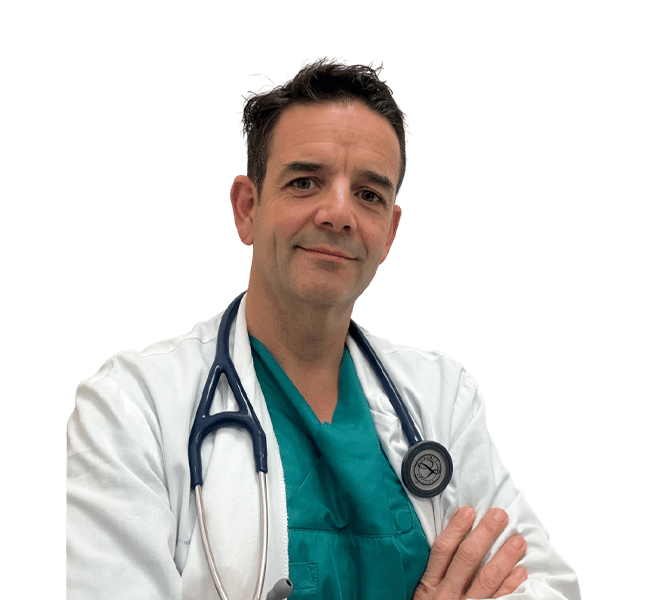
Dr. Ignacio Gil Ortega
Cardiologist and Electrophysiologist
Dr. Gil Ortega’s clinical focus includes arrhythmia diagnosis, catheter ablation, syncope and implanted cardiac devices. After medical studies at the University of Murcia, he completed cardiology training at Hospital Clinico Universitario de Salamanca. His professional biography also records a doctorate from the University of Salamanca and arrhythmia fellowship training at Hospital Universitario Virgen de la Arrixaca. He consults at HLA La Vega in Murcia.
- Cardiology residency: Hospital Clinico Universitario de Salamanca, 2001–2006.
- Arrhythmia fellowship: Hospital Universitario Virgen de la Arrixaca, 2006–2008.
- Previously responsible for the Arrhythmia Unit at Hospital Santa Lucia, Cartagena, 2008–2024.
Electrophysiology Technology and Device Planning in Murcia
Mapping and Rhythm Recording
3D mapping helps relate electrical activity to heart anatomy during electrophysiology procedures. Holter recorders and insertable monitors serve a different purpose: documenting intermittent rhythm disturbances over time. A particular system or test is chosen for the clinical question.
Implanted Device Selection
Device planning considers pacing needs, dangerous-rhythm risk and whether resynchronization is appropriate. For an MRI-conditional system, scan eligibility depends on the complete implanted system and the required scanning conditions; the label does not mean every MRI is automatically suitable.
Useful Questions for Your Device Consultation
- Which device and lead configuration fits my diagnosis, and why?
- Where will the procedure take place, and what anesthesia or sedation is planned?
- Who will provide programming, remote monitoring and urgent support after I return home?
Preparing for Arrhythmia Treatment in Murcia
The following is preparation guidance, rather than a fixed clinic protocol. Your actual tests, admission and treatment schedule depend on the assessment.
- 1.Organize Your Records. Prepare recent ECGs, monitoring reports, imaging, previous procedure notes and your current medicine list. Include a symptom timeline and relevant family history.
- 2.Discuss the Rhythm Diagnosis. Review which arrhythmia is established, whether further testing is needed and how observation, medicines, a procedure or a device compare for your case.
- 3.Review the Proposed Care Plan. Obtain a written quote, treatment location, preparation instructions and anticipated follow-up. Do not stop anticoagulants or other prescribed medicines without specific clinical instructions.
- 4.Arrange Continuing Care. Agree on recovery advice, medication review, device checks where applicable and how records will reach your cardiologist at home.
Arrhythmia Treatment Suitability and Aftercare in Murcia
Choosing an Appropriate Treatment
Treatment depends on the rhythm diagnosis, symptoms, heart function, prior treatment and other medical conditions. Observation or medicines may be appropriate for some patients. An invasive procedure requires an individual discussion of expected benefit, alternatives and complications.
Important Procedure Risks
- Catheter ablation can cause bleeding, infection, blood vessel or heart injury, clots, stroke or new rhythm problems. Risks vary by the ablation site and procedure.
- Pacemaker and ICD implantation can involve infection, bleeding, lead displacement or lung injury. Devices require checks and may eventually need replacement.
- Cardioversion has clot-related and rhythm-related risks. Sedation and anesthesia also require assessment.
Follow-up After Returning Home
Arrange a discharge summary, medicine plan and follow-up schedule. After atrial fibrillation ablation, blood-thinner decisions depend on stroke risk and clinical guidance, not simply whether symptoms have stopped. Device patients should retain their identification card and arrange access to device checks.
Severe chest pain, collapse, stroke symptoms or marked breathing difficulty require urgent local medical attention rather than an online appointment request.
Planning a Cardiology Visit to Murcia, Spain
The consultation address is HLA La Vega, C/ Roman Alberca S/N, 30008 Murcia, Spain. Match the appointment confirmation to the exact consultation and procedure location before arranging accommodation or transport.
- Allow for assessment before assuming a procedure will take place during the same trip.
- For treatment requiring sedation, discuss an accompanying adult, discharge transport and recovery arrangements.
- Request individualized advice on travel after a procedure; a general recovery estimate is not fitness-to-fly clearance.
- Check entry documentation with the Spanish consulate or embassy responsible for your nationality and country of residence.
Travel, accommodation, interpretation and airport transfers should be treated as separate arrangements unless expressly included in the written offer.
Arrhythmia Care Questions for Patients Visiting Murcia
Which Arrhythmias Are Assessed at Dr. Gil's Arrhythmia Care in Murcia?
Dr. Gil's Arrhythmia Care assesses atrial fibrillation, atrial flutter, supraventricular tachycardia, ventricular arrhythmias, slow heart rhythms and unexplained fainting. The appropriate test or treatment depends on the diagnosis. A consultation can also address existing cardiac devices and a family history of inherited heart disease.
How Much Does Arrhythmia Treatment in Murcia Cost?
No verified public price list was available for Dr. Gil's Arrhythmia Care. Request a written USD quote for the specific consultation, test or procedure. For hospital treatment, clarify specialist fees, anesthesia, equipment, admission, implanted hardware where relevant, and follow-up rather than assuming one figure includes every charge.
Does Every Patient with Atrial Fibrillation Need Ablation?
No. Atrial fibrillation management may involve stroke prevention, medicines to control rate or rhythm, treatment of associated conditions, and procedures when appropriate. Dr. Gil Ortega’s assessment should establish how your symptoms, heart health and treatment history affect the options. Ablation does not guarantee permanent freedom from arrhythmia.
Can Ablation Replace Blood-Thinning Medicine?
Ablation should not be regarded as an automatic reason to stop anticoagulants. In atrial fibrillation, ongoing blood-thinner treatment depends on stroke risk and the treating clinician’s guidance, including after apparently successful ablation. Review the discharge plan carefully and do not independently stop or change prescribed medication.
How Are a Pacemaker and an ICD Different?
A pacemaker mainly supports a heartbeat that is too slow. An ICD can detect and treat dangerous ventricular rhythms; some systems also provide pacing. Cardiac resynchronization addresses coordination of the heart’s contraction in selected patients. The correct system depends on clinical findings, rather than a preference for a particular device.
What Can Monitoring Show When Palpitations Are Infrequent?
Holter and event monitors record rhythm outside the consultation. When episodes are uncommon, an insertable cardiac monitor may help capture a symptom-related event over a longer period. Dr. Gil's Arrhythmia Care offers these monitoring approaches; the duration and device are chosen according to your symptoms and diagnostic needs.
Can Implanted Devices Be Followed Remotely After Treatment?
Remote monitoring is among the services at Dr. Gil's Arrhythmia Care for compatible implanted devices. Before returning home, establish the monitoring provider, connection requirements, alert arrangements and local device clinic. Remote transmissions supplement clinical follow-up; they do not mean every adjustment can be made remotely or provide a substitute for emergency assessment.
How Should International Patients Prepare for a Murcia Consultation?
Bring your ECGs, rhythm recordings, imaging reports, medication list and previous cardiac procedure records. Device patients should also bring their identification card and recent interrogation report. Establish the appointment location, language arrangements, proposed costs and follow-up needs before travel. Any procedure date and recovery stay depend on individual assessment.
PLAN YOUR CARE WITH PLACIDWAY
Plan Arrhythmia Care at Dr. Gil's Arrhythmia Care in Murcia
Explore assessment and treatment options at Dr. Gil's Arrhythmia Care in Murcia with Dr. Ignacio Gil Ortega. Share your rhythm diagnosis, symptoms and previous test results to request information about relevant consultations, catheter ablation or implanted devices, together with an individualized cost estimate and follow-up arrangements.
Important Medical Information
This information is for general education and does not replace an examination by a licensed cardiologist. Treatment suitability, risks and costs vary from person to person. PlacidWay lists providers but does not perform medical procedures; your treatment agreement is directly with the provider.
Dr. Gil's Arrhythmia Care in Murcia, Spain Certificates

Location

About Medical Center
- Speciality: Heart Care/Surgery
- Location: Hospital HLA La Vega Murcia, Spain , Murcia , Spain
- Overview: Dr. Gil's Arrhythmia Care provides cardiology and electrophysiology in Murcia, Spain, with Dr. Ignacio Gil Ortega, including arrhythmia assessment, ablation, cardiac devices and rhythm monitoring.
























Share this listing