


Comprehensive Guide to Treatment of Intervertebral Hernia Without Surgery
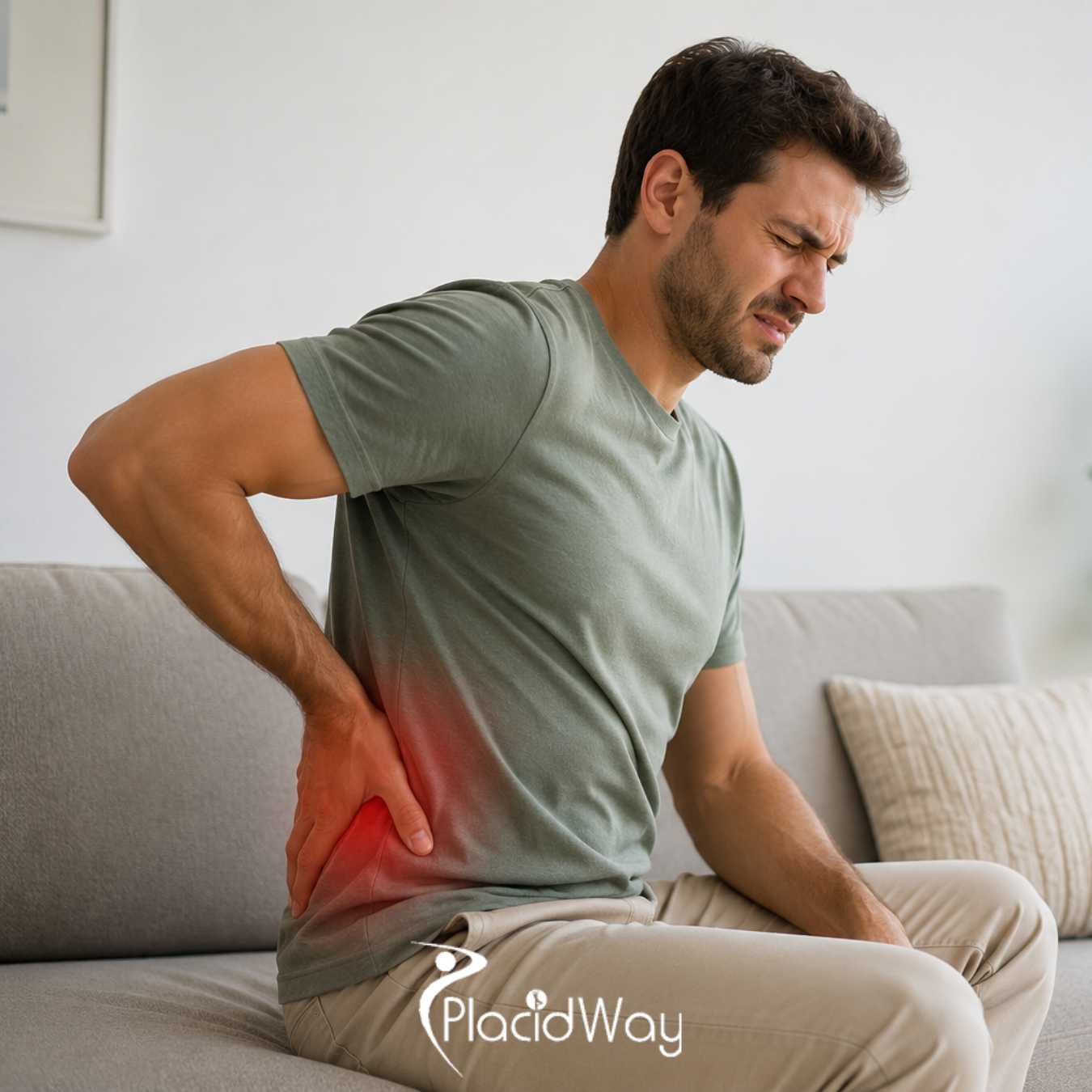
Living with chronic back pain can be deeply debilitating, but finding an effective treatment of intervertebral hernia without surgery laser spine center is changing lives worldwide. Many patients mistakenly believe that invasive, high-risk open back surgery is the only path to lasting relief from a slipped or ruptured spinal disc.
Fortunately, modern medical advancements have pioneered minimally invasive and completely non-surgical alternatives. By utilizing cutting-edge percutaneous laser disc decompression and targeted laser therapy, you can successfully eliminate severe nerve compression, restore your structural mobility, and reclaim your active lifestyle without facing the lengthy, painful recovery associated with traditional operations.
Video Chapters & Quick Navigation
The Anatomy of Back Pain: Understanding Intervertebral Hernias
To fully grasp the benefits of non-invasive treatments, patients must first understand the underlying biomechanics of their pain. The human spine is an incredibly complex structure composed of vertebrae separated by soft, shock-absorbing discs. As highlighted at , these intervertebral discs feature a tough outer layer called the annulus fibrosus and a gel-like inner core known as the nucleus pulposus.
When the spine undergoes severe trauma, repetitive stress, or age-related degeneration, the tough outer layer can crack or tear. This micro-trauma allows the inner gel to push outward, creating what medical professionals diagnose as a herniated or bulging disc. When this displaced tissue encroaches upon the sensitive spinal canal, it inevitably compresses nearby nerve roots.
This nerve compression is the primary culprit behind debilitating conditions such as severe sciatica, chronic lumbar pain, and cervical radiculopathy. Patients frequently report sharp, shooting pain radiating down their legs or arms, accompanied by numbness, tingling, and a profound loss of muscular strength. Because the nerve root is highly sensitive, even a millimeter of disc protrusion can cause agonizing discomfort that severely limits daily activities.
The Progression of Spinal Disc Degeneration
Intervertebral hernias rarely occur overnight without warning. They are typically the final stage of a progressive degenerative disc disease process. Initially, a disc may simply lose its hydration and elasticity, a condition known as disc desiccation.
As the structural integrity of the disc weakens, it may bulge evenly around its perimeter. Without proper slipped disc conservative management, this bulge can evolve into a focal protrusion or a true herniation. By identifying the problem early through advanced MRI diagnostics, spine specialists can intervene with conservative or non-surgical methods before the disc completely ruptures.
The Severe Limitations and Hidden Risks of Traditional Open Spine Surgery
For decades, orthopedic surgeons relied heavily on highly invasive procedures such as laminectomies, microdiscectomies, and complex spinal fusions to treat herniated discs. As discussed in the video at , these traditional operations require large incisions, the cutting of essential back muscles, and the physical removal of bone and disc tissue.
While open surgery can successfully relieve nerve pressure in certain severe cases, it comes with a staggering array of risks. General anesthesia alone poses significant cardiovascular and respiratory hazards. Furthermore, the extensive tissue trauma required to access the spine often leads to massive blood loss and a high risk of hospital-acquired postoperative infections.
Perhaps the most concerning risk of traditional spine surgery is the development of epidural fibrosis, which is the formation of heavy scar tissue around the delicate nerve roots. This scar tissue can bind to the nerves, causing permanent pain that is often worse than the original hernia. This phenomenon is so common that the medical community has coined a specific term for it: Failed Back Surgery Syndrome (FBSS).
The Financial and Physical Toll of Extended Recovery
Beyond the immediate surgical risks, the recovery timeline for a traditional spinal fusion or laminectomy is notoriously long and arduous. Patients are typically hospitalized for several days, followed by weeks or even months of strict bed rest and intensive physical rehabilitation.
This prolonged recovery period results in substantial lost wages and a drastic reduction in the patient's quality of life. The massive out-of-pocket costs for hospital stays, anesthesiologists, and extended physical therapy make traditional surgery an incredible financial burden, further driving the demand for a safer, more cost-effective treatment of intervertebral hernia without surgery.
Decoding Non-Surgical Laser Spine Treatment Options
The paradigm of spinal care has shifted dramatically toward minimally invasive and non-surgical interventions. At a state-of-the-art laser spine center, specialists utilize highly concentrated beams of light energy to treat the root cause of the pain without ever wielding a scalpel. This approach is revolutionized by its ability to preserve the structural integrity of the spine.
Non-surgical intervertebral hernia treatment relies on the principles of thermal energy and intradiscal pressure modulation. By delivering precise laser energy into the center of the damaged disc, the procedure vaporizes a tiny volume of the nucleus pulposus. As explained at , this vaporization instantly reduces the internal pressure of the disc.
This drop in pressure creates a powerful vacuum effect within the disc space. The vacuum naturally draws the herniated or bulging portion of the annulus fibrosus back toward the center, immediately relieving the dangerous mechanical compression on the adjacent spinal nerves. Because the laser precisely targets only the damaged water-rich tissue, the healthy surrounding tissues remain completely unharmed.
Types of Lasers Used in Spinal Decompression
Not all lasers are created equal when it comes to delicate spinal procedures. Premier spine centers typically employ advanced Holmium:YAG or Neodymium:YAG (Nd:YAG) lasers. These specific wavelengths are uniquely suited for spinal disc herniation recovery without surgery because they are highly absorbed by water.
Since the nucleus of a spinal disc is primarily composed of water and collagen, these specialized lasers can safely ablate the tissue at very low temperatures. This prevents any unwanted thermal damage to the adjacent nerve roots or the delicate endplates of the vertebral bones, ensuring a highly controlled and profoundly safe patient experience.
How Percutaneous Laser Disc Decompression (PLDD) Revolutionizes Care
The cornerstone of modern non-surgical disc treatment is Percutaneous Laser Disc Decompression (PLDD). This FDA-approved procedure has a documented track record of high success rates for carefully selected patients. "Percutaneous" simply means "through the skin," highlighting the fact that no large surgical incisions are required.
The PLDD procedure is elegantly simple yet highly sophisticated. As detailed at , the patient is brought into a sterile procedure room and given a mild local anesthetic to numb the skin and underlying soft tissues. Unlike open surgery, the patient remains awake and communicative throughout the entire process, which completely eliminates the life-threatening risks associated with general anesthesia.
Using real-time continuous fluoroscopic (X-ray) imaging, the specialized spine surgeon carefully guides a hollow microscopic needle through the skin and directly into the center of the herniated disc. Once exact positioning is radiographically confirmed, a microscopic optical glass laser fiber is threaded through the needle. The surgeon then delivers precise pulses of laser energy to gently vaporize the excess disc fluid, shrinking the hernia and freeing the trapped nerve.
The Immediate Post-Operative Experience
Because PLDD does not involve cutting muscle, scraping bone, or altering the mechanical stability of the spine, the immediate aftermath is remarkably mild. Upon removal of the needle, a single small bandage is applied to the puncture site. There are absolutely no stitches or staples required.
Most patients experience an immediate and profound reduction in their radicular pain while still lying on the procedure table. Following a brief observation period of about an hour, patients are permitted to walk out of the clinic on their own two feet. This immediate return to mobility is the hallmark of advanced non-invasive spinal decompression therapy.
Top Benefits of Choosing a Dedicated Laser Spine Center
Opting for treatment at a specialized laser spine facility offers a multitude of clinical and lifestyle advantages over traditional hospital-based orthopedic departments. These centers are entirely dedicated to the nuance of minimally invasive spine care, employing teams of neurosurgeons, interventional pain specialists, and physical therapists who focus exclusively on non-surgical techniques.
The primary benefit, as highlighted at , is the preservation of your natural spinal anatomy. Because no bone or supporting ligament is removed, you do not face the long-term risk of spinal instability that often necessitates future fusion surgeries. The structural integrity of your back remains completely intact.
| Feature | Traditional Open Surgery | Laser Disc Decompression (PLDD) |
|---|---|---|
| Anesthesia | General (High Risk) | Local (Very Low Risk) |
| Incision Size | 2 to 5 inches | Needle puncture (1mm) |
| Hospital Stay | 1 to 4 days inpatient | Outpatient (Go home same day) |
| Muscle Damage | Significant tearing & retraction | Zero muscle damage |
| Recovery Time | 3 to 6 months | 1 to 2 weeks |
Patient Candidacy: Who Qualifies for Non-Invasive Disc Therapy?
While PLDD and related laser treatments represent a massive leap forward in medical science, they are not universally applicable to every single spinal condition. Thorough diagnostic evaluation is absolutely critical to ensuring high success rates. Medical professionals must carefully review a patient's medical history, physical symptoms, and high-resolution imaging to determine candidacy.
Ideal candidates for laser spine surgery alternatives are individuals suffering from a "contained" herniated disc. This means that while the inner gel is pushing outward and causing a bulge, the outer annulus fibrosus has not completely ruptured or allowed a free fragment of disc material to break off into the spinal canal. As noted at , if a free fragment exists (extruded disc), traditional microsurgery or endoscopic laser spine surgery might be required to manually remove the debris.
Furthermore, candidates typically have tried standard slipped disc conservative management for at least four to six weeks without adequate relief. These conservative measures often include oral anti-inflammatory medications, specialized physical therapy, chiropractic adjustments, and epidural steroid injections. If these methods fail to resolve the debilitating sciatica or lumbar pain, PLDD becomes the logical next step.
- Diagnostic MRI Confirmation: A recent MRI (usually within the last 6 months) is mandatory to accurately map the size and exact location of the hernia.
- Absence of Severe Stenosis: Patients with severe, advanced spinal stenosis or major structural deformities like high-grade spondylolisthesis may not achieve optimal results from laser decompression alone.
- Clear Radicular Symptoms: The procedure is most successful for patients experiencing distinct nerve compression symptoms, such as radiating leg pain, rather than just isolated axial lower back ache.
Comprehensive Spinal Disc Herniation Recovery Without Surgery
The timeline for spinal disc herniation recovery without surgery is exponentially faster than the grueling months required after an open laminectomy or fusion. Because there is no surgical trauma to heal, the body's energy is directed entirely toward resolving the nerve inflammation. Most patients report a 70% to 80% reduction in their radiating nerve pain within the first 48 hours.
During the first week post-procedure, as detailed at , patients are encouraged to engage in light, low-impact walking to promote healthy blood flow and prevent muscular stiffness. However, heavy lifting, extreme twisting, and high-impact sports must be strictly avoided to allow the targeted disc to stabilize and the annulus wall to naturally heal over the micro-puncture site.
By the second or third week, patients are typically transitioned into a specialized physical therapy program. This is a crucial component of long-term success. Physical therapists will guide you through targeted core-strengthening exercises designed to build an "internal corset" of muscle around your spine. Strong abdominal and lumbar muscles significantly reduce the daily mechanical load on your intervertebral discs, drastically lowering the chances of future herniations.
Long-Term Efficacy and Preventing Re-Herniation
Clinical studies following PLDD patients over five to ten years show excellent long-term efficacy rates, frequently exceeding 85% patient satisfaction. The key to maintaining these outstanding results lies in lifestyle modifications. Ergonomic adjustments at your workplace, maintaining a healthy body weight, and committing to lifelong core exercises ensure that the treated disc remains healthy.
Unlike traditional surgery, which permanently alters the spine and can accelerate degeneration in adjacent discs (adjacent segment disease), laser decompression preserves the natural biomechanics of your back. This protective approach significantly reduces the likelihood that you will ever need future spinal interventions.
Preparing for Your Non-Invasive Spinal Procedure
Proper preparation is the final key to ensuring a smooth, highly successful procedure. Your journey begins with a comprehensive consultation with a board-certified interventional spine specialist. During this meeting, you will thoroughly review your MRI imaging, discuss your daily pain levels, and establish realistic expectations for your functional recovery.
As outlined at , pre-operative instructions are remarkably straightforward. Patients are typically advised to stop taking blood-thinning medications and certain anti-inflammatory drugs a few days prior to the procedure to minimize the risk of bruising at the needle insertion site. Fasting is usually required for just a few hours before your scheduled appointment.
Because the procedure is performed on an outpatient basis under local anesthesia, you will need to arrange for a trusted friend or family member to drive you home afterward. While you will be fully conscious and able to walk, it is standard medical protocol not to operate a vehicle immediately following any interventional spine procedure.
By choosing an advanced laser spine center, you are actively opting out of the risks, scars, and prolonged suffering of traditional surgery. You are embracing a scientifically proven, minimally invasive pathway to permanently eliminate nerve pain and confidently return to the activities you love most.
Ready to Reclaim Your Life from Back Pain?
PlacidWay Medical Tourism connects you with top-rated, internationally accredited laser spine centers around the globe. Discover affordable, world-class non-surgical hernia treatments today.
GET A FREE QUOTE








.png)
.png)
.png)
.png)
.png)








Share this listing