


Zainab's Journey: Stem Cell & Bone Marrow Transplant for Cancer in Beijing, China
Facing a life-threatening pediatric illness is a family's greatest nightmare, but Zainab's journey through a stem cell and bone marrow transplant for cancer in Beijing, China, proves that geographic borders should never limit access to life-saving care. When traditional, localized therapies failed to provide lasting remission, her family made the courageous decision to look globally for advanced cancer treatment options. This highly specialized medical pathway is often fraught with anxiety, yet it opens doors to world-class oncology protocols that are unavailable or prohibitively expensive in many Western nations.
This inspiring video narrative documents their comprehensive international medical journey, showcasing how specialized oncology hospitals in Beijing offer cutting-edge, affordable hematology treatments. By exploring the integration of modern cellular therapy with unwavering family support, you will witness how a devastating leukemia diagnosis was transformed into a triumphant story of pediatric cancer survival. Watch to discover how international medical tourism is redefining the boundaries of oncology care and providing renewed hope for patients worldwide.
Video Chapters & Quick Navigation
The landscape of global healthcare has shifted dramatically over the past decade, providing unprecedented access to specialized oncology treatments. For families confronting aggressive forms of blood cancer, looking beyond their domestic healthcare system is no longer a last resort, but a strategic medical decision. Zainab's story serves as a powerful testament to the efficacy and accessibility of international hematology programs.
Zainab’s Diagnosis: The Exhausting Search for Advanced Cancer Care
When a child is diagnosed with a severe hematological malignancy, such as acute lymphoblastic leukemia (ALL) or acute myeloid leukemia (AML), the initial standard of care usually involves intensive chemotherapy. However, when these conventional therapies fail to eradicate the cancer cells, or if a patient experiences an aggressive relapse, a bone marrow transplant becomes the definitive pathway to survival. Zainab’s family found themselves in this exact, terrifying predicament.
As documented at in the video, the local medical infrastructure in their home country simply lacked the advanced technology and specialized donor registries required for a complex pediatric transplant. The family faced the agonizing reality of dwindling domestic options and rapidly compounding medical bills. They needed a medical institution that not only possessed state-of-the-art cellular therapy laboratories but also had extensive experience in managing pediatric oncology cases with high success rates.
This desperate search led them to explore global medical tourism for oncology. After extensive research and consultations with international medical facilitators, they identified Beijing as a premier destination for their daughter's life-saving procedure. The decision to travel thousands of miles for medical care is never taken lightly, but the promise of access to top-tier hematologists made the journey essential.
Why Beijing, China is Emerging as a Global Hub for Oncology
Over the last twenty years, China has invested billions of dollars into biotechnology, genomic research, and the development of specialized oncology mega-hospitals. Cities like Beijing and Shanghai are now at the forefront of cellular therapies, including CAR-T cell therapy and advanced hematopoietic stem cell transplantation (HSCT). For international patients, these medical hubs offer a unique combination of extreme clinical volume and cutting-edge medical research.
Unmatched Clinical Experience and High-Volume Centers
One of the primary reasons Beijing excels in bone marrow transplants is the sheer volume of procedures performed annually. In the medical field, high procedural volume directly correlates with lower complication rates and higher overall survival rates. The specialized hematology departments in Beijing conduct thousands of complex transplants each year, far exceeding the volume of many top-tier Western hospitals.
This unparalleled experience means that the oncologists, nurses, and laboratory technicians are intimately familiar with every possible complication, from graft-versus-host disease (GVHD) to opportunistic viral infections. When Zainab arrived at the facility, as seen at , her parents were immediately reassured by the highly coordinated, multidisciplinary medical team that took charge of her case.
State-of-the-Art Medical Infrastructure
The oncology hospitals catering to international patients in Beijing are equipped with infrastructure that rivals or surpasses the best institutions in the United States and Europe. This includes advanced HEPA-filtered laminar airflow isolation rooms, which are absolutely critical for protecting immunocompromised patients during the transplant process. Furthermore, their in-house laboratories utilize the latest flow cytometry and molecular typing technologies to ensure perfect donor-recipient matching.
Additionally, these facilities integrate seamless international patient departments. These dedicated wings are designed specifically to cater to medical tourists, providing translated medical records, culturally appropriate dietary options, and constant logistical support. This holistic approach ensures that families can focus entirely on their child's recovery rather than navigating a complex foreign healthcare system.
Understanding Stem Cell and Bone Marrow Transplants for Cancer
To truly appreciate the magnitude of Zainab's medical journey, it is essential to understand the complex science behind a hematopoietic stem cell transplant. The fundamental goal of this procedure is to replace a patient's diseased or damaged bone marrow with healthy blood-forming stem cells. These miraculous cells have the unique ability to develop into red blood cells, white blood cells, and platelets.
There are two primary types of transplants used in oncology: autologous and allogeneic. An autologous transplant uses the patient’s own stem cells, which are harvested and frozen before administering high-dose chemotherapy. However, for severe blood cancers like Zainab's, an allogeneic transplant is required. This involves sourcing healthy stem cells from a matched donor, which introduces a powerful "graft-versus-leukemia" effect where the new immune system actively hunts down and destroys remaining cancer cells.
The "Beijing Protocol": Revolutionizing Haploidentical Transplants
Historically, the biggest hurdle in allogeneic bone marrow transplantation was finding a perfectly matched donor, usually a fully matched sibling. For patients without a fully matched donor, the prognosis was often grim. This is where the medical institutions in Beijing have truly changed the landscape of global oncology.
Chinese medical researchers pioneered and perfected what is globally known in the medical community as the "Beijing Protocol" for haploidentical (half-matched) stem cell transplants. This groundbreaking technique allows a patient to receive a transplant from a donor who is only a 50% match, meaning almost every patient can use a parent or half-sibling as a donor. As highlighted at in the video transcript, this protocol utilizes specialized immunosuppressive regimens to prevent the half-matched cells from attacking the patient's body.
Because of this clinical innovation, patients like Zainab, who could not find a full match in international bone marrow registries, are given a second chance at life. The Beijing Protocol has drastically reduced mortality rates associated with haploidentical transplants, making it a highly sought-after treatment standard for international leukemia patients.
Phase One: The Intensive Conditioning Regimen
The bone marrow transplant process is physically demanding and unfolds over several distinct medical phases. The first phase is known as "conditioning," which takes place during the week immediately preceding the transplant. During this critical period, the patient is admitted to a sterile isolation room.
The conditioning regimen consists of ultra-high doses of chemotherapy, and sometimes total body irradiation (TBI). The purpose of this aggressive treatment is twofold: first, to completely eradicate any lingering cancer cells hidden within the body, and second, to intentionally suppress the patient's immune system. By wiping out the existing bone marrow, the doctors create physical space for the new, healthy stem cells to take root and prevent the body from rejecting the donor cells.
This is arguably the most arduous phase for the patient, as the severe side effects of high-dose chemotherapy take hold. Patients experience intense nausea, fatigue, and hair loss. However, Beijing's oncology centers employ advanced palliative care protocols, utilizing the latest anti-emetic medications and continuous nutritional support to keep patients as comfortable and stable as possible during this grueling week.
Day Zero: The Gift of Life and Stem Cell Infusion
In the oncology ward, the day the stem cells are administered is universally referred to as "Day Zero." It is celebrated as a new medical birthday for the patient. Despite the immense complexity of the science leading up to this moment, the actual infusion process is surprisingly anticlimactic and visually resembles a standard blood transfusion.
The harvested stem cells—whether extracted directly from the donor's hip bone or collected from their peripheral blood via an apheresis machine—are carefully transported to the patient's isolation room. The life-saving cells are then infused directly into the patient's bloodstream through a central venous catheter. Once inside the bloodstream, these intelligent stem cells act like homing pigeons, naturally migrating their way into the hollow cavities of the patient's bones.
During the infusion, the patient is monitored continuously by a dedicated team of hematology nurses and critical care physicians. They watch vigilantly for any signs of adverse allergic reactions or fluid overload. For Zainab and her family, Day Zero marked the pivotal transition from fighting the disease to planting the seeds of recovery.
The Waiting Game: Isolation, Engraftment, and Absolute Neutrophil Counts
Following Day Zero, the patient enters the most precarious phase of the transplant journey. Because the conditioning regimen completely destroyed their original immune system, the patient has essentially zero white blood cells to fight off infections. They must remain in a highly sterile, positive-pressure isolation room for several weeks.
The Critical Wait for Engraftment
During this period, the medical team closely monitors the patient's daily blood work, waiting for a phenomenon called "engraftment." Engraftment occurs when the donated stem cells successfully settle into the bone marrow and begin manufacturing new, healthy blood cells. The first sign of successful engraftment is usually a steady rise in the Absolute Neutrophil Count (ANC), a specific type of white blood cell crucial for fighting bacterial infections.
Until engraftment occurs—typically between Day +14 and Day +21—the patient is sustained entirely by regular transfusions of red blood cells and platelets. They are also placed on a heavy regimen of prophylactic antibiotics, antivirals, and antifungals to prevent opportunistic infections. The comprehensive critical care provided by the Beijing medical staff during this vulnerable window is a major factor in their high international success rates.
Managing Graft-Versus-Host Disease (GVHD)
Another major hurdle during the recovery phase is monitoring for Graft-Versus-Host Disease (GVHD). In an allogeneic transplant, the newly developing immune system may sometimes recognize the patient's own organs and tissues as "foreign" and launch an attack. Mild GVHD is actually considered beneficial, as it indicates the new immune system is active and will also attack any residual leukemia cells.
However, severe GVHD requires immediate medical intervention. The specialized oncologists in China are world-renowned for their delicate balancing act of administering precise immunosuppressive drugs. They expertly modulate the new immune system, ensuring it is strong enough to prevent a cancer relapse, but subdued enough to protect the patient's liver, skin, and gastrointestinal tract from damage.
The Financial Reality: Affordable Bone Marrow Transplants in Beijing
While clinical excellence is the primary driver for seeking medical care in Beijing, the financial aspect cannot be ignored. In the United States and the United Kingdom (for private care), a comprehensive allogeneic bone marrow transplant can easily exceed half a million dollars. For many uninsured or underinsured families, this price tag represents an insurmountable barrier to life-saving treatment.
China offers a profoundly different financial reality for complex oncology procedures. Due to lower administrative overhead, government subsidies in medical research, and scaled healthcare economics, the exact same premium treatment protocols are available at a fraction of Western costs. Families can access world-class hematology care without plunging into lifelong medical debt.
| Treatment Component | Estimated Cost (USA/UK) | Estimated Cost (Beijing, China) |
|---|---|---|
| Pre-Transplant Workup & HLA Typing | $15,000 - $25,000 | $3,000 - $5,000 |
| Stem Cell Harvest & Processing | $40,000 - $60,000 | $8,000 - $12,000 |
| Conditioning Chemotherapy & Infusion | $100,000 - $150,000 | $20,000 - $35,000 |
| 30-Day Isolation Room & Critical Care | $200,000 - $400,000+ | $30,000 - $50,000 |
*Note: Prices are approximate and can vary based on the specific medical complexities, length of stay, and currency exchange rates. Always consult with a medical facilitator for accurate quoting.
Navigating International Medical Tourism for Oncology Patients
Traveling abroad for a standard medical procedure is challenging, but relocating a severely ill oncology patient requires meticulous, military-grade logistical planning. Families cannot simply book a flight and show up at a foreign hospital. The process requires specialized medical visas, secure transport of medical records, and continuous coordination with international health departments.
Overcoming Language and Cultural Barriers
One of the most common anxieties families have is the language barrier. Navigating complex medical terminology is difficult enough in one's native language. To counter this, premier oncology hospitals in Beijing assign dedicated, medically trained translators to international patients. These patient coordinators act as liaisons between the family and the medical staff, ensuring that informed consent is fully understood and that every medical update is clearly communicated.
Furthermore, medical tourism facilitators like PlacidWay play a crucial role in bridging the gap between home and destination. They handle the burdensome administrative tasks, from expedited medical visa applications to arranging long-term accommodation near the hospital for the family. This allows the parents to dedicate 100% of their emotional energy to supporting their child through the arduous treatment process.
The Road to Recovery: Post-Transplant Care and Lifelong Remission
A bone marrow transplant is not a surgery you recover from in a few weeks; it is a profound biological reset that takes up to a full year to complete. Even after Zainab was discharged from the strict isolation ward, as shown with joyful tears at , she was required to stay in Beijing for several months as an outpatient. This allows the medical team to conduct frequent follow-up clinics, adjust immunosuppressive medications, and monitor for late-onset viral infections.
Because the transplant essentially wiped out her previous immunological memory, Zainab, like all transplant recipients, will eventually need to receive all her childhood vaccinations again. The new immune system must be trained from scratch. However, the ultimate reward for enduring this marathon of medical care is the prospect of a total cure. The diseased bone marrow is gone, replaced entirely by a healthy, robust, and cancer-free system.
Why Patient Success Stories Matter in Global Healthcare
When a family is handed a devastating pediatric cancer diagnosis, the statistics and medical jargon can feel overwhelming and hopeless. Personal narratives like Zainab's are a crucial beacon of light in the dark landscape of oncology. By sharing their international medical journey, her family demystifies the process of traveling abroad for highly complex medical care.
Their story proves that world-class medical excellence is not confined to a single country or continent. Innovation in stem cell therapy and bone marrow transplantation is a global endeavor. For countless families sitting in oncology wards around the world, learning about the advanced, affordable treatment options available in specialized hubs like Beijing is the first step toward a renewed sense of hope and a pathway to a definitive cure.
Explore Life-Saving Oncology Treatments Abroad
PlacidWay Medical Tourism connects patients with highly specialized, globally recognized oncology and hematology centers in Beijing, China. Discover affordable, cutting-edge stem cell and bone marrow transplant options today.
REQUEST A FREE MEDICAL CONSULTATION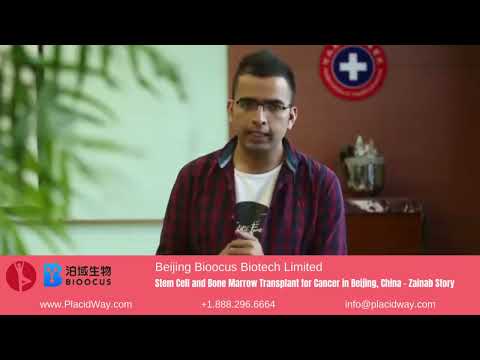




.png)
.png)


.png)








Share this listing