


When considering an advanced eye surgery procedure in Mexico, many individuals mistakenly believe that the medical process begins the exact moment they enter the operating room. This common misconception overlooks the most critical phases of medical care that dictate the success of any vision correction treatment. The reality of modern ophthalmology is that a successful visual outcome is largely determined weeks before any surgical instrument is ever utilized. Proper preparation requires a meticulously structured clinical evaluation designed to map out the unique characteristics of your visual system.
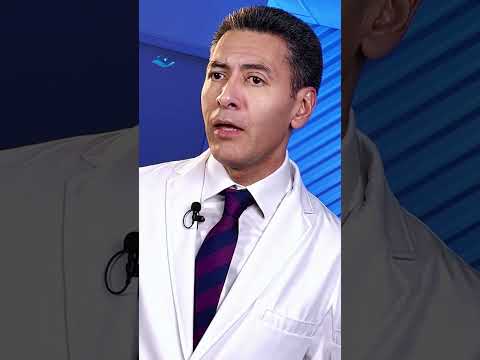
As highlighted at [00:00] in the video, the journey to clearer vision starts significantly earlier than the surgical appointment itself. The foundation of exceptional clinical results relies heavily on a comprehensive preliminary phase. Patients traveling for specialized optical treatments must undergo a rigorous series of diagnostic steps to ensure highest safety standards are met. This intensive pre-operative methodology is what separates standard clinics from world-class medical facilities dedicated to preserving and enhancing human sight.
Video Chapters & Quick Navigation
- 1. Comprehensive Eye Surgery Assessment
- 2. Understanding Patient Lifestyle for Vision Correction
- 3. Surgical Planning and Ophthalmologist Experience
- 4. Achieving Safe and Predictable Eye Surgery Results
- 5. Determining Candidacy for Vision Correction
- 6. The Importance of Saying No in Ophthalmology
- 7. Excellence From the First Eye Consultation
- 8. A Fully Customized Approach to Vision Care
1. The Crucial First Step: Comprehensive Eye Surgery Assessment in Tijuana
The foundation of any successful optical intervention begins with a meticulous clinical evaluation. As noted at [00:06], proper medical protocol starts with a full assessment backed by highly accurate diagnostic studies. This initial phase involves far more than simply reading letters off a traditional eye chart in a doctor's office. It requires sophisticated diagnostic imaging to thoroughly map the microscopic structures of the cornea, lens, and retina.
During a high-quality laser eye surgery assessment in Tijuana, clinical technicians utilize advanced corneal topography mapping tools. These devices measure the exact curvature and thickness of the cornea, detecting microscopic irregularities that naked eyes cannot see. Identifying these minute structural variations is absolutely critical before any laser system can be safely calibrated for a patient. Without this level of extreme precision, surgeons operate blindly regarding the microscopic integrity of the eye.
Additionally, optical coherence tomography (OCT) is often employed to capture high-resolution cross-sectional images of the retina. This allows the medical team to ensure there are no underlying conditions, such as early-stage macular degeneration or hidden glaucoma indicators. Gathering this comprehensive biological data ensures that the physical structure of the eye can safely withstand the proposed surgical intervention without unexpected complications.
2. Why Understanding Patient Lifestyle is Vital for Vision Correction Surgery
A strictly anatomical approach to ophthalmology is no longer sufficient in modern medical practice. Around [00:10], the discussion shifts to the absolute necessity of listening to the patient and understanding their daily lifestyle. A successful visual outcome is highly subjective and depends entirely on how the individual uses their vision in everyday scenarios. What constitutes a perfect result for one individual might be highly problematic for another.
For example, a professional driver requires flawless distance vision and excellent night sight with minimal glare or halos. Conversely, a software developer spends ten to twelve hours a day staring at digital screens set at intermediate distances. Treating both of these patients with the exact same refractive technique or intraocular lens implant would likely leave one of them dissatisfied. The surgeon must tailor the focal points and visual outcomes to match the specific occupational and recreational demands of the patient.
Understanding a patient's expectations is just as important as understanding their daily activities. Some individuals expect absolute perfection without the need for reading glasses ever again, while others are perfectly content wearing mild magnifiers for tiny print. By having extensive pre-operative conversations, medical professionals can set realistic expectations and align the surgical plan with the patient's specific life goals.
3. The Importance of Surgical Planning and Ophthalmologist Experience
Technical execution during the actual operation is only one component of a successful medical outcome. As emphasized at [00:15], good surgery is not just about technique; it heavily involves deep planning and vast clinical experience. The ability to properly interpret complex diagnostic data and translate it into a safe, executable surgical plan is what defines a master surgeon. This strategic planning phase minimizes risks and maximizes post-operative visual acuity.
Experience allows a surgeon to anticipate potential anatomical anomalies that might present themselves during the procedure. A seasoned ophthalmologist has encountered thousands of unique corneal structures and internal eye variations throughout their career. This extensive background empowers them to adjust their surgical approach instantly if an unexpected variable arises while the patient is in the operating chair.
The pre-surgical planning phase also involves selecting the appropriate energy levels for lasers, determining the exact incision angles, and choosing the precise dimensions of any implanted materials. Every single microscopic decision must be finalized before the patient is prepped for the procedure. This rigorous mental rehearsal and mathematical calculation are the true hallmarks of elite vision correction surgery preparation.
4. The Role of Advanced Technology in Safe and Predictable Eye Surgery Results
The ultimate goal of any clinical intervention is to improve the patient's quality of life without introducing unnecessary risks. Mentioned at [00:22], taking the correct decisions before operating is the definitive pathway to safe and predictable results. Predictability in ophthalmology means that the surgeon knows exactly how the eye will heal and function long before the actual healing process begins. This eliminates the guesswork that used to be inherent in older optical procedures.
Achieving this level of safety requires heavy reliance on state-of-the-art diagnostic algorithms and computer-guided laser systems. Modern excimer and femtosecond lasers track eye movements at thousands of times per second during the procedure. If the patient shifts their gaze even a fraction of a millimeter, the laser automatically pauses or adjusts its targeting. This technological safety net ensures that the treatment is delivered exactly where the surgical plan intended.
Furthermore, predictive modeling software allows surgeons to simulate the visual outcome based on the patient's specific biometric data. By inputting the topographic maps and axial length measurements into specialized medical software, the clinic can virtually test different treatment parameters. This digital foresight dramatically reduces the chances of over-correction or under-correction, ensuring the patient achieves their desired visual acuity on the first attempt.
5. Determining Candidacy: Why Not Every Patient is Suited for the Same Eye Procedure
Human anatomy is vastly diverse, and the biological makeup of our ocular system is as unique as a fingerprint. At [00:24], it is clearly stated that in ophthalmology, every single eye is fundamentally different. Because of these distinct biological variations, applying a universally standardized surgical approach to every patient is both ineffective and medically dangerous. A procedure that works perfectly for a thirty-year-old might be completely inappropriate for a sixty-year-old.
This is precisely why not all patients are candidates for the exact same medical procedure. For instance, a patient seeking LASIK must possess a specific minimum corneal thickness to safely undergo the creation of a corneal flap. If diagnostic tests reveal that their cornea is naturally too thin, proceeding with traditional LASIK could severely compromise the structural integrity of their eye. In such cases, an alternative approach like PRK (Photorefractive Keratectomy) or the implantation of an ICL (Implantable Collamer Lens) becomes the necessary medical route.
| Procedure Type | Ideal Candidate Profile | Common Disqualifications |
|---|---|---|
| Traditional LASIK | Patients with adequate corneal thickness and stable prescriptions. | Thin corneas, severe dry eye syndrome, or keratoconus. |
| PRK Surface Ablation | Individuals with thinner corneas or high-impact lifestyle requirements. | Patients requiring rapid, immediate visual recovery times. |
| Refractive Lens Exchange | Older adults experiencing presbyopia or early-stage cataracts. | Younger patients who still possess natural accommodation abilities. |
6. The Ethical Importance of Saying No in Ophthalmology Consultations
One of the most profound markers of a trustworthy medical institution is their willingness to turn a prospective patient away. As mentioned around [00:30], deciding to say "no" at the right time is a massive part of doing the medical job correctly. Clinics focused purely on financial volume will often force patients into procedures they are only marginally qualified for. Ethical medical facilities prioritize long-term ocular health over immediate surgical bookings.
Denying a procedure is never done lightly; it is a clinical decision based on hard diagnostic evidence that indicates high risk. If a pre-operative scan reveals subclinical keratoconus or an unstable tear film, the surgeon must decline to operate to protect the patient's future vision. Proceeding with elective vision correction surgery preparation under suboptimal physiological conditions can lead to irreversible visual degradation. Patient safety must always override the desire to perform the surgery.
When a surgeon says no to a specific procedure, it does not always mean the end of the patient's journey to visual freedom. It often leads to a discussion regarding specialized, alternative treatments that better suit their specific ocular environment. A responsible clinic will carefully explain the exact medical reasons for the denial and map out safer alternatives that align with the patient's unique biological constraints.
7. Excellence From the First Eye Consultation in Tijuana
The standard of care must be exceptionally high from the very first interaction a patient has with the medical facility. At [00:34], it is noted that surgical excellence actually commences during the initial consultation phase. The environment of the clinic, the thoroughness of the technicians, and the clarity of the doctor's communication all contribute to the overall success of the treatment. A rushed or disorganized consultation is a clear warning sign of a compromised surgical environment.
During a high-level assessment, patients should experience a seamless flow of diagnostic testing followed by an unhurried consultation with the primary surgeon. This is the time when trust is established, and complex medical jargon is translated into understandable concepts for the patient. The medical team should encourage extensive questioning, ensuring the individual feels completely educated about the proposed treatment plan. True excellence means the patient enters the operating room with zero lingering doubts.
- Complete Transparency: Open discussions regarding expected recovery timelines, potential side effects, and realistic visual outcomes.
- Data-Driven Decisions: Utilizing hard biometric data to guide the surgical plan rather than relying on standard procedural templates.
- Continuous Monitoring: Establishing clear post-operative care protocols before the surgery is even scheduled.
8. A Fully Customized Approach to Vision Care and Next Steps
The culmination of advanced diagnostics, detailed lifestyle discussions, and expert surgical planning results in a completely tailored medical experience. Mentioned at [00:40], integrating advanced technology with a totally personalized approach is the gold standard for optical care. Every laser pulse, every incision angle, and every post-operative drop regimen is customized specifically for your unique biological profile. This individualized care architecture significantly reduces recovery time and enhances overall visual comfort.
Taking the first step toward visual freedom requires scheduling a comprehensive assessment with a highly qualified medical team. Preparing for this assessment involves gathering your previous optical records, noting down your specific lifestyle requirements, and being ready to discuss your medical history openly. By actively participating in this critical pre-surgical phase, you empower your ophthalmologist to design the safest and most effective treatment plan possible.
Your vision is arguably your most important sense, heavily dictating your quality of life, independence, and daily safety. As perfectly summarized at the end of the video, your eyes absolutely deserve expert attention from the very first step of the process. Prioritizing thorough pre-operative assessments over speedy surgical bookings will ensure your journey to better vision is smooth, safe, and highly successful.
Ready to Improve Your Vision Safely?
Take the first step toward clear, predictable visual outcomes. Schedule your comprehensive eye surgery assessment and receive a personalized medical evaluation tailored to your unique lifestyle.
Get Free QuoteView Full Video Transcript
[00:00] Many people think surgery begins when we entered the operating room.
[00:04] But the reality is that surgery starts much earlier.
[00:06] Begins with a full assessment with accurate studies.
[00:10] With listening to the patient, understand his or her style of life, their needs and expectations.
[00:15] Good surgery is not only technique but planning, is experience.
[00:19] Is to make the right decisions before operating for safe and predictable results.
[00:24] In ophthalmology, every eye is different.
[00:27] That is why not all patients are candidates to the same procedure.
[00:30] And say no in time is also part of doing our job well.
[00:34] In Tijuana Eye Center, we believe that excellence surgical start from the first consultation.
[00:40] With technology advanced and a fully customized approach.
[00:42] Schedule your appointment or visit our site website to learn more about our procedures.
[00:47] And how we look after your vision from the very first step.
[00:49] Your eyes deserve expert attention.






.jpg)
.png)
.png)
.png)








Share this listing