
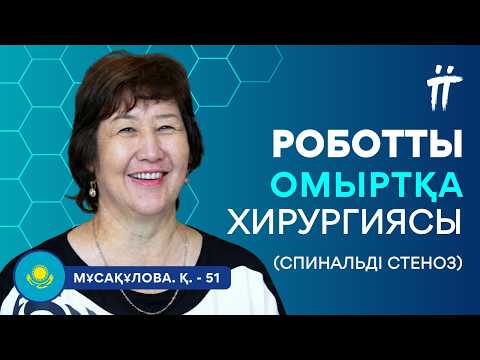
Living with chronic back pain can affect walking, sitting, carrying everyday items, and maintaining an independent lifestyle. This video follows the experience of Kuralay Musakulova, a 51-year-old woman from Almaty, Kazakhstan, who traveled to Turkey after living with severe back pain for more than 10 years. Her treatment journey involved a robotic spine surgery procedure in Turkey using the Mazor X robotic system.
Kuralay's story provides a patient-focused look at robotic spine surgery, including the impact chronic back pain had on her daily life, her decision to travel internationally for treatment, support from patient coordinators, the seven-hour operation, and her early recovery. The video also explains how robotic technology was incorporated into the surgical planning process.
For patients researching robotic spine surgery in Bursa, Turkey, this experience highlights practical aspects of an international orthopedic journey, including pre-surgical research, communication with the medical team, robotic surgical planning, post-operative monitoring, early mobility, and the patient's goals after treatment.
Video Chapters
Living With Chronic Back Pain Before Robotic Spine Surgery
Chronic back pain had affected Kuralay's life for more than a decade. At [00:50], she explains that she had been living with severe back pain for over 10 years.
Her symptoms affected basic daily activities. She describes difficulty sitting for extended periods, walking only short distances, moving around comfortably, and even carrying groceries home. These limitations eventually encouraged her to search for another treatment option.
For Kuralay, the goal of treatment was closely connected with regaining everyday mobility and returning to activities that chronic back pain had made increasingly difficult.
How Chronic Back Pain Affected Her Daily Life
The patient's experience shows how persistent spinal pain can interfere with ordinary movements and independence. Sitting, walking, carrying objects, and moving comfortably had all become challenging for her.
After living with these restrictions for years, Kuralay began researching treatment options and eventually decided to pursue robotic spine surgery in Turkey.
- Difficulty Sitting: She could not comfortably remain seated for long periods.
- Limited Walking: Her ability to walk had become significantly restricted.
- Everyday Tasks: Carrying basic groceries had become difficult.
- Reduced Mobility: Moving around comfortably had become increasingly challenging.
Traveling From Kazakhstan to Turkey for Robotic Spine Surgery
Kuralay traveled internationally from Almaty, Kazakhstan, in search of treatment for her longstanding back condition. At [01:22], she explains that she came from Almaty to Turkey with hope that treatment could help improve her condition.
Before traveling, she researched the medical team and treatment carefully. She later explains that she reviewed information through the clinic's Instagram page and developed confidence in the doctor before making the journey.
Her experience shows that researching the surgical team, understanding the technology being proposed, and communicating with the medical provider can be important steps for patients considering spine surgery abroad.
Choosing the Spine Surgery Team
Kuralay identifies Dr. Yunus Uysal as the doctor responsible for her robotic spine surgery and expresses appreciation for the care she received from the medical team.
She also explains that researching the clinic beforehand helped her feel more confident about traveling internationally for the operation. For patients considering a similar procedure, understanding who will perform the surgery and how the treatment will be planned can be important parts of the decision-making process.
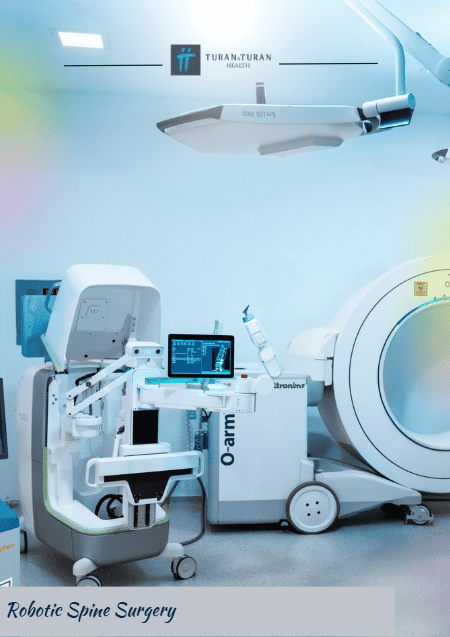
Mazor X Robotic System Used for Spine Surgery in Turkey
The Mazor X robotic surgery system was an important part of Kuralay's treatment journey. She explains that the clinic informed her about the robotic system soon after her arrival and that learning about the technology contributed to her confidence in proceeding with surgery.
At [02:43], the video focuses on the planning and precision involved in her robotic spine surgery.
Robotic surgical guidance is used as part of the surgeon's planning and instrument positioning process. The surgeon remains responsible for performing the operation, while the robotic system assists with executing the planned surgical approach.
Role of Robotic Guidance During Spine Surgery
In Kuralay's case, robotic technology was presented as part of the surgical planning process. The video emphasizes precision and the ability to plan the operation before and during surgery.
Patients researching robotic spine surgery in Bursa, Turkey should ask their medical team exactly how robotic guidance will be used in their individual procedure and what role the surgeon and technology will each have during the operation.
- Surgical Planning: The robotic system supports planning based on the patient's anatomy.
- Guided Positioning: Robotic technology can assist the surgeon with following the planned surgical pathway.
- Patient-Specific Approach: Surgical planning is based on the individual patient's condition.
- Surgeon-Controlled Procedure: The surgeon remains responsible for performing and supervising the operation.
Patient Coordination Before Robotic Spine Surgery in Turkey
International patient support was another part of Kuralay's experience. At [01:33], she discusses being welcomed by patient coordinators, including Alemdar Eldaroglu.
She also explains that translators met her at the airport and supported communication during the medical journey. For an international patient traveling from Kazakhstan, this assistance helped her navigate the process after arriving in Turkey.
Before robotic spine surgery, patients typically need to understand their diagnosis, proposed procedure, hospital plan, recovery expectations, and follow-up requirements. Clear communication between the patient and medical team is especially important when treatment involves international travel.
The Seven-Hour Robotic Spine Surgery Procedure
Kuralay's spine operation was a significant surgical procedure. At [02:11], she explains that the operation lasted approximately seven hours.
Despite the length of the procedure, she describes her early recovery as faster than she had expected. The video emphasizes that her operation involved robotic planning and close post-operative monitoring.
The exact surgical steps required for spine surgery vary according to the patient's diagnosis and treatment plan. Patients considering robotic spine surgery should ask their surgeon which spinal levels will be treated, what procedure is being recommended, how long the operation may take, and what recovery plan will follow.
Robotic Guidance and Traditional Spine Surgery Approaches
The central difference highlighted in Kuralay's video is the use of robotic assistance during her operation. Robotic systems are designed to support surgical planning and help the surgeon follow a predetermined pathway during specific stages of the procedure.
Traditional and robotic-assisted spine surgery both depend heavily on the experience and judgment of the operating surgeon. Robotic technology does not replace the surgeon; instead, it functions as an additional planning and guidance tool.
The most appropriate surgical method depends on the patient's diagnosis, anatomy, imaging findings, and the procedure recommended by the treating spine specialist.
| Treatment Consideration | Traditional Spine Surgery | Robotic-Assisted Spine Surgery |
|---|---|---|
| Surgical Planning | Based on imaging, anatomical landmarks, and the surgeon's operative plan | Uses computerized planning together with imaging and surgeon guidance |
| Instrument Guidance | Performed using conventional surgical navigation and technique | Robotic guidance can assist with following the planned pathway |
| Role of Surgeon | Surgeon performs and controls the operation | Surgeon performs and controls the operation with robotic assistance |
| Patient-Specific Planning | Treatment is planned according to individual anatomy and diagnosis | Computer-assisted planning is incorporated into the individual surgical plan |
| Suitability | Depends on diagnosis and surgeon recommendation | Depends on diagnosis, procedure, technology availability, and surgeon recommendation |
Early Recovery After Robotic Spine Surgery in Turkey
One of the most notable parts of Kuralay's experience was how soon she began standing after surgery. At [01:44], she explains that she was already standing on her feet by the second day after the operation.
She also describes receiving close monitoring following the procedure. Later in the video, she says she began walking freely after surgery.
This represents Kuralay's individual recovery experience rather than a standard timeline for every spine surgery patient. Recovery after spinal procedures varies according to the type and extent of surgery, the patient's overall health, and the rehabilitation plan recommended by the treating team.
Post-Operative Monitoring and Mobility
Kuralay says that her condition was closely monitored after surgery. Early movement was introduced during her recovery, with the medical team supervising her progress.
Patients undergoing spine surgery should follow their own surgeon's instructions about standing, walking, activity restrictions, rehabilitation, and travel after the procedure. The appropriate recovery plan differs from one patient to another.
Returning to Everyday Life After Robotic Spine Surgery
For Kuralay, treatment was closely connected with returning to the everyday activities she had struggled to enjoy because of chronic back pain.
At [03:54], she talks about returning to her personal goals, including cooking, spending time with her family, swimming, and enjoying life again.
Her experience shows the personal impact that improving mobility can have after years of physical limitation. However, recovery and long-term outcomes after spine surgery vary, and each patient requires an individualized treatment and rehabilitation plan.
For patients researching robotic spine surgery in Turkey, important questions include understanding the diagnosis, knowing exactly which operation is recommended, identifying the surgeon, learning how robotic technology will be used, and discussing realistic recovery expectations before traveling.
Explore Robotic Spine Surgery Options in Turkey
If you are researching treatment for chronic back pain and want to understand whether robotic-assisted spine surgery may be an option, request information about the medical evaluation, surgical approach, treatment plan, recovery process, and international patient support available in Turkey.
Get Free QuoteView Full Video Transcript
[00:00] My back has been hurting for over 10 years.
[00:04] I couldn't sit for long periods. I walked very little.
[00:08] It became very difficult to move around. I decided to come from Almaty to this clinic for treatment.
[00:15] The translators met me at the airport. They explained that this clinic uses the Mazor-X robotic surgery system.
[00:25] After hearing about the benefits and seeing how it minimizes nerve damage, I felt confident coming here.
[00:30] I completely trust the Turan clinic. I am endlessly grateful to the doctors and medical staff.
[00:45] My name is Kuralay Musakulova. I am from Kazakhstan, Almaty. I am 51 years old.
[00:50] I lived with severe back pain for over 10 years.
[00:58] The pain seriously affected my daily life.
[01:03] Everyday movements became incredibly difficult. I couldn't even carry basic groceries home.
[01:16] I found my solution in robotic surgery.
[01:22] I came from Almaty to Turkey with great hope.
[01:33] The patient coordinators, including Alemdar Eldaroglu, welcomed us right away.
[01:40] Everything was fully monitored after the surgery.
[01:44] By the second day, I was already standing on my feet.
[01:55] I am deeply thankful to my doctor, Dr. Yunus Uysal, for his expertise in robotic spine surgery.
[02:11] It was a 7-hour surgery, but my recovery was surprisingly fast.
[02:25] I trusted my doctor completely. I researched everything thoroughly on their Instagram page beforehand.
[02:43] The robotic surgery was planned with ultimate precision.
[02:57] I came here not with fear, but with absolute confidence.
[03:11] After the operation, I started walking freely.
[03:43] The surgery process went perfectly without any complications.
[03:54] Now it is time to return to my dreams—cooking, spending time with family, swimming, and enjoying life again.






.png)
.png)




.png)








Share this listing