
Recovery After Knee Surgery in Mexico: Timeline and What to Expect
Many patients traveling for orthopedic care wonder about the recovery timeline for knee surgery in Mexico. Understanding the rehabilitation process, travel restrictions, and post-operative care requirements is essential before committing to orthopedic treatment abroad. Because joint procedures significantly impact mobility, planning your recovery is just as crucial as the surgery itself.
Key Takeaways
- Recovery timelines vary widely between minimally invasive arthroscopy and complex total knee replacement.
- Patients typically remain in the destination country for 7 to 14 days after a major joint replacement to monitor for complications.
- Air travel after surgery increases the risk of deep vein thrombosis (DVT), requiring strict preventative measures.
- Early physical therapy is crucial and will begin while you are still recovering at your destination.
- Successful recovery requires coordinating long-term follow-up care with an orthopedic specialist in your home country.
How long do I need to stay in Mexico after my procedure?
The length of your stay depends heavily on the complexity of the intervention and how your body responds to the initial healing phase. Following a total or partial knee replacement, medical professionals need adequate time to monitor your vital signs, manage acute pain, and watch for early signs of infection or blood clots. Traveling too soon can pose severe risks to your health and the success of the implant.
During these initial days, you will likely spend 2 to 4 days admitted to the hospital facility. Afterward, patients are typically discharged to a nearby hotel or a specialized recovery retreat. It is during this outpatient period that local nurses or therapists may visit you to assist with wound care and ensure you are adapting to mobility aids like walkers or crutches safely.
What are the distinct phases of the recovery timeline?
The acute healing phase happens immediately after surgery and often overlaps with your time spent abroad. During these first two weeks, the primary goals are wound healing, pain management, and preventing complications. Patients focus on simple movements, such as ankle pumps and assisted walking, to promote blood circulation.
Once you return home, you will enter the mobility restoration phase. Between weeks two and six, physical therapy becomes more intensive. You will work on bending and straightening the knee, gradually reducing reliance on pain medication, and transitioning from a walker to a cane. Finally, the strengthening phase can last up to a year, focusing on returning to low-impact daily activities, driving, and regaining full independence.
Will I receive physical therapy during my medical trip?
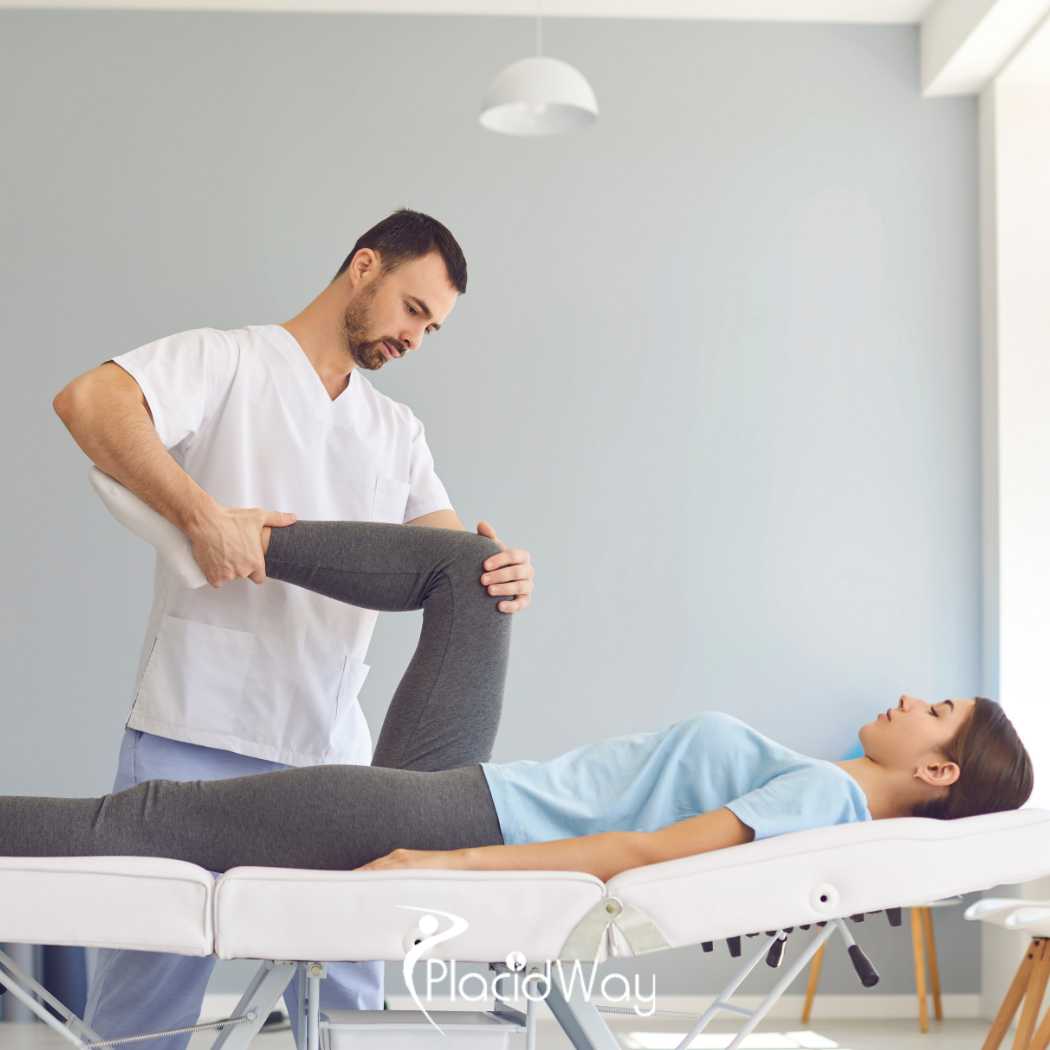
Early mobilization is a critical standard of care in modern orthopedics. Moving the new joint shortly after surgery helps prevent stiffness, reduces swelling, and lowers the risk of developing blood clots. A physical therapist will usually visit your room the day after surgery to help you stand and take your first steps using a walker.
Before you are cleared to fly, the therapist will ensure you can safely perform essential movements. You must be able to get in and out of bed independently, use the restroom, and navigate a few stairs. They will also provide a detailed exercise plan that you must continue diligently upon returning to your home country.
How soon is it safe to travel back home?
Air travel after major orthopedic surgery requires careful planning. The combination of prolonged sitting in cramped airplane seats, changes in cabin pressure, and the body's natural response to surgical trauma creates an elevated risk for Deep Vein Thrombosis (DVT) and pulmonary embolism.
To mitigate these risks, your medical team will likely prescribe blood-thinning medications to take before and during your flight. Furthermore, patients are advised to wear medical-grade compression stockings, request an aisle seat, and get up to walk the cabin every hour. Always obtain written medical clearance from your operating surgeon before attempting to board a flight.
How does recovery impact the overall knee surgery cost in Mexico?
While the baseline cost of joint replacement abroad is often estimated between $5,000 and $9,000, recovery logistics add to the final budget. Patients need comfortable accommodation that can safely support limited mobility—ideally ground-floor rooms or hotels with reliable elevators and accessible bathrooms.
Additionally, you must account for the cost of a travel companion, as undergoing major joint surgery alone is not advised. Companion travel, prolonged lodging, specialized meals, and potential fees for outpatient nursing or physical therapy visits should all be factored into your financial planning for a realistic view of the total expenditure.
How do I select a reputable knee surgery clinic in Mexico?
Because recovery relies heavily on the quality of the surgical intervention, selecting an appropriate facility is paramount. Look for hospitals that hold recognized accreditations, such as from the Joint Commission International (JCI) or the General Health Council of Mexico (CSG). These credentials indicate that the facility adheres to rigorous hygiene, safety, and equipment standards.
Furthermore, ensure the orthopedic surgeon is certified by the Mexican Council of Orthopedics and Traumatology (Consejo Mexicano de Ortopedia y Traumatología) or holds equivalent international qualifications. A high-quality clinic will also be transparent about their infection rates, the types of prosthetic implants they use, and their protocols for managing post-operative emergencies.
What are the main risks associated with knee surgery abroad?
Any invasive joint procedure carries inherent medical risks, regardless of where it is performed. Infection is a primary concern, as a deep infection in a new prosthetic joint can be devastating and often requires additional surgery to clean or replace the implant. This is why following all wound care instructions precisely is non-negotiable.
Another significant risk is delayed healing or joint stiffness, often resulting from inadequate physical therapy. If a complication arises after you have returned home, local doctors may be hesitant to intervene without a complete understanding of the original procedure. Therefore, securing a clear, cooperative plan for managing potential complications before you travel is highly recommended.
What role does medical tourism in Mexico play in post-operative care?
Because the region caters heavily to international patients, many providers have tailored their services to meet the specific needs of medical travelers. It is common for hospitals to bundle surgical fees with airport transfers, translation services, and structured stays at designated recovery retreats. These retreats are often equipped with hospital beds, accessible showers, and round-the-clock nursing assistance.
However, medical tourism also inherently creates a fragmentation of care. Once you cross the border to return home, you leave your operating surgeon behind. This geographical gap requires patients to be highly proactive in their recovery, ensuring they have robust communication channels with their international team while securing a local healthcare provider willing to take over their long-term care.
When can I realistically resume walking and daily activities?
Reclaiming your mobility is a gradual process. In the first few weeks, you will rely heavily on mobility aids. As muscle strength improves and swelling decreases, your physical therapist will advise you when it is safe to transition from a walker to a cane, and eventually, to walking unassisted.
Return to driving is usually permitted when you are no longer taking narcotic pain medications and have regained enough strength and reflex speed to operate the pedals safely—often around 4 to 6 weeks. Low-impact activities like swimming and stationary cycling can usually be integrated into your routine after surgical incisions have completely healed and cleared by a doctor.
How do I manage long-term follow-up care with my local physician?
A successful joint replacement relies on continuity of care. It is imperative not to wait until you return home to find a doctor. Speak with local primary care physicians or orthopedic surgeons beforehand to ensure they are willing to remove sutures, prescribe ongoing physical therapy, and monitor your long-term recovery.
When you are discharged from the international hospital, insist on receiving a comprehensive medical file. This file must include detailed surgical notes, anesthesia records, discharge summaries, and the specific manufacturer details (brand, model, and size) of the joint implant. Having this precise information allows your local doctor to understand exactly what was done and properly evaluate your healing progress.
Why Choose PlacidWay for Medical Tourism in Mexico?
PlacidWay serves as an informational platform to help individuals research global healthcare options. When exploring orthopedic care, PlacidWay offers several educational benefits:
- Extensive Information: Access a broad directory of international healthcare facilities, clinics, and medical professionals.
- Provider Profiles: Review educational backgrounds, facility accreditations, and certifications of various healthcare providers.
- Cost Estimates: Compare generalized pricing estimates for various orthopedic procedures across different regions.
- Patient Resources: Read general informational guides regarding procedures, expected timelines, and questions to ask your doctor.
- Direct Connection: Utilize the platform to request information directly from international medical facilities to make informed, independent healthcare decisions.
Frequently Asked Questions
Does flying increase the risk of blood clots after joint surgery?
Yes, flying and prolonged sitting can increase the risk of deep vein thrombosis (DVT) after major lower-limb surgeries. Surgeons typically recommend taking precautions such as wearing compression stockings, staying hydrated, moving your legs frequently, and sometimes taking prescribed blood thinners before air travel.
Can I bring a companion to help me during my recovery?
It is highly recommended to travel with a companion. Having someone to assist with carrying luggage, managing medications, helping you navigate airports, and providing emotional support can significantly reduce stress and improve safety during the initial recovery phase.
Are pain medications prescribed for my trip home?
Yes, your medical team will typically prescribe appropriate pain relief medications to keep you comfortable during your journey. You should carry these in your carry-on luggage along with a copy of your prescription and a doctor's note to present to customs if requested.
How long does a knee arthroscopy take to heal compared to a replacement?
Knee arthroscopy is minimally invasive, and many patients recover within 4 to 6 weeks. A total knee replacement involves removing and replacing bone and cartilage, requiring a much longer recovery period of 3 to 6 months for normal activities, and up to a year for complete tissue healing.
Do Mexican clinics provide medical records in English?
Many facilities that cater to international patients provide medical records, operative reports, and implant details in English. However, you should always verify this with the provider beforehand and request translated copies to give to your local physician.
Will my local insurance cover complications if they arise back home?
Insurance policies vary widely. While some plans may cover emergency care for complications upon your return, they often do not cover the initial elective surgery performed abroad. It is crucial to review your health insurance policy or purchase specialized medical tourism insurance before traveling.
Can I do my physical therapy exercises in a hotel room?
Yes, many of the initial post-operative exercises, such as ankle pumps, quad sets, and gentle knee bending, can be performed safely in a hotel room. Your physical therapist will teach you how to perform these exercises correctly before you leave the hospital.
What mobility aids will I need before flying back?
Depending on the procedure, you will likely need crutches, a walker, or a cane. You must arrange for wheelchair assistance at the airport well in advance, as walking long distances through terminals is not advised immediately after knee surgery.
How soon can I shower after having knee surgery?
This depends on the type of dressing used. With waterproof dressings, you may be able to shower within a few days. With standard dressings, you typically must wait until the staples or stitches are removed or the incision is completely closed. Always follow your surgeon's specific wound care instructions.
Is it safe to undergo bilateral knee surgery as a medical tourist?
Bilateral (both knees at once) surgery is complex and significantly increases recovery difficulty, pain, and the risk of complications like DVT. Many surgeons advise international patients against bilateral procedures because managing the intense physical demands and subsequent air travel is very challenging.
Compare Treatment Options and Facilities
Research international medical providers and request information to help you make an informed decision about your orthopedic care.
Request Treatment InformationReferences
- Total Knee Replacement – American Academy of Orthopaedic Surgeons (AAOS)
- Deep Vein Thrombosis & Pulmonary Embolism (Air Travel) – Centers for Disease Control and Prevention (CDC)
- Knee Replacement: About the Procedure – Mayo Clinic
- Patient Education: Total Knee Replacement – American Association of Hip and Knee Surgeons (AAHKS)
- Joint Surgery Recovery Timeline – Arthritis Foundation
- Knee Replacement Surgery Discharge – MedlinePlus (U.S. National Library of Medicine)




















Share this listing