
Save on Knee Replacement in Mexico | Canadian Guide
Key Takeaways
- Canadian patients often bypass extended domestic orthopedic waitlists by traveling south for joint arthroplasty.
- Total estimated expenses usually cover surgeon fees, operating room use, standard hospital stays, and the prosthetic implant.
- Patients must plan for a multi-week stay to manage initial wound healing and secure travel clearance.
- Continuity of care with a local physical therapist back home must be arranged before departure.
Why are Canadian patients exploring total knee replacement in Mexico?
Extended wait times within Canada's public healthcare system drive many individuals to seek timely surgical intervention through medical tourism in Mexico.
Accessing timely joint reconstruction can be challenging under provincial healthcare models where waitlists for orthopedic evaluations and procedures often span many months or even years. For individuals experiencing chronic knee pain and functional decline, this delay impacts overall quality of life. Consequently, many Canadians look abroad to private international facilities that can schedule interventions promptly.
Private medical centers in popular Mexican destinations feature advanced surgical suites, modern diagnostic imaging, and sterile operating environments comparable to North American standards. International patient departments assist with logistics, making the transition seamless for travelers seeking structured care.
However, traveling internationally for major surgery requires careful preparation. You must ensure that your medical records are thoroughly reviewed by the operating team beforehand to confirm your candidacy and establish a realistic timeline.
What is the estimated total knee replacement cost in Mexico?
The financial commitment for a total knee arthroplasty in Mexico typically spans between $7,000 and $14,000 USD, depending on facility choice, surgeon expertise, and implant selection.
When evaluating financial estimates for total knee replacement cost in Mexico, understanding the breakdown of expenses helps prevent unexpected out-of-pocket costs. Comprehensive medical packages frequently bundle surgeon fees, operating room utilization, standard prosthetic components, nursing care, and a multi-night hospital stay. However, preoperative diagnostic imaging, specialized medications, or extended rehabilitation sessions may require separate financial arrangements.
The choice of implant materials also influences the overall price. High-grade titanium or customized high-flexion components can alter baseline estimates. It is vital to request an itemized billing statement from your chosen total knee replacement clinic in Mexico to ensure complete transparency before committing to care.
Regional economic factors and competitive private healthcare structures allow hospitals in Mexico to offer advanced surgical care at a fraction of North American costs. Even so, clinical quality, sterile operating conditions, and surgeon experience should always take precedence over finding the lowest advertised price.
| Procedure Type | Estimated Cost Range (USD) | Included Components & Variables |
|---|---|---|
| Unilateral Total Knee Replacement | $8,500 – $11,000 | Surgeon fees, standard implant, 3-night hospital stay |
| Advanced Robotic-Assisted Package | $11,000 – $14,000 | Navigation software, premium components, extended care |
| Secondary Travel Expenses | $1,000 – $2,500 | Flights from Canada, recovery hotel lodging, outpatient therapy |
How does medical tourism in Mexico assist international travelers?
The structured ecosystem for international patients provides dedicated coordination, bilingual support, and modern clinical facilities equipped for complex joint reconstruction procedures.
Participating in medical tourism in Mexico offers access to internationally accredited medical centers featuring advanced surgical suites and specialized orthopedic units. Many hospitals maintain partnerships with global healthcare networks, ensuring adherence to strict sterilization and patient safety protocols.
International patient departments help navigate logistical hurdles by managing medical record translations, scheduling consultations, and organizing accessible accommodation near the treatment center. This administrative support reduces the stress of planning major orthopedic surgery abroad.
Nevertheless, you must perform independent research to verify that the chosen facility adheres to rigorous clinical standards. Reviewing institutional accreditations and speaking directly with medical coordinators helps establish transparency before departure.
Always request written confirmation detailing whether your quoted medical package covers unexpected revisions, extended hospital stays, or emergency medication requirements.
Who is an appropriate candidate for joint replacement surgery?
Candidates typically present with advanced knee osteoarthritis, rheumatoid arthritis, or post-traumatic damage causing chronic pain and stiffness that has failed to improve with conservative treatments.
Joint replacement is designed to relieve debilitating pain and restore mobility when non-surgical options—such as physical therapy, weight management, anti-inflammatory medications, and intra-articular injections—no longer provide relief. Your orthopedic surgeon will evaluate your functional limitations, imaging scans, and overall health status to determine suitability.
Medical conditions such as active systemic infections, severe peripheral vascular disease, or uncontrolled medical comorbidities may temporarily or permanently disqualify a patient from elective joint surgery. Prioritizing physiological stability ensures the body can safely tolerate anesthesia and the physical demands of rehabilitation.
Realistic expectations are also crucial. While modern arthroplasty significantly reduces pain and improves day-to-day functioning, high-impact athletic activities may be discouraged to protect the longevity of the prosthetic implant.
What preoperative diagnostics are required before scheduling surgery?
Comprehensive diagnostic testing is mandatory to assess bone structure, joint degeneration severity, and overall physiological fitness for general or regional anesthesia.
- Full-length standing X-rays to evaluate joint space narrowing, bone spurs, and overall mechanical alignment of the leg.
- Magnetic Resonance Imaging scans when soft tissue, ligamentous, or complex cartilage damage needs clearer visualization.
- Comprehensive blood panels to screen for infection markers, coagulation parameters, and baseline organ function.
- Cardiovascular evaluations, including electrocardiograms, to ensure heart stability under anesthesia.
- Medical clearances from specialists if you manage chronic conditions like diabetes, hypertension, or pulmonary issues.
What are the potential risks and complications of knee replacement?
Like all major orthopedic interventions, joint replacement carries inherent medical risks that require careful monitoring, infection control, and strict adherence to postoperative care guidelines.
Deep vein thrombosis represents a primary concern, especially when combining major bone surgery with long-distance air travel back to Canada. Preventative measures, including blood thinners, mechanical compression devices, and early ambulation, are routinely prescribed to minimize vascular complications.
Infection at the surgical site or deep within the joint capsule represents another critical risk requiring prompt antibiotic treatment or secondary surgical washout. Patients must maintain strict incision hygiene and report unusual swelling, redness, or fever immediately.
Other potential issues include persistent stiffness, instability, or implant wear over time. Selecting an experienced surgeon and using FDA-cleared or CE-marked prosthetic components helps mitigate these long-term mechanical risks.
Early mobilization is a cornerstone of modern knee replacement protocols, with patients typically encouraged to stand and take supported steps within twenty-four hours of their operation to promote healing.
How should patients plan for post-surgical recovery and travel?
A structured recovery timeline is vital. Medical guidelines strictly prohibit immediate air travel back to Canada, requiring patients to remain near their surgical center for at least two to three weeks.
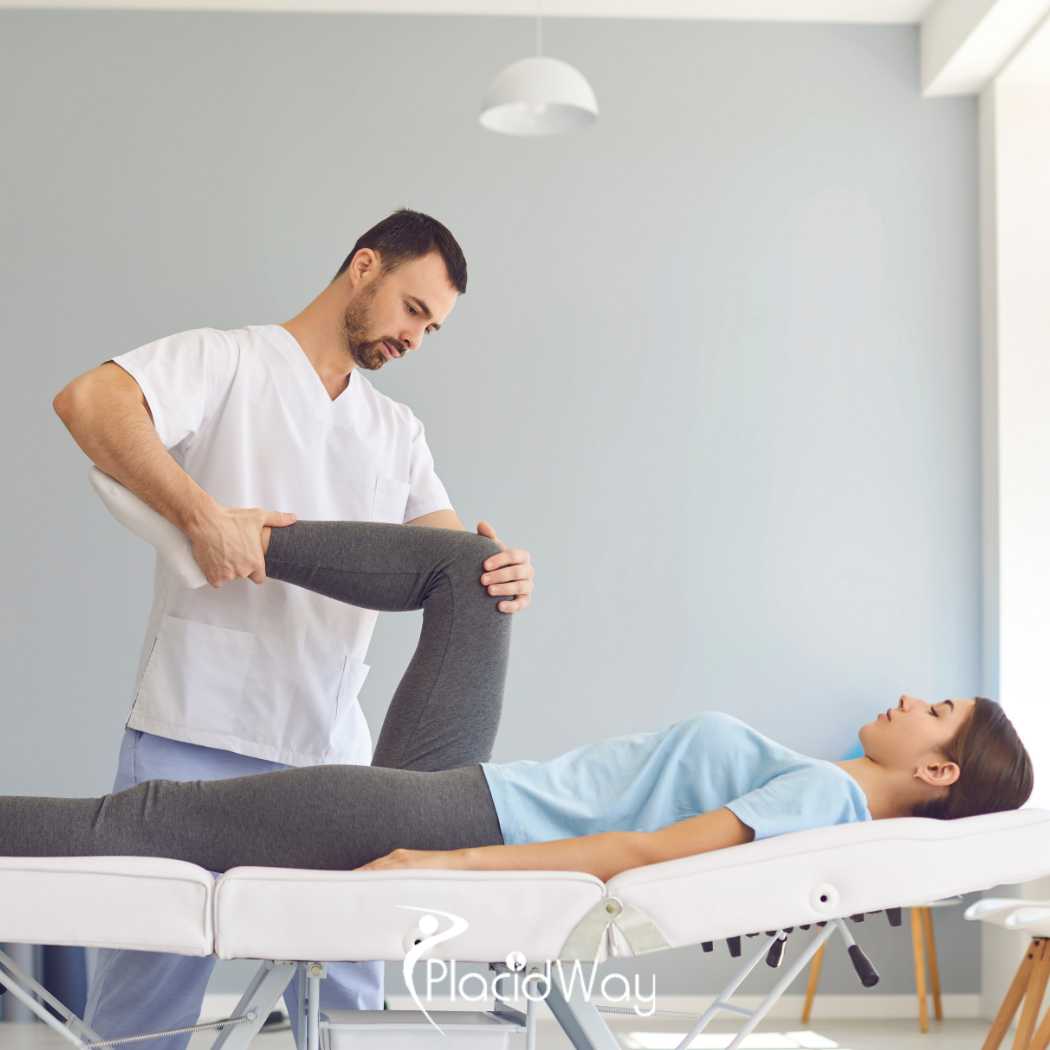
The initial days post-surgery focus on acute pain management and supervised physical therapy sessions to restore basic knee flexion and extension. Once discharged from the hospital, patients transition to a recovery hotel where light exercises continue under professional guidance.
Before boarding a return flight, your operating surgeon must perform a clinical evaluation to provide formal travel clearance. Travelers should request aisle seating to allow leg movement, maintain hydration, and perform gentle seated leg exercises during flight.
Establishing ongoing rehabilitation with a local physical therapist in Canada ensures continuous progress and reduces the likelihood of developing scar tissue or permanent range-of-motion deficits.
What are the requirements for follow-up care upon returning to Canada?
Long-term success relies heavily on consistent outpatient rehabilitation and periodic radiographic evaluations to monitor implant stability.
After returning home, you will need to continue physical therapy for several months to regain muscle strength and natural gait mechanics. Your local orthopedic specialist should review follow-up X-rays at scheduled intervals, such as at six weeks, three months, and one year postoperatively.
Maintaining transparent communication between your international surgical team and your Canadian healthcare providers ensures that any minor concerns are addressed promptly before developing into more complex issues.
Why Choose PlacidWay?
PlacidWay provides an informative platform designed to help patients research global healthcare providers and compare medical options objectively.
Provider Directories
Access structured databases of international hospitals and specialized orthopedic centers for independent review.
Cost Comparison
Review estimated pricing structures across different global regions to manage healthcare budgets responsibly.
Direct Communication
Connect directly with hospital representatives to ask clinical questions and request detailed treatment estimates.
Accreditation Review
Evaluate facility credentials and safety standards to support informed medical travel decisions.
Educational Resources
Explore guides detailing surgical preparation, recovery timelines, and continuity of care requirements.
Frequently Asked Questions
Are orthopedic surgeons in Mexico qualified to perform total knee replacement for Canadian patients?
Many orthopedic surgeons in Mexico hold professional board certifications and have completed international fellowship training in joint arthroplasty. Patients should verify individual credentials and state licensing, such as the cedula profesional, through official government registries before scheduling care.
Is physical therapy included in knee replacement packages in Mexico?
Initial inpatient physical therapy during your hospital stay is typically included in standard surgical packages. However, extended outpatient rehabilitation sessions required after discharge usually require separate financial arrangements, so you should clarify this directly with your chosen healthcare provider.
Can Canadian patients fly home immediately after knee replacement surgery in Mexico?
Medical guidelines strictly advise against taking long flights immediately following major joint arthroplasty due to the elevated risk of deep vein thrombosis and surgical site strain. Patients generally need to remain near the surgical center for two to three weeks before receiving formal travel clearance.
What happens if postoperative complications arise after returning to Canada?
You must establish a relationship with a local orthopedic specialist or primary care physician in Canada prior to traveling. Having your complete medical records translated and transferred ensures seamless continuity of care if postoperative issues arise after your return.
Are English-speaking medical staff available in private Mexican hospitals?
Private medical facilities that cater to international patients usually employ English-speaking physicians, nurses, and dedicated patient coordinators. These professionals ensure clear communication regarding medical instructions, informed consent, and postoperative care.
How long does the actual knee replacement surgical procedure take?
The surgical procedure itself generally lasts between one and two hours. Additional time is required for preoperative preparation, anesthesia administration, and immediate postoperative monitoring in the recovery unit.
Do Canadian patients need a special visa to travel for joint surgery in Mexico?
Visa requirements depend entirely on citizenship and current national entry regulations. Many Canadian citizens traveling to Mexico for short-term medical care use standard tourist entry documentation, which should be verified well in advance of travel dates.
Does Canadian provincial health insurance cover surgery performed in Mexico?
Provincial healthcare plans in Canada typically do not cover elective surgical procedures performed abroad. Patients must pay out-of-pocket or utilize private international health coverage where applicable.
What pain management protocols are utilized postoperatively?
Hospitals typically employ a multimodal pain management approach, combining oral analgesics, anti-inflammatory medications, and short-term prescription pain relief to keep patients comfortable and facilitate early mobilization.
When can a patient resume normal walking unassisted after knee replacement?
Patients are typically encouraged to stand and walk with assistive devices within twenty-four hours of surgery. Achieving a normal, unassisted gait generally takes several months of dedicated physical therapy and consistent daily exercise.
Compare Treatment Options
Review accredited facilities, compare estimates, and connect with medical providers to make an informed decision regarding your healthcare journey.
Request Treatment InformationReferences
- Total Knee Replacement – American Academy of Orthopaedic Surgeons
- Total Knee Replacement Overview – Mayo Clinic
- Medical Tourism Safety Guidelines – Centers for Disease Control and Prevention
- Patient Safety and Quality Care – World Health Organization
- International Healthcare Accreditation Standards – ISQua
- Planning for Joint Surgery Abroad – Arthritis Foundation
Disclaimer: This content is for informational purposes only and does not constitute professional medical advice, diagnosis, or treatment. Always seek the advice of your physician or other qualified health provider with any questions you may have regarding a medical condition. Never disregard professional medical advice or delay in seeking it because of something you have read here.
```

























Share this listing