
What to Consider When Choosing a PRP Hair Clinic in Gangnam
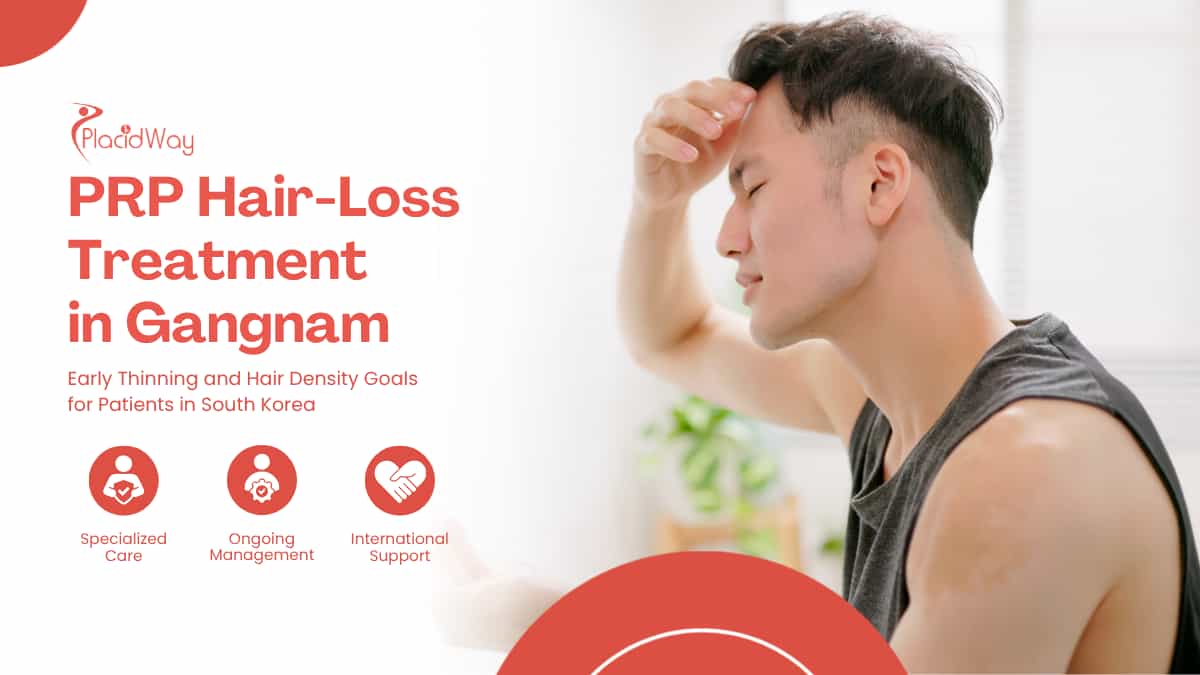
Hair loss rarely announces itself all at once. It happens in the quiet transition between having hair you do not think about and having hair you constantly have to manage, whether that means adjusting your part line, changing how you style it under bright lights, or monitoring the shower drain with growing apprehension.
When thinning begins, the immediate instinct is often to look for a definitive, permanent fix. However, early hair loss occupies a frustrating middle ground where surgical transplants are premature, yet the prospect of starting a lifelong daily regimen of systemic oral medications carries the weight of potential side effects. For some people exploring early intervention, PRP hair-loss treatment in Gangnam may be worth investigating as a non-surgical option aimed at supporting hair density.
You are likely searching for a biological intervention that utilizes your body’s own resources to halt regression and protect the density you still possess. The central question is not just whether Platelet-Rich Plasma (PRP) works, but whether you are in the correct biological window to benefit from it, and whether you are prepared for the maintenance it requires.
This is the exact window where Platelet-Rich Plasma (PRP) therapy enters the conversation as a viable, autologous bridge. By isolating the growth factors present in your own blood and delivering them directly to failing follicles, PRP aims to fundamentally alter the biological signaling happening beneath the surface of your scalp.
For those evaluating global healthcare options, Gangnam, South Korea, has emerged as a prominent destination for this exact stage of hair restoration. Rather than treating PRP as a quick standalone injection, South Korean dermatology clinics often integrate it into highly methodical, multi-modal scalp care protocols that borrow heavily from their established approach to aesthetic dermatology.
The Biology of Early Hair Loss: Why Time Matters
To understand why PRP is recommended at specific stages of hair loss, it is necessary to understand what is actually happening to your hair. In androgenetic alopecia—the most common form of progressive thinning—hair follicles do not simply fall out and disappear overnight.
Instead, they undergo a protracted process known as miniaturization. Over successive hair cycles, the follicle shrinks, spending less time in the active growth (anagen) phase and more time in the resting (telogen) phase, ultimately producing a hair shaft that is progressively thinner, shorter, and more translucent.
- The Visible Scalp: Miniaturization reduces the overall diameter of the hair shafts, meaning light penetrates through the hair down to the scalp much more easily, even if the actual number of hairs has not drastically decreased yet.
- The Shift in Texture: You may notice that the hair in the thinning areas feels softer, weaker, or more wispy compared to the resilient terminal hairs at the back of your head.
- The Point of No Return: Eventually, a miniaturized follicle will stop producing hair entirely and undergo fibrosis, turning into scar tissue that can no longer be reactivated by biological treatments.
This physiological timeline is why the window for regenerative therapies is relatively strict. Platelet-Rich Plasma cannot resurrect a dead, fibrotic follicle.
If an area of the scalp is completely smooth and bald, surgical restoration is usually the only path forward. PRP is designed strictly to rehabilitate failing follicles, pulling them back from the brink of miniaturization and extending their active growth phase before they become dormant.
Decoding PRP: How Blood Plasma Stimulates the Scalp
The mechanism of Platelet-Rich Plasma relies entirely on autologous healing, meaning it uses your body's own biological materials to force a localized cellular response. The process begins with a standard blood draw, after which the blood is placed into a centrifuge and spun at high speeds to separate the red blood cells from the plasma.
The resulting concentrated plasma contains a high density of platelets, which are rich in alpha granules. When these platelets are injected into the scalp and begin to degranulate, they release a cascade of potent growth factors—including Vascular Endothelial Growth Factor (VEGF) and Platelet-Derived Growth Factor (PDGF)—directly into the follicular environment.
Multiple systematic reviews and meta-analyses published between 2023 and 2026 evaluating randomized controlled trials have provided a clearer picture of what PRP can and cannot achieve. The data indicates:
- Density vs. Thickness: Activated PRP has been shown to significantly increase hair density (the total number of visible hairs per square centimeter) compared to placebo. However, it does not reliably increase individual hair thickness (shaft diameter) across all patient cohorts.
- Mechanism of Action: Research suggests the released growth factors stimulate hair follicle regeneration primarily through the activation of the Wnt/?-Catenin signaling pathway and by promoting angiogenesis (new blood vessel formation) around the follicle.
- Shedding Reduction: A primary clinical benefit frequently observed by dermatologists is the stabilization of hair loss, characterized by a marked reduction in daily shedding.
Because these growth factors stimulate new blood supply and activate stem cells in the bulge area of the follicle, the hair is encouraged to remain in its growth phase longer. The goal is to reverse the miniaturization trend, yielding a denser visual appearance over the course of several months.
However, understanding this mechanism is crucial for managing expectations. You are not generating new follicles; you are maximizing the biological output of the follicles you already have, delaying the progression of genetic hair loss.
The Gangnam Protocol: The "Skinification" of the Scalp
If the biology of a platelet is identical regardless of geography, why does the destination matter? The distinction lies in the delivery protocol, the diagnostic environment, and the adjunct therapies that surround the injection itself.
In many Western aesthetic markets, a PRP session for hair loss is often treated as a brief, standalone appointment. A patient may walk in, have their blood drawn and spun, receive their injections over the course of fifteen minutes, and leave.
A Multi-Modal Approach to Follicular Health
Dermatology clinics in Gangnam approach the scalp with the same meticulous, multi-step philosophy they apply to facial skincare. This concept, often referred to as the "skinification" of scalp care, dictates that injecting growth factors into a poorly maintained, inflamed scalp is an inefficient use of resources.
As a result, traveling to Seoul for non-surgical hair restoration generally means encountering a coordinated, multi-modal protocol designed to optimize the scalp environment before, during, and after the actual PRP injections occur.
- High-Resolution Trichoscopy: Before any treatment begins, precise diagnostics are utilized to evaluate follicular viability, assess scalp inflammation, and calculate exact hair density in various zones.
- Deep Scalp Scaling: The scalp is often treated with advanced "aqua peeling" and exfoliation techniques to remove hardened sebum plugs, environmental debris, and dead skin cells that can impede absorption and cause chronic micro-inflammation.
- Precision Delivery Systems: Clinics frequently use automated micro-needling devices or mesotherapy guns to create controlled micro-injuries and deliver the plasma at an exact dermal depth, ensuring even distribution rather than relying solely on manual syringe injections.
- Low-Level Laser Therapy (LLLT): Following the precise injection of the activated PRP, patients are typically placed under targeted red-light laser devices to reduce immediate inflammation and further stimulate cellular metabolism.
Comparing Biological and Medical Interventions
Making an informed decision about PRP requires understanding how it sits within the broader landscape of hair loss interventions. No single treatment works universally, and combination therapies are frequently recommended by specialists to tackle hair loss from multiple angles.
While oral medications target the hormonal root cause of hair loss systemically, biological injections like PRP target the localized cellular environment. Understanding these distinct mechanisms helps clarify why one might choose PRP, either as a standalone alternative or as an adjunct to other therapies.
| Modality | Primary Mechanism | Commitment Level | Key Considerations |
|---|---|---|---|
| PRP Therapy | Autologous growth factors prolong the anagen phase and increase blood supply. | Clinic visits every 4-6 weeks initially, then 1-2 times annually. | Highly safe due to autologous origin. Excellent for density goals, though needle-intensive. |
| Exosome Therapy | Potent paracrine signaling using cell-free vesicles delivering mRNA and proteins. | Similar clinical schedule to PRP, often combined in high-end Korean protocols. | Highly trending in Seoul with strong density results. Newer modality requiring careful clinic selection. |
| Finasteride (Oral) | Systemically inhibits 5-alpha reductase, reducing DHT levels that attack follicles. | Daily pill, required indefinitely to maintain results. | Highly effective foundational treatment. Some patients avoid it due to concerns over systemic side effects. |
| Minoxidil (Topical) | Vasodilation and potassium channel opening to prolong the growth phase. | Daily or twice-daily topical application, indefinitely. | Accessible and affordable. Often combined with PRP for synergistic effects. Can cause scalp irritation. |
For many individuals, the decision to pursue PRP or advanced mesotherapy in South Korea is driven by a desire to avoid the daily friction and potential side effects of medications, even if it requires a higher upfront financial and logistical investment.
Others use PRP as a preparatory step before a future hair transplant, ensuring the donor and recipient areas are vascularly optimized, or as a post-surgical boost to aid in graft survival and healing.
Traveling to South Korea: Continuity of Care Logistics
A significant logistical reality of PRP is that it requires an initial induction series of three to four sessions, usually spaced four to six weeks apart. If you are visiting South Korea for a standard two-week vacation or business trip, you cannot complete a full induction series.
Medical travelers must therefore approach regenerative hair therapy with a strategic continuity plan. Rather than viewing the Gangnam visit as a singular cure, it is generally treated as the high-intensity primer for a longer-term protocol.
- The Intensive Primer Strategy: Patients receive their first, highly comprehensive session in Seoul—often upgrading to a combined protocol that includes PRP, deep scaling, and exosomes—to aggressively kickstart the process. They then return home and arrange for a local provider to administer the standard PRP maintenance sessions at weeks four and eight.
- The Extended Stay: Digital nomads, expatriates, or those traveling for extended business assignments schedule their stays to span two to three months, allowing them to complete the crucial initial phase entirely within the Korean clinical system.
- The Annual Maintenance Trip: Some individuals choose to complete their initial induction series locally in their home country, utilizing a trip to Gangnam specifically for their comprehensive, high-intensity annual maintenance session.
Communication with your local dermatologist before traveling is highly recommended. Establishing that they are willing to continue your injection series at the four-week and eight-week marks ensures the biological momentum gained in Seoul is not lost.
Furthermore, Korean clinics will typically provide you with detailed trichoscopy images, exact platelet yield data, and a record of any adjunct therapies used. Handing these records to your local provider creates a seamless transition of care once you return home.
The Caregiver and Companion Experience
Traveling internationally for medical treatment often prompts the question of whether a companion is necessary. Unlike surgical hair transplants—which can leave patients groggy from mild sedatives and require assistance with luggage and post-operative care—PRP is a minimally invasive, walk-in and walk-out procedure.
From a strict medical standpoint, a caregiver is not required. However, many individuals choose to incorporate their scalp therapy into a broader trip with a partner or friend, making the logistics of navigating Gangnam’s vast medical and retail districts much more enjoyable.
- Simultaneous Treatments: Many dermatology clinics offer parallel services. While you undergo a 90-minute PRP protocol, a companion can often schedule a relaxing scalp scaling session or facial aesthetic treatment in the same facility.
- Translation and Advocacy: While top clinics provide in-house translators, having a companion provides an extra set of ears when listening to aftercare instructions regarding hair washing and product use.
- Post-Procedure Comfort: Your scalp may feel slightly tender or tight for a few hours. Having someone to help navigate the subway system or grab food allows you to head straight back to your hotel to relax without wearing a tight hat.
The Treatment Experience: Sensation and Recovery
The physical reality of PRP involves navigating both a blood draw and a series of scalp injections, which naturally causes some apprehension. Because the scalp is dense with nerve endings, injecting plasma into the superficial dermal layers is inherently uncomfortable.
However, Gangnam dermatology clinics prioritize patient comfort and often employ advanced techniques to manage this discomfort. The process generally relies on distraction and localized numbing rather than systemic sedation.
- Numbing protocols: "Do you use a high-strength topical anesthetic cream, or will you administer a localized nerve block before the injections begin?"
- Sensory distraction: "Do you utilize cooling air devices or vibration tools during the injections to confuse the nerve receptors and minimize the perception of the needle?"
- Delivery methods: "Will the PRP be delivered via a manual syringe for precise depth control, or do you use an automated multi-needle mesotherapy gun?"
While the blood draw and centrifugation happen seamlessly in the background, the actual injection phase usually takes only ten to fifteen minutes. The sensation is often described as a series of sharp, rapid pinpricks, followed by a feeling of fullness or pressure beneath the scalp as the plasma disperses.
One of the primary benefits of PRP is that it does not involve surgical incisions, stitches, or a protracted healing phase. You can typically walk out of the clinic and immediately resume normal, non-strenuous activities, though your scalp may feel slightly tight or tender for a few hours.
Aftercare and the "Shedding Phase"
Clinics universally advise against washing your hair for at least 24 hours post-treatment. The goal is to allow the growth factors maximum time to absorb without being diluted or washed away, and to let the micro-injection sites close fully to prevent irritation.
Perhaps the most misunderstood aspect of starting regenerative hair therapy is the initial shedding phase. Around four to six weeks after the first treatment, many patients notice an alarming temporary increase in hair falling out.
This early shedding is not a sign that the treatment is failing. As dormant or sluggish follicles are abruptly stimulated into a new, healthy growth phase (anagen), they must first eject the weak, resting hairs (telogen) that were occupying the follicle. Abandoning the protocol during this phase means stopping just as the biological cycle begins to reset.
Regenerative hair growth operates on a timeline of months, not days. While a reduction in excessive shedding may be noticed early on, visible improvements in overall density and hair caliber typically take three to six months to become clinically apparent.
Additionally, strenuous exercise, saunas, and hot hats should be avoided to prevent excessive sweating in the first few days. Most importantly, you must avoid Non-Steroidal Anti-Inflammatory Drugs (NSAIDs) like ibuprofen for a designated period before and after the procedure, as these medications actively block the inflammatory healing pathways that PRP relies on to stimulate cellular repair.
The Financial Reality of PRP in Gangnam
When researching options in South Korea, you will find a broad pricing spectrum for PRP treatments, generally ranging from $300 on the lower end up to $2,000. Understanding what drives this variance is critical when evaluating clinic proposals.
| Country | Typical Price (USD) | Why Patients Travel From Here |
|---|---|---|
| South Korea (Gangnam) | $300 – $2,000 | The baseline price referenced throughout this article. |
| United States | $1,500 – $5,000 | PRP hair-loss packages in the US are typically sold as a series of 3–4 sessions rather than a single treatment, which is reflected in this range. |
| China | $600 – $2,500 | A widely available, lower-cost option in China's dermatology clinics, though often using different PRP preparation protocols than Korea's. |
| Middle East (UAE) | $1,200 – $4,000 | A premium-tier wellness and hair-restoration market where PRP packages are commonly bundled with other hair treatments. |
Figures are general market ranges compiled from multiple clinics and medical-travel sources as of 2026; individual quotes vary by clinic, technique, and case complexity.
The cost of biological treatments in Gangnam is rarely based on the basic mechanism of spinning blood, but rather on the concentration technology, the adjunct therapies included, and whether the quote represents a single session or a full package.
- The $300 Tier: Typically represents a single session of standard PRP injections at a high-volume clinic. This may not include extensive scalp preparation, trichoscopy, or advanced post-care laser therapies.
- The $800 - $1,200 Tier: Often indicates a highly comprehensive single session. This price usually covers the full "skinification" protocol: microscopic diagnostics, deep scaling, activated PRP with specialized centrifuge kits for higher platelet yields, mesotherapy delivery, and LED therapy.
- The $1,500 - $2,000 Tier: Frequently represents a multi-session package (e.g., three sessions paid upfront) or a premium single session that combines autologous PRP with high-potency MSC-derived exosomes and stem-cell conditioned media.
When reviewing a treatment plan, always clarify exactly what the quoted price includes. Ask whether it covers one session or the full induction series, what specific centrifuge system is used to guarantee platelet concentration, and whether the supportive therapies are bundled into the cost.
It is also important to factor in the cost of continuing the therapy in your home country. Because maintenance is required, viewing the Gangnam price in isolation without budgeting for local follow-up sessions will give an incomplete picture of the total financial commitment.
The Long-Term Commitment: Maintenance and Next Steps
The most vital truth regarding non-surgical hair restoration is that it is a treatment, not a cure. Androgenetic alopecia is a chronic, genetically driven condition. If you intervene biologically to stimulate the follicles but eventually stop all maintenance, your genetic programming will gradually resume control, and miniaturization will begin again.
Choosing Platelet-Rich Plasma means committing to a management strategy. You are actively buying time, preserving density, and keeping follicles viable for as long as possible. The initial effort requires consistency, but the long-term reality settles into a manageable routine of occasional maintenance sessions to sustain the biological signal.
If you are noticing early signs of thinning and wish to avoid both daily systemic medications and premature surgery, the comprehensive PRP and mesotherapy protocols found in Gangnam offer a scientifically grounded, methodical path forward. The next step is evaluating your current density through a professional consultation and establishing a continuity plan that fits your lifestyle.
Frequently Asked Questions
Does PRP regrow hair on a completely bald scalp?
Platelet-Rich Plasma (PRP) cannot resurrect a dead follicle or generate new hair on completely bald areas. It is designed to rehabilitate failing, miniaturizing follicles by extending their growth phase and increasing blood supply, which can improve overall density and hair caliber in areas of early to moderate thinning.
How many PRP sessions are typically required for early thinning?
Most clinical protocols recommend an initial induction phase of three to four sessions spaced four to six weeks apart. Following this initial series, maintenance sessions are generally required every six to twelve months to sustain the results, as hair loss is a chronic condition.
What is the difference between PRP and exosome hair therapy?
PRP is an autologous treatment, meaning it uses growth factors extracted from your own blood. Exosome therapy utilizes cell-free vesicles typically derived from mesenchymal stem cells (often allogeneic) that contain concentrated growth factors and mRNA. While exosomes are highly potent and trending in advanced scalp care, PRP has a longer track record of autologous safety.
Can I wash my hair immediately after a PRP session?
Clinics generally advise patients to avoid washing their hair, applying styling products, or engaging in heavy sweating for at least 24 hours after the procedure. This allows the injected plasma to absorb properly and minimizes the risk of irritating the injection sites.
Do PRP scalp injections cause significant pain?
The scalp is highly sensitive, so multiple injections can cause discomfort. However, many advanced dermatology clinics manage this by using strong topical anesthetics, cooling devices, or vibration tools to distract the nervous system, making the procedure highly tolerable for most individuals.
How does traveling for PRP work if multiple sessions are needed?
Because PRP requires a series of treatments, medical travelers often complete their first intensive session—frequently combined with advanced therapies like mesotherapy or exosomes—while visiting South Korea. They then return home with a continuity of care plan, receiving their subsequent standard PRP sessions from a local provider.
Ready to Explore Your Hair Restoration Options?
If you are considering a comprehensive scalp care and PRP protocol, comparing specialized clinics and understanding treatment continuity is the first step.
Request InformationReferences
https://pubmed.ncbi.nlm.nih.gov/40944844/
https://pubmed.ncbi.nlm.nih.gov/38789807/
https://pubmed.ncbi.nlm.nih.gov/41219547/
https://pubmed.ncbi.nlm.nih.gov/36729475/
https://pubmed.ncbi.nlm.nih.gov/41877369/
https://pubmed.ncbi.nlm.nih.gov/40955427/
https://pubmed.ncbi.nlm.nih.gov/40826200/
This content is for educational purposes only and is not medical advice. Diagnosis, treatment suitability, risks, recovery, travel timing and outcomes vary by individual and procedure. Decisions should be made with appropriately qualified healthcare professionals after an individual assessment. PlacidWay provides healthcare information and facilitation services and is not the treating physician, clinic or hospital.
.png)

.png)
.png)
.jpg)
.png)
.png)

.jpg)
.jpg)
.jpg)
.jpg)








Share this listing