
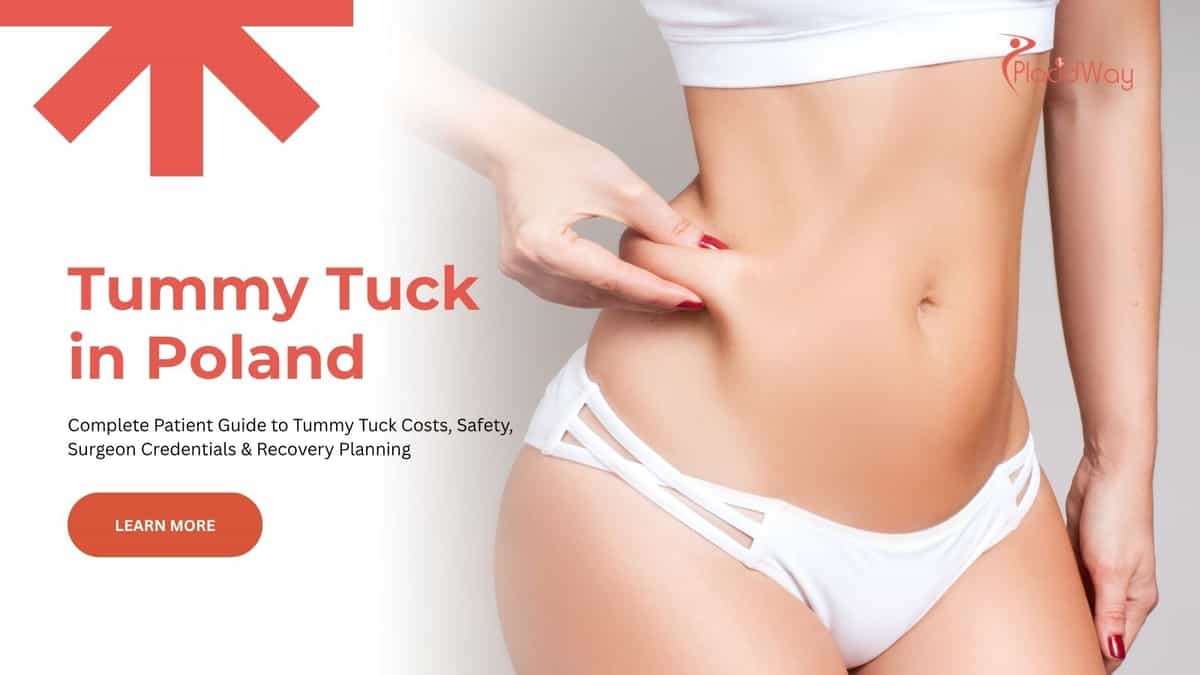
If you are struggling with loose abdominal skin or separated muscles after pregnancy or major weight loss, travelling for tummy tuck surgery in Poland offers a way to access highly qualified European surgeons at a more manageable price. To make a safe and informed decision, you need to understand exactly what the procedure involves, expect realistic surgical costs between $3,500 and $5,500 USD, and know how to verify that your chosen clinic is properly registered with the Polish Chamber of Physicians and Dentists (NIL).
Quick Summary: What You Need to Know Before Traveling
- Estimated Cost: Between $3,500 and $5,500 USD depending on the procedure's complexity and clinic location.
- Certifications to Verify: Look for surgeons registered with the Polish Chamber of Physicians and Dentists (NIL) and the Polish Society of Plastic, Reconstructive and Aesthetic Surgery (PTChPRiE).
- Ideal Candidate: You should be at a stable weight, have a BMI under 30, and be finished with future pregnancies.
- Safety Overview: Poland operates under strict European Union healthcare directives, ensuring high standards for surgical hygiene, anesthesia, and patient care.
- Recovery Time: Expect to stay in Poland for 7 to 10 days post-surgery; full physical recovery takes 6 to 8 weeks.
- Important Caution: Flying too soon after surgery increases the risk of deep vein thrombosis (DVT); always follow your surgeon's specific clearance timeline before boarding a plane.
Why Patients Travel to Poland for Abdominoplasty
Many patients feel unhappy with their abdominal profile, especially when diet and exercise cannot repair stretched skin or torn muscles. Seeking surgical solutions at home often involves long waiting lists or high private healthcare fees. This leads many international patients to look across borders for reliable alternatives.
Poland has emerged as a premier destination within Europe for cosmetic and reconstructive surgery. The country combines advanced medical infrastructure with highly specialized surgical training. Medical tourists from the UK, Germany, Scandinavia, and North America frequently choose Polish clinics for their body contouring needs.
Here are the primary reasons patients select Poland for a tummy tuck:
- Strict adherence to European Union medical and safety standards.
- Surgeons who often train internationally and hold dual board certifications.
- Significant cost savings compared to private clinics in the UK, US, or Ireland.
- Modern private hospitals equipped with dedicated intensive care units (ICUs) and advanced monitoring technology.
- English-speaking medical coordinators who handle translations, transfers, and accommodations.
- Short, direct flights from major European cities, minimizing travel stress during the recovery phase.
Patient Demographics: Who is Traveling to Poland for Plastic Surgery?
Understanding who travels for this procedure can help you feel more confident in your decision. Current healthcare travel data from 2024 to 2026 shows clear trends in international patient demographics seeking body contouring in Central Europe. The majority of these patients are women seeking postpartum restoration or post-bariatric skin removal.
Recent demographic shifts indicate that patients are prioritizing board-certified expertise and modern clinical facilities over simply finding the lowest price. The data below illustrates the distribution of patient ages seeking abdominoplasty and the steady growth of international medical arrivals to Poland for these specialized procedures.
Clinical Age Demographics of International Tummy Tuck Patients (2024 Data)
Source: Verified clinical registry trends for post-bariatric and postpartum reconstructive procedures (2024).
The core demographic remains patients between 35 and 50 years old. This aligns with the typical life stage where patients have completed their families or have achieved long-term stability after significant weight loss. These patients often combine abdominoplasty with other procedures.
Growth in International Medical Arrivals for Body Contouring in Poland (2024-2026 Projection)
Source: Projected European cross-border healthcare trends for aesthetic reconstruction (2024-2026).
Understanding the Surgical Procedure
A tummy tuck, clinically known as abdominoplasty, is a major surgical procedure designed to flatten the abdomen. It removes excess fat and skin while restoring weakened or separated muscles. This creates an abdominal profile that is smoother and firmer.
The surgery addresses a specific anatomical issue called diastasis recti. During pregnancy or significant weight gain, the connective tissue joining the two halves of the rectus abdominis muscles can stretch and thin out. Even with rigorous exercise, these muscles often cannot return to their original position. A surgeon repairs this by suturing the abdominal wall fascia back together.
Depending on your anatomy, your surgeon may recommend one of several techniques. A full abdominoplasty targets the entire abdominal area above and below the belly button. A mini tummy tuck focuses only on the area below the navel, requiring a smaller incision. For patients with massive weight loss, an extended tummy tuck addresses tissue around the hips and lower back.
Are You a Good Candidate for Surgery?
Not everyone who wants a flatter stomach is medically suited for this operation. Surgeons carefully screen patients to minimize surgical risks and ensure optimal healing. Assessing your physical health is the first step in planning your trip.
The ideal candidate is someone in good overall physical health with a stable weight. Significant weight fluctuations after the procedure can reverse the surgical outcomes. Therefore, your doctor will likely recommend that you reach your target weight before undergoing surgery.
You may be a suitable candidate if:
- Your Body Mass Index (BMI) is under 30 (some surgeons accept up to 32 depending on overall health).
- You are a non-smoker, or you are willing to stop smoking entirely at least six weeks before and after surgery.
- You do not have uncontrolled chronic conditions like severe diabetes or cardiovascular disease.
- You have realistic expectations about the resulting scar, which is permanent but typically hidden by underwear.
- You are finished having children, as future pregnancies can stretch the repaired muscles again.
Cost of Tummy Tuck Treatment in Poland
Cost is a major driving factor for patients seeking care abroad. Prices in Poland are highly competitive, largely due to lower local operational costs and a favorable exchange rate for international currencies. However, lower cost does not imply lower quality; clinical standards remain exceptionally high due to EU regulations.
When reviewing quotes, you must clearly understand what is included. Some clinics provide a base surgical price, while others offer all-inclusive medical packages. These packages typically cover the surgery, anesthesia, pre-operative testing, hospital stay, compression garments, and local transfers.
| Country | Estimated Cost Range (USD) |
|---|---|
| United States | $8,000 - $15,000 |
| United Kingdom | $7,500 - $11,000 |
| Germany | $6,500 - $9,000 |
| Poland | $3,500 - $5,500 |
Be aware of potential hidden expenses when planning your budget. Ask your clinic coordinator if the quoted price covers medical complications insurance, post-operative medications, extended hospital stays, and follow-up consultations. Flight costs and hotel accommodations for the recovery period must also be factored into your total financial plan.
Choosing the Right Hospital or Clinic in Poland
Your safety depends heavily on the quality of the facility where the surgery takes place. Poland has a well-regulated healthcare system overseen by the Ministry of Health (Ministerstwo Zdrowia). You should only consider clinics that transparently display their licensing and facility capabilities.
When evaluating a hospital, inquire about their critical care infrastructure. Tummy tucks require general anesthesia, which carries inherent risks. The clinic must have resuscitation equipment, continuous patient monitoring systems, and ideally, an on-site Intensive Care Unit (ICU) or immediate transfer protocols to a major hospital.
Facility Verification Checklist
- Is the clinic registered with the Polish Ministry of Health?
- Does the facility hold ISO 9001 certification for quality management?
- Are they accredited by the European Society for Quality in Healthcare (ESQ)?
- Do they have English-speaking staff and translators on-site 24/7?
- Is there an emergency protocol in place for surgical complications?
How to Verify Your Plastic Surgeon in Poland
The skill and experience of your surgeon are the most critical factors in achieving a safe, natural-looking result. In Poland, the title of "Plastic Surgeon" is legally protected. A doctor must complete years of general surgery training followed by specialized training in plastic surgery to use this title.
Do not rely solely on social media photos or marketing claims. You must verify their formal medical credentials. A qualified surgeon should hold active registration and specialized board certifications recognized by both national and international medical communities.
Look for the following credentials when researching your doctor:
- Naczelna Izba Lekarska (NIL): The Polish Chamber of Physicians and Dentists. You can check a doctor's registration number (PWZ) in their public registry.
- PTChPRiE: Membership in the Polish Society of Plastic, Reconstructive and Aesthetic Surgery indicates the surgeon has met strict national specialist criteria.
- International Memberships: While not mandatory, membership in ISAPS (International Society of Aesthetic Plastic Surgery) or ASPS (American Society of Plastic Surgeons) shows a commitment to global medical standards.
Step-by-Step Tummy Tuck Recovery Timeline
Recovery from an abdominoplasty is a gradual process that requires patience and strict adherence to post-operative instructions. Because abdominal muscles are heavily involved in basic movements like sitting up, walking, and coughing, the initial healing phase can be uncomfortable.
Your body will undergo significant biological changes as it heals the incisions and adjusts to the tightened muscle fascia. You will need to wear a medical-grade compression garment continuously for several weeks. This garment minimizes swelling, supports the new abdominal contours, and prevents fluid buildup (seroma).
| Timeframe | Clinical Process | Patient Sensation | Action Required |
|---|---|---|---|
| Days 1-3 | Acute inflammatory response; fluid drains via surgical tubes. | Tightness, soreness, grogginess from anesthesia. | Rest in a flexed position; short assisted walks to prevent DVT. |
| Week 1-2 | Incision begins sealing; drain tubes are typically removed. | Moderate bruising and swelling; itching near the incision. | Wear compression garment 24/7; avoid lifting anything heavy. |
| Weeks 3-4 | Internal fascia healing continues; superficial swelling reduces. | Improved mobility; pulling sensation when stretching. | Return to light desk work; continue wearing compression garment. |
| Weeks 6-8 | Soft tissue stabilization; scar tissue maturation begins. | Minimal pain; normal energy levels return. | Resume standard exercise routines upon doctor's clearance. |
Potential Risks and Safety Protocols
Every major surgery carries risks, and tummy tuck procedures are no exception. While serious complications are uncommon when performed by a qualified surgeon in a sterile environment, you must be aware of the clinical risks. Understanding these allows you to recognize early warning signs and seek prompt medical attention.
The most common post-operative issue is a seroma, which is an accumulation of clear fluid beneath the skin. Surgeons typically use small drainage tubes to prevent this. Another risk is poor wound healing or skin necrosis, which is significantly more likely in smokers or patients with poor blood circulation.
Deep Vein Thrombosis (DVT) is a serious risk for medical tourists. Long periods of immobility during surgery, combined with sitting on an airplane during the journey home, can cause blood clots in the legs. Clinics in Poland mitigate this by using compression stockings, prescribing blood thinners if necessary, and encouraging early, gentle walking after surgery.
Emergency Warning Signs
Contact your healthcare provider immediately if you experience:
- Sudden shortness of breath or chest pain (signs of a potential pulmonary embolism).
- Severe, escalating pain not relieved by prescribed medication.
- Excessive bleeding or fluid leaking heavily from the incision site.
- Redness, spreading warmth, or foul-smelling discharge indicating an infection.
- A fever exceeding 100.4°F (38°C).
Combining Procedures: The Mommy Makeover
Many patients traveling to Poland choose to combine their abdominoplasty with other aesthetic surgeries. Doing so can be cost-effective because it requires only one round of anesthesia, one hospital stay, and one consolidated recovery period. The most common combination is known as a "mommy makeover."
A mommy makeover typically pairs a tummy tuck with breast surgery, such as an augmentation, lift (mastopexy), or reduction. Liposuction is also frequently performed alongside abdominoplasty to contour the waist and flanks, creating a more dramatic, sculpted result. However, your surgeon must evaluate whether combining procedures is safe for your specific body.
Longer time under anesthesia increases surgical risks. Your doctor will carefully calculate the estimated operating time. If the combined procedures take longer than six hours, a responsible surgeon may recommend splitting the surgeries into two separate trips to prioritize your cardiovascular safety and recovery capacity.
Travel Planning and Logistics for Your Surgery in Poland
Medical tourism requires meticulous travel planning. Unlike a standard holiday, your itinerary must accommodate a significant recovery period where you will have limited mobility. Most major Polish cities with medical hubs, such as Warsaw, Krakow, Wroclaw, and Gdansk, have international airports with excellent accessibility.
You cannot fly home immediately after a tummy tuck. Changes in cabin pressure and prolonged sitting drastically increase the risk of blood clots. Surgeons in Poland typically require patients to remain in the country for 7 to 10 days post-operation. During this time, you will attend follow-up appointments to remove drains, check the incision, and receive clearance to fly.
When booking your trip, plan for a companion to travel with you if possible. You will need help carrying luggage, getting out of bed, and navigating the airport on your return journey. Many Polish clinics offer dedicated medical concierges who arrange accessible hotel rooms, airport transfers, and nursing support to make this process seamless.
Frequently Asked Questions About Tummy Tuck in Poland
Is it safe to have a tummy tuck in Poland?
Yes, it is generally safe when performed by a board-certified plastic surgeon in a licensed medical facility. Poland adheres to strict EU healthcare regulations, and many clinics utilize modern technology and maintain excellent hygiene standards.
How long do I need to stay in Poland after the surgery?
You typically need to stay in Poland for 7 to 10 days after your operation. This allows your surgeon to monitor your initial healing, remove any surgical drains, and safely clear you for air travel to prevent blood clot risks.
Will a tummy tuck get rid of my stretch marks?
A tummy tuck can remove stretch marks located on the skin that is excised, which is usually the area below the belly button. However, stretch marks outside the removal zone, such as on the upper abdomen or flanks, will remain.
What is the difference between a mini and a full tummy tuck?
A full tummy tuck addresses the entire abdominal wall, requiring a hip-to-hip incision and repositioning of the belly button. A mini tummy tuck focuses only on the lower abdomen below the navel, requiring a smaller incision and no navel repositioning.
Are the results of an abdominoplasty permanent?
The removal of excess skin and fat is permanent, and repaired muscles generally stay intact. However, significant weight fluctuations, aging, or future pregnancies can stretch the tissues again, potentially reversing the surgical results.
Can I get pregnant after having a tummy tuck?
You can safely get pregnant after the procedure, but doctors strongly advise waiting until your family is complete. Pregnancy will stretch the repaired abdominal muscles and skin, which may require a revision surgery to correct later.
How bad is the scarring, and where will it be?
The scar runs horizontally across the lower abdomen, just above the pubic area, designed to be hidden by underwear or a bikini. While the scar is permanent, it typically fades significantly over 12 to 18 months with proper scar care.
Does the quoted cost usually include anesthesia and hospital stay?
In Poland, many clinics offer all-inclusive packages that cover the surgeon's fee, anesthesia, operating room costs, and the required overnight hospital stay. However, you must always request a written, itemized quote to confirm exact inclusions.
How do I communicate with medical staff if I don't speak Polish?
The vast majority of top private clinics catering to international patients employ fluent English-speaking surgeons and nurses. Clinics often assign a dedicated English-speaking patient coordinator to assist you throughout your entire medical journey.
What happens if there is a surgical complication after I return home?
Before booking, you should verify the clinic's revision policy. Many top clinics provide medical complications insurance or offer free revision surgeries for clinical errors. However, you would need to consult a local doctor immediately for urgent post-travel emergencies.
Ready to Explore Your Options in Poland?
PlacidWay can help you compare trusted providers, understand treatment costs, and request information from board-certified plastic surgeons in Poland.
Request Free InformationDisclaimer: This information is for educational purposes only and does not replace professional medical advice. Always consult a qualified healthcare provider before making medical decisions.
References
- Tummy Tuck (Abdominoplasty) Overview – National Health Service (NHS)
- Tummy Tuck Safety and Risks – American Society of Plastic Surgeons (ASPS)
- Verification of Medical Credentials – Polish Chamber of Physicians and Dentists (NIL)
- Global Surgical Statistics and Patient Demographics (2024 Data) – International Society of Aesthetic Plastic Surgery (ISAPS)
- Abdominoplasty Procedure Details and Patient Suitability – Mayo Clinic
- Board Certification Standards – Polish Society of Plastic, Reconstructive and Aesthetic Surgery (PTChPRiE)
- Complications and Recovery in Post-Bariatric Body Contouring – National Center for Biotechnology Information (NCBI)

























Share this listing