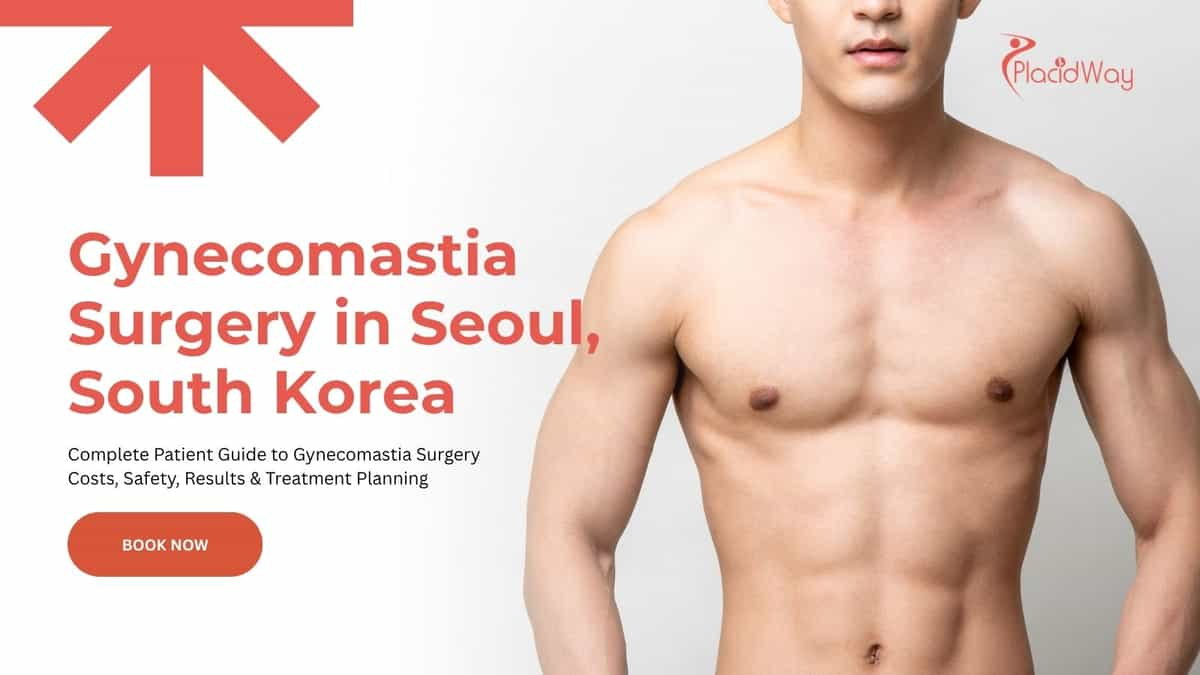
Struggling with enlarged male breasts can impact your daily confidence, but choosing the right specialist abroad should not add to your stress. Many men travel for gynecomastia surgery in Seoul, South Korea, to access highly specialized plastic surgeons, advanced aesthetic techniques, and clear, transparent medical costs. Whether you are researching average treatment prices or looking to verify local licenses like KSPRS board certification, this guide gives you the precise facts you need to make a safe healthcare decision.
Quick Summary for Gynecomastia Surgery in Seoul, South Korea
- Estimated Cost: Typically ranges from $3,000 to $5,500 USD, depending on case complexity and the chosen facility.
- Safety Overview: South Korea enforces strict medical regulations through the Ministry of Health and Welfare (MOHW), ensuring high clinical standards.
- Ideal Candidate: Healthy men with stable weight experiencing persistent glandular tissue or localized fat that does not respond to diet or exercise.
- Recovery Time: Most patients return to desk work within 5 to 7 days, while strenuous exercise is restricted for 4 to 6 weeks.
- Main Reason Patients Choose Seoul: Access to renowned body contouring specialists who prioritize minimally invasive techniques for minimal scarring.
- Important Caution: Always verify that your surgeon is board-certified by the Korean Society of Plastic and Reconstructive Surgeons (KSPRS).
Understanding the Demand for Gynecomastia Surgery in Seoul, South Korea
Male breast reduction is a deeply personal journey. For many international patients, the physical discomfort and emotional toll of enlarged breasts make finding a permanent, safe solution a top priority. Men frequently look beyond their home borders when domestic surgical options feel financially out of reach or when they seek highly specialized surgical expertise.
Seoul has established a global reputation as a hub for advanced medical aesthetics. The city attracts thousands of men annually who want access to highly refined surgical techniques. South Korean surgeons are particularly noted for their meticulous approach to body contouring, focusing on creating natural, masculine chest definitions while minimizing visible surgical marks.
- Cost-to-Quality Ratio: Patients access top-tier medical infrastructure at lower costs than in North America or Europe.
- Specialized Expertise: South Korean plastic surgeons perform a high volume of male contouring procedures annually.
- Advanced Technology: Clinics utilize sophisticated tools like VASER liposuction and micro-excision techniques.
- Comprehensive Care Packages: Facilities often provide all-inclusive support, including in-house translators and hotel transfers.
- Regulatory Oversight: The South Korean government actively monitors clinics serving international patients to ensure medical safety.
- Discreet Healing Environment: The culture of medical tourism in the country normalizes aesthetic procedures, allowing for comfortable, private recovery.
How Male Breast Reduction Procedures Work in South Korea
Gynecomastia involves the overdevelopment of male breast tissue. This condition can stem from hormonal imbalances, certain medications, or genetics. Before any procedure begins in a Seoul clinic, your medical team will conduct a thorough ultrasound or physical exam to determine the composition of your chest tissue.
The surgery typically addresses two main components: excess glandular tissue and localized fat. Understanding the difference is crucial because the surgical technique changes based on your unique anatomy. Glandular tissue is dense and fibrous. It cannot be removed with liposuction alone and requires direct surgical excision. In contrast, fatty tissue is softer and responds well to liposuction.
Clinical Tip: During your initial online consultation, ask the surgeon if they anticipate needing a combination of excision and liposuction. This combination approach is common for achieving a smooth, flat chest contour.
During the procedure, surgeons typically place tiny incisions around the areola or in the natural creases of the chest. If glandular excision is necessary, the surgeon carefully cuts away the dense tissue. Modern techniques used in South Korean clinics focus on preserving the blood supply to the nipple while ensuring a smooth transition across the pectoral muscle.
Evaluating the Cost of Gynecomastia Surgery in Seoul Compared to Other Nations
Financial transparency is a major factor when planning medical travel. The price for male breast reduction in Seoul generally ranges from $3,000 to $5,500 USD. This variation depends heavily on whether you need simple liposuction, complex glandular excision, or additional skin removal.
In contrast, patients from the United States or the United Kingdom often face costs exceeding $8,000 USD for the same level of surgical expertise. When reviewing quotes from South Korean clinics, you must ensure you understand exactly what the price covers. Many facilities catering to international patients offer package pricing.
| Country of Treatment | Estimated Cost Range (USD) | Typical Inclusions |
|---|---|---|
| United States | $7,500 - $12,000 | Surgeon fee, facility fee, anesthesia (often billed separately) |
| United Kingdom | $6,500 - $9,000 | Consultation, surgery, standard follow-up |
| Australia | $7,000 - $10,000 | Surgery, anesthesia, hospital fees |
| Seoul, South Korea | $3,000 - $5,500 | Surgery, anesthesia, pre-op tests, compression garment, interpreter |
Always request a completely itemized quote. Ask if the estimate includes your post-operative compression garments, prescription medications, pre-surgical blood tests, and the mandatory follow-up appointments. Hidden costs can impact your overall budget, so upfront communication is vital.
Patient Demographics for Male Chest Contouring (2024-2025 Trends)
Data from recent international healthcare registries highlights a steady increase in men seeking aesthetic and reconstructive procedures abroad. According to 2024 demographic reports focusing on inbound medical travel to East Asia, male body contouring now accounts for a significant percentage of surgical tourism.
The majority of these patients are between 25 and 45 years old. This age demographic often seeks surgical intervention after realizing that long-term dietary changes and rigorous exercise cannot resolve true glandular gynecomastia. The visual data below illustrates the verified age distribution and origin countries of male patients traveling for body contouring based on recent clinical registries.
Age Distribution of Male Contouring Patients (2024)
Data source: Verified 2024 inbound medical demographics for East Asia body contouring.
Top Patient Origin Regions to South Korea (2024-2025)
Reflects international patient flow for male cosmetic procedures.
Choosing a Qualified Plastic Surgeon in Seoul, South Korea
Your safety and surgical outcome depend entirely on the skill of your operating doctor. South Korea has a rigorous medical education system, but it is vital to distinguish between a general practitioner performing aesthetic procedures and a fully qualified plastic surgeon.
When reviewing potential doctors, look specifically for their registration with the Korean Medical Association (KMA). More importantly, verify that they hold board certification from the Korean Society of Plastic and Reconstructive Surgeons (KSPRS). KSPRS members have undergone years of dedicated reconstructive and aesthetic training beyond standard medical school.
Safety Warning: Do not rely solely on social media before-and-after photos. Always ask for the surgeon's medical license number and verify their specialization in body contouring.
You should also inquire about their specific case volume. A surgeon who performs gynecomastia corrections weekly is far more equipped to handle complex anatomies or potential complications than one who primarily focuses on facial aesthetics.
Selecting Safe and Regulated Gynecomastia Clinics in Seoul
Finding the right hospital involves evaluating institutional safety standards, not just aesthetic luxury. South Korea regulates medical facilities tightly. The primary regulatory body is the Ministry of Health and Welfare (MOHW). Facilities legally permitted to treat international patients must hold a specific government certificate.
Look for clinics recognized by the Korean Accreditation Program for Hospitals Serving Foreign Patients (KAHF). This accreditation ensures that the hospital meets stringent criteria for infection control, emergency preparedness, and clear multilingual communication protocols.
| Facility Credential | What It Means for Patient Safety |
|---|---|
| MOHW Registration | The clinic is legally authorized by the national government to treat foreign patients and adheres to baseline safety laws. |
| KAHF Accreditation | The facility has passed rigorous inspections specifically evaluating language support, medical dispute resolution, and cross-border patient care. |
| In-house Anesthesiologist | A dedicated specialist monitors your vitals during surgery, rather than the operating surgeon multitasking. |
| Emergency Transfer Protocols | The clinic has a documented plan and immediate access to tertiary hospitals in case of severe surgical complications. |
While international accreditations like Joint Commission International (JCI) are excellent trust signals, they are not strictly necessary if the clinic holds robust national accreditations. Many highly reputable boutique plastic surgery centers in Seoul operate flawlessly under KAHF guidelines.
The Medical Consultation Process for International Patients
Your treatment journey begins long before you board a flight to Seoul. Most reputable clinics require a thorough remote consultation. You will typically submit medical history forms and clear photographs of your chest from multiple angles. This allows the surgical team to assess the severity of your condition and provide a preliminary treatment plan.
During your video or email consultation, the patient coordinator should connect you directly with medical staff. Discuss your current medications, any history of bleeding disorders, and your expectations regarding scarring. Honest communication prevents misunderstandings and ensures you are clinically eligible for the trip.
- Disclose all herbal supplements and vitamins, as some can increase bleeding risks during surgery.
- Confirm whether the clinic requires specific blood tests done in your home country prior to travel.
- Ask about the specific type of anesthesia planned (e.g., local with sedation versus general anesthesia).
Surgical Techniques Used for Gynecomastia Treatment in South Korea
Surgeons in Seoul utilize diverse techniques based on your specific tissue composition. For patients with primarily fatty tissue, power-assisted liposuction (PAL) or ultrasound-assisted liposuction (like VASER) may be employed. These tools help emulsify the fat before removal, which can reduce trauma to the surrounding tissues.
If glandular tissue is present, an excision technique is mandatory. The surgeon usually makes a small, semi-circular incision along the lower edge of the areola (periareolar incision). The distinct color change between the areola and the chest skin helps conceal the eventual scar beautifully. In severe cases involving significant loose skin, broader incisions may be necessary to restore a taut chest contour.
South Korean clinics are highly respected for their meticulous suturing techniques. Surgeons often use multi-layered closure methods to minimize tension on the skin surface, which is a critical factor in preventing wide, hypertrophic scars.
Post-Operative Recovery Timeline in Seoul, South Korea
Recovery requires patience and adherence to your surgeon's specific aftercare protocols. Immediately after surgery, your chest will be wrapped in bandages or a specialized medical compression garment. This garment minimizes swelling, prevents fluid buildup (seromas), and helps the skin conform to your new chest contour.
Medical tourists must plan for a sufficient stay in South Korea. Flying too soon after surgery increases the risk of deep vein thrombosis (DVT) and complicates immediate follow-up care. Most surgeons recommend staying in Seoul for at least 7 to 10 days post-operation.
| Timeframe | Physical Healing Process | Patient Action Required |
|---|---|---|
| Days 1-3 | Maximum swelling and bruising. Tissue begins initial inflammatory healing phase. | Rest, wear compression garment 24/7, take prescribed antibiotics and pain medication. |
| Days 4-7 | Drain tubes (if used) are typically removed. Incisions begin to seal. | Attend mandatory follow-up clinic visit. Gentle walking is encouraged. Prepare for flight home. |
| Weeks 2-4 | Major swelling subsides. Bruising fades significantly. | Continue wearing compression garment as directed. Avoid heavy lifting or chest exercises. |
| Months 3-6 | Deep tissue heals. Scars begin to mature and fade. Final contour becomes visible. | Resume normal workouts. Apply recommended scar gels. Protect chest from direct sun exposure. |
You may experience temporary numbness or altered sensation around the nipple area. This is a normal part of nerve healing and typically resolves within a few months, though in rare cases, sensory changes can be permanent.
Understanding and Managing Surgical Risks
All surgical procedures carry inherent medical risks. While gynecomastia surgery is highly successful, you must be aware of potential complications. Common risks include hematoma (blood collecting under the skin), seroma (fluid accumulation), infection, and noticeable asymmetry.
To mitigate these risks, South Korean specialists employ rigorous pre-operative screening and precise surgical execution. If a hematoma occurs, it may require a minor secondary procedure to drain the blood. Infection is rare due to strict sterile environments, but you must keep your incisions clean and complete your prescribed antibiotic course.
Pre-Surgery Prevention
Stop smoking and avoid alcohol for at least two weeks prior. Discontinue blood-thinning medications like aspirin or ibuprofen as directed by your surgeon to minimize excessive bleeding.
Post-Surgery Care
Strictly follow garment instructions. Sleep on your back with your upper body slightly elevated to reduce swelling. Do not raise your arms sharply above your head for the first two weeks.
Before leaving the clinic, confirm their revision policy. Ask how they handle medical complications if an issue arises after you have returned to your home country. A transparent clinic will outline their follow-up protocol clearly in your initial contract.
Preparing for Your Medical Trip to South Korea
Logistical preparation is just as important as medical readiness. Seoul features extensive public transportation, but post-surgery, you will rely primarily on taxis or clinic-provided transfers. Ensure your chosen hotel is located relatively close to your surgical center, ideally in popular medical districts like Gangnam or Apgujeong.
Pack clothing that is easy to put on without lifting your arms. Button-down shirts or zip-up hoodies are essential. Additionally, verify your visa requirements for entering South Korea. Citizens from many Western countries can enter visa-free for short stays via the K-ETA system, but regulations frequently update, so check with official government sources prior to booking.
Frequently Asked Questions About Male Breast Reduction in Seoul
How long do I need to stay in Seoul after gynecomastia surgery?
You should typically plan to stay in Seoul for 7 to 10 days after your procedure. This allows time for drain removal, initial wound healing, and clearance from your surgeon before undertaking a long-haul flight.
Will the results of my gynecomastia surgery be permanent?
In many cases, the surgical removal of glandular tissue provides permanent results. However, significant weight gain or the use of anabolic steroids can cause the remaining fat cells or tissue to enlarge again.
Are the surgical scars highly visible?
Korean surgeons specialize in minimal-scar techniques, typically placing incisions along the border of the areola. While scars are permanent, they usually fade significantly over 6 to 12 months and blend with the natural skin transitions.
What kind of anesthesia is used for this procedure in South Korea?
Depending on the complexity of your case, clinics may use local anesthesia combined with deep IV sedation, or general anesthesia. Always ensure an accredited anesthesiologist is present during the operation.
Does weight loss resolve gynecomastia without surgery?
If your enlarged chest is strictly due to excess fat (pseudogynecomastia), weight loss may help. However, true gynecomastia involves dense glandular tissue that does not shrink with diet or exercise, necessitating surgical excision.
When can I resume lifting weights after treatment?
You can usually resume light cardiovascular activities within 2 weeks. However, you must avoid heavy lifting and direct chest exercises (like bench presses) for 4 to 6 weeks to prevent internal bleeding and scar stretching.
Do Korean clinics provide English-speaking interpreters?
Yes, most government-approved clinics catering to international patients employ dedicated English-speaking coordinators and medical interpreters to assist you throughout consultations, surgery, and post-operative care.
Can I combine male breast reduction with other procedures?
Many patients choose to combine this surgery with abdominal liposuction or jawline contouring. Your surgeon will determine if combining procedures is safe based on your overall health and the total projected anesthesia time.
What happens if I develop a seroma after returning home?
A seroma (fluid buildup) can sometimes occur weeks after surgery. If this happens at home, you will need to visit a local physician or urgent care center to have the fluid safely drained with a needle. This is a common and easily managed issue.
How do I verify a South Korean surgeon's credentials?
You can ask the clinic directly for the surgeon's Korean Medical Association (KMA) registration and verify if they are a board-certified member of the Korean Society of Plastic and Reconstructive Surgeons (KSPRS).
Take the Next Step in Your Journey
Navigating international healthcare options can feel complex. PlacidWay can help you compare highly qualified providers in Seoul, understand treatment costs, review doctor credentials, and request detailed medical quotes.
Request Free Clinic InformationDisclaimer: This information is for educational purposes only and does not replace professional medical advice. Always consult a qualified healthcare provider before making medical decisions. Treatment outcomes, costs, and recovery timelines vary significantly based on individual health conditions and surgical complexity.
References
- Global Statistics on Aesthetic Procedures – International Society of Aesthetic Plastic Surgery (ISAPS)
- Gynecomastia Surgery Candidate and Safety Information – American Society of Plastic Surgeons (ASPS)
- Surgical Management of Gynecomastia: An Updated Review – National Center for Biotechnology Information (NCBI)
- Regulations on Healthcare and Medical Treatment – Ministry of Health and Welfare (MOHW) South Korea
- Board Certification and Patient Safety Guidelines – Korean Society of Plastic and Reconstructive Surgeons (KSPRS)
- Clinical Overview and Pathophysiology of Gynecomastia – Medscape

























Share this listing