
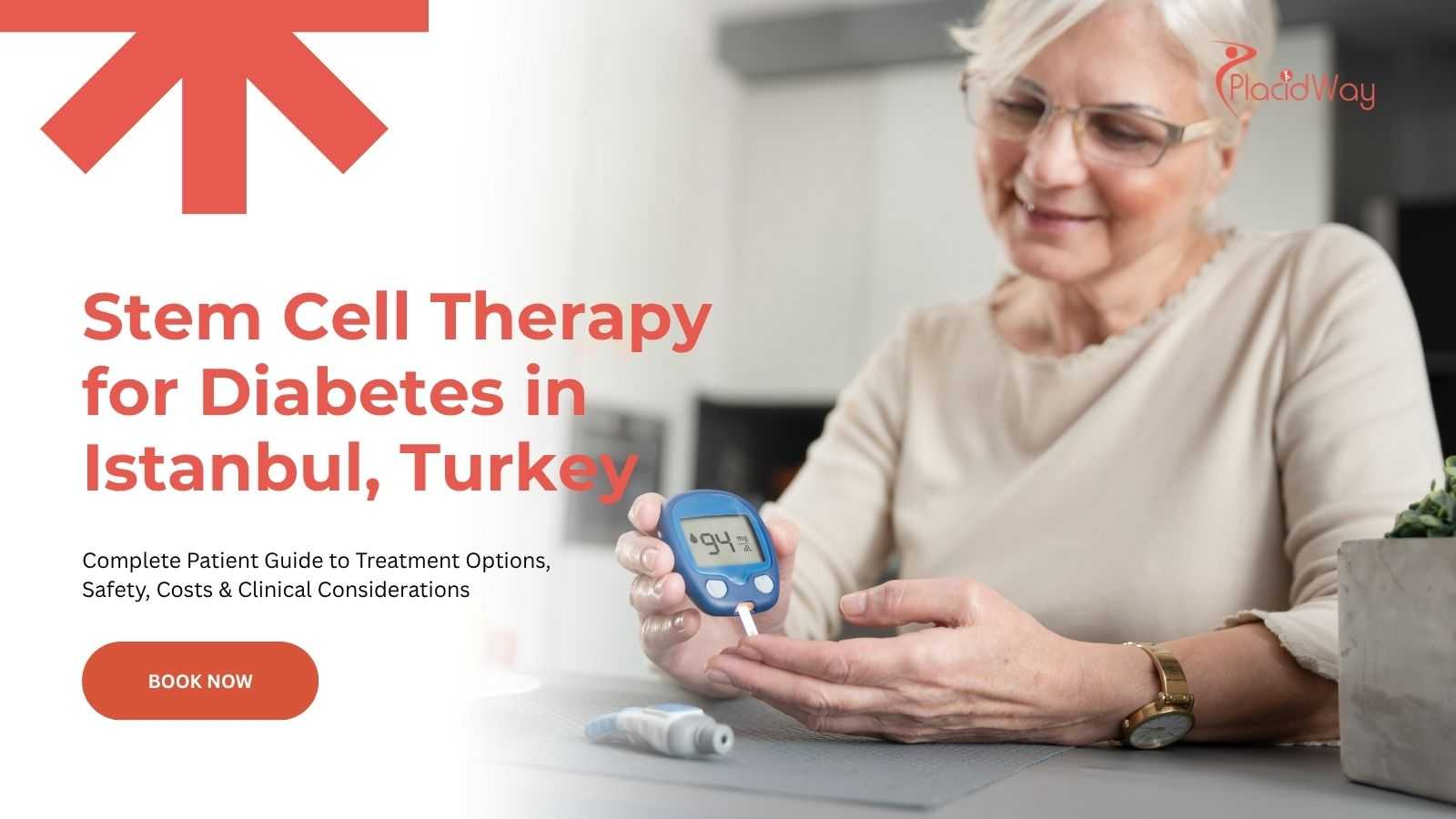
Patients dealing with advanced diabetes often search for alternative ways to manage insulin dependence and cellular inflammation. If you are researching stem cell therapy for diabetes in Istanbul, Turkey, you likely have questions about whether this treatment is safe, how much it costs, and if it can actually improve your quality of life. This guide helps you navigate Turkish healthcare regulations, understand what specific Good Manufacturing Practice (GMP) lab certifications to look for, and evaluate the realistic outcomes of regenerative medicine abroad.
Quick Summary: Stem Cell Therapy for Diabetes in Istanbul
- Estimated Cost: Typically ranges from $6,000 to $12,000 USD, depending on the type of stem cells used, laboratory processing, and package inclusions.
- Safety Overview: Generally well-tolerated when using autologous (your own) or ethically sourced umbilical cord mesenchymal stem cells, provided the clinic uses a Turkish Ministry of Health-approved, GMP-certified laboratory.
- Ideal Candidate: Patients with Type 2 diabetes struggling with insulin resistance, or early-stage Type 1 patients looking to protect remaining beta-cell function. It is not a guaranteed cure.
- Recovery Time: The infusion itself takes a few hours. Most patients can travel home within 3 to 5 days, though biological changes in blood glucose may take 3 to 6 months to evaluate.
- Why Istanbul: Access to advanced GMP-certified regenerative medicine laboratories, highly trained endocrinologists, and medical costs that are significantly lower than in the US or Europe.
- Important Caution: Stem cell therapy for diabetes remains an investigational treatment. Always prioritize clinics with documented medical board certifications and transparent clinical protocols.
Introduction to Stem Cell Therapy for Diabetes in Istanbul, Turkey
Managing diabetes through conventional medications and daily insulin injections can be physically and emotionally exhausting. Many international patients look beyond their home countries for regenerative medicine approaches that aim to address the underlying cellular dysfunction rather than just managing symptoms. Stem cell therapy for diabetes focuses on reducing systemic inflammation, improving insulin sensitivity, and potentially protecting pancreatic beta cells.
When searching for medical destinations, Istanbul consistently emerges as a leading hub for regenerative therapies. Patients travel to Turkey for several key reasons:
- Access to state-of-the-art laboratories operating under strict Good Manufacturing Practice (GMP) guidelines.
- Highly regulated stem cell processing overseen by the Turkish Ministry of Health.
- Comprehensive medical packages that include endocrinology evaluations, treatment, and follow-up care.
- Shorter wait times for specialized treatments compared to nationalized healthcare systems in the UK or Canada.
- Availability of multidisciplinary medical teams specializing in cellular therapy and metabolic diseases.
Understanding Diabetes and Cellular Therapy
To understand how stem cell therapy may help, you first need to understand how diabetes affects the body. Diabetes mellitus is a metabolic disease characterized by chronic high blood sugar levels. In Type 1 diabetes, the body’s immune system mistakenly attacks and destroys the insulin-producing beta cells in the pancreas. In Type 2 diabetes, the body becomes resistant to the insulin it produces, eventually leading to beta-cell exhaustion.
Conventional treatments replace missing insulin or force the body to utilize it better. However, they do not repair damaged tissue or reset the immune system. This is where regenerative medicine comes in. Stem cells, specifically Mesenchymal Stem Cells (MSCs), possess unique immunomodulatory properties.
When introduced into the body, MSCs may help regulate the immune system, potentially halting the autoimmune attack in Type 1 diabetes. For Type 2 diabetes, these cells secrete anti-inflammatory cytokines that can reduce systemic inflammation and improve the body's natural insulin sensitivity.
Types of Stem Cells Used for Diabetes Treatment in Turkey
Not all stem cell therapies are the same. Clinics in Istanbul typically utilize specific types of stem cells depending on your medical history, diagnosis, and the specialist's protocol. The two most common types used for metabolic conditions are autologous and allogeneic mesenchymal stem cells.
Autologous stem cells are harvested from your own body. Doctors usually extract these from your adipose (fat) tissue or bone marrow. Because they are your own cells, there is virtually zero risk of immune rejection. However, the quality of autologous cells can be affected by your age and how long you have had diabetes.
Allogeneic stem cells are ethically sourced from healthy donors, most commonly from umbilical cord tissue (Wharton’s Jelly) after a healthy birth. These cells are young, highly active, and processed in GMP-certified laboratories. Umbilical cord MSCs are immune-privileged, meaning they rarely trigger an immune response, making them a popular choice for diabetes treatment in Istanbul.
| Stem Cell Source | Origin | Primary Benefit | Processing Time |
|---|---|---|---|
| Adipose-Derived (Autologous) | Patient's own fat tissue | Zero rejection risk | Same day or overnight |
| Bone Marrow (Autologous) | Patient's own bone marrow | Rich in hematopoietic cells | Same day |
| Umbilical Cord (Allogeneic) | Healthy donor cord tissue | Highly potent, young cells | Pre-processed in GMP lab |
Clinical Expectations and Realistic Treatment Goals
It is vital to approach stem cell therapy for diabetes with realistic expectations. This treatment is not a magic cure, and it will not allow you to instantly stop taking your prescribed medications or insulin. The primary goal of cellular therapy is disease management, slowing progression, and improving your overall quality of life.
In clinical settings, doctors monitor specific biomarkers to gauge the therapy's success. The most common metric is HbA1c, which measures your average blood sugar levels over three months. Patients may also track C-peptide levels, which indicate how much natural insulin the pancreas is still producing.
Successful treatment outcomes may include a gradual reduction in HbA1c levels, stabilized fasting blood glucose, and a potential decrease in the daily required dosage of exogenous insulin. Furthermore, patients often report improvements in secondary diabetes complications, such as reduced neuropathic pain and better energy levels due to decreased systemic inflammation.
Patient Demographics and Global Travel Trends (2024 Data)
Istanbul has seen a steady increase in international patients seeking regenerative medicine. Understanding patient demographics helps illustrate who is traveling for this specific care. Recent 2024 data regarding international health travel to Turkey highlights distinct patterns in patient origin and motivation.
Patients traveling for metabolic cellular therapies primarily originate from regions where such treatments are either prohibitively expensive or strictly limited to early-phase clinical trials. Western Europe, the Middle East, and North America represent the largest inbound demographics for regenerative therapies.
2024 International Patient Origins for Regenerative Therapies in Turkey
Percentage share of international patients traveling to Turkey for cellular and regenerative medicine (Verified 2024 medical travel datasets).
Patient Suitability and Eligibility Assessment
Not every patient with diabetes will benefit from stem cell therapy. Reputable clinics in Istanbul perform rigorous medical screening to determine your eligibility. This assessment ensures patient safety and prevents individuals from spending money on a treatment that is unlikely to yield results.
An ideal candidate for Type 2 diabetes stem cell therapy is typically someone who has had the condition for fewer than 10 to 15 years, still has some natural pancreatic function, and is struggling to manage their condition despite adherence to diet and medication. For Type 1 diabetes, candidates are often those recently diagnosed, as the goal is to intervene before all beta cells are completely destroyed.
Patients who are generally disqualified from receiving stem cell therapy include those with active cancer, severe active infections, unmanaged cardiovascular disease, or end-stage renal failure. Your medical history, recent blood panels, and current medication list must be thoroughly reviewed by a hematologist and an endocrinologist before approval.
Cost of Stem Cell Therapy for Diabetes in Istanbul
Financial transparency is a major factor for patients planning medical travel. The cost of stem cell therapy for diabetes in Istanbul is highly variable. Pricing depends on the specific protocol designed by your doctor, the source of the stem cells, the required cell count (dosage), and the facility's clinical standards.
In general, you can expect the cost in Istanbul to range between $6,000 and $12,000 USD. Autologous treatments using fat or bone marrow tend to be on the lower end of this spectrum. Allogeneic treatments utilizing millions of expanded umbilical cord stem cells from a GMP-certified laboratory often fall on the higher end due to complex manufacturing and purification processes.
Most top-tier hospitals in Istanbul provide comprehensive packages. It is important to ask for a written, itemized quote. Ensure you understand what is included, such as pre-treatment blood work, specialist consultations, the stem cell infusion, VIP airport transfers, and post-treatment medical follow-ups.
| Treatment Component | Typical Inclusion Status |
|---|---|
| Endocrinology Consultation | Usually Included |
| Stem Cell Laboratory Processing | Included (Core Cost) |
| Infusion Procedure and Monitoring | Usually Included |
| Flights and Accommodation | Rarely Included (Patient Responsibility) |
| Post-treatment Nutritional Guidance | Varies by Clinic |
Cost Comparison by Country
To understand the financial value of traveling to Turkey, it is helpful to compare estimated treatment costs across different medical tourism destinations. The primary driver of these price differences is the cost of laboratory operation, local regulatory fees, and standard healthcare administrative costs in each respective country.
In the United States, regenerative therapies are highly regulated, and out-of-pocket costs for specialized stem cell processing can exceed $20,000 to $30,000 USD, often with limited availability outside of clinical trials. In contrast, destinations like Mexico and Turkey offer safe, regulated alternatives at a fraction of the cost.
Istanbul remains highly competitive. The country has invested heavily in health tourism infrastructure, allowing clinics to utilize cutting-edge medical technology and GMP-certified labs without the inflated administrative overhead found in North American healthcare systems.
| Destination Country | Estimated Cost Range (USD) | Primary Appeal |
|---|---|---|
| Istanbul, Turkey | $6,000 - $12,000 | GMP labs, affordable comprehensive packages |
| United States | $20,000 - $35,000+ | Domestic convenience, specific clinical trials |
| Mexico | $7,000 - $14,000 | Proximity to North America |
| Panama | $15,000 - $25,000 | Established specialized institutes |
Step-by-Step Treatment Process in Istanbul
Understanding the exact sequence of events helps alleviate travel anxiety. The treatment journey in Istanbul is usually well-structured. Most accredited clinics assign a dedicated international patient coordinator who speaks your language and manages your itinerary from the moment you arrive.
Your journey begins before you even book a flight. You will participate in a secure telemedicine consultation where a Turkish specialist reviews your medical records and recent HbA1c results. Once approved, you can schedule your travel. Upon arriving in Istanbul, the clinic normally arranges airport pickup and transports you to your hotel or the hospital.
Day one usually involves in-person consultations, comprehensive blood tests, and physical examinations. Depending on the type of stem cells used, day two may involve the cell extraction (if autologous) or the preparation of donor cells. The actual infusion, typically administered via intravenous (IV) drip, takes place on day two or three. You will remain under medical observation for several hours post-infusion to ensure there are no immediate adverse reactions.
Recovery Timeline and Biological Response
The physical recovery from the stem cell infusion procedure is very brief. The IV drip itself is minimally invasive. If you underwent liposuction or bone marrow aspiration for autologous cells, you may experience mild soreness or bruising at the extraction site for a few days. However, the biological recovery—the period during which the stem cells exert their therapeutic effects—is much longer.
Stem cells do not alter blood glucose levels overnight. The immunomodulatory and anti-inflammatory processes take time. You may not notice any changes in your daily blood sugar readings for the first few weeks. True clinical evaluation typically begins at the three-month mark.
During this biological recovery phase, it is crucial to maintain strict adherence to your current diabetes management plan. Continuing to eat a balanced diet, exercising regularly, and taking your prescribed medications ensures the best possible environment for the stem cells to function effectively.
2024 Clinical Observation: MSC Clinical Trials in Type 2 Diabetes
Cumulative number of registered global clinical trials investigating Mesenchymal Stem Cells for Type 2 Diabetes (Data up to 2024).
Risks, Complications, and Safety Considerations
Patient safety must always be the top priority when evaluating cellular therapies. While stem cell therapy for diabetes is generally well-tolerated, it is not completely risk-free. Because the treatment involves intravenous administration, there is a standard medical risk of minor infection, bleeding at the injection site, or mild fever shortly after the procedure.
A specific risk associated with unverified clinics is cellular contamination. If stem cells are not processed in a strictly controlled laboratory setting, bacterial or viral contamination can occur, leading to severe systemic infections. Furthermore, using unapproved cell types or receiving treatment from unqualified practitioners can result in adverse immune reactions.
To mitigate these risks, your chosen provider in Istanbul must have clear protocols for complication management. Ask the clinic about their follow-up schedule and what emergency support they provide. Reputable hospitals will always have an intensive care unit (ICU) on-site or immediate transfer access in the rare event of a severe adverse reaction.
Choosing a Clinic: Turkish Regulations and Certifications
Istanbul boasts world-class healthcare facilities, but medical tourism requires diligent vetting. In Turkey, regenerative medicine and stem cell therapies are tightly regulated by the Turkish Ministry of Health (Sa?l?k Bakanl???). You should never choose a clinic based solely on marketing materials or low prices.
When selecting a hospital or clinic, the most important credential to look for is Good Manufacturing Practice (GMP) certification for their stem cell laboratory. GMP ensures that the cells are cultured, processed, and stored in a sterile, quality-controlled environment. Additionally, verify that the facility holds a valid Health Tourism Authorization Certificate, which is legally required by the Turkish government to treat international patients.
While international accreditations like Joint Commission International (JCI) are excellent indicators of overall hospital quality, the GMP certification and Ministry of Health licensing are the absolute most critical requirements specifically for safe stem cell processing in Turkey.
Verifying Doctor Credentials in Istanbul
The success and safety of your treatment rely heavily on the medical professional designing your therapy protocol. Stem cell therapy for diabetes should not be administered by general practitioners or aesthetic doctors. The medical team should consist of board-certified specialists.
Look for doctors who are registered with the Turkish Medical Association (Türk Tabipleri Birli?i). The lead physician managing your case should ideally be a board-certified endocrinologist or hematologist with specific, documented experience in cellular therapies. You have the right to request the doctor’s curriculum vitae (CV) to review their medical schooling, fellowship training, and years of experience.
During your initial consultation, evaluate the doctor's communication style. A trustworthy specialist will patiently explain the limitations of the treatment, discuss potential risks, and refuse to guarantee a complete cure for your diabetes. Transparency is a hallmark of medical professionalism.
Travel Planning and Medical Visas for Turkey
Traveling to Istanbul for medical care is generally straightforward for international visitors. Turkey offers modern airport infrastructure, specifically the new Istanbul Airport (IST), which serves as a major global transit hub. Depending on your nationality, you may need a visa to enter the country.
Many patients from the US, UK, and EU can easily obtain an electronic visa (e-Visa) online prior to departure. The medical tourism visa process is quick and inexpensive. Ensure your passport is valid for at least six months from your date of entry.
When planning your trip, consider arriving a day or two before your first clinical appointment to allow your body to adjust to the time zone. While the medical process takes only a few days, many patients extend their stay in Istanbul to rest and recover in a comfortable hotel before flying home. Always confirm that your clinic package includes ground transportation, as navigating Istanbul traffic immediately after medical treatment can be stressful.
Frequently Asked Questions
Patients researching stem cell therapy for diabetes in Istanbul frequently ask these common questions. The answers provided below aim to offer clear, medically cautious guidance.
Is stem cell therapy a permanent cure for diabetes?
No, stem cell therapy is not considered a permanent cure for diabetes. It is an investigational treatment aimed at managing the disease, reducing systemic inflammation, improving insulin sensitivity, and potentially lowering HbA1c levels. Ongoing conventional medical management is still required.
Is it safe to get stem cell therapy in Istanbul?
Yes, it can be safe if you choose a fully licensed and regulated facility. You must ensure the clinic is certified by the Turkish Ministry of Health and utilizes a GMP-certified laboratory for all stem cell processing to minimize the risk of contamination or complications.
Which type of stem cell is best for Type 2 diabetes?
Many specialized clinics in Istanbul prefer using allogeneic Mesenchymal Stem Cells (MSCs) derived from ethically sourced umbilical cord tissue for Type 2 diabetes. These young cells are highly potent and have strong anti-inflammatory properties without triggering immune rejection.
How long does the treatment process take in Turkey?
The actual medical process typically takes 3 to 5 days. This timeframe includes initial blood tests, medical consultations, the preparation of the stem cells, the intravenous infusion procedure, and post-infusion monitoring before you are cleared to fly home.
Will I be able to stop taking insulin after treatment?
You should never expect to completely stop taking insulin immediately after treatment. While some patients may see a reduction in their required insulin dosage over several months as insulin sensitivity improves, this must be carefully managed and approved by your primary endocrinologist.
Are there any side effects from the IV stem cell infusion?
Most patients tolerate the IV infusion well. Minor side effects may include a low-grade fever, mild fatigue, or slight bruising at the IV insertion site lasting for 24 to 48 hours. Severe adverse reactions are rare when proper medical screening and sterile laboratory protocols are followed.
Why is treatment in Turkey cheaper than in the US?
Treatment in Turkey is more affordable due to lower local administrative costs, favorable exchange rates, and government support for the medical tourism sector. The lower cost does not imply inferior medical technology; Turkish clinics utilize the same high-standard GMP lab equipment as European facilities.
How long does it take to see results in my blood sugar levels?
Stem cell therapy relies on gradual cellular repair and immunomodulation. Patients typically do not see changes in daily blood glucose levels immediately. Most doctors evaluate the clinical effectiveness of the treatment by checking HbA1c levels 3 to 6 months after the procedure.
Can anyone with diabetes get this treatment?
No. Patients with active cancers, uncontrolled severe infections, end-stage organ failure, or very advanced diabetes with profound complications may not be eligible. A thorough medical screening by an Istanbul specialist is required to confirm if you are a suitable candidate.
Does medical insurance cover stem cell therapy for diabetes in Turkey?
Generally, standard international health insurance providers do not cover stem cell therapy for diabetes, as it is largely classified as an investigational or elective procedure. Patients usually pay out-of-pocket, which is why transparent pricing and detailed clinical quotes are essential.
Ready to Explore Your Treatment Options?
Navigating international healthcare can be overwhelming. PlacidWay Medical Tourism can help you compare top-rated, certified clinics in Istanbul, understand your treatment costs, and ask providers the right medical questions. Connect with qualified specialists today.
Request Free InformationDisclaimer: This information is for educational purposes only and does not replace professional medical advice. Always consult a qualified healthcare provider before making medical decisions. Stem cell therapy for diabetes is often considered investigational; outcomes vary significantly by patient.
References
- Understanding Diabetes – International Diabetes Federation (IDF)
- Mesenchymal Stem Cells in Type 2 Diabetes – Stem Cells Translational Medicine
- Health Tourism Data and International Patient Statistics (2024) – USHA? (International Health Services Turkey)
- Clinical Trials for Mesenchymal Stem Cells in Diabetes – ClinicalTrials.gov Registry
- Efficacy and Safety of Stem Cell Therapy for Diabetes – National Institutes of Health (NIH)
- Healthcare Regulations and Quality Standards – Republic of Turkey Ministry of Health


























Share this listing