


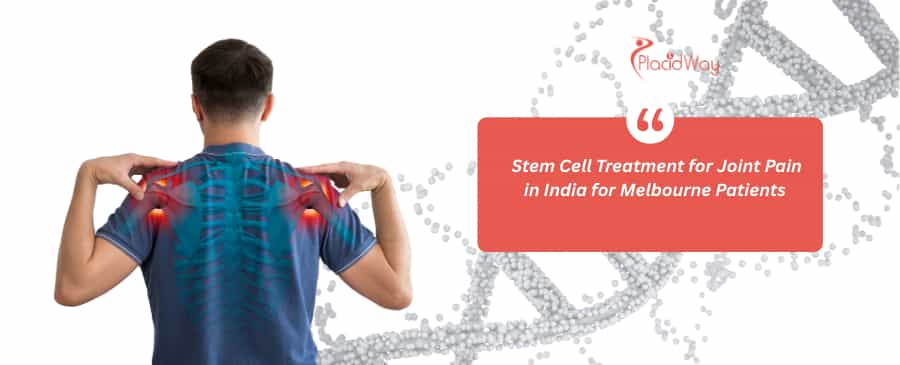
For many residents of Melbourne, living with chronic joint pain or osteoarthritis often means facing a difficult choice: managing pain with temporary medications or waiting months—sometimes years—for joint replacement surgery within the public health system. As regenerative medicine advances, Stem Cell Treatment for joint pain in India has emerged as a compelling alternative, offering Australian patients access to cutting-edge therapy without the waitlists or the prohibitive costs found in Western private practice.
India’s medical infrastructure has rapidly modernized, with major cities like Delhi, Mumbai, and Bangalore hosting JCI-accredited hospitals that specialize in orthobiologics. For an Australian patient, the combination of world-class medical expertise, English-speaking staff, and significantly lower costs makes India a premier destination. This guide outlines everything you need to know about traveling from Melbourne for orthopedic Stem Cell Therapy, including costs, procedure details, and safety standards.
Key Takeaways: High-Quality Care at a Fraction of the Cost
Traveling to India allows you to bypass local waitlists and access advanced regenerative care immediately. Most packages are designed specifically for international travelers, ensuring a seamless experience from arrival to departure.
- Significant Savings: Melbourne patients typically save 60% to 75% compared to private therapies in Australia or the US.
- Comprehensive Packages: Costs generally range from $3,500 to $7,000 USD per joint, often including airport transfers, pre-op scans, and short-term accommodation.
- No Waitlists: Unlike the Australian public system, treatment in India can be scheduled within weeks of inquiry.
- Standard of Care: Leading Stem Cell Therapy protocols utilize Autologous Mesenchymal Stem Cells (MSCs), ensuring 100% biocompatibility and safety.
Understanding Regenerative Joint Therapy
This advanced non-surgical approach harnesses your body's own repair mechanisms to heal damaged cartilage and reduce inflammation, offering a potential alternative to invasive joint replacement.
Regenerative therapy, widely known as Stem Cell Therapy, involves using the patient’s own biological material to stimulate healing in damaged tissues. In the context of knee osteoarthritis or hip pain, this procedure targets the worn-down cartilage that causes friction and pain. By injecting concentrated regenerative cells directly into the affected joint, physicians aim to reduce inflammation and promote the natural repair of tissue.
For many residents of Melbourne, living with chronic joint pain or osteoarthritis often means facing a difficult choice: managing pain with temporary medications or waiting months—sometimes years—for joint replacement surgery within the public health system. As regenerative medicine advances, stem cell treatment for joint pain in India has emerged as a compelling alternative, offering Australian patients access to cutting-edge therapy without the waitlists or the prohibitive costs found in Western private practice.
India’s medical infrastructure has rapidly modernized, with major cities like Delhi, Mumbai, and Bangalore hosting JCI-accredited hospitals that specialize in orthobiologics. For an Australian patient, the combination of world-class medical expertise, English-speaking staff, and significantly lower costs makes India a premier destination. This guide outlines everything you need to know about traveling from Melbourne for orthopedic stem cell therapy, including costs, procedure details, and safety standards.
Key Takeaways: High-Quality Care at a Fraction of the Cost
Traveling to India allows you to bypass local waitlists and access advanced regenerative care immediately. Most packages are designed specifically for international travelers, ensuring a seamless experience from arrival to departure.
- Significant Savings: Melbourne patients typically save 60% to 75% compared to private therapies in Australia or the US.
- Comprehensive Packages: Costs generally range from $3,500 to $7,000 USD per joint, often including airport transfers, pre-op scans, and short-term accommodation.
- No Waitlists: Unlike the Australian public system, treatment in India can be scheduled within weeks of inquiry.
- Standard of Care: Treatments utilize Autologous Mesenchymal Stem Cells (MSCs), ensuring 100% biocompatibility and safety.
Understanding Regenerative Joint Therapy
This advanced non-surgical approach harnesses your body's own repair mechanisms to heal damaged cartilage and reduce inflammation, offering a potential alternative to invasive joint replacement.
Regenerative therapy, often referred to as stem cell therapy, involves using the patient’s own biological material to stimulate healing in damaged tissues. In the context of knee osteoarthritis or hip pain, this procedure targets the worn-down cartilage that causes friction and pain. By injecting concentrated regenerative cells directly into the affected joint, physicians aim to reduce inflammation and promote the natural repair of tissue.
Sources of Regenerative Cells
In reputable Indian hospitals, the cells are strictly autologous, meaning they are harvested from your own body. This eliminates the risk of allergic reactions or rejection.
- Bone Marrow Aspirate Concentrate (BMAC): Cells are harvested from the pelvic bone. This is the gold standard for orthopedic conditions due to the high concentration of growth factors.
- Adipose-Derived Stem Cells (ADSC): Cells are harvested from a small sample of abdominal fat. This method is often preferred for older patients as fat tissue retains a high yield of viable cells even with age.
"The 'wait-and-see' approach often prescribed in the West can lead to further joint degradation. In India, we focus on early intervention using Regenerative Cell-Based Therapies. By addressing cartilage damage in Grade 2 or 3 osteoarthritis, we can often delay or even prevent the need for total knee replacement for our international patients from Australia and New Zealand."
Why Melbourne Patients Choose India for Orthopedics
Beyond the cost benefits, Australian patients are drawn to India's highly experienced specialists, state-of-the-art robotic technology, and a medical culture that prioritizes patient accessibility.
The decision to travel for medical care is significant, but the advantages offered by India's medical tourism sector are compelling. Hospitals in Delhi and Mumbai routinely treat international patients, meaning they have dedicated International Patient Departments (IPDs) that handle everything from visa assistance to dietary preferences.
Furthermore, the expertise available is world-class. Many leading Indian orthopedic surgeons have trained in the UK, USA, or Australia, ensuring they are familiar with Western medical protocols and patient expectations. They utilize the same diagnostic equipment (3 Tesla MRI, high-resolution ultrasound) found in Melbourne's top private clinics.
India is the largest provider of generic drugs and vaccines globally, but it also manufactures high-end medical consumables domestically. This localized production significantly reduces hospital overheads, a saving that is directly passed on to patients. This is why a stem cell treatment for joint pain in India can cost a fraction of the price in Melbourne without compromising on the quality of the medical kit used.
Cost Analysis: India vs. Australia vs. Other Hubs
A transparent look at the financial benefits reveals that even with business class travel included, treatment in India remains far more affordable than comparable private options at home.
For Melbourne residents, the cost of private regenerative therapies can be prohibitive, often falling outside the coverage of Medicare. Below is a comparison of estimated costs for a standard unilateral (one knee) Stem Cell Therapy protocol.
| Destination | Estimated Cost (USD) | Estimated Cost (AUD) | Inclusions |
|---|---|---|---|
| India | $3,500 – $7,000 | $5,200 – $10,500 | Procedure, 2-3 Days Stay, Airport Transfer, Medications |
| Australia (Private) | $9,000 – $15,000+ | $13,500 – $22,500+ | Procedure Only (Out-patient) |
| USA | $15,000 – $25,000 | $22,500 – $37,500 | Procedure Only |
| Thailand | $6,000 – $10,000 | $9,000 – $15,000 | Procedure, 1 Day Stay |
The Treatment Journey: From Melbourne to India
A step-by-step roadmap designed for comfort and ease, ensuring that every aspect of your medical trip is planned before you even board your flight.
1. Virtual Consultation
Before flying, you will have a video consultation with a senior orthopedic specialist. You will share your recent X-rays or MRI scans (digital copies) from Melbourne. The doctor will assess your candidacy and propose a tailored treatment plan.
2. Visa and Travel
Once approved, the hospital provides an invitation letter for an Indian e-Medical Visa. This digital visa is easily obtained online by Australian citizens. Flights from Melbourne (MEL) to Delhi (DEL) or Mumbai (BOM) typically take 12-15 hours with one stopover.
3. Arrival and Procedure
Upon landing, a hospital representative will escort you to your hotel or the facility. Pre-operative blood tests are done on day one. The procedure is usually performed on day two, taking 2-3 hours under local anesthesia. You are generally discharged the same day or kept overnight for observation.
4. Recovery and Return
Post-procedure rehabilitation sessions are conducted over the next 2-3 days. Most patients are fit to fly back to Melbourne within 5 to 7 days of arrival, with a detailed follow-up plan for their local physiotherapist.
Safety, Success Rates, and Legal Framework
India regulates stem cell research and therapy through the ICMR and DCGI, ensuring that accredited hospitals adhere to ethical and safety standards for patient protection.
Safety is the primary concern for any medical tourist. It is crucial to choose hospitals that are JCI (Joint Commission International) or NABH (National Accreditation Board for Hospitals) accredited. These accreditations ensure the facility meets rigorous global standards for hygiene, patient safety, and surgical care.
Legally, India permits the use of "Minimally Manipulated" autologous stem cells for therapeutic use in orthopedics. This distinction is important; it means the cells are not artificially expanded in a lab (which carries higher risks) but are harvested, concentrated, and re-injected within the same surgical setting, maintaining their natural biological potency and safety profile.
"We strictly adhere to the National Guidelines for Stem Cell Research. We do not offer 'magic cures' for systemic diseases. Our focus is purely on evidence-based orthobiologics for joint repair, ensuring our international patients receive safe, proven therapies that have a tangible impact on their quality of life."
Frequently Asked Questions
Is stem cell therapy for joint pain legal in India?
Yes, regenerative cell-based therapies using autologous (patient's own) cells are permitted under strict medical supervision in India. Major JCI-accredited hospitals follow the National Guidelines for Stem Cell Research (NGSCR) to ensure safety and ethical compliance, primarily utilizing Bone Marrow Aspirate Concentrate (BMAC) or Adipose-derived cells.
How much can I save by choosing India over Australia?
Melbourne patients typically save between 60% and 75% on treatment costs. While a similar private protocol in Australia might cost upwards of $12,000–$15,000 AUD (often out-of-pocket), packages in India range from $4,500 to $9,000 AUD, including accommodation and airport transfers.
What is the success rate of stem cell therapy for knee osteoarthritis?
Clinical data from top Indian orthopedic centers indicates a success rate of approximately 75-85% for symptom relief in Grade 1 to Grade 3 osteoarthritis. Success is defined by significant pain reduction, improved range of motion, and delayed need for total knee replacement.
How long do I need to stay in India for the treatment?
Most patients require a stay of only 5 to 7 days. This allows time for the initial consultation, the 1-day procedure, and a few days of post-procedure observation and rehabilitation before being cleared to fly back to Melbourne.
Do Indian doctors speak English?
Yes, English is the primary language of medical education and communication in Indian hospitals. You will have no trouble communicating with your surgeon, nursing staff, or administrative teams, ensuring a smooth and comfortable experience.
Is the procedure painful?
The procedure is minimally invasive and performed under local anesthesia or mild sedation. Patients generally report mild discomfort during the harvesting of cells (from bone marrow or fat) but experience minimal pain during the injection itself.
Does Australian Medicare cover stem cell treatment overseas?
Generally, no. Australian Medicare does not cover medical treatments performed overseas. This is considered an out-of-pocket expense, but the significantly lower cost in India often makes it more affordable than private treatment in Australia even without insurance.
What type of stem cells are used in India?
Top facilities strictly use Autologous Adult Stem Cells, specifically Mesenchymal Stem Cells (MSCs). These are harvested from your own body—usually from bone marrow (hip bone) or adipose tissue (stomach fat)—eliminating the risk of rejection or disease transmission.
How soon can I walk after the procedure?
Most patients can walk immediately after the procedure with some assistance or a walking aid. Doctors usually recommend light activity for the first 48 hours, followed by a guided physical therapy protocol to maximize cartilage regeneration.
Do I need a medical visa for this treatment?
Yes, Australian citizens are eligible for an Indian e-Medical Visa. This can be applied for online and is typically processed within 72 hours. PlacidWay and your chosen hospital will provide the necessary invitation letter to secure this visa.
Ready to Restore Your Mobility?
Don't let joint pain limit your life or your finances. PlacidWay partners with the top JCI-accredited hospitals in India to bring you world-class regenerative joint therapy packages tailored for Australian residents.
Get a free, no-obligation quote today and speak directly with our medical care team to plan your journey from Melbourne to recovery.
Get a Quote for Treatment in India


















Share this listing