
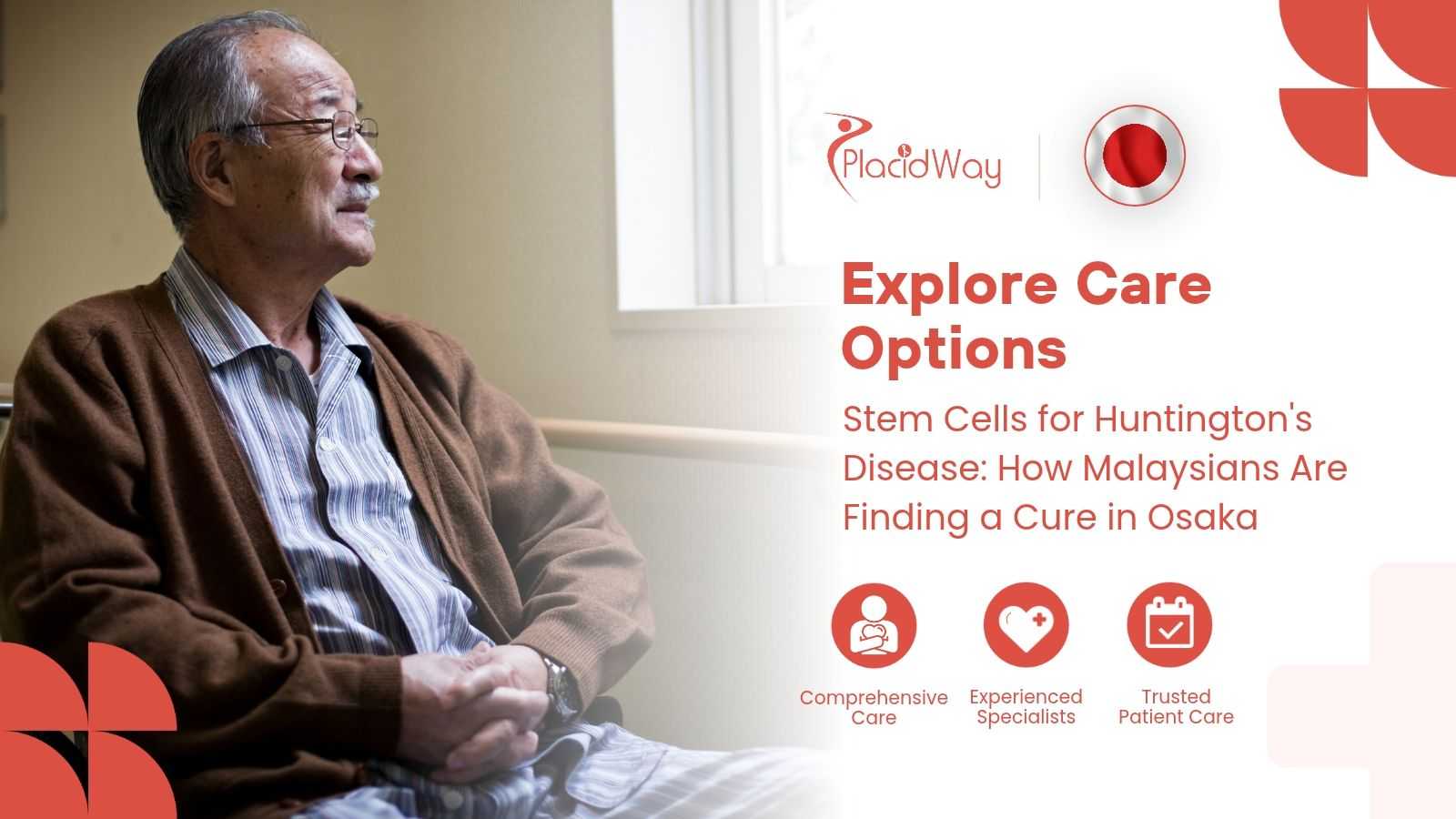
Huntington’s Disease Care in Osaka, Japan: Exploring Emerging Stem Cell Therapy Options and Research for Malaysian Patients
Exploring options for Stem Cell Therapy for Huntington’s Disease in Japan involves understanding the genetic causes of the condition, progressive neurodegeneration, current treatment approaches, and emerging scientific research. For Malaysian patients and families considering specialist care in Osaka, learning about Stem Cell Treatment for Huntington’s Disease in Japan requires careful evaluation of clinical evidence, potential risks, treatment eligibility, and realistic expectations. Understanding Japan’s regenerative medicine regulatory framework, the distinction between established neurological care and experimental cell-based interventions, and the importance of individualized medical assessment can help families make informed decisions. Consulting qualified neurologists and reviewing credible research are essential steps when exploring available care options and planning ongoing support for people living with Huntington’s disease.
Quick Summary & Key Takeaways
- Genetic Cause: Huntington’s Disease is an inherited, autosomal dominant neurodegenerative disorder caused by an expanded CAG repeat in the HTT gene on chromosome 4.
- Progressive Impact: It causes progressive motor, cognitive, and psychiatric decline, severely impairing movement, reasoning, and daily independence over time.
- Emerging Research in Osaka: Malaysian families are seeking information on clinical trials and stem cell research in medical hubs like Osaka, Japan.
- Stem Cell Role: Preclinical models study stem cells for potential neuroprotection, trophic factor support, and tissue repair—not as an established genetic cure.
- Japan's Regulatory Framework: Regenerative medical procedures in Japan operate under strict legislation (Act on the Safety of Regenerative Medicine) monitored by the Ministry of Health, Labour and Welfare (MHLW).
- Established vs. Experimental: Experimental stem cell treatments are investigational and must be weighed against established multidisciplinary symptom management.
- Planning & Costs: Participation in research or international medical travel involves substantial financial, logistical, and safety considerations (all costs assessed in USD).
Understanding Huntington’s Disease and Its Progressive Neurological Effects
Huntington’s Disease (HD) is a rare, inherited neurodegenerative disorder characterized by the progressive breakdown of nerve cells in the brain. Over time, HD damages specialized brain structures—specifically the basal ganglia and cerebral cortex—leading to involuntary movements, cognitive decline, and psychiatric disturbances.
Because Huntington’s Disease affects multiple neurological systems simultaneously, managing its progression requires complex, multidisciplinary medical care. As symptom severity advances, families often look toward global research hubs to understand emerging therapeutic concepts.
Why Malaysian Families Seek Information About Emerging Neurological Research
In Malaysia, access to specialized neurogenetic care and experimental clinical trials for rare genetic conditions can be limited. When conventional treatments focus primarily on managing symptoms rather than slowing disease trajectory, families frequently research international advances. Osaka, Japan, has established itself as a leading international hub for medical research and biotechnology. Malaysian patients and caregivers look to Japan due to its reputation for advanced clinical infrastructure, stringent healthcare regulations, and pioneering stem cell research initiatives.
- Explore specialized neurological care and genetic counseling options.
- Research clinical trials and emerging approaches for Huntington’s disease.
- Review the available scientific evidence, potential risks, and eligibility criteria for experimental treatments.
- Consult qualified neurologists before making decisions about international treatment.
How Huntington’s Disease Affects Movement, Cognition, and Daily Independence
Motor Dysfunction
Involuntary jerking or writhing movements (chorea), rigidity, impaired gait, difficulty swallowing (dysphagia), and loss of physical balance.
Cognitive Impairment
Loss of executive function, difficulty organizing tasks, reduced processing speed, memory loss, and impaired spatial awareness.
Loss of Independence
Gradual inability to manage daily personal care, employment, communication, mobility, and self-care without full-time assistance.
Understanding the Genetic Cause of Huntington’s Disease
Huntington’s Disease is caused by a mutation in the HTT gene, located on chromosome 4. This gene encodes a protein called huntingtin. The mutation involves an abnormal expansion of a CAG (cytosine-adenine-guanine) trinucleotide repeat sequence:
- Normal Repeat Count: 10 to 35 CAG repeats.
- Intermediate Count: 36 to 39 CAG repeats (reduced penetrance; may or may not develop symptoms).
- Pathological Count: 40 or more CAG repeats (full penetrance; individual will develop HD).
This expanded CAG segment causes the production of an abnormally long, toxic mutant huntingtin protein (mHTT). Over time, mHTT misfolds, accumulates inside striatal neurons, disrupts intracellular transport, and ultimately triggers premature cell death.
What Current Medical Science Knows About Huntington’s Disease Progression
Epidemiological and epidemiological data published by official health organizations show that Huntington’s Disease typically manifests between ages 30 and 50, though juvenile onset can occur. Once clinical motor signs emerge, the disease progresses continuously over an average duration of 15 to 20 years.
Estimated Functional Decline in Huntington's Disease Over Time
Source: National Institute of Neurological Disorders and Stroke (NINDS) & World Health Organization (WHO) Clinical Progression Data.
Exploring the Role of Stem Cells in Neurological Research
Researchers worldwide are investigating stem cells to evaluate whether cell-based products can support injured brain tissue, modulate neuroinflammation, or replace lost medium spiny neurons in the striatum. Stem cell platforms under laboratory study include induced pluripotent stem cells (iPSCs), neural stem cells (NSCs), and mesenchymal stem cells (MSCs).
Can Stem Cells Address the Underlying Genetic Changes in Huntington’s Disease?
It is essential to clarify that stem cell administration does not correct or rewrite the genetic CAG expansion present inside a patient’s endogenous DNA. Stem cells are studied for potential neuroprotective or paracrine support, but they do not reverse the inherited genetic mutation responsible for mHTT production throughout the body.
What Preclinical Studies Reveal About Potential Neuroprotective Approaches
Preclinical animal models have shown that stem cell transplantation can secrete neurotrophic factors such as Brain-Derived Neurotrophic Factor (BDNF). These factors may help buffer vulnerable neurons against excitotoxicity, reduce oxidative stress, and temporarily slow cell degeneration in animal models. However, laboratory successes in rodent models do not automatically translate into identical clinical outcomes in human patients.
Clinical Trials and Japan’s Regenerative Medicine Framework
Stem Cell Treatment for Huntington’s Disease in Japan is strictly governed by national health statutes. Japan’s legislative environment for cellular products is among the most structured globally, balancing clinical research innovation with patient safety safeguards.
| Regulatory Element | Governance & Requirement | Patient Significance |
|---|---|---|
| Governing Legislation | Act on the Safety of Regenerative Medicine (ASRM) & PMDA oversight | Ensures cell therapies undergo government registration and safety review. |
| Facility Licensing | Ministry of Health, Labour and Welfare (MHLW) facility authorization | Confirms processing cleanrooms meet strict sterility and cell-handling standards. |
| Risk Classification | Class I (High Risk), Class II (Medium Risk), Class III (Low Risk) | Categorizes cell procedures according to biological manipulation and origin. |
| Committee Review | Certified Special Committee for Regenerative Medicine evaluation | Requires independent scientific review of research plans and consent forms. |
Why Experimental Stem Cell Therapy Is Not an Established Cure
Critical Medical Warning: There is currently no medical cure for Huntington’s Disease. Stem Cell Therapy for Huntington’s Disease in Japan remains investigational and experimental. Cell procedures should never be represented as a guaranteed cure or a substitute for proven neurological care.
Comparing Emerging Research With Established Symptom Management Options
| Category | Established Standard Care | Emerging Stem Cell Research |
|---|---|---|
| Primary Objective | Symptom management, safety, and quality of life maintenance. | Investigating potential neuroprotection and tissue support. |
| Clinical Status | Approved, evidence-based standard medical interventions. | Experimental, investigational clinical trials or early protocols. |
| Interventions | Chorea medications (VMAT2 inhibitors), antidepressants, physical therapy. | Cellular infusions or targeted neural stem cell research protocols. |
| Evidence Level | Validated through international phase III human trials. | Preclinical studies and early phase human safety trials. |
Genetic Counseling and Pre-Travel Verification Checklist
Genetic counseling is a cornerstone of responsible Huntington’s Disease management. Before considering research participation or medical travel, families must engage in formal genetic counseling to review predictive testing, inheritance risks for offspring, and emotional implications.
What Malaysian Families Should Verify Before Traveling for Experimental Treatment
Essential Verification Checklist
- Confirm physician specialty in neurology and neurogenetics.
- Verify government authorization under Japan’s MHLW.
- Ensure cell processing occurs in an accredited cleanroom facility.
- Review full written informed consent documents in English/Malay.
- Confirm emergency transfer agreements with local specialist hospitals.
Red Flags to Avoid
- Claims of a guaranteed cure or guaranteed reversal of HD symptoms.
- Pressure to pay upfront fees without reviewing full medical records.
- Providers withholding facility licensing numbers or physician names.
- Promotions advising patients to discontinue prescribed medications.
- Lack of structured long-term post-treatment follow-up plans.
Understanding Research Participation Costs and Travel Budgeting
Evaluating international medical travel for neurological research requires thorough financial planning. All pricing comparisons should be evaluated in United States Dollars (USD) to ensure standardized budgeting across borders.
| Cost Component | What to Confirm? | Planning Consideration (USD) |
|---|---|---|
| Specialist Consultations | Neurologist examination and genetic record review. | Confirm whether initial virtual review is included. |
| Diagnostic Imaging & Labs | Brain MRI, neurological rating scales, and blood panels. | Ask if recent Malaysian MRI scans can be transferred. |
| Cellular / Protocol Fees | Laboratory processing, cleanroom culture, and procedure costs. | Request an itemized written quote prior to travel. |
| Travel & Logistics | Flights between Kuala Lumpur and Osaka, hotel accommodation, transport. | Budget for a caregiver companion and flexible flight dates. |
| Post-Procedure Care | Follow-up appointments, medical translation, emergency buffer. | Ensure funds are allocated for local Malaysian follow-up care. |
Building an Informed Long-Term Care Plan for Huntington’s Disease
Neurological Follow-Up
Schedule regular neurologist assessments to monitor disease progression and review medications for chorea and psychiatric symptoms as needed.
Physical & Occupational Therapy
Use individualized rehabilitation and exercise programs to support mobility, improve balance, maintain daily living skills, and reduce fall risks.
Speech & Swallowing Therapy
Arrange ongoing assessments to support communication and swallowing safety, identify difficulties early, and help reduce choking and aspiration risks.
Nutritional Support
Work with a dietitian to plan calorie-dense, balanced meals that help address weight loss and increased energy needs. Adapt food textures when necessary to accommodate swallowing difficulties.
Legal & Advance Care Planning
Discuss future care preferences, advance medical directives, appropriate legal arrangements, and family support early so the individual can participate in decisions while able to do so.
Frequently Asked Questions (FAQs)
1. What is Huntington’s Disease?
Huntington’s Disease is an inherited neurodegenerative disorder caused by a mutation in the HTT gene, leading to progressive motor, cognitive, and psychiatric decline over time.
2. Can stem cells cure Huntington’s Disease?
No. There is currently no cure for Huntington’s Disease. Stem cell applications remain experimental and investigational, aiming to study neuroprotection rather than reverse genetic mutations.
3. Why are Malaysian families exploring research in Osaka, Japan?
Japan is recognized for its advanced biopharmaceutical research infrastructure, specialized neurological centers, and stringent regulatory oversight under the Ministry of Health, Labour and Welfare (MHLW).
4. How is stem cell research regulated in Japan?
Cellular procedures in Japan are regulated under the Act on the Safety of Regenerative Medicine (ASRM), requiring certified committee review, government registration, and strict cleanroom facility standards.
5. What are the main symptoms of Huntington’s Disease?
Symptoms include involuntary writhing movements (chorea), muscle rigidity, cognitive decline, memory loss, executive dysfunction, depression, and mood changes.
6. What is the genetic cause of Huntington’s Disease?
HD is caused by an expansion of CAG trinucleotide repeats in the HTT gene on chromosome 4, resulting in toxic mutant huntingtin protein accumulation in brain cells.
7. How do stem cells differ from standard HD treatments?
Standard treatments use approved medications to manage symptoms like chorea and mood changes. Stem cell approaches are experimental biological therapies undergoing clinical investigation.
8. What should families check before traveling to Japan for medical research?
Families should verify the physician’s medical license, MHLW facility authorization, written informed consent in English, emergency hospital transfer plans, and total itemized costs in USD.
9. Why is genetic counseling important for Huntington’s Disease?
Genetic counseling helps families understand inheritance patterns, evaluate predictive genetic testing, address emotional impacts, and make informed reproductive decisions.
10. How should research costs be evaluated?
Costs should be evaluated in USD and cover consultations, imaging, laboratory processing, travel, accommodation, and a financial buffer for follow-up care upon returning home.
Explore Medical Research and Consultations With PlacidWay
PlacidWay assists international families in researching specialized medical centers for Regenerative Medicine in Japan, evaluating healthcare qualifications, and gathering transparent information regarding neurological care options worldwide. Request personalized details, facility credentials, and consultation guidelines before making international medical travel decisions.
Request Medical InformationDisclaimer: This content is provided strictly for educational and informational purposes and does not constitute formal medical advice, diagnosis, or treatment recommendation. Huntington’s Disease is a complex genetic condition requiring direct supervision by qualified neurologists and genetic specialists. Experimental therapies discussed are investigational. Always consult a licensed healthcare professional before making clinical or medical travel decisions.
References:
- World Health Organization (WHO) – Global Health and Disease Information
- Japan Ministry of Health, Labour and Welfare (MHLW) – Healthcare Policies and Regenerative Medicine Regulations
- Japan Pharmaceuticals and Medical Devices Agency (PMDA) – Medical Safety and Regulatory Guidance
- Huntington’s Disease Society of America (HDSA) – Patient Education and Family Support
- International Society for Stem Cell Research (ISSCR) – Stem Cell Research and Clinical Guidance
- Malaysia Ministry of Health (MOH) – Healthcare Policies and Patient Information
- Centers for Disease Control and Prevention (CDC) – Health and Disease Information

.png)




.png)

.png)





.png)
.png)









Share this listing