
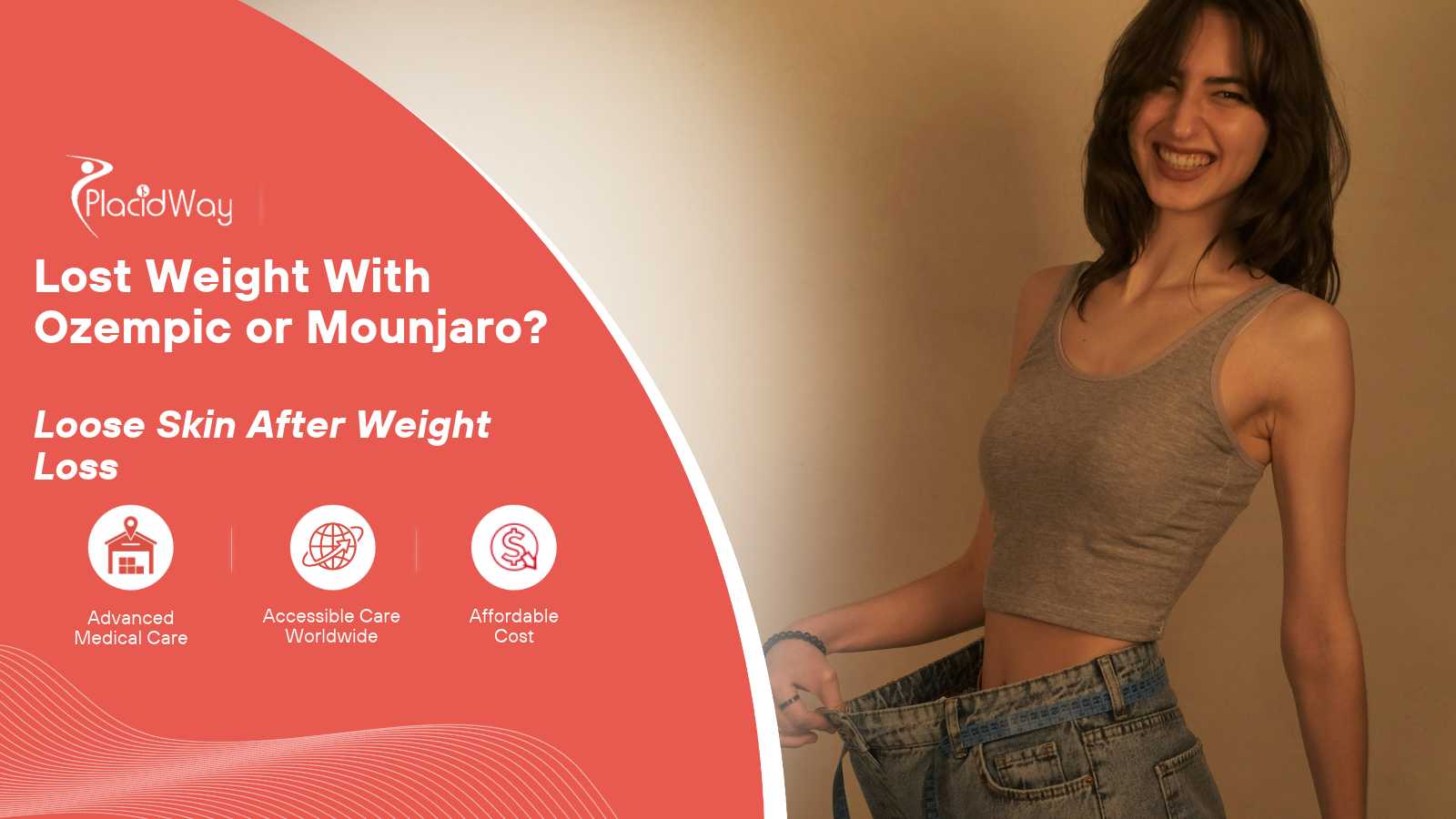
Losing a significant amount of weight with medications such as semaglutide or tirzepatide can change far more than the number on the scale. For some people, reaching a lower weight reveals another concern they did not expect: loose abdominal skin, hanging upper arms, sagging thighs, changes in breast shape, or excess skin around the waist and lower body.
That shift is now influencing plastic surgery demand. In 2025, 82% of American Society of Plastic Surgeons member surgeons said they had received consultation requests related to GLP-1 medication use. Tummy tuck, breast surgery, arm lift, thigh lift and body lift were among the procedures most commonly discussed with these patients.
For patients in the United States and Canada in particular, the next question is increasingly not just “Can this loose skin be treated?” but also “Should I have body contouring at home or consider surgery in Mexico?”
Mexico has become relevant because of its proximity to North America, established plastic-surgery market, range of surgical centers and potentially lower treatment costs. However, body contouring after major weight loss can involve extensive surgery, so choosing a destination should never be based on price alone.
Quick Answer
Body contouring after GLP-1-related weight loss can remove excess skin and reshape areas such as the abdomen, arms, thighs, breasts and lower body. The American Society of Plastic Surgeons reports substantial growth in several lift procedures alongside rapidly increasing GLP-1-related consultations.
Patients may consider Mexico because treatment can cost less than in the United States or Canada and because cities such as Tijuana, Mexicali, Monterrey, Mexico City and Cancun have established international plastic-surgery markets.
However, the safest decision is based on the surgeon's specialist credentials, facility authorization, anesthesia team, surgical plan, recovery arrangements and complication-management strategy rather than the lowest advertised package price.
Why GLP-1 Weight Loss Is Changing Plastic Surgery?
GLP-1 and related medications have transformed obesity treatment.
Semaglutide and tirzepatide are examples of medications used for diabetes and, under specific brand names and indications, chronic weight management. In the United States, for example, Wegovy is approved for chronic weight management, while Ozempic is approved for type 2 diabetes. Tirzepatide is marketed as Mounjaro for type 2 diabetes and Zepbound for chronic weight management.
For some patients, these medications can produce substantial weight reduction.
But losing body fat does not necessarily mean the skin contracts at the same rate.
Skin elasticity varies according to factors such as:
- Age
- Genetics
- How much weight was lost
- How quickly weight changed
- How long the person previously lived at a higher weight
- Pregnancy history
- Smoking
- Sun exposure
- Nutrition
- The area of the body involved
After substantial weight loss, skin and supporting tissues may no longer conform completely to the person's smaller body size. ASPS identifies this as one of the main reasons people consider surgical body contouring after significant weight loss.
For some patients, this becomes the unexpected second phase of weight loss.
Phase one is losing weight.
Phase two is deciding what to do about the body changes left behind.
What Happens to the Body After Major Weight Loss?
The effects can appear almost anywhere.
Someone may reach a healthy or significantly lower weight but still have:
Abdomen
A fold or apron of loose skin can remain below the waist. In some people it can interfere with clothing, movement, hygiene or exercise.
Upper Arms
Skin may hang between the armpit and elbow even after significant fat loss.
Thighs
Loose inner-thigh skin can rub during walking or exercise.
Breasts
Weight loss can reduce breast volume while stretched skin remains. Some patients notice deflation, sagging or loss of upper-breast fullness.
Waist and Lower Back
Excess skin may extend around the hips, waist or buttocks, making a more extensive lower-body lift relevant.
Face and Neck
Loss of facial fat may reveal facial laxity or create a hollow appearance. This is sometimes described online as “Ozempic face,” although facial changes can follow significant weight loss regardless of how the weight was lost.
Importantly, body contouring is not simply another form of weight-loss treatment.
Its purpose is generally to address skin and tissue that remain after weight reduction has already occurred.
GLP-1 Patients Are Asking About More Than Tummy Tucks
The rise in demand is not limited to one procedure.
According to the 2025 ASPS member survey, surgeons reporting GLP-1-related consultations most commonly mentioned:
| Procedure | ASPS surgeons reporting GLP-1-related consultations |
|---|---|
| Tummy tuck | 88% |
| Breast surgery | 87% |
| Arm lift | 84% |
| Thigh lift | 80% |
| Panniculectomy | 67% |
| Body lift | 62% |
Consultations do not mean all of these patients ultimately had surgery, but they demonstrate how strongly significant medication-associated weight loss is entering plastic-surgery discussions.
Actual lift-procedure statistics also rose in 2025.
ASPS reported:
- Upper body lifts up 22%
- Arm lifts up 21%
- Thigh lifts up 20%
- Breast lifts up 8%
- Lower-body lifts up 4%
ASPS specifically cautions that these trends do not prove GLP-1 medications caused all of the growth, but the overlap between significant weight loss and increased interest in restorative procedures is becoming increasingly visible.
What Body Contouring Procedures Can Be Considered After GLP-1 Weight Loss?
There is no single “GLP-1 body contouring surgery.”
Treatment depends on where the excess skin is located and how extensive it is.
Tummy Tuck
An abdominoplasty removes excess abdominal skin and may address abdominal wall laxity when appropriate.
It can be relevant when weight loss leaves a substantial fold or loose skin across the lower abdomen.
Panniculectomy
A panniculectomy removes a hanging apron of abdominal skin known as a pannus.
Its goal may be more functional than cosmetic when excess tissue contributes to problems such as irritation or difficulty with hygiene.
It is not identical to a full tummy tuck.
Arm Lift
Brachioplasty removes excess skin from the upper arm.
This can be relevant when substantial weight loss leaves hanging tissue between the elbow and underarm.
Thigh Lift
A thigh lift removes and reshapes excess skin around the inner and/or outer thighs.
Breast Lift
Mastopexy raises and reshapes breasts affected by volume loss and skin laxity.
Some patients may discuss a lift alone, while others may be evaluated for augmentation, fat grafting or reduction depending on anatomy and goals.
ASPS notes that breast volume loss and sagging are increasingly being discussed by patients after GLP-1-associated weight reduction.
Lower Body Lift
A lower-body lift can address several connected areas, such as:
- Abdomen
- Waist
- Hips
- Outer thighs
- Buttocks
It may involve a circumferential incision around part or all of the torso.
Upper Body Lift
This can address excess tissue across areas such as the upper back, lateral chest and surrounding regions.
Facial or Neck Procedures
Major weight reduction can also affect the face and neck.
Depending on anatomy, patients may ask about:
- Facelift
- Neck lift
- Facial fat grafting
- Eyelid surgery
- Nonsurgical volume restoration
A responsible consultation should determine whether these changes are best addressed surgically, nonsurgically or not treated at all.
Why Mexico Is Entering the Conversation?
For North American patients, Mexico is geographically different from many other international plastic-surgery destinations.
Someone living in California, Arizona or Texas may be able to reach certain Mexican medical destinations by a relatively short flight or even by ground transportation.
Patients from other parts of the United States and Canada also have access to direct flights to cities with established private medical sectors.
The most common reasons patients compare Mexico include:
Lower Treatment Costs
Surgical and facility costs can be lower than in many US markets.
Current PlacidWay pricing data for tummy tuck surgery in Mexico shows an average quoted price of approximately $8,425, with verified clinic quotes ranging from approximately $3,950 to $12,900. These are marketplace estimates rather than guaranteed prices, and complex post-weight-loss surgery may cost more.
More extensive combined surgery can be significantly more expensive.
Proximity
Mexico can reduce travel distance compared with destinations in Europe or Asia for US and Canadian patients.
That can matter when postoperative follow-up is required.
Established Plastic-Surgery Destinations
International patients can find plastic surgeons in several Mexican cities, including:
- Tijuana
- Mexicali
- Monterrey
- Mexico City
- Guadalajara
- Cancun
- Playa del Carmen
The quality, credentials and scope of facilities vary significantly, so the country alone should never be treated as a quality indicator.
Medical Tourism Infrastructure
Some providers coordinate:
- Airport or border transfers
- Hotel or recovery accommodation
- Preoperative tests
- Surgery
- Hospital stay
- Medications
- Compression garments
- Postoperative appointments
Patients should confirm exactly what a package includes rather than assuming “all-inclusive” covers every medical and travel expense.
What Does Body Contouring in Mexico Cost After Major Weight Loss?
This question is more complicated than it first appears because post-weight-loss surgery is often individualized.
A straightforward tummy tuck and a circumferential lower-body lift are not comparable operations.
Indicative marketplace pricing currently shows:
| Procedure | Approximate Mexico market range |
|---|---|
| Tummy tuck | About $3,950–$12,900 based on current clinic quotes |
| Tummy tuck with liposuction | Often quoted within broader package ranges |
| Arm lift | Varies by extent and whether combined |
| Thigh lift | Varies by extent and whether combined |
| Lower-body lift | Generally higher than a single-area procedure |
| Combined post-weight-loss surgery | Can exceed $10,000 depending on number of areas and complexity |
PlacidWay's broader Mexico plastic-surgery research currently places many single-procedure packages around $4,000–$8,500, while more extensive combined procedures may reach approximately $7,500–$13,700 or more.
These figures should be used as planning ranges, not quotes.
A personalized price may depend on:
- Amount of excess skin
- BMI
- Medical history
- Number of treatment areas
- Length of surgery
- Hospital requirements
- Anesthesiology fees
- Surgeon fees
- Laboratory testing
- Overnight stay
- Medications
- Compression garments
- Pathology if tissue is examined
- Recovery accommodation
- Nursing assistance
- Postoperative appointments
- Whether a companion travels with you
The cheapest advertised price may exclude several of these items.
Why Post-GLP-1 Surgery Can Be More Complex Than Standard Cosmetic Surgery
Someone seeking a routine cosmetic tummy tuck and someone who has lost 80 or 100 pounds may have very different surgical needs.
Major weight loss can leave excess skin across several connected regions.
ASPS notes that post-weight-loss contouring may require extensive incisions, and procedures are frequently performed in stages rather than all at once.
That is important for medical tourists.
A patient may initially think:
“I want my stomach, arms, thighs and breasts fixed in one trip.”
But combining too many procedures can lengthen anesthesia time, increase physiological stress and make recovery more difficult.
A qualified surgeon may recommend:
- Stage 1: abdomen/lower body
- Stage 2: breasts/upper body
- Stage 3: arms or thighs
The exact strategy should be based on the individual's health and anatomy rather than travel convenience.
Do You Need to Reach Your Goal Weight Before Surgery?
Weight stability is an important part of post-weight-loss surgery planning.
ASPS identifies adults with stabilized weight as better candidates for body contouring.
If substantial additional weight loss occurs after surgery, more laxity can develop.
If significant weight is regained, the result can also change.
The surgeon may therefore ask about:
- Current weight
- Highest previous weight
- Amount lost
- How long the current weight has been stable
- Whether the patient is still losing weight
- GLP-1 dosage
- Future treatment plan
- Nutritional intake
- Exercise habits
There is no universal timeline that applies to every GLP-1 patient.
The treating surgeon, prescribing clinician and anesthesia team should determine appropriate timing individually.
What Happens to GLP-1 Medication Before Surgery?
This question should be handled by the surgical and anesthesia teams rather than by following generic internet advice.
GLP-1 and related medications can affect gastrointestinal function, and perioperative management recommendations have evolved as clinicians have gained more experience with these drugs.
Patients should tell their surgeon and anesthesiologist:
- Exactly which medication they take
- Dose
- Dosing schedule
- Why it was prescribed
- Whether the dose recently changed
- Whether they experience nausea, vomiting, reflux, bloating or delayed stomach emptying
- Whether they have diabetes
Do not independently stop prescription medication because a clinic coordinator, online forum or social-media post tells you to do so.
The appropriate perioperative plan should come from the clinicians responsible for your care.
Nutrition Matters More Than Many Patients Expect
Large weight loss can sometimes be associated with nutritional deficiencies, regardless of whether weight was lost through medication, bariatric surgery or another method.
That matters because wound healing requires adequate nutrition.
In 2026, ASPS highlighted recommendations emphasizing nutritional screening and personalized dietary planning for patients undergoing body contouring after significant weight loss. Protein, vitamins and minerals can all become relevant to healing.
Preoperative assessment may therefore include:
- Nutritional history
- Protein intake
- Blood count
- Iron status
- Vitamin levels when clinically appropriate
- Metabolic testing
- Evaluation of previous bariatric surgery if applicable
Patients should be cautious of any clinic willing to schedule extensive surgery without obtaining an adequate medical history.
Are GLP-1 Users at Different Surgical Risk?
Research is still developing.
A 2026 study highlighted by ASPS examined patients undergoing panniculectomy following massive weight loss and found that GLP-1 use may be associated with differences in some postoperative complications, although the findings did not suggest a simple across-the-board increase in overall surgical risk.
The practical message is not that GLP-1 users should avoid surgery.
It is that surgeons need to know about medication use and incorporate it into surgical planning.
The evidence is evolving, and individualized medical assessment is more useful than broad assumptions such as “GLP-1 patients are safe” or “GLP-1 patients are high risk.”
Who May Be a Candidate for Body Contouring After Weight Loss?
According to ASPS guidance, general characteristics associated with better candidacy include:
- Significant weight loss that has stabilized
- Overall good health
- Absence of uncontrolled conditions that could impair healing
- Not smoking
- Realistic expectations
- Willingness to maintain healthy nutrition and activity
A consultation should also consider:
- Diabetes control
- Anemia
- Cardiovascular conditions
- Previous blood clots
- Previous surgeries
- Bariatric surgery history
- Medications
- Nutritional status
- BMI
- Plans for pregnancy
- Skin quality
- Amount and location of excess tissue
Not every patient who dislikes loose skin is automatically a surgical candidate.
How to Evaluate a Plastic Surgeon in Mexico
This is where medical tourism decisions should become much more rigorous.
A low package price should not be enough.
Ask for the surgeon's:
Full legal name
Do not evaluate a provider only through a clinic brand or social-media account.
Specialist credentials
Confirm that the physician has formal specialist training in plastic, aesthetic and reconstructive surgery appropriate to the procedure being offered.
Current professional registration
Ask for documentation that can be independently checked through relevant Mexican professional and specialty organizations.
Experience with massive-weight-loss patients
A surgeon who performs routine liposuction or breast augmentation is not automatically experienced in circumferential body lifts or complex post-weight-loss reconstruction.
Ask specifically:
How many post-weight-loss body-contouring procedures do you perform?
Hospital or surgical-facility information
Ask exactly where the operation will occur.
Facility authorization
For surgery in Mexico, confirm the facility's applicable authorization and licensing, including relevant COFEPRIS requirements.
Anesthesiologist
Ask who will administer anesthesia and what their qualifications are.
Emergency plan
Ask:
If I develop bleeding, infection, a blood clot or another complication, which hospital will treat me?
This is one of the most important medical-tourism questions and one of the least glamorous.
What Should Be Included in a Mexico Body-Contouring Quote?
Request an itemized written quote.
It should identify, where applicable:
- Surgeon
- Exact procedure
- Hospital/facility
- Anesthesia
- Anesthesiologist
- Operating-room fees
- Implants if applicable
- Laboratory tests
- Medical clearance
- Medications
- Compression garments
- Hospital stay
- Pathology
- Postoperative visits
- Recovery accommodation
- Nursing assistance
- Airport/border transfers
- Complication policy
Ask what is not included as carefully as you ask what is included.
A $6,000 package that excludes hospitalization, revision care or anesthesia cannot fairly be compared with an $8,500 package that includes those services.
How Long Should You Stay in Mexico After Body Contouring?
There is no universal safe number of days.
Recovery depends heavily on the procedure.
A small arm lift and a circumferential body lift are entirely different operations.
International patients should ask their surgeon:
- How long they should remain near the surgical facility
- When drains can be removed
- When the surgeon wants the first postoperative appointment
- When they can travel by car
- When they can fly
- How long they should avoid heavy lifting
- Whether they require a companion
- What warning symptoms require urgent care
Do not book the shortest possible trip simply to reduce hotel costs.
Body contouring after major weight loss can involve substantial wounds, swelling and mobility limitations.
Why Flying Home Too Soon Can Be a Problem
Long periods of immobility are relevant after many surgeries because postoperative patients can already be at increased risk of venous thromboembolism.
Flying may also mean:
- Prolonged sitting
- Carrying luggage
- Navigating airports
- Limited access to the operating surgeon
- Dealing with swelling far from the treatment facility
The surgeon should explicitly clear international travel.
Patients should also understand what happens if a complication develops after they return home.
Mexico vs Colombia vs Turkey After GLP-1 Weight Loss
Mexico is not the only destination attracting body-contouring patients.
Mexico
Often most practical for:
- United States
- Canada
Potential advantages:
- Proximity
- Direct flights
- Border access for some patients
- Shorter return journey
- Extensive private medical-tourism market
The key weakness is variation between facilities and providers, making verification essential.
Colombia
Colombia has a significant aesthetic-surgery market and can appeal to patients seeking body-contouring expertise.
It may be especially relevant for:
- United States
- Canada
- Latin America
However, longer travel and postoperative follow-up logistics may matter depending on where the patient lives.
Turkey
Turkey has become a major destination for cosmetic surgery, particularly for patients from:
- United Kingdom
- Western Europe
- Middle East
It can be geographically convenient for European patients in the same way Mexico is convenient for North Americans.
This illustrates an important medical-tourism principle:
The “best country” is not necessarily the same for every patient.
Travel time, aftercare access and the ability to return to the surgeon can sometimes matter more than saving another $1,000.
The Better Question Is Not “Which Country Is Cheapest?”
A better comparison asks:
- Who will operate on me?
- Where will surgery happen?
- Who provides anesthesia?
- How many post-weight-loss cases has the surgeon treated?
- How long should I remain nearby?
- Who monitors me after discharge?
- What happens if I have a complication?
- Can I return to this surgeon easily?
- What is the complete cost rather than the advertised surgery price?
The answers create a much more meaningful comparison than country-level price tables.
Body Contouring After GLP-1s May Become a Multi-Stage Journey
One of the clearest changes emerging from major weight loss is that patients often do not have only one concern.
Someone may simultaneously notice:
- Abdominal skin
- Flattened breasts
- Upper-arm laxity
- Inner-thigh skin
- Facial volume loss
ASPS describes a growing whole-body approach among patients after significant weight loss rather than demand for only one isolated procedure.
That creates an important expectation issue.
Patients should not expect every concern to be corrected during one operation.
A safer plan may involve multiple procedures over time.
For medical tourists, this could mean planning two carefully structured trips rather than one overly aggressive surgical session.
Questions to Ask Before Traveling to Mexico for Surgery
Before paying a deposit, ask the prospective provider:
- What is the surgeon's complete name and specialist certification?
- How frequently does the surgeon perform body contouring after major weight loss?
- What procedure is being recommended and why?
- Are multiple procedures being combined?
- How long is the expected operating time?
- Where will the operation take place?
- Is the facility properly authorized for the planned surgery?
- Who will provide anesthesia?
- What preoperative tests are required?
- Does my current BMI affect my surgical risk?
- Do you require my weight to be stable?
- How will my GLP-1 or tirzepatide treatment be managed around surgery?
- Do I need nutritional testing?
- How long must I remain in Mexico?
- What postoperative nursing is available?
- When is my final postoperative examination before traveling?
- What happens if I develop a blood clot, wound problem or infection?
- Which hospital handles emergencies?
- Who pays for treatment if complications occur?
- How are postoperative concerns handled after I return home?
A provider should be willing to answer these questions clearly.
Frequently Asked Questions
Does Ozempic directly cause loose skin?
Loose skin is more accurately associated with substantial or rapid weight loss rather than being a unique direct effect of one medication. Skin may not contract fully after body volume decreases.
Is body contouring the same as liposuction?
No. Liposuction removes localized fat. Body-contouring surgery after major weight loss often involves removing significant amounts of excess skin. Some procedures may incorporate liposuction, but it cannot substitute for skin removal when substantial laxity is present.
What is the most common surgery after GLP-1 weight loss?
There is no single procedure appropriate for everyone. However, ASPS reported that tummy tuck was the body procedure most frequently discussed in GLP-1-related consultations among surveyed member surgeons, followed closely by breast surgery, arm lift and thigh lift.
Can several procedures be done at once?
Sometimes, but more is not necessarily better. The safe number and combination of procedures depend on medical history, surgical time, extent of tissue removal and other factors. Extensive post-weight-loss body contouring is often staged.
Should I stop Ozempic, Wegovy, Mounjaro or Zepbound before surgery?
Do not make this decision yourself. Medication management should be coordinated between your prescribing clinician, surgeon and anesthesiologist.
How much does body contouring cost in Mexico?
Costs vary significantly by procedure. Current PlacidWay clinic data shows tummy-tuck quotes in Mexico from approximately $3,950 to $12,900, while larger multi-procedure plans can cost considerably more.
Is Mexico safe for plastic surgery?
Mexico has qualified plastic surgeons and established private hospitals, but quality varies by provider and facility. Safety should be evaluated at the surgeon and facility level rather than assuming that every clinic within a country meets the same standards.
Is Mexico better than Turkey for body contouring?
For many US and Canadian patients, Mexico may be more practical because of travel distance and follow-up access. For UK or European patients, Turkey may offer the geographic advantage. Surgeon expertise and aftercare should ultimately be more important than destination popularity.
How soon after reaching my goal weight should I consider surgery?
Weight should generally be stable before body contouring, but there is no single timeline appropriate to every patient. A plastic surgeon should evaluate your weight trajectory, medical health, medication use and nutritional status.
Compare Body-Contouring Options Through PlacidWay
Major weight loss can be a meaningful health achievement, but the physical changes that follow can create a completely new set of decisions.
If you are considering post-weight-loss body contouring abroad, PlacidWay can help you compare:
- Plastic surgeons
- Hospitals and surgical centers
- Mexico treatment destinations
- Tummy tuck and body-lift options
- Arm, thigh and breast-lift procedures
- Treatment packages
- Estimated costs
- Provider credentials
- Consultation options
Rather than choosing a clinic from an advertisement or social-media transformation video, request complete treatment plans from several providers and compare the surgeon, procedure, facility, recovery strategy and total cost.
For patients in the United States and Canada, Mexico may offer a practical combination of geographic access and lower treatment costs. But after major GLP-1-associated weight loss, the objective should not simply be to find cheaper plastic surgery.
It should be to find a surgical plan that appropriately addresses your new anatomy while giving you enough time, clinical oversight and postoperative support to recover safely.
Explore Body Contouring in Mexico After Weight Loss
Considering body contouring after losing weight with Ozempic, Mounjaro or another weight-management treatment? Contact PlacidWay to compare surgeons, procedure options and personalised quotes in Mexico. Start with a medical review of your weight stability, nutrition, medications and surgical suitability, and discuss recovery arrangements before planning your trip.
Request InformationMedical Disclaimer
This article is for educational purposes only and does not provide medical advice, diagnosis or a recommendation to undergo surgery or travel for treatment. Eligibility for body-contouring surgery must be determined by qualified healthcare professionals after reviewing your medical history, medications, weight stability, nutritional status and individual surgical risks. Do not start, stop or alter GLP-1, tirzepatide or other prescription medications without guidance from the clinicians responsible for your care.
References
- American Society of Plastic Surgeons. The GLP-1 Effect: From Body to Face and What Happens Next. September 2026.
- American Society of Plastic Surgeons. Lift Procedures Led Growth as Demand for Restoration Drove Plastic Surgery in 2025. 2026.
- American Society of Plastic Surgeons. Body Contouring – Skin Removal After Major Weight Loss.
- American Society of Plastic Surgeons. Nutrition Recommendations Support Healing After Body Contouring Surgery in Patients with Significant Weight Loss. 2026.
- American Society of Plastic Surgeons. Weight Loss Medications May Affect Some Complications After Panniculectomy. 2026.
- US Food and Drug Administration. FDA Approves New Medication for Chronic Weight Management.
- US Food and Drug Administration. Semaglutide indications and regulatory documentation.
- PlacidWay. Tummy Tuck Surgery Cost in Mexico. Updated 2026.
- PlacidWay. All-Inclusive Plastic Surgery Packages in Mexico. Updated 2026.





















Share this listing