
PlacidWay field report · Cataract surgery · Istanbul, Turkey
Cataract Surgery in Istanbul, Turkey: the quiet choice British patients are making
Written for UK readers in their sixties and seventies who have been told the NHS wait, or the wait for the lens they actually want, will run for many months.
Entry 00 · The walk back to the hotel
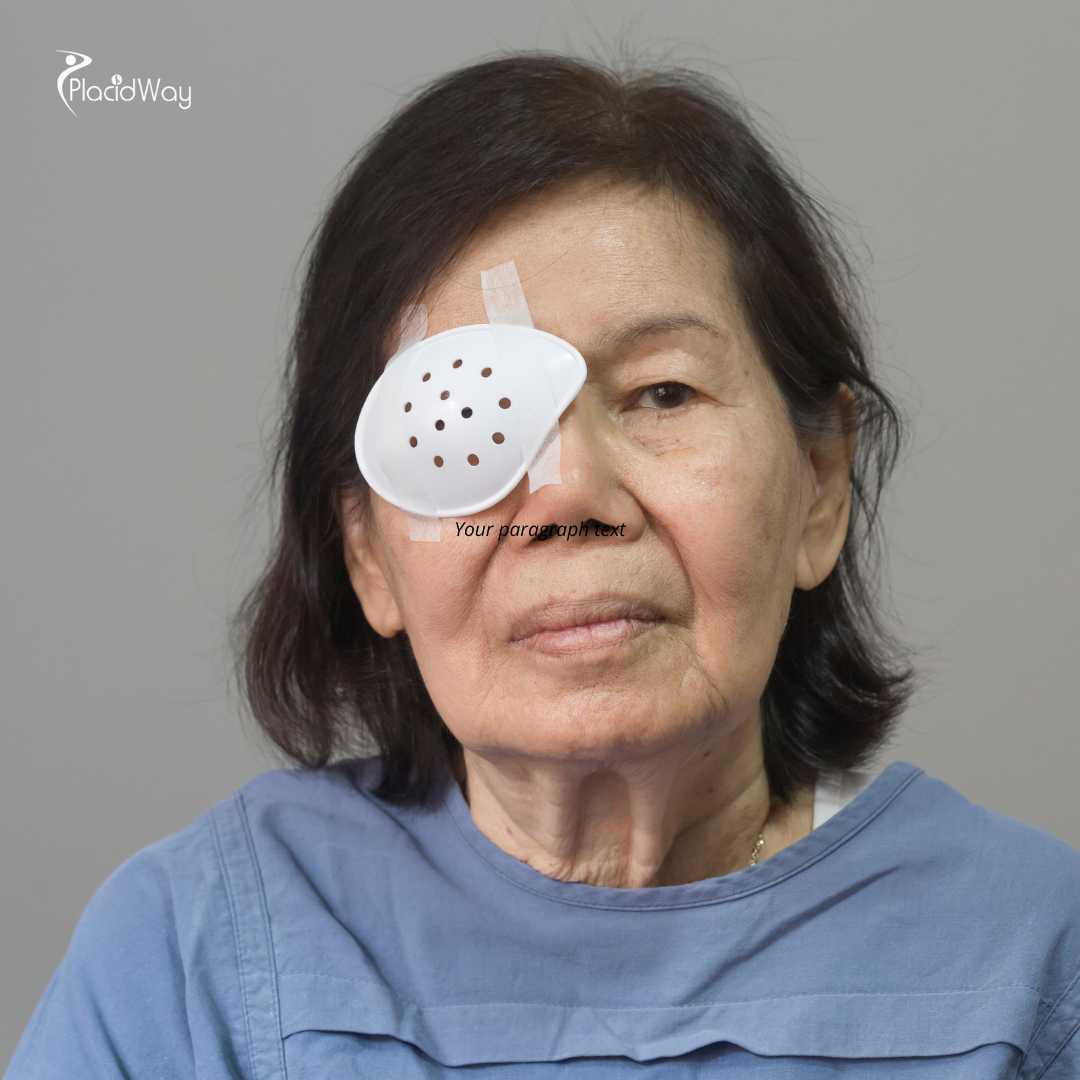
Helen leaves her dad in the hotel room at half past four, his drops lined up on the bedside table and a clear plastic shield taped over his left eye. She has forty minutes before the next dose. Down the hill from Ni?anta?? the pavement tilts toward the Bosphorus and the air begins to smell of salt water. A man with a tray of sesame-crusted simit balanced on his head calls out the price. Gulls wheel over the ferry pier at Be?ikta?, a ferry horn sounds long and low, and from across the water the call to prayer rises from one minaret, then another, then a third. The autumn afternoon is still mild enough for a light jacket. She buys two simit and a small glass of tea at a kiosk, then a tub of red lentil soup from the lokanta on the corner, because this morning Roy said the colours of the curtains looked brighter than they had in years and he fancied something warm.
Helen and Roy are composites, drawn from the kinds of families PlacidWay hears from rather than any one real household. Their trip, though, is a fair picture of how cataract surgery in Istanbul tends to go for British patients. A short flight. Pre-operative scans the day after landing. One eye done, a check the next morning, the second eye a day or so later. A week of drops, short walks and early nights. Then home, with the follow-up plan written down.
This report is organised around the things people tend to believe about Istanbul before they look closely. Some of those beliefs are wrong. A few are partly right, and we say so plainly.
The ledger at a glance
Flight from London
About 4 hours
Clock difference
2 to 3 hours ahead
Approx. price per eye
$1,500 to $3,000
roughly £1,150 to £2,300
Typical stay, both eyes
7 to 10 nights
Prices are approximate estimates and vary by clinic and lens. Sterling figures use a rough exchange rate. Always confirm with a written quote.
Entry 01 · Myth
“Istanbul is a hair and teeth town, not somewhere for eyes”
Hair transplants and dental veneers get the headlines, so it surprises many British patients to learn that eye surgery is a long-established specialty in Turkey. Large private hospital groups in Istanbul run dedicated ophthalmology departments, and there are standalone eye hospitals that do little else. The interest from UK patients has grown by word of mouth rather than advertising, which is why it feels quiet. We have no reliable count of how many people travel, and we would rather not invent one. What we can describe are the signals that keep coming up when readers explain why they started looking.
Driver A
Waits and lens limits at home
The NHS fits a standard monofocal lens free of charge, but waiting times differ between areas and premium multifocal lenses are generally not offered. Private UK surgery is available but the bill climbs quickly for two eyes.
Driver B
Direct flights from regional airports
Turkish Airlines, British Airways, Pegasus and several low-cost carriers link Istanbul with London and a number of regional UK airports, so many patients avoid a connection.
Driver C
No visa for a short stay
British passport holders can currently visit Turkey for up to 90 days in any 180 without a visa. Passport validity rules still apply, so check GOV.UK before booking.
Driver D
Licensing you can actually check
Turkey's Ministry of Health licenses hospitals and issues a separate authorisation for facilities treating international patients. Several Istanbul hospitals also hold Joint Commission International accreditation.
Driver E
Both eyes in one visit
Instead of two operations weeks apart, many Istanbul clinics schedule the second eye within days of the first, so one trip covers the lot.
Driver F
Packages with the logistics built in
Airport transfers, an English-speaking coordinator and sometimes a hotel are often folded into the quote, which matters when you cannot see well enough to find your way around.
Entry 02 · Myth
“You can’t properly check a Turkish clinic from your sofa in Britain”
You can, and you should, before any deposit leaves your bank account. The good news for a cautious reader is that most of the important checks are public or can be requested in writing. A reputable clinic will not be offended by any of these questions. If one is, that tells you something useful.
CHECK 1
Ask for the hospital's Ministry of Health licence and its Health Tourism Authorisation Certificate, the document that permits it to treat international patients.
CHECK 2
If the clinic says it holds Joint Commission International accreditation, search for it yourself on the JCI website. Accreditation belongs to a specific site, so make sure the listed address matches where you will be operated on.
CHECK 3
Get the operating surgeon's full name and confirm they are a specialist ophthalmologist. Membership of the Turkish Ophthalmological Association or the European Society of Cataract and Refractive Surgeons is a helpful signal, though not a licence in itself.
CHECK 4
Insist on a video consultation with the surgeon, not only with a sales coordinator. Ask how often they perform cataract surgery and how they handle a complication during the operation.
CHECK 5
Ask which lens manufacturer and model they plan to use. Established makers include Alcon, Johnson & Johnson Vision, Zeiss and Bausch + Lomb. The exact model should appear on your quote and later on your lens implant card.
CHECK 6
Request English copies of the consent form and the aftercare instructions before you travel, so you can read them calmly at home with your reading glasses and a cup of tea.
One British-specific step helps a great deal. Send the clinic your most recent sight test results from your high-street optician and a medication list from your GP practice. If you take blood thinners, eye drops for glaucoma or tamsulosin for a prostate condition, the surgeon needs to know in advance, because these can affect how the operation is planned. Your own GP or optometrist is the right person to talk through whether anything in your history makes travel unwise.
Entry 03 · Myth
“Once you land at Heathrow, any problem is yours alone”
This is the worry we hear most, and it deserves a careful answer. You are not alone, but the support does change shape once you are home, and the time to set it up is before you fly out.
In Istanbul, a well-run clinic checks each eye the morning after surgery and again before you are cleared to fly, usually a few days later. Ask for those dates in writing. You should leave with your operation notes, the lens implant card for each eye, a printed drop schedule and a direct contact line, often WhatsApp, that is answered by clinical staff rather than a sales team.
Back in the UK, the NHS will treat an urgent eye problem whether your operation happened in Leeds or in Istanbul. Sudden worsening vision, increasing pain, growing redness, or a shower of new floaters with flashing lights should be treated as same-day problems. Call NHS 111, go to your nearest eye casualty department, or attend A&E. Serious complications after cataract surgery are uncommon, but knowing where you would go is part of a sensible plan.
Routine follow-up is a different matter. Before you travel, ring your usual optician and ask whether they will do a post-operative check and a new glasses prescription around four to six weeks after surgery, and what that costs when the operation was private and abroad. Many people also find that months or years later the vision clouds slightly again. This is posterior capsule opacification, a common and treatable after-effect, usually fixed with a quick laser procedure. Ask your Istanbul clinic how they would handle it and what your GP referral options might be at home.
Finally, a point about insurance that catches many readers out. Your UK Global Health Insurance Card does not apply in Turkey, and standard travel insurance usually excludes planned treatment and its complications. Look for a specialist medical travel policy and read the exclusions closely, especially if you are over seventy.
Entry 04 · Myth
“Having both eyes done in one trip is reckless”
In the NHS, the second eye is usually operated on weeks after the first. That gap lets the team see how the first eye settles and fine-tune the second lens if needed. It is a cautious, sensible model, and it is the one most British patients know.
Istanbul clinics treating overseas patients more often operate on the second eye a day or a few days after the first, once the first has been checked. Some surgeons offer both eyes on the same day, treating each as a completely separate procedure with fresh instruments and fresh preparation. Both approaches are used internationally. The trade-off is real though. With a short gap, there is less chance to learn from the first eye before choosing the second lens, and if a problem appeared in both eyes you would have both affected at once.
This is a decision to make with the operating surgeon, ideally after you have also discussed it with your own optometrist. If you have other eye conditions, a strong prescription or a very unusual eye shape, a longer gap may be the wiser plan, even if it means two trips.
Entry 05 · Myth
“The figure in the email is the figure you’ll pay”
It can be, but only if the quote is built properly. The most common surprise for UK patients is not a sneaky fee. It is the lens. Your scans on arrival may show astigmatism or a measurement that makes the surgeon recommend a toric or different premium lens, and that can move the price. Ask, in writing, what happens if the recommended lens changes after testing and whether you can decline the upgrade.
Below is a sample budget for both eyes with a companion travelling from the UK for around eight nights. It is illustrative, not a quote. Use it to spot what your own quote leaves out.
| Line item | Approx. range |
|---|---|
| Surgery for both eyes with lenses, scans and short-term aftercare | £2,300 to £4,600 |
| Return flights for two from a UK airport | £300 to £800 |
| Hotel, eight nights, if not in the package | £500 to £1,100 |
| Meals, taxis and small extras | £250 to £450 |
| Specialist medical travel insurance | Varies widely by age and health |
| UK optician check and new glasses after healing | £50 to £400 |
| Contingency for two extra nights if a check is delayed | £150 to £300 |
| Indicative total before insurance | £3,550 to £7,650 |
Approximate estimates based on surgery at $1,500 to $3,000 per eye, converted roughly to sterling. For comparison, private surgery with a premium lens in the UK runs at roughly $3,500 to $5,500 per eye, about £2,650 to £4,200, before any travel. Confirm every figure with a written quote.
To keep the price fixed, ask the clinic to confirm each of these points in one written document:
Whether the price is per eye or for both eyes, and the currency. Many Istanbul clinics quote in euros or US dollars, so ask your bank about card fees.
The exact lens model for each eye, and the price difference if the surgeon recommends a change on arrival.
Which tests, drops, eye shields, check-ups and transfers are included.
What an extra check-up or extra night costs if you are asked to stay longer.
The deposit, cancellation and refund terms, including what happens if the surgeon decides on the day that surgery should not go ahead.
Entry 06 · Myth
“If you’re going abroad anyway, the cheapest city wins”
Istanbul is not the cheapest option for cataract surgery, and it is not the only good one. We compared five destinations that UK patients commonly consider, weighting cost and lens options at 25 percent, provider qualifications and accreditation at 25 percent, aftercare and follow-up at 20 percent, travel access from the UK at 15 percent and patient reputation at 15 percent. The order below is our editorial judgement for this particular reader, not a published ranking.
| Destination | Approx. per eye | Where it is strong | What to weigh |
|---|---|---|---|
| 1. Istanbul | $1,500 to $3,000 | Wide choice of eye departments and hospitals, several with JCI accreditation. Premium multifocal and toric lenses widely offered. Year-round direct flights from many UK airports. | A huge, hilly city with heavy traffic. Quality varies across so many providers, so vetting matters. No GHIC cover. |
| 2. Budapest | $1,800 to $3,200 | EU regulation, a compact and walkable centre, and flights of under three hours. GHIC applies to urgent state care while there. | Slightly higher prices and fewer all-inclusive packages, so you may arrange more yourself. Cold, grey winters. |
| 3. Antalya | $1,200 to $2,500 | Lower Turkish prices, often bundled with a seaside hotel. A calmer, flatter resort setting for recovery. | Far fewer specialist eye providers than Istanbul. Many UK flights are seasonal. Strong summer sun and the pull of the pool, which you must avoid after surgery. |
| 4. Prague | $2,000 to $3,500 | EU standards, a well-established private eye clinic sector and the shortest flight on this list from many UK airports. | Higher-end pricing narrows the saving against UK private care. Cobbled streets in the old town. |
| 5. New Delhi | $800 to $1,800 | The lowest prices here and long experience with very high volumes of cataract surgery at large eye hospitals. | A long-haul flight of around nine hours, an e-visa to arrange, intense summer heat and poor winter air quality. A big ask soon after eye surgery. |
Prices are approximate estimates for surgery with lens and may vary by clinic and lens type. Confirm directly with providers.
Istanbul comes out in front for this reader because it balances several things at once. The provider pool is deep enough to find an accredited hospital with an experienced cataract surgeon, the premium lens range is broad, and flights run all year from regional airports, not just London. Budapest is a very fair alternative if EU regulation and a gentler city matter more to you than price. Antalya suits someone who values a resort setting and has found a specific, well-vetted provider there. New Delhi offers excellent value but asks the most of an older traveller's stamina.
Entry 07 · Myth
“A city of fifteen million is no place to heal”
Cataract recovery is mostly gentle. You will spend the first days putting in drops several times a day, wearing a shield at night, avoiding rubbing the eye and keeping out of dusty wind. That routine fits Istanbul better than people expect, provided you pick the right base.
Many of the city's private eye departments sit on the European side in districts such as ?i?li and Be?ikta?, with others across the water around Ata?ehir. Choose a hotel within a short taxi ride, or better, a short level walk of the clinic, with a lift and a step-free entrance. For gentle outings, Maçka Park has wide paved paths and benches under plane trees. Emirgan Park, further up the Bosphorus, is famous for its tulips in spring. A seated ferry ride across to Kad?köy is a lovely hour out once your surgeon is happy, as long as you wear wraparound sunglasses against wind and spray.
Food helps more than you might think when you are tired. Lokantas, the canteen-style restaurants where you point at trays of the day's cooking, serve soft, home-style dishes such as lentil soup, stuffed peppers and slow-cooked beans. Breakfast often means eggs, cheese, olives, tomatoes and bread, and tea arrives constantly in small tulip-shaped glasses. Ask your surgeon before you visit a hammam, the traditional Turkish bath, because steam, splashing water and scrubbing are exactly what a healing eye should avoid for the first couple of weeks. The same caution applies to hotel pools and spas.
For comfort, spring from April to early June and autumn from September into early November tend to be the kindest months, with mild days and fewer crowds than high summer. July and August are often hot and humid. Winter brings rain, wind and the odd snowfall. Light sleepers may want earplugs, as the call to prayer sounds five times a day, starting before dawn. Many visitors grow fond of it, but it helps to know in advance.
Entry 08 · Where the myths are partly true
The honest drawbacks
Good surgery in Istanbul is very achievable. So are a few genuine difficulties, and we would rather you met them here than at the airport.
D1. Continuity of care is broken by distance
The surgeon who knows your eyes will be about 1,800 miles away once you are home. The NHS will treat urgent problems, but routine refinements, such as a lens exchange in the rare case one is needed, may mean another trip or paying privately in the UK.
D2. The journey itself is tiring
Istanbul Airport is enormous, with long walks between gate and passport control. Sabiha Gökçen, on the Asian side, is smaller but further from many clinics. Transfers can take 45 minutes to well over an hour in traffic. Book free special assistance through your airline, and ask for a wheelchair at both ends if walking distances worry you.
D3. Hills, kerbs and crowds
Much of central Istanbul is steep, with uneven pavements, high kerbs and busy crossings. With one eye blurred and your depth perception off, a fall is a real risk. Take a companion's arm, use taxis for anything more than a short level stroll, and leave the sightseeing for another visit.
D4. Plenty of choice, uneven quality
The problem in Istanbul is not limited provider choice. It is the reverse. Agencies, social media adverts and very low headline prices make it hard to tell a specialist eye hospital from a general clinic that occasionally does cataracts. Vet the actual hospital and the actual surgeon, not the advert.
D5. Language outside the clinic
International patient departments usually work well in English. Pharmacies, taxi drivers and smaller hotels may not. A translation app on your companion's phone and a printed copy of your drop schedule go a long way.
D6. Premium lenses are not right for every eye
Multifocal lenses can cause halos or glare around lights at night, which matters if you drive after dark. They may be unsuitable with macular degeneration, glaucoma or diabetic eye disease. No lens can promise life without glasses, and a careful surgeon may steer you towards a simpler lens even though it costs less.
D7. Time away from home
Plan on seven to ten nights. That means arranging care for a spouse at home, a pet sitter, or cover for grandchild duties. You cannot always fly home the day after surgery, and a check may be pushed back by a day.
D8. UK complaint routes do not apply
Your surgeon is not registered with the General Medical Council, and a dispute would fall under Turkish rules rather than British ones. This is why written quotes, written aftercare terms and paying by credit card, which may give some purchase protection, are worth the effort.
Entry 09 · Fit
Who Istanbul suits, and who should stay closer to home
A good fit
Your eyes are otherwise healthy and cataracts are the main problem.
You want a toric or multifocal lens that the NHS will not provide, and your optometrist agrees your eyes are suitable for one.
You walk comfortably for short distances and can manage an airport with assistance.
A spouse, son, daughter or friend can travel with you for the full stay.
You can pay from savings without stretching your pension, and keep a margin for surprises.
You are happy to line up a UK optician check before you leave.
Probably not the right move
You have advanced macular degeneration, unstable glaucoma or diabetic eye disease that needs regular monitoring by one team.
Your NHS date is only weeks away and a standard lens would suit you well.
You have had recent falls, or memory changes would make a strict drop routine hard to follow.
Nobody can come with you, or you cannot find insurance that covers the trip.
You are hoping for a promise of perfect sight without glasses. No honest surgeon anywhere can offer that.
If you fall somewhere in between, that is normal. Talk it through with your GP or optometrist, who knows your eye history in a way no overseas clinic can until you share it.
Entry 10 · The last doubt
“But how do I know the price won’t change once I’m there?”
You know because it is written down before you book. PlacidWay can help you request itemised quotes from Istanbul eye providers that name the lens model for each eye, list every check-up and transfer included, and state what happens if testing on arrival points to a different lens. You compare them at home, in your own time, and share them with your optician if you like. There is no obligation to travel.
Send your latest sight test and a medication list when you ask, so the answer reflects your own eyes rather than a generic package.
Sources and further reading
NICE guideline NG77: Cataracts in adults, management
NHS: Going abroad for medical treatment
GOV.UK: Turkey travel advice, entry requirements
Joint Commission International





















Share this listing