

Contents
Waking up and immediately fumbling for your glasses is a frustrating daily ritual many North Americans are desperate to ditch. But when you look at the steep price tag for laser eye surgery back home in the US or Canada, keeping those smudged lenses suddenly feels like your only practical option. Opting for PRK surgery in Cancun offers a brilliant escape from that financial roadblock, combining world-class vision correction with a tropical backdrop.
The average procedure cost in this coastal city sits right around $1,500 for both eyes, which is a fraction of what you would pay up north. While the lower price is incredibly enticing, your vision is invaluable, meaning you must verify local clinic credentials. Look specifically for facilities accredited by the Consejo de Salubridad General (CSG), Mexico's highest health authority. Taking a few extra minutes to confirm these local certificates ensures your eyes are in the safest possible hands before you trade the snow for the sand.
What You Should Know
Navigating medical travel by piecing together individual services can quickly become a logistical headache. Opting for a comprehensive treatment package takes the guesswork out of your trip, letting you focus entirely on your corneal healing. These bundled options create a structured itinerary that keeps your stress levels low while in an unfamiliar city.
Most robust PRK packages include your initial consultation, the excimer laser procedure, standard post-op medications, and mandatory follow-up checks. Some clinics even bundle in airport transfers and local accommodations near the medical facility. Review the packages below to compare what each one offers and find the most convenient arrangement for your journey.
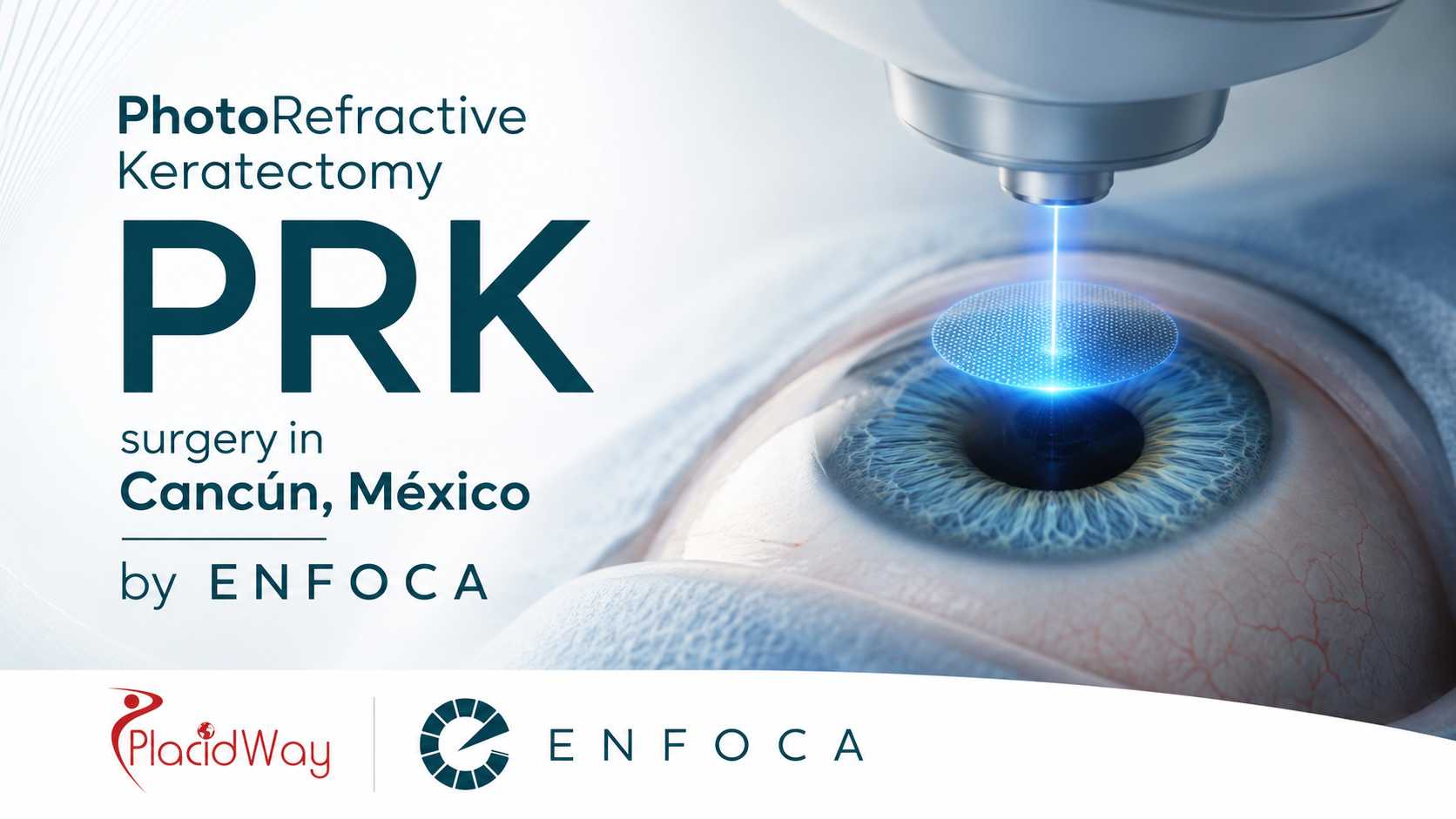
Price starting from $1,940
PRK Eye Surgery in Cancun by ENFOCA
ENFOCA oftalmología Avanzada
- Eye/Lasik Care
Cancun,Mexico

Price starting from $1,800
PRK Eye Surgery in Cancun by Perfect Vision
Perfect Vision Eye Lasik Surgery Center
- Eye/Lasik Care
Cancun,Mexico
Getting straight to the numbers, PRK surgery in this region generally costs around $1,500 for both eyes. This stark contrast to the $4,000 or more you might pay in the US or Canada is exactly why so many patients are crossing the border for vision correction. Understanding the financial breakdown helps you budget appropriately for travel and post-op care.
This dramatic price drop is entirely due to lower regional living costs and reduced administrative overhead, not a compromise in medical quality. You still get access to the same advanced excimer lasers used globally by top ophthalmologists. Take a look at the pricing details below to compare the financial aspects and see just how much you could save.
PRK Centers Cost Comparison in Cancun,Mexico
| Provider | Procedure | Price |
|---|---|---|
| Perfect Vision Eye Lasik Surgery Center | PRK, Eye/Lasik Care | $1800 |
| ENFOCA oftalmología Avanzada | PRK, Eye/Lasik Care | $1900 |
PRK Cost Comparison in Mexico
| Country | Procedure | Price |
|---|---|---|
| United States | PRK, Eye/Lasik Care | $4500 |
| Canada | PRK, Eye/Lasik Care | $3500 |
Picking a clinic should never feel like taking a gamble, especially when it concerns your eyesight. Rather than getting swept up by modern waiting rooms and rehearsed reception pitches, focus your energy on verifying their medical credentials. You will want to look for facilities approved by COFEPRIS, the Mexican health regulatory agency that enforces strict hygiene and safety standards.
A reliable eye center will gladly share their sterilization protocols, laser technology details, and local safety licenses with you upfront. Thorough research protects you from subpar care and ensures a safe surgical environment. Take a moment to browse the options listed below to compare clinics and see which facility aligns best with your needs.

Perfect Vision Eye Lasik Surgery Center
Cancun,Mexico

ENFOCA oftalmología Avanzada
Cancun,Mexico
There is a distinct comfort in seeing the environment where your procedure will actually happen before you even pack your bags. Video content bridges that geographical gap, offering a transparent look into the operating rooms and patient recovery areas. Seeing the facility firsthand helps strip away the mystery of international medical travel.
Watching real footage shows you the exact laser technology the surgeons use and the general atmosphere of the clinic. It is a vital step in building trust and calming any pre-procedure nerves about foreign healthcare. Watch the videos provided below to compare the facilities and visualize your own journey.
Nothing speaks louder than the firsthand stories of people who have already walked the path you are considering. Reading patient reviews gives you unpolished, genuine insights into what the recovery process and bedside manner are really like. These stories often reveal the subtle details that official clinic brochures leave out.
Pay close attention to comments about how the clinic handled follow-up care and whether the medical staff communicated clearly in English. Shared experiences highlight the realities of healing from refractive surgery while staying in a hotel. Check out the patient reviews below to compare their stories and gather real-world perspectives on your options.

Having questions about traveling abroad for vision correction is entirely natural and expected. Below are some of the most common questions patients ask when considering this laser treatment in this popular coastal destination.
Is the surgery safe to undergo here?
Yes, it is safe when you choose an accredited clinic that uses modern, FDA-approved excimer lasers and follows strict international sterilization protocols.
How does this procedure differ from LASIK?
Unlike LASIK, this method does not create a corneal flap. Instead, the surgeon removes the outer layer of the cornea entirely before applying the laser, making it ideal for patients with thinner corneas.
Will the medical staff speak English?
Most facilities catering to international medical tourists require their surgeons and patient coordinators to be fully bilingual in English and Spanish.
Can I fly immediately after my treatment?
Ophthalmologists strongly advise waiting at least 3 to 5 days before flying. The dry cabin air can severely irritate your eyes during the crucial initial healing phase.
What if I need follow-up care after returning home?
Your local eye doctor can easily handle standard post-operative checkups. Just ensure you take all your medical records and surgical notes back with you.
Can I go to the beach or swim during recovery?
No, you must avoid swimming pools, oceans, and sand for several weeks to prevent serious infections and corneal irritation.
Why is the cost so much lower than in the US?
The lower price tag is due to the reduced cost of living, lower malpractice insurance premiums, and decreased facility overhead, rather than any drop in medical quality.
What kind of technology do the clinics use?
Reputable eye centers utilize the same advanced, computer-guided excimer lasers and diagnostic mapping equipment found in top-tier North American hospitals.
How long should I plan to stay in the city?
Patients typically need to stay for 5 to 7 days. This allows enough time for the initial consultation, the procedure itself, and mandatory follow-up appointments.
Is the local UV index dangerous for healing eyes?
The tropical sun is intense, so you must wear high-quality, UV-blocking sunglasses constantly when outdoors to protect your healing corneas from UV damage.
The ultimate success of your vision correction relies heavily on the steady hands and extensive experience of your chosen ophthalmologist. When traveling abroad, ensuring your surgeon is highly qualified is the single most critical step in your planning process. You want a specialist who performs these refractive surgeries daily, not just occasionally.
Specifically look for doctors certified by the Mexican Council of Ophthalmology, which validates their ongoing education and surgical expertise. Many top specialists in this region have also completed prestigious fellowships internationally. Browse the surgeon profiles below to compare their backgrounds, board certifications, and specific experience levels.


Dr. Blanca B. Figueroa Magana
Perfect Vision | Eye Lasik Surgery Center
- Eye Surgery Specialist
Cancun,Mexico
Combining a life-changing medical procedure with the tranquil environment of the Mexican Caribbean sounds almost too good to be true, but it is a very real option. This city has evolved into a premier hub for US and Canadian medical tourists seeking both affordability and a serene recovery setting. The calm atmosphere provides a low-stress environment while your eyes heal.
Getting here is remarkably straightforward, with dozens of short, direct flights arriving daily from major North American transit hubs. Once you land, the local infrastructure makes navigating between your hotel and the medical facility completely seamless.
| Airport | Cancun International Airport (CUN) |
| Flight Time | 2 to 5 hours from most US/Canadian cities |
| Primary Language | Spanish (English widely spoken in healthcare) |
| Currency | Mexican Peso (USD widely accepted) |
| Post-Op Climate Note | High UV index requires strict sunglasses usage outdoors |
Navigating the world of medical tourism does not have to be a solo endeavor filled with uncertainty. Our team is here to help you connect with fully accredited eye clinics, coordinate your specialist consultations, and handle the logistical details of your trip abroad. We prioritize your safety and informed decision-making above all else.
Ensuring you have all the facts, verified clinic options, and clear pricing details allows you to take the next step toward clearer vision with confidence. Click the button below to request a transparent, no-obligation estimate tailored specifically to your medical needs.
References
- Photorefractive Keratectomy (PRK) – American Academy of Ophthalmology
- Laser Eye Surgery Options – Mayo Clinic
- Health Information for Travelers to Mexico – Centers for Disease Control and Prevention
- Hospital Certification Standards – Consejo de Salubridad General
- Clinical Outcomes of PRK – National Center for Biotechnology Information























Share this listing