
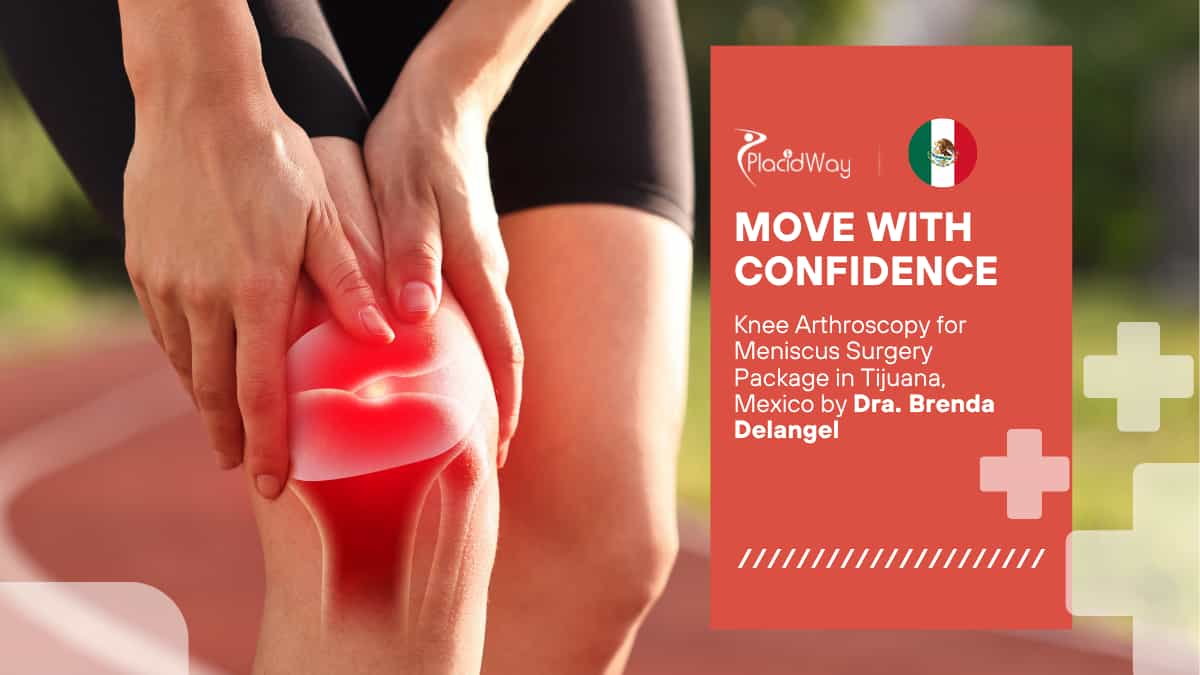
A torn meniscus can turn simple movements like walking, climbing stairs, or exercising into daily challenges.
This knee arthroscopy in Tijuana, Mexico, is designed for patients who may need minimally invasive meniscus repair or treatment after a medical evaluation.
The package has a starting price of $6,900 and typically involves a short recovery stay, although the final treatment plan, eligibility, and total cost depend on your diagnosis, imaging results, and physician assessment.
Key Insights About This Knee Arthroscopy Package
- Treatment focus: Knee arthroscopy is commonly used to evaluate and treat certain meniscus injuries through small incisions rather than traditional open surgery.
- Starting cost: The package starts from $6,900; actual expenses may change depending on surgical findings, required procedures, medications, and recovery needs.
- Patient suitability: Candidates usually include people with symptoms linked to meniscus tears who have been evaluated through clinical examination and imaging such as MRI.
- Medical standards: Patients should confirm the surgeon’s credentials, facility licensing, surgical protocols, anesthesia standards, and infection-control practices before treatment.
- Travel planning: International patients should arrange medical records, imaging files, travel clearance, and post-operative follow-up plans before traveling.
- Recovery expectations: Recovery varies based on whether the meniscus is repaired or partially removed, overall health, rehabilitation progress, and physician recommendations.
Knee Arthroscopy Package Cost in Tijuana, Mexico
The cost of meniscus surgery varies significantly between countries depending on healthcare systems, surgeon fees, facility charges, anesthesia, rehabilitation services, and follow-up care. Patients should compare complete treatment plans rather than only the procedure fee.
| Country | Estimated Knee Arthroscopy Cost Range | Common Reason Patients Compare Options |
|---|---|---|
| United States | Approximately $10,000–$25,000+ | Higher healthcare and facility costs |
| Canada | Varies depending on private care availability | Wait times and access considerations |
| Mexico | Starting from $6,900 for this package | Cross-border access for some international patients |
| India | Often lower than Western healthcare markets | International orthopedic treatment options |
Estimated Package Cost Breakdown
The following breakdown is an educational estimate. Final costs depend on medical evaluation, required procedures, hospital policies, and individual recovery needs.
| Procedure Item | Estimated Cost | Description |
|---|---|---|
| Knee arthroscopy procedure | Included in package estimate | Minimally invasive knee procedure performed through small incisions |
| Meniscus treatment | Included depending on surgical plan | Repair or removal of damaged meniscus tissue when appropriate |
| Medical evaluation and surgical planning | Varies | Assessment based on symptoms, examination, and imaging |
| Anesthesia and operating room services | Varies | Required surgical support services |
| Post-operative care | Varies | Follow-up instructions and recovery guidance |
| Total Starting Package Price | $6,900 | Starting estimate pending medical assessment |
What Is Included in the Knee Arthroscopy Package?
- Pre-treatment medical review and evaluation planning
- Knee arthroscopy procedure according to the approved treatment plan
- Meniscus-related surgical treatment when medically appropriate
- Operating room and surgical support services
- Anesthesia services related to the procedure
- Post-operative instructions
- Recovery guidance provided by the medical team
What Is Not Included in the Package?
- International airfare and personal travel expenses
- Accommodation unless specifically included in the final agreement
- Personal expenses during travel
- Additional diagnostic tests not included in the treatment plan
- Extended rehabilitation or physical therapy beyond included services
- Treatment of unrelated medical conditions
Who May Be a Candidate for Meniscus Surgery?
Knee arthroscopy may be considered for patients with symptoms related to meniscus injuries when conservative treatments have not provided sufficient improvement or when the injury pattern requires surgical management.
- Patients with a diagnosed meniscus tear confirmed through medical evaluation
- Individuals experiencing knee pain, swelling, catching, or restricted movement
- People whose symptoms continue despite non-surgical approaches such as medication or physical therapy
- Patients who are medically fit for anesthesia and surgery
- Individuals willing to complete recommended rehabilitation after surgery
Medical Records Usually Needed Before Assessment
Providing complete medical information helps the physician understand your condition and determine whether knee arthroscopy is appropriate.
- MRI reports and knee imaging results
- X-ray reports if available
- Previous orthopedic consultation notes
- Description of symptoms and duration
- Previous treatments attempted, including physical therapy or medications
- Current medication list
- Relevant medical history, including previous surgeries and chronic conditions
How Knee Arthroscopy for Meniscus Surgery Works
Knee arthroscopy is a minimally invasive orthopedic procedure that allows a surgeon to examine and treat problems inside the knee joint using a small camera called an arthroscope. Instead of making a large incision, the surgeon uses small openings to access the joint and perform the necessary treatment.
For meniscus injuries, the goal may be to repair the damaged cartilage when possible or remove the damaged portion when repair is not suitable. The exact approach depends on factors such as the location and type of tear, age, activity level, knee condition, and overall health.
Step-by-Step Knee Arthroscopy Procedure
- Pre-surgical evaluation: The orthopedic team reviews your symptoms, medical history, imaging results, and overall fitness for surgery.
- Anesthesia preparation: Appropriate anesthesia is administered based on your surgical plan and medical needs.
- Small knee incisions: The surgeon creates small openings around the knee to insert the arthroscope and specialized instruments.
- Joint examination: The camera provides an internal view of the knee structures, including the meniscus and surrounding tissues.
- Meniscus treatment: The surgeon repairs the meniscus or removes damaged tissue when clinically appropriate.
- Closure and recovery: The instruments are removed, incisions are closed, and you receive post-operative instructions before discharge or continued monitoring.
Treatment Timeline for International Patients
The exact timeline differs between patients. Your physician will determine when you can travel, undergo surgery, and return home based on your recovery and medical condition.
| Stage | What Usually Happens |
|---|---|
| Before travel | Medical records are reviewed, imaging is assessed, and treatment suitability is discussed. |
| Arrival in Mexico | Final consultation, examinations, and surgical preparation take place. |
| Procedure day | Knee arthroscopy is performed according to the approved surgical plan. |
| Early recovery | The medical team provides mobility instructions, medication guidance, and follow-up recommendations. |
| Return home | Travel timing depends on physician clearance and individual healing progress. |
How Long Should You Stay in Tijuana for Knee Arthroscopy?
The length of stay depends on the type of meniscus procedure performed, your recovery speed, and your physician’s advice. Some patients may return home relatively soon after surgery, while others may require additional monitoring or rehabilitation planning.
- Complete medical clearance before flying home.
- Follow surgeon instructions regarding walking, wound care, and activity restrictions.
- Arrange transportation and accommodation suitable for early recovery.
- Confirm follow-up communication plans before leaving Mexico.
Recovery and Aftercare After Meniscus Surgery
Recovery after knee arthroscopy varies depending on whether the meniscus was repaired or partially removed. Following rehabilitation recommendations is an important part of restoring movement, strength, and knee function.
Typical Recovery Stages
- First few days: Patients may experience swelling, discomfort, and limited movement. Elevation, prescribed medication, and activity guidance may be recommended.
- First few weeks: Physical therapy and gradual strengthening exercises may be introduced depending on the procedure performed.
- Several weeks to months: Mobility and activity levels typically improve gradually. Recovery time depends on the complexity of the repair and individual healing.
- Long-term care: Maintaining strength, flexibility, and healthy activity habits may support knee function after recovery.
Risks and Possible Complications of Knee Arthroscopy
Like any surgical procedure, knee arthroscopy has potential risks. The list below is not exhaustive. Your orthopedic surgeon should explain risks based on your medical history, diagnosis, and planned procedure.
- Infection at the surgical site
- Bleeding or blood clot formation
- Swelling or stiffness of the knee
- Persistent pain or limited improvement
- Nerve or blood vessel injury (uncommon)
- Reaction to anesthesia
- Need for additional treatment if symptoms continue
- Meniscus repair failure or incomplete healing in some cases
Expected Results After Meniscus Surgery
The main goals of knee arthroscopy are to address the specific knee problem, reduce symptoms when possible, and improve function. Results vary depending on the injury type, surgical approach, rehabilitation participation, and individual health factors.
- Many patients experience improvement in knee movement and daily activity comfort.
- Pain levels may decrease after recovery, although outcomes differ between individuals.
- Recovery progress depends on rehabilitation and adherence to medical instructions.
- A repaired meniscus may require a longer recovery period compared with partial meniscus removal.
- Your physician can provide a more personalized expectation after reviewing your diagnosis.
Why Knowing Your Surgeon Matters
For procedures such as knee arthroscopy and meniscus surgery, the surgeon’s orthopedic training, experience with joint conditions, and approach to diagnosis are important factors to discuss during your medical evaluation. Before traveling, patients should review their imaging studies, diagnosis, treatment options, and expected recovery plan directly with the treating physician.
A consultation with Dra. Brenda Delangel can help determine whether arthroscopic meniscus surgery is an appropriate option based on your symptoms, MRI findings, knee condition, activity level, and overall health.
Frequently Asked Questions About Knee Arthroscopy in Tijuana
1. What is knee arthroscopy for meniscus surgery?
Knee arthroscopy is a minimally invasive procedure where a surgeon uses a small camera and instruments to examine and treat problems inside the knee joint, including certain meniscus injuries.
2. How much does meniscus surgery cost in Tijuana, Mexico?
This package has a starting price of $6,900. The final cost depends on medical evaluation, the exact procedure required, and any additional services needed.
3. How do I know if I need meniscus surgery?
A physician typically evaluates symptoms, physical examination findings, imaging results, and previous treatments before recommending surgery.
4. How long does knee arthroscopy take?
The procedure duration varies depending on the complexity of the knee problem and the treatment performed.
5. Can I travel internationally after knee arthroscopy?
Travel timing depends on your recovery, mobility, medical condition, and clearance from your treating physician.
6. Will my meniscus be repaired or removed?
The decision depends on the tear pattern, location, tissue condition, and whether repair is considered appropriate.
7. What medical records should I send before consultation?
MRI reports, imaging files, previous orthopedic notes, medication details, and medical history are commonly requested.
8. What questions should I ask before choosing this treatment?
Ask about surgeon qualifications, recommended procedure, alternatives, risks, recovery expectations, and total estimated costs.
9. Is knee arthroscopy suitable for everyone?
No. Suitability depends on the individual diagnosis, health status, knee condition, and physician evaluation.
10. What happens if surgery does not improve my symptoms?
Your physician can discuss possible next steps, which may include rehabilitation, additional evaluation, or alternative treatment approaches.
Request More Information About This Knee Arthroscopy Package
Choosing orthopedic treatment abroad requires careful planning, medical review, and clear communication. If you would like to understand whether this package may match your situation, you can request a personalized evaluation and discuss your questions with the medical team.
Medical Disclaimer
This content is provided for general informational and educational purposes only and does not replace professional medical advice, diagnosis, or treatment recommendations. Always consult a qualified healthcare professional before making decisions about surgery or medical travel.
























Share this listing