


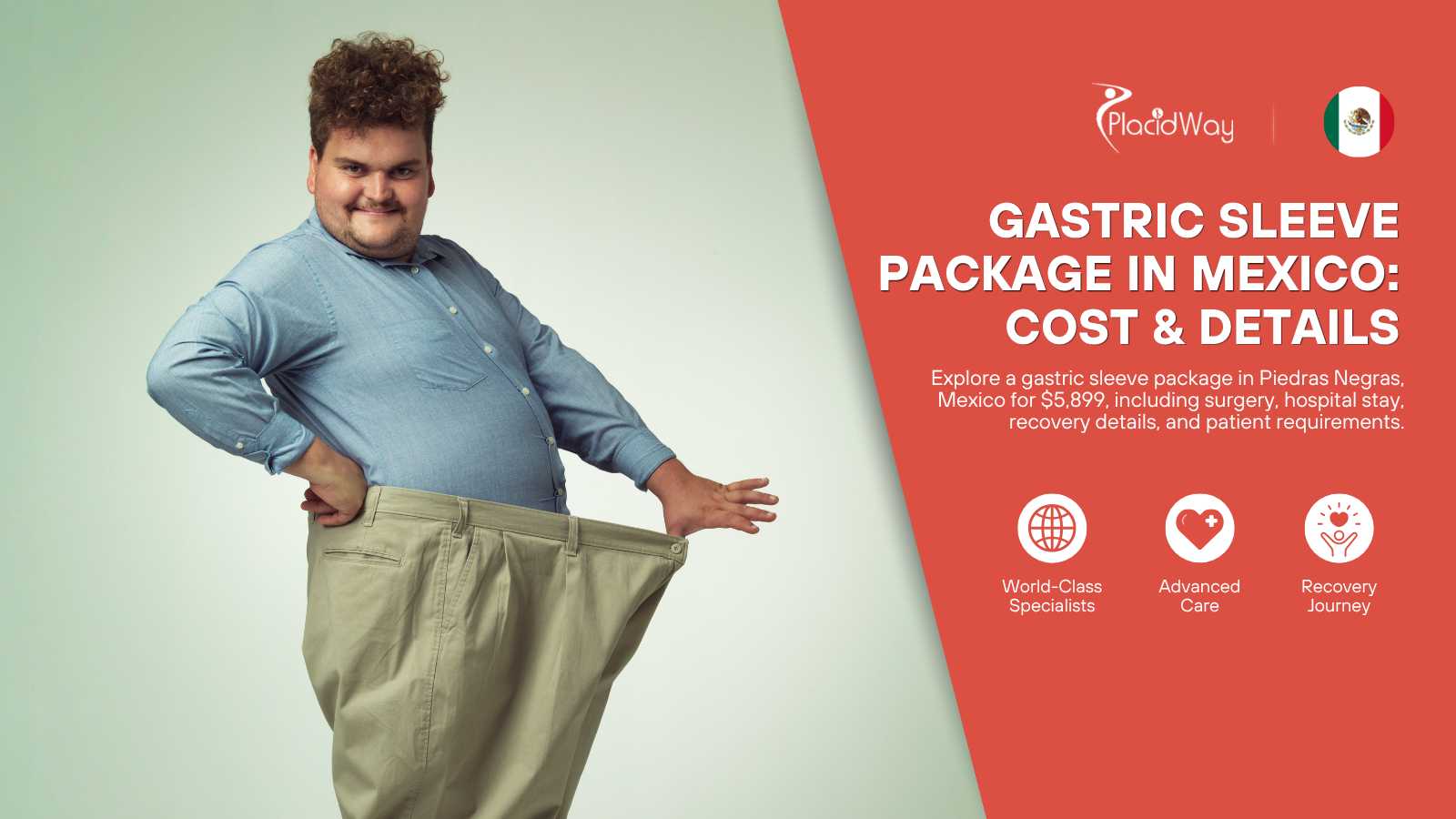
Ready to wave goodbye to fad diets and hello to sustainable weight loss? This comprehensive gastric sleeve package in Piedras Negras, Mexico, provides a proven metabolic solution for candidates struggling with obesity. Starting at an estimated $5,899, this all-inclusive package features your surgical procedure, expert care, and a planned multi-day hospital and hotel stay to ensure a safe recovery. Keep in mind that final eligibility and exact pricing depend on your individual medical assessment.
Key Package Insights
- Estimated Starting Cost: $5,899 (subject to final medical evaluation and personal health factors).
- Safety & Standards: Clinical care aligns with the American Society for Metabolic and Bariatric Surgery (ASMBS) guidelines.
- Candidate Qualifications: Generally suited for individuals with a BMI of 35+, or 30+ accompanied by obesity-related conditions.
- What to Expect: A minimally invasive laparoscopic procedure that reduces your stomach capacity by approximately 80%.
- Pre-Travel Action: A valid passport and preliminary medical clearance are absolutely required before booking flights.
Gastric Sleeve Surgery Cost Comparison and Breakdown
Traveling for bariatric surgery allows many patients to access high-quality care at a fraction of the cost found in their home countries. Below is a general cost comparison to highlight the potential savings.
| Destination | Estimated Cost (USD) |
|---|---|
| Piedras Negras, Mexico | $5,899 |
| United States | $16,000 - $20,000+ |
| Canada | $18,000 - $22,000+ |
Understanding exactly what you are paying for brings peace of mind. Here is a detailed breakdown of the estimated $5,899 package. Please note that this is an estimated cost pending a final medical assessment.
| Procedure Item | Estimated Cost | Description |
|---|---|---|
| Surgical Procedure | $4,000 | Includes surgeon fees, anesthesia, and operating room usage. |
| Hospital Stay | $900 | 2 nights in the medical facility with 24/7 nursing care. |
| Medical Tests & Consults | $500 | Pre-op bloodwork, EKG, and nutritional consultation. |
| Local Transportation | $150 | Chauffeured airport pick-up and clinical transfers. |
| Hotel Accommodation | $349 | 1-night partner hotel stay for pre-flight recovery. |
| Total Estimated Price | $5,899 | Comprehensive all-inclusive starting price. |
What is Included in Your Gastric Sleeve Package?
This medical tourism package is designed to be as stress-free as possible. It bundles essential clinical and travel services together so you can focus entirely on your health.
- Laparoscopic gastric sleeve surgery performed by board-certified specialists.
- All anesthesia medications and attending anesthesiologist fees.
- Standard pre-operative medical evaluations, including basic blood panels and EKG.
- Two nights of dedicated hospital stay and one night in a local recovery hotel.
- Ground transportation between the local airport, the hotel, and the hospital.
- Post-operative nutritional guidelines and remote follow-up support to guide your transition.
What is Not Included in This Bariatric Package?
Transparency is key when planning medical travel. Certain variables depend entirely on your home location, personal health needs, and travel preferences.
- Flights or any international travel expenses from your home country to the destination.
- Specialized medical clearances (such as sleep apnea testing or cardiology clearance if your history requires it).
- Extra nights in the hospital or hotel beyond the established itinerary.
- Prescription medications required for long-term use after returning home.
- Medical tourism insurance or travel complication coverage (highly recommended to purchase separately).
Who is an Ideal Candidate for Gastric Sleeve Surgery?
Bariatric surgery is a powerful tool, but it is not a quick fix for everyone. A careful evaluation is necessary to ensure the procedure is safe and effective for your body.
- Individuals with a Body Mass Index (BMI) of 35 or higher.
- Those with a BMI of 30 to 34.9 who are managing obesity-related conditions like type 2 diabetes or severe hypertension.
- Patients who have earnestly attempted, but not achieved, long-term weight loss through diet and exercise.
- Non-smokers, or individuals willing to quit smoking well in advance of the surgery to ensure safe healing.
- People fully committed to making permanent, lifelong changes to their diet and daily physical activity.
Medical Records Needed for Preliminary Assessment
Before you pack your bags, the clinical team needs to ensure your body is ready for surgery. Gathering these records early speeds up the approval process.
- A recent comprehensive blood panel (including CBC, CMP, and lipid panels).
- An electrocardiogram (EKG) to verify cardiovascular readiness.
- A complete medical history detailing past surgeries, allergies, and current medications.
- A formal clearance letter from your primary care physician or specialist if you have pre-existing chronic conditions.
- A psychological evaluation, which is sometimes requested to confirm you are prepared for the necessary lifestyle shifts.
Step-by-Step Gastric Sleeve Procedure Guide
Knowing what happens in the operating room can help calm pre-surgery nerves. The gastric sleeve (sleeve gastrectomy) is a straightforward, minimally invasive procedure.
Step 1: Administration of Anesthesia
You will be placed under general anesthesia, ensuring you are completely asleep and pain-free during the operation.
Step 2: Laparoscopic Incisions
The surgeon makes a few small incisions (usually less than an inch long) in your abdomen. A tiny camera and specialized surgical instruments are inserted through these keyholes, avoiding the need for a large open cut.
Step 3: Reshaping the Stomach
Using surgical staples, the doctor separates and removes about 80% of the stomach. The remaining portion takes the shape of a narrow tube, or "sleeve," roughly the size and shape of a banana.
Step 4: Finalizing the Surgery
The instruments are carefully removed, and the small incisions are closed with stitches or surgical tape. The entire process typically takes between 60 to 90 minutes from start to finish.
Your Bariatric Treatment Timeline
Planning your trip requires understanding how the days unfold. Here is a general timeline of what your medical journey to Piedras Negras will look like.
Phase 1: Pre-Travel and Virtual Consultation
You will connect with the medical team remotely to submit your records. Once cleared, you will begin a mandatory pre-op liquid diet to shrink your liver and prepare your body for surgery.
Phase 2: Arrival and Pre-Op Testing
Upon arriving in Mexico, a driver will transfer you to the clinic. You will undergo final bloodwork, an EKG, and an in-person consultation with your surgeon to review the plan.
Phase 3: Surgery and Hospital Recovery
Surgery takes place on day one or two. You will spend the next two nights recovering in a private hospital room, monitored around the clock by nursing staff as you begin sipping clear liquids.
Phase 4: Hotel Rest and Journey Home
After discharge from the clinic, you will spend one final night resting in a comfortable partner hotel. The next day, you receive final clearance to travel home and begin the long-term aftercare phase.
Expected Length of Stay in Piedras Negras
Rushing recovery is never a good idea. To ensure your body is stable enough for travel, a specific timeframe is established for your safety.
- Total time in the destination is typically 4 to 5 days.
- Includes 1 to 2 nights recovering in the hospital under close medical supervision.
- Includes 1 to 2 nights resting in a partner hotel before boarding a flight.
- Final travel clearance is strictly dependent on your treating physician's assessment of your healing progress.
Post-Op Gastric Sleeve Recovery and Aftercare
The surgery is only the first step; the real transformation happens during recovery. Your stomach needs time to heal, meaning your diet will progress in careful stages.
Immediately after treatment, your intake is restricted to clear liquids (like broth and water) to keep you hydrated without stretching the fresh staple line. Over the next two weeks, you will slowly transition to thicker liquids and protein shakes while incorporating short, frequent walks to promote circulation.
By weeks three and four, soft and pureed foods are introduced. Many patients feel energetic enough to return to desk jobs and light activities around this time. Long-term aftercare requires a lifelong commitment to chew your food thoroughly, eat protein-first meals, and take specific bariatric vitamins daily to prevent malnutrition.
Potential Risks and Complications of Gastric Sleeve
Every surgical procedure carries inherent risks, and it is vital to approach bariatric surgery fully informed. While generally safe, your physician will help you weigh these risks against the health threats of severe obesity.
- Bleeding or infection at the minimally invasive incision sites.
- Leaks from the surgical staple line in the reshaped stomach.
- The development or worsening of acid reflux (heartburn).
- Long-term nutritional deficiencies if daily vitamin regimens are ignored.
Please note: This list is not exhaustive. Your treating physician will discuss your individual risk profile during your medical consultation to ensure you are comfortable before proceeding.
Expected Results and Weight Loss Goals
Managing expectations is a cornerstone of surgical success. The gastric sleeve changes your anatomy, but you must change your habits to see lasting results.
- Patients often lose 50% to 70% of their excess body weight within the first 12 to 18 months.
- Many experience rapid, significant improvements in obesity-linked conditions like type 2 diabetes, sleep apnea, and high blood pressure.
- Results typically vary from patient to patient, largely depending on strict adherence to post-operative nutrition and exercise guidelines.
- The surgery restricts portion sizes and reduces hunger hormones, but it does not guarantee permanent weight loss if poor eating habits return.
Frequently Asked Questions About Gastric Sleeve in Mexico
1. Is it safe to travel to Piedras Negras for weight loss surgery?
Yes, thousands of international patients travel to border cities like Piedras Negras safely each year. The medical tourism infrastructure includes secure airport pickups and coordinated transport directly to accredited clinical facilities.
2. How long does the actual gastric sleeve surgery take?
Because it is done laparoscopically, the procedure is relatively swift. You can expect to be in the operating room for roughly 60 to 90 minutes.
3. Will I have loose skin after losing weight?
This often depends on your starting weight, age, and genetics. Significant weight loss can result in excess skin, and some patients choose to undergo cosmetic contouring a year or two after their sleeve procedure.
4. Can the gastric sleeve be reversed?
No. Unlike the gastric band, the gastric sleeve permanently removes a large portion of your stomach. It cannot be reversed, though it can sometimes be revised to a gastric bypass if medically necessary.
5. What will my diet look like immediately after the procedure?
You will be strictly on clear liquids for the first few days to allow your stomach to heal. From there, you will gradually advance to full liquids, purees, soft foods, and eventually solid bariatric portions over several weeks.
6. When can I return to work after surgery?
Patients with desk jobs or low-impact roles typically return to work within 10 to 14 days. Those with physically demanding jobs requiring heavy lifting may need 3 to 6 weeks of recovery.
7. Do I need to bring a companion with me?
While the nursing staff provides comprehensive care, many patients bring a friend or family member for emotional support and assistance with luggage during the flight home.
8. Will my insurance cover bariatric surgery in Mexico?
Most US and Canadian health insurance policies do not cover medical care outside the country. Packages like this are designed as affordable, all-inclusive options specifically for self-pay patients.
9. How soon can I exercise after the operation?
Light walking is encouraged on day one to prevent blood clots. However, strenuous exercise, core workouts, and heavy lifting must be avoided for at least 4 to 6 weeks until your surgeon gives the green light.
10. What happens if my BMI is extremely high?
Patients with a very high BMI may require a longer pre-op liquid diet to shrink the liver safely. In some high-risk cases, extra hospital days or specialized fees may apply, which will be discussed transparently during your evaluation.
Ready to Transform Your Health?
Taking the first step toward a healthier you is a major milestone, and the team is here to support you every step of the way. If you are ready to explore your options or simply want to find out if this package is the right fit for your body, let's start the conversation. Your healthier future is just one click away.
Request Free QuoteMedical Disclaimer: The content provided on this page is for general informational and educational purposes only. It is not intended as a substitute for professional medical advice, diagnosis, or treatment. Always seek the advice of your physician or other qualified health provider with any questions you may have regarding a medical condition.
Scientific References & Patient Resources
- 2022 American Society for Metabolic and Bariatric Surgery (ASMBS) and International Federation for the Surgery of Obesity and Metabolic Disorders (IFSO): Indications for Metabolic and Bariatric Surgery
- National Institute of Diabetes and Digestive and Kidney Diseases (NIDDK): Types of Bariatric Surgery
- ASMBS Patient Learning Center: Bariatric Surgery Procedures Overview
- MedlinePlus Medical Encyclopedia: Gastric Bypass and Sleeve Gastrectomy Information
- National Institutes of Health (NIH): Long-term outcomes of laparoscopic sleeve gastrectomy



























Share this listing