
Request a video call
Confirm Your Virtual Consultation
Thessaloniki Vision Clinic in Thessaloniki, Greece Profile Overview

Thessaloniki Vision Clinic for Cataract, Cornea and Laser Eye Care
Thessaloniki Vision Clinic is Dr. Panagiotis Dervenis’s ophthalmology practice in Thessaloniki, Greece. It assesses cataracts, refractive errors, glaucoma, keratoconus and other corneal or ocular surface conditions. Cataract surgery replaces a cloudy natural lens, laser vision correction reshapes the cornea in suitable eyes, and glaucoma treatment aims to protect remaining sight by lowering eye pressure.
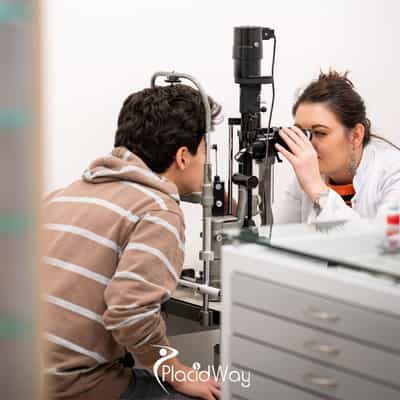
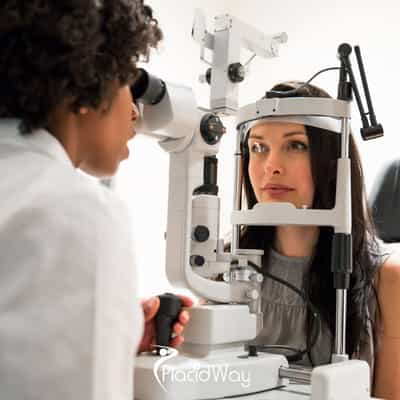
An eye examination helps identify which approach fits the cause of your vision changes. If you’re travelling for surgery, ask for an itemised USD quote and the dates of the early checks before booking your return.
Where Should You Start With Eye Care in Thessaloniki?
Start with the decision you need to make about your eyes, your budget or your trip.
Is It a Cataract or a Prescription Problem?
The cause of blur determines which treatment to discuss.
Compare Cataract and Laser SurgeryWhat Will the Quote Cover?
The procedure, eye count and follow-up affect what you pay.
See What to Request in USDWho Will Assess My Eyes?
Review Dr. Dervenis’s cornea, glaucoma and cataract training.
Meet Dr. Panagiotis DervenisHow Long Should I Allow for Follow-Up?
The proposed procedure and early checks determine when you can leave.
Plan Your Visit and ReturnCataract Surgery or Laser Vision Correction?
Cataract surgery treats a cloudy natural lens. Laser vision correction treats an optical prescription by changing corneal shape. An eye exam can also identify corneal or optic nerve disease that changes the plan.
Cataract Surgery and Lens Selection
The clinic describes day-case, small-incision phacoemulsification. Ultrasound breaks up the cloudy lens so the surgeon can replace it with an artificial intraocular lens. Discuss monofocal lenses for one main focus, toric designs for astigmatism, extended depth of focus (EDOF) for a broader focus range and multifocal designs for several distances. Near glasses may still be useful. Multifocal optics can cause glare or halos, especially at night. Surgical risks include infection, changes in eye pressure and retinal detachment.
LASIK, PRK, TransPRK and SMILE
LASIK reshapes the cornea under a flap. PRK and TransPRK reshape its surface without a flap, and early recovery generally takes longer than with LASIK. SMILE removes a small piece of tissue through a small incision. Prescription stability, corneal shape and thickness, and dry eye help determine suitability. Dry eye, glare, halos and residual prescription can affect results. Glasses and contact lenses remain options. The clinic also describes EVO ICL, which adds a lens while retaining the natural one, and clear lens exchange, which replaces it. Both require separate assessment for the risks of surgery inside the eye.
Ask Which Eye Assessment to Arrange
If a previous exam mentioned cataract, astigmatism or irregular corneal shape, share the diagnosis and what you want to improve. Ask which measurements Dr. Dervenis needs to distinguish the cause of blur and whether the assessment can be scheduled before any treatment decision.
Mention Thessaloniki Vision Clinic and your treatment interest in the request form.
Eye Treatment Costs at Thessaloniki Vision Clinic
Request a USD quote for your specific examination or procedure. For surgery, ask for the per-eye price and a separate total if both eyes need treatment. Check which party bills for each item.
- Consultation and tests, including imaging or lens measurements needed for your case.
- Surgeon, operating facility and anaesthesia fees, plus the exact lens, device or donor tissue charge if relevant.
- Medicines, scheduled checks and any charges for extra visits or treatment if you need them.
Keratoconus, Corneal Transplants and Ocular Surface Care
The treatments serve different purposes. Keratoconus care looks at whether the cornea is changing over time. A transplant decision depends on which tissue is diseased. Dry eye and blepharitis care starts with the tear film and eyelids.
Keratoconus Assessment and Cross-Linking
Topography and tomography measure corneal shape and thickness. Cross-linking uses riboflavin and UV-A to slow progression. Rigid gas-permeable or scleral lenses can improve vision, and the clinic discusses intracorneal ring segments in selected cases. Deep scarring or advanced disease may lead to a graft assessment.
Partial and Full-Thickness Corneal Transplants
DMEK and DSAEK replace tissue at the inner surface, for example in Fuchs endothelial dystrophy. DALK replaces affected front and middle tissue while preserving a healthy inner layer. Penetrating keratoplasty (PK) replaces the full thickness. Follow-up checks for infection, rejection or graft failure. An inner-layer graft can detach and sometimes needs a second air or gas injection to reposition it.
Blepharitis and Dry Eye Treatment
The clinic assesses eyelid inflammation, oil gland function and tear film stability. It describes tear break-up assessment and meibography, which images the eyelid oil glands. Treatment may include warm compresses, eyelid hygiene and preservative-free tears. Prescription medicines, eyelid-margin cleaning or intense pulsed light (IPL) may be considered in selected persistent cases.
Glaucoma Testing, Laser and Surgery
Glaucoma care aims to slow further optic nerve damage. Pressure readings are interpreted alongside corneal thickness, drainage-angle examination, visual field testing and optic nerve imaging with optical coherence tomography (OCT).
The clinic describes pressure-lowering drops, selective laser trabeculoplasty (SLT) and surgery. MIGS, or minimally invasive glaucoma surgery, can suit selected eyes and may sometimes be combined with cataract surgery. Trabeculectomy creates a new drainage route, while drainage implants use a tube to divert fluid. The choice depends on disease severity, target pressure and previous treatment. Possible surgical complications include pressure changes, infection and scarring that affects drainage. Ongoing pressure and visual field monitoring remain important after surgery.
Meet the Ophthalmic Surgeon at Thessaloniki Vision Clinic
Dr. Panagiotis Dervenis sees patients at the Thessaloniki practice. His training covers the different eye conditions assessed there.
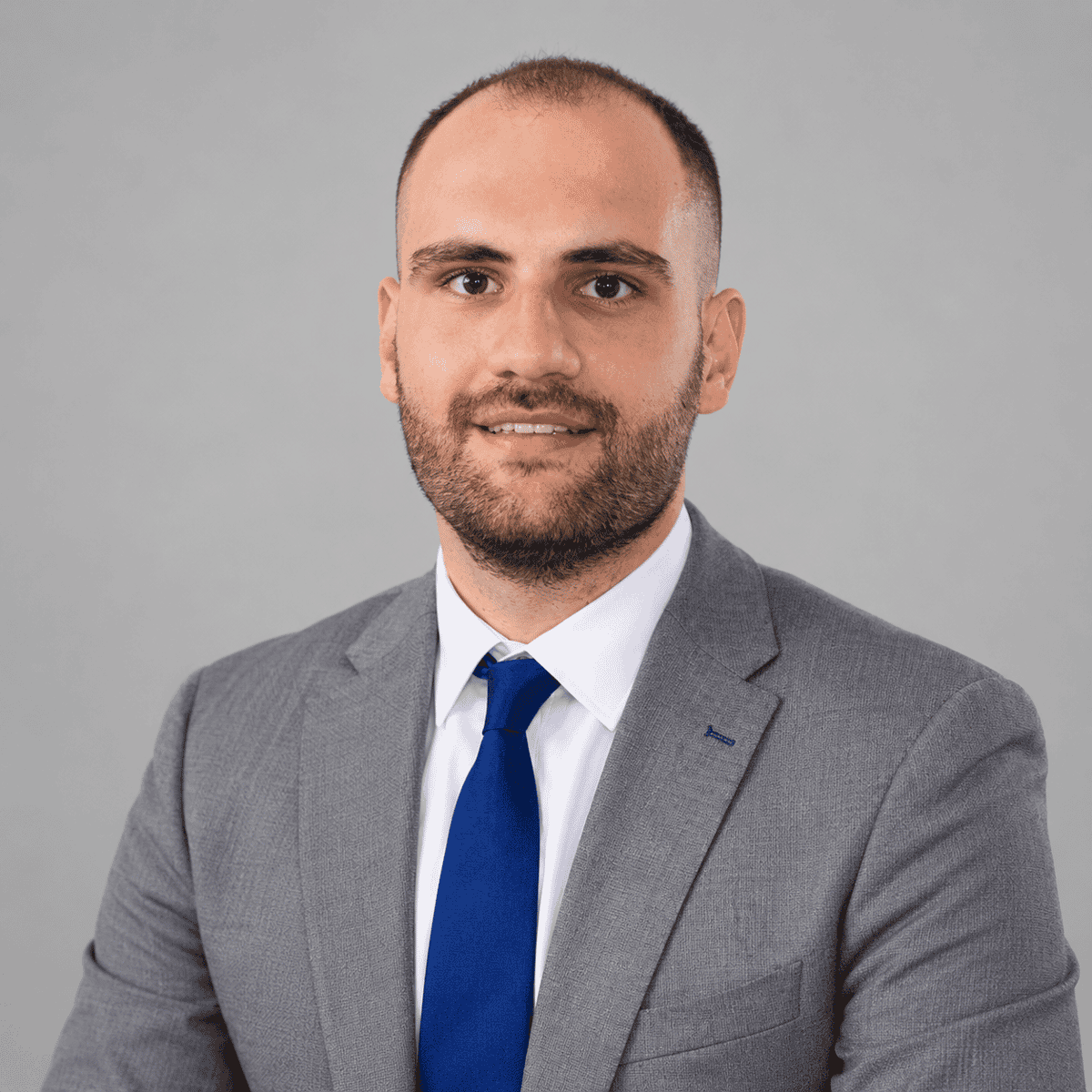
Dr. Panagiotis Dervenis
Ophthalmic Surgeon | MD, MSc, FEBO, PgDip CRS
Dr. Dervenis evaluates corneal and ocular surface disorders, glaucoma, cataracts and refractive problems. He trained in ophthalmology at Trikala General Hospital, University Hospitals Sussex and Moorfields Eye Hospital. He subsequently completed fellowship training in glaucoma and complex cataract surgery at Colchester Eye Centre of Excellence and in cornea and ocular surface care at Moorfields and King’s College Hospital.
- MD, Aristotle University of Thessaloniki (2018).
- MSc in Biomedical Research Methodology, Biostatistics and Clinical Bioinformatics, University of Thessaly (2020).
- European Board of Ophthalmology diploma (FEBO) and postgraduate diploma in Cataract and Refractive Surgery, Ulster University (2025).
How to Prepare for an Eye Assessment or Surgery?
Use these steps to plan your enquiry and visits. Your examination determines the tests, treatment and follow-up schedule. Ask where and when to collect drops, when to resume driving and which checks require an in-person visit.
- Gather Your Eye Records. Have your latest prescription, medication list, and any scans, pressure readings or visual fields available. Include prior eye surgery and contact lens use.
- Plan the Assessment. Ask what can be reviewed in advance, which measurements require an in-person visit and whether you must pause contact lenses before them.
- Confirm the Surgery and Discharge Plan. If surgery is offered, get the exact facility, operating clinician, anaesthesia plan and first follow-up date in writing.
- Arrange Follow-Up at Home. Agree who will monitor healing or eye pressure, how records will be shared and whom to contact if you develop symptoms.
Where Is the Clinic and When Can You Travel Home?
The appointment office is at 136 Konstantinou Karamanli Avenue, at the corner of Theodorou Natsina, on the second floor in Thessaloniki 54248, Greece. Confirm the operating address separately before arranging transport.
Local Access. The clinic lists 25is Martiou metro station and the Vrysaki and Makedonias bus stops.
Airport Access. Thessaloniki Airport (SKG) has bus links into the city. Schedule visits in Thessaloniki local time and check entry requirements with the Greek Ministry of Foreign Affairs for your passport and itinerary.
Postoperative Checks and Urgent Symptoms
An air or gas bubble used to position some corneal grafts can delay flying. Do not fly while the bubble remains in the eye, and get clearance from your surgeon. Ask for local urgent eye care arrangements. Sudden vision loss, severe pain or worsening redness and light sensitivity after surgery need urgent assessment.
Questions to Include in Your Enquiry
- Which lens or graft is proposed? Ask for the specific type because it changes what the quote should cover and what follow-up you may need.
- Where are the first checks? The practice address is known, and your plan should specify the operation site, essential local review dates and what can transfer to your home clinician.
- What language support can you arrange? Ask specifically about the consultation, consent and written discharge instructions.
Include the questions that apply to your care in the Request Info form.
Ask About Early Checks Before Booking Travel
If you’re considering a corneal graft, glaucoma procedure or cataract surgery, request the operating location, the first checks that must take place in Thessaloniki and what your local ophthalmologist can monitor. For a graft, ask how donor availability could affect your dates.
Mention Thessaloniki Vision Clinic and your treatment interest in the request form.
Questions About Eye Care at Thessaloniki Vision Clinic
These answers cover assessment, treatment choices, written quotes and planning for care after you leave Thessaloniki.
Who Will Assess Me at Thessaloniki Vision Clinic?
Dr. Panagiotis Dervenis is the ophthalmic surgeon named at Thessaloniki Vision Clinic. His training includes cornea and ocular surface fellowships at Moorfields Eye Hospital and King’s College Hospital and a glaucoma fellowship at Colchester Eye Centre of Excellence. For a surgical enquiry, ask where the operation and postoperative reviews would take place.
How Do I Know Whether I Need Cataract Surgery or Laser Vision Correction?
An eye exam can show whether a cloudy natural lens, a refractive error or another eye condition is affecting your vision. Cataract surgery replaces the cloudy lens. LASIK, PRK and SMILE change the shape of the cornea in selected candidates. The result of the exam determines which discussion is useful.
What Should I Consider When Choosing a Lens for Cataract Surgery?
Discuss night driving, computer work and reading with Dr. Dervenis. A toric lens can address astigmatism. Extended depth of focus and multifocal designs offer different ranges of focus and trade-offs, including possible glare or halos. Corneal and retinal health, lens measurements and your willingness to use glasses all matter.
Can Cross-Linking Improve My Vision if I Have Keratoconus?
The main aim of corneal cross-linking is to slow or stop documented progression. You may still need glasses or specialty contact lenses to see clearly. If you have older corneal maps, ask how to share them, since changes over time can help the ophthalmologist decide whether cross-linking is appropriate.
How Does the Surgeon Choose the Type of Corneal Transplant?
The surgeon looks at which layers are affected. DMEK and DSAEK replace tissue at the back of the cornea. DALK replaces front and middle tissue while keeping your own healthy inner layer. A full-thickness graft may be considered when disease or scarring involves layers that a partial graft would leave behind.
Is MIGS a Suitable Option for My Glaucoma?
It depends on your glaucoma type, how far it has progressed and the pressure your eye needs to reach. Bring any previous visual fields, optic nerve scans and your current drops list. These help frame the discussion about medication, laser treatment or the level of pressure reduction a procedure may offer.
What Should a Written USD Quote Include?
Ask for the cost per eye and for both eyes if both are being considered. Request separate amounts for the consultation and tests, surgeon and facility fees, lens or graft costs where applicable, and scheduled follow-up. Also ask who bills for an extra visit or procedure if recovery requires one.
When Can I Fly Home After a Corneal Transplant?
Your surgeon should clear you to fly. An air or gas bubble may be used to hold an inner-layer graft in place, and you must avoid flying while it remains in the eye. Ask what the early reviews need to check and arrange follow-up at home before booking your return.
Can Dry Eye Affect My Assessment for Laser Surgery?
Yes. Dry eye and eyelid inflammation can affect the quality of vision and should be assessed before elective laser correction. Tell Dr. Dervenis about burning, fluctuating blur or contact lens discomfort. If the surface needs treatment first, ask when the surgeon can reassess it and repeat any measurements needed for planning.
PLAN YOUR CARE WITH PLACIDWAY
Plan Eye Care at Thessaloniki Vision Clinic in Greece
If you’re considering cataract surgery, laser vision correction, glaucoma care or a corneal transplant at Thessaloniki Vision Clinic, request information about the assessment, the proposed procedure and an itemised USD quote. Include any practical questions about the visits you may need in Thessaloniki.
Mention Thessaloniki Vision Clinic and your treatment interest in the request form.
Important Medical Information
This information is for general education and does not replace an examination by a licensed ophthalmologist. Treatment suitability, risks and costs vary from person to person. PlacidWay lists providers but does not perform medical procedures; your treatment agreement is directly with the provider.
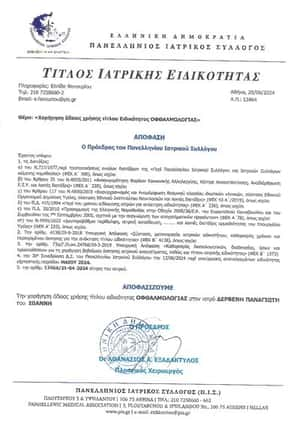
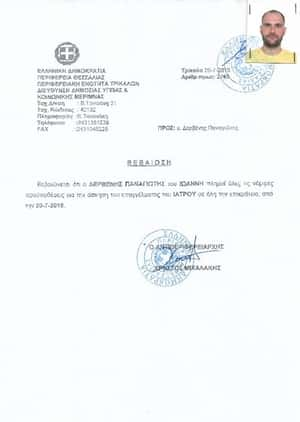
Thessaloniki Vision Clinic in Thessaloniki, Greece Certificates
Location

About Medical Center
- Speciality: Eye/Lasik Care,Organ Transplant,Laser Surgery
- Location: 136 K. Karamanlis Avenue and Th. Natsina, 2nd floor, Thessaloniki, , Thessaloniki 54248 , Greece
- Overview: Thessaloniki Vision Clinic in Thessaloniki, Greece, provides ophthalmology assessments for cataracts, corneal disease and glaucoma, with specialist evaluation for laser vision correction.




















Share this listing