


Zahaed Evangelista’s Smooth Recovery: Laparoscopic Surgery Success at Hernia Clinic in Merida, Mexico
Struggling with debilitating abdominal pain can bring daily life to a complete standstill, leaving patients searching desperately for effective relief. For many individuals facing this reality, discovering affordable and reliable treatment options in their home country feels completely overwhelming due to skyrocketing healthcare costs. However, Zahaed Evangelista’s smooth recovery following his laparoscopic surgery success at the Hernia Clinic in Merida, Mexico, provides a powerful beacon of hope. Medical tourism has revolutionized how we approach healthcare, allowing patients to bypass astronomical local medical bills without ever compromising on clinical quality.
Watch to uncover how advanced, minimally invasive surgical techniques combined with world-class Mexican hospitality are helping international patients regain their mobility, eliminate chronic pain, and return to their active lifestyles in record time.
Video Chapters & Quick Navigation
When an internal organ pushes through a weak spot in the muscle or tissue that normally contains it, the resulting condition is known as a hernia. While some hernias present as minor, painless bulges, others can quickly escalate into severe medical emergencies. The landscape of treating this common yet disruptive ailment has shifted dramatically in recent years. Patients from the United States, Canada, and Europe are increasingly looking beyond their borders to find safe, highly effective, and economically viable surgical solutions.
Understanding the Hidden Burden of Untreated Hernias
A hernia does not heal on its own. In fact, without surgical intervention, the muscular defect typically enlarges over time, leading to worsening symptoms of an untreated inguinal hernia or umbilical hernia. Patients often report a heavy, dragging sensation in the abdomen or groin, sharp pains during physical exertion, and extreme discomfort when coughing or bending over.
The true danger of delaying treatment lies in the risk of strangulation. This occurs when the protruding tissue becomes trapped, cutting off its vital blood supply. A strangulated hernia is a life-threatening medical emergency requiring immediate, often much more complex, surgical repair. Because the financial barriers to high-quality healthcare in North America are immense, many uninsured or underinsured individuals are forced to live with these debilitating symptoms, gambling with their long-term health.
Types of Hernias Commonly Treated Abroad
Specialized centers like the Hernia Clinic in Merida are equipped to handle a wide spectrum of abdominal wall defects. The most frequently treated conditions include:
- Inguinal Hernias: The most common type, occurring in the inner groin area.
- Umbilical Hernias: Typically located near the belly button, often resulting from heavy lifting or prior pregnancies.
- Incisional Hernias: Developing at the site of a previous surgical scar where the abdominal wall has weakened.
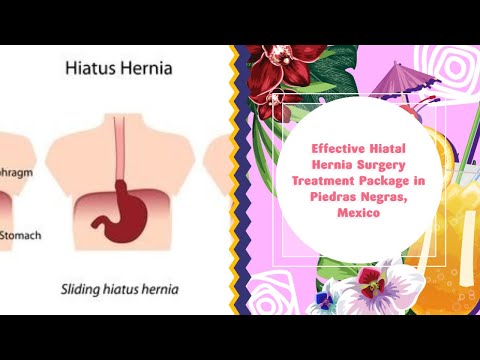
- Hiatal Hernias: Occurring when the upper part of the stomach pushes through the diaphragm, often causing severe acid reflux.
Zahaed Evangelista’s Patient Journey to a Pain-Free Life
Hearing a firsthand patient testimonial provides invaluable insight into the realities of international medical travel. As noted at in the video, Zahaed Evangelista details the initial onset of his hernia pain, describing how it began to severely limit his daily activities. Like many prospective patients, he was initially apprehensive about the prospect of crossing international borders for a major surgical procedure.
However, upon researching the best hospitals for hernia surgery in Merida Mexico, his perspective shifted. By , Zahaed recounts his arrival at the state-of-the-art clinic. He was immediately struck by the impeccable cleanliness of the facility, the advanced diagnostic technology, and the profound empathy of the medical staff. The personalized consultation ensured that he understood every facet of the upcoming minimally invasive procedure.
The post-operative experience is where the true value of his decision shined. At , Zahaed enthusiastically discusses his rapid recovery phase. Instead of lingering in a sterile, overpriced hospital room in his home country, he was able to recover in a warm, welcoming environment with attentive, personalized care that exceeded his highest expectations.
Why Choose Merida, Mexico for Your Hernia Surgery?
Merida, the vibrant capital of the Mexican state of Yucatan, has quietly transformed into one of the premier destinations for global healthcare. While cities like Tijuana and Cancun are well-known hubs, Merida offers a distinct set of advantages that make it particularly appealing for patients seeking complex surgical interventions.
Unparalleled Safety and Tranquility
Merida is consistently ranked as the safest city in Mexico and one of the safest cities in all of the Americas. For medical tourists, this translates to profound peace of mind. Patients can freely walk the historic streets, enjoy the local cuisine, and focus entirely on their healing process without the underlying stress associated with less secure regions.
World-Class Medical Infrastructure
The hospitals and specialized surgical centers in Merida rival the best facilities found in the United States and Europe. The Hernia Clinic in Merida is outfitted with the latest laparoscopic imaging towers, high-definition monitors, and advanced surgical instrumentation. Furthermore, the attending surgeons are frequently board-certified internationally, having completed extensive fellowships in minimally invasive techniques in the US, Canada, or Europe.
The Transformative Advantages of Laparoscopic Hernia Repair
In decades past, hernia repair required a large, open incision through the abdominal muscles. This traditional approach often resulted in significant post-operative pain, high risks of surgical site infections, and a prolonged, arduous recovery period. Today, the minimally invasive laparoscopic hernia repair benefits have made open surgery largely obsolete for standard cases.
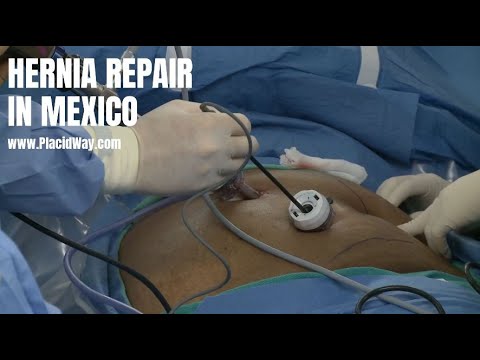
During a laparoscopic repair, the surgeon makes three to four tiny incisions, usually no larger than a keyhole. A laparoscope—a thin tube equipped with a high-definition camera and a light source—is inserted into the abdomen. The abdominal cavity is then gently inflated with carbon dioxide gas, providing the surgeon with a clear, magnified view of the hernia defect on a video monitor.
Why Minimally Invasive is Superior
Because the surgeon does not need to cut through thick bands of muscle tissue, the trauma to the body is drastically minimized. Patients experience exponentially less post-operative pain, requiring fewer narcotic pain medications. Additionally, the cosmetic outcome is vastly superior; the tiny incision sites heal quickly, leaving barely noticeable scars behind.
Shattering the Price Tag: A Detailed Cost Comparison
The primary catalyst driving the surge in medical tourism to the Yucatan Peninsula is the staggering financial discrepancy between healthcare systems. Understanding the true cost of inguinal hernia surgery without insurance in the United States highlights why so many patients are booking flights south of the border.
In the US, patients are routinely billed separately by the hospital, the primary surgeon, the anesthesiologist, and the surgical center. These fragmented costs can easily spiral out of control. Conversely, clinics in Merida offer comprehensive, transparently priced all-inclusive surgical packages.
As the data clearly illustrates, patients traveling to Merida can expect to save between 60% and 80% on their overall medical expenses. These savings are achieved without cutting corners; they are simply a reflection of the lower cost of living, reduced administrative overhead, and capped malpractice insurance rates inherent to the Mexican healthcare system.
The Critical Role of Advanced Surgical Mesh
A common question among prospective patients relates to the materials used during the procedure. The gold standard for modern hernia repair involves the use of a synthetic, biocompatible surgical mesh. When repairing a hernia laparoscopically, the surgeon pulls the protruding tissue back into place and secures the mesh patch over the weakened abdominal wall.
This mesh acts as a durable scaffold. Over the following weeks, the patient's natural tissue grows into the pores of the mesh, creating a reinforced, permanent barrier that is significantly stronger than the original muscle wall. The top-rated clinics in Merida utilize the exact same FDA-approved, high-quality mesh brands that are utilized in elite North American surgical centers, drastically reducing the long-term risk of hernia recurrence.
What to Expect: The Laparoscopic Hernia Surgery Recovery Timeline
Understanding the laparoscopic hernia surgery recovery timeline and restrictions is vital for a successful outcome. While the minimally invasive nature of the procedure accelerates healing, patients must still adhere to strict post-operative guidelines to ensure the surgical mesh integrates properly.
Days 1 to 3: The Immediate Post-Op Phase
Immediately following the surgery, patients will experience mild to moderate soreness around the incision sites and potentially some shoulder pain, which is a harmless byproduct of the carbon dioxide gas used to inflate the abdomen. Most patients are encouraged to walk short distances within hours of waking up from anesthesia, as light mobility promotes blood circulation and prevents the formation of blood clots. Knowing how to sleep after laparoscopic hernia surgery is also crucial; resting on your back with your head slightly elevated is highly recommended to reduce abdominal tension.
Days 4 to 14: Returning to Normalcy
By the end of the first week, the majority of the acute soreness will have subsided. Patients can generally resume light, non-strenuous daily activities, such as office work, walking around the neighborhood, and driving (provided they are no longer taking prescription pain medications). However, strict lifting restrictions remain in place. Patients must absolutely avoid lifting anything heavier than ten pounds, including groceries or small children, to prevent dislodging the newly placed mesh.
Weeks 3 to 6: Full Integration
As the patient transitions into the third and fourth weeks, the surgical mesh becomes firmly integrated with the surrounding bodily tissues. Surgeons typically clear patients to slowly reintroduce more rigorous physical activities, including jogging, cycling, and light resistance training. By week six, the vast majority of patients are fully cleared to return to heavy lifting, intense athletic pursuits, and manual labor without any lingering restrictions.
Planning Your Medical Tourism Trip to Merida
Successfully navigating a medical journey abroad requires careful preparation. Planning a medical tourism trip to Merida is surprisingly straightforward, especially when utilizing dedicated facilitation services that handle the complex logistics.
Pre-Travel Consultations
Before booking any flights, patients will undergo a comprehensive virtual consultation with the surgical team in Merida. During this telemedicine appointment, the surgeon will review your medical history, analyze any recent ultrasound or CT scans, and determine if you are a suitable candidate for laparoscopic repair. This ensures that there are no surprises upon your arrival.
Logistics and Accommodations
Merida features a modern international airport with direct flights from several major US hubs, including Miami and Houston. Medical tourism packages frequently include VIP airport transfers, ensuring you are picked up safely and transported directly to your boutique hotel or recovery suite. Many nearby hotels cater specifically to recovering medical tourists, offering specialized dietary menus, accessible ground-floor rooms, and on-call nursing support.
Dietary Recommendations Post-Hernia Surgery
Nutrition plays a fundamentally critical role in the speed and quality of your recovery. Following abdominal surgery, the digestive tract can be temporarily sluggish due to anesthesia and reduced physical activity. Staying hydrated and consuming the right nutrients can prevent complications such as severe constipation, which can dangerously strain the abdominal wall.
In the initial days post-surgery, patients are advised to consume a soft, easily digestible diet. Lean proteins, such as grilled chicken or fish, provide the essential amino acids necessary for tissue repair. High-fiber foods, including oatmeal, leafy greens, and fresh fruits, are vital for maintaining regular bowel movements without straining. Hydration is equally important; drinking plenty of water ensures that the fiber can do its job effectively, keeping the gastrointestinal system moving smoothly.
Embracing a Pain-Free Future
Living with the constant threat and discomfort of a hernia restricts your freedom, your mobility, and your overall quality of life. Zahaed Evangelista’s remarkably smooth recovery serves as a testament to the safety, efficacy, and outstanding patient care provided by the Hernia Clinic in Merida. The combination of elite surgical expertise, cutting-edge laparoscopic technology, and transparently affordable pricing has leveled the playing field for international patients.
By choosing medical tourism in the vibrant, safe, and culturally rich city of Merida, you are not just repairing a physical ailment; you are taking proactive control of your health and your financial future. The path to a permanent, pain-free restoration is clear, well-trodden by thousands of successful patients, and more accessible today than ever before.
Ready to Reclaim Your Active, Pain-Free Life?
Stop letting a hernia dictate what you can and cannot do. PlacidWay Medical Tourism seamlessly connects you with top-tier, board-certified surgeons at the premier Hernia Clinic in Merida, Mexico. Experience world-class laparoscopic care, save up to 80% on medical costs, and enjoy a safe, smooth recovery in a beautiful destination.
GET A FREE QUOTE TODAY


-Package-in-Istanbul,-Turkey-by-Turan-Turan.jpg)

.jpg)
.png)










Share this listing