
Finding Hope: A Successful Liver Transplant Journey at Lokman Hekim University Ankara Hospital
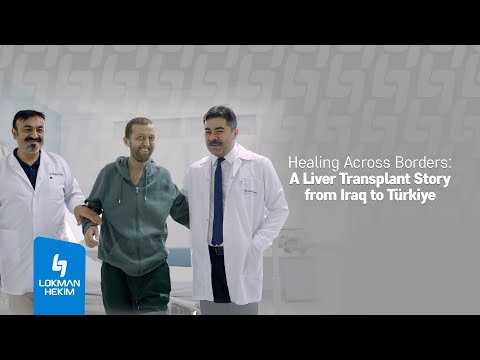
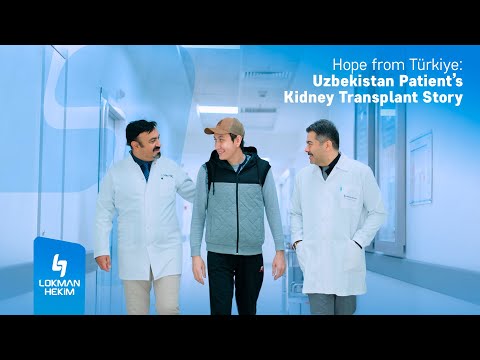
For many patients suffering from end-stage organ failure, the search for a cure is a race against time. Abdulbaqi Hassan Thabit, a 26-year-old young man from Iraq, found himself in the midst of this harrowing race when a metabolic liver disorder threatened his life. After unsuccessful attempts at treatment in his home country, his journey led him to the heart of Turkey. At Lokman Hekim University Ankara Hospital, a combination of cutting-edge medical technology and compassionate care transformed his despair into a story of survival and renewal. Watch this incredible journey to see how specialized liver transplant in Turkey is saving lives across borders.
Video Chapters & Medical Insights
The First Signs: From Persistent Itching to Organ Failure
The journey of a liver transplant patient often begins with seemingly minor symptoms that escalate into life-altering complications. For Abdulbaqi, the first indicator that something was wrong was a persistent, uncontrollable itch all over his body [00:02]. In the world of hepatology, this is known as pruritus, and it is a classic, often debilitating symptom of cholestatic liver disease. When the liver cannot properly process bile, bile salts accumulate in the bloodstream and deposit in the skin, causing intense itching that rarely responds to standard antihistamines.
Abdulbaqi sought medical attention in Iraq, but despite consultations with multiple doctors, no effective results or clear path to recovery were found [00:05]. This highlights a common challenge for patients with rare metabolic disorders: the need for highly specialized diagnostic tools and expertise that are often only available in international medical hubs like Ankara, Turkey. The frustration of seeking treatment without results can lead to a rapid decline in physical and mental health, making the decision to travel for medical care a critical turning point.
Understanding Progressive Familial Intrahepatic Cholestasis (PFIC)
Upon arriving at Lokman Hekim Hospital, Abdulbaqi was evaluated by Assoc. Prof. Ümit Özçelik [00:20]. The diagnosis was a metabolic liver disorder known as Progressive Intrahepatic Cholestasis. This condition is frequently hereditary, and sadly, Abdulbaqi's family history confirmed the genetic nature of the disease, as he had already lost an older brother to the same condition [00:27]. This tragic context underscored the urgency of the situation; for Abdulbaqi, this wasn't just a medical procedure—it was a fight for his family's legacy and his own future.
PFIC is a group of rare genetic disorders that disrupt the production and flow of bile. When bile flow is blocked (cholestasis), it causes progressive liver damage, leading to cirrhosis and, eventually, total liver failure. Because it is a metabolic disorder rooted in the genetic makeup of the liver cells, a liver transplant is often the only definitive cure. By replacing the diseased liver with a healthy one from a donor, the metabolic defect is corrected, allowing the patient to lead a normal, healthy life.
Comparison of Liver Disease Progression
| Stage | Typical Symptoms | Medical Intervention |
|---|---|---|
| Early Stage Cholestasis | Persistent itching (pruritus), jaundice, fatigue. | Bile acid sequestrants, vitamin supplements. |
| Intermediate Fibrosis | Weight loss, vitamin deficiencies, enlarged spleen. | Nutritional support, monitoring for portal hypertension. |
| End-Stage Liver Failure | Extreme muscle wasting (cachexia), inability to stand, mental confusion. | Liver Transplantation (Living or Deceased Donor). |
The Critical State: Cachexia and Physical Debility
When Abdulbaqi first presented to the outpatient clinic in Ankara, his condition was dire. Dr. Mesut Pekmez, Deputy Chief Physician at Lokman Hekim, described him as being "severely underweight" and in a "moderate-to-poor general condition" [00:33]. The metabolic disorder had ravished his body, leading to extreme weakness. He was so frail that he was barely able to stand on his own [00:38].
This state of severe muscle wasting and weight loss is medically termed cachexia. It is a common complication of end-stage liver disease because the liver is no longer able to synthesize essential proteins or manage the body's energy stores. For a surgical team, performing a major transplant on a patient in this weakened state is incredibly risky. The body needs a certain level of baseline strength to survive the stress of surgery and the subsequent recovery process. Therefore, the team at Lokman Hekim had to first focus on stabilizing Abdulbaqi before he could even be considered for the operating table.
Pre-Surgical Stabilization: Enteral and Parenteral Nutrition
To prepare Abdulbaqi for the life-saving surgery, the medical team initiated a rigorous nutritional rehabilitation program. This involved both enteral and parenteral nutrition therapies [00:42]. Enteral nutrition refers to feeding through the gastrointestinal tract (either orally or via a feeding tube), while parenteral nutrition involves delivering nutrients directly into the bloodstream intravenously. By combining these methods, the doctors were able to bypass his compromised digestive capabilities and deliver high-calorie, high-protein support directly to his tissues.
The goal was to restore his muscle strength and improve his "general condition" to a point where his body could withstand anesthesia and the complex vascular reconstructions required during a liver transplant [00:46]. This comprehensive approach to patient care is a hallmark of world-class transplant centers. It isn't just about the surgery itself; it is about the meticulous preparation that ensures the patient's body is ready for the "new" organ. Without this phase, the risk of post-operative complications or organ rejection increases significantly.
The Search for a Living Donor: A Family's Sacrifice
In Turkey, living donor liver transplantation is highly advanced. This process involves taking a portion of a healthy person's liver (the donor) and transplanting it into the recipient. Because the liver has a remarkable ability to regenerate, both the donor's and the recipient's liver portions will grow to full size within weeks. However, finding a compatible donor is a rigorous process. Several potential donors were evaluated at Lokman Hekim for Abdulbaqi, but initially, none were suitable [00:50].
Suitability depends on many factors, including blood type compatibility, liver size and volume, and the overall health of the donor. Finally, after thorough testing, Abdulbaqi's uncle was found to be a compatible match [00:56]. The decision to become a living donor is an act of immense courage and love. It allows the transplant to happen much sooner than waiting for a deceased donor on a national registry, which is crucial for patients in critical condition like Abdulbaqi. With a compatible donor secured, the surgical process could finally proceed [01:01].
Surgical Excellence and the Path to Recovery
The liver transplant surgery was performed with precision by the specialized team at Lokman Hekim University. Surgery of this nature involves hours of delicate work, reconnecting the portal vein, hepatic artery, and bile ducts. Abdulbaqi underwent the surgery successfully, and importantly, the post-operative period was uneventful and free of major complications [01:12]. As his body began to accept the new liver, his physical strength started to return rapidly.
Interestingly, as he regained his physical health, the medical team discovered a different side of Abdulbaqi. The once-frail young man who could barely stand turned out to be a very energetic and vibrant individual [01:07]. This transformation is the most rewarding part of transplant medicine—seeing a patient go from the brink of death to a state of high energy and joy. Abdulbaqi was eventually discharged in good health, ready to return to Iraq and resume his life [01:15].
Key Elements of Successful Transplant Recovery
- Immunosuppressant Adherence: Taking medication to prevent the body from rejecting the new liver.
- Regular Follow-ups: Monitoring liver function tests and bile duct health.
- Physical Rehabilitation: Gradually increasing activity to rebuild muscle mass lost during illness.
- Nutritional Maintenance: Following a liver-healthy diet to support the new organ's longevity.
Why Turkey is a Global Leader in Liver Transplantation
Abdulbaqi's story is one of many that highlight why Turkey, and specifically Ankara, has become a global destination for liver transplants. Turkish medical centers offer a unique combination of high success rates, advanced surgical techniques (especially in living donor transplants), and significantly more affordable costs compared to Western Europe or the United States. Furthermore, hospitals like Lokman Hekim University emphasize a patient-centric approach that includes international patient coordination, language support, and comprehensive pre- and post-operative care.
For patients from countries like Iraq, Turkey is not just a neighboring country; it is a gateway to high-quality healthcare that meets international standards. The expertise of surgeons like Assoc. Prof. Ümit Özçelik and the dedicated hospital infrastructure at Lokman Hekim ensure that even the most complex metabolic and genetic liver disorders can be treated effectively, giving patients like Abdulbaqi a second chance at a healthy, productive life.
Ready to Restore Your Health in Turkey?
PlacidWay Medical Tourism connects you with top-rated hospitals in Turkey like Lokman Hekim, offering world-class organ transplants and specialized care at unbeatable prices. Let us handle the details while you focus on your recovery.
GET A FREE QUOTEView Full Video Transcript
00:01 At first, I had an itch all over my body. Then I visited doctors in Iraq but no results.
00:10 Later on we came to Türkiye to Lokman Hekim Hospital.
00:17 Abdulbaqi is a 26-year-old patient from Iraq. He has a family history of a hereditary disease.
00:23 He was diagnosed with a metabolic liver disorder known as progressive intrahepatic cholestasis. Sadly, he lost one of his older brothers to the same condition.
00:31 When Abdulbaqi first presented to our outpatient clinic, he was severely underweight, in moderate-to-poor general condition, and barely able to stand due to extreme weakness.
00:40 After admitting him to the hospital, we initiated both enteral and parenteral nutrition therapies, providing support through both oral and intravenous routes to help him regain his muscle strength.
00:49 Several potential donors were evaluated at our hospital for Abdulbaqi, but unfortunately, none were suitable.
00:55 Eventually, his uncle was found to be a compatible donor after thorough testing, and we were able to proceed with the liver transplantation process.
01:04 As his physical strength improved over the following days, we discovered that Abdulbaqi is actually a very energetic person.
01:08 He successfully underwent surgery, and the postoperative period was uneventful.
01:13 He recovered well and was discharged in good health. Now, we are preparing to send him home.
01:21 Thank God, the operation was successful. I am getting back to life again. I am getting back to my natural life gradually.
01:30 I would like to thank the medical staff at Lokman Hekim Hospital for welcoming me so well. And a special thanks to Dr. Ümit and Dr. Mesut.










Share this listing