


If you are comparing a Korean plastic surgery tour package, the headline price is only the beginning of the decision. A rhinoplasty or eyelid surgery trip can have a very different medical, recovery and travel budget from a facelift, revision procedure, facial bone surgery or a multi-procedure body plan.
Current Seoul package pages reviewed for this guide range from about $4,000 for a listed rhinoplasty package and $4,600 for a listed eye-lift package to $33,142 for a multi-procedure mommy makeover and $35,000 for a revision deep-plane facelift package. These are package-page figures, not guaranteed market averages. Before paying a deposit, verify the operating surgeon, the clinic's international-patient registration, anesthesia arrangements, recovery plan and every item included in the written quote.

Quick Summary:
- Current package-page examples: reviewed Seoul pages show selected procedures from about $4,000 to $35,000, depending on procedure scope and whether several operations are combined.
- Do not treat a package figure as a final bill: anesthesia, implants or grafts, tests, compression garments, hotel extensions, additional procedures and complication care may be separate.
- Clinic check: confirm whether the institution is properly registered under South Korea's system for attracting international patients when that registration applies.
- Surgeon check: obtain the surgeon's full legal name and verify plastic-surgery specialist credentials independently rather than relying on advertising language.
- KAHF: the Korean Accreditation Program for Hospitals Serving Foreign Patients is an additional quality and patient-safety evaluation for participating institutions; it is useful but not the only selection criterion.
- Recovery stay: selected facial procedures may require roughly 7–14 days locally, while extensive or combined surgery may require longer. The surgeon should determine flight readiness.
- Budgeting method: compare written, itemized quotes that separate medical fees, logistics and possible additional costs.
Why Patients Consider Korean Plastic Surgery Tours?
Patients consider Korean plastic surgery tours for a mix of surgical choice, cost comparison and access to a large concentration of cosmetic practices in Seoul. Common searches include rhinoplasty, upper or lower eyelid surgery, facelift, neck lift, facial contouring, breast surgery, liposuction and combinations of facial or body procedures. International patients may also value language coordination and the ability to schedule consultation, surgery and early follow-up within one trip.
Why South Korea Enters the Plastic Surgery Comparison?
- Large number of cosmetic and plastic-surgery practices in Seoul.
- Procedure-specific clinics and surgeons with different areas of focus.
- International-patient coordination at some registered institutions.
- Package formats that may combine medical care with local logistics.
- Direct comparison of several procedures during one consultation trip.
- Private-pay pricing that can differ from private surgery costs in the United States, United Kingdom or Australia.
What International Plastic Surgery Patients Still Need to Solve?
- Independent verification of the operating surgeon's specialty credentials.
- Clear understanding of what the quote includes and excludes.
- Enough time in Korea for early post-operative reviews.
- A plan for urgent care if a complication develops after departure.
- Communication about risks, consent and expectations without relying only on a coordinator.
- Realistic budgeting for flights, accommodation, time off work and possible additional treatment.
Korean Plastic Surgery Tour Package Cost
The practical cost range is broad because “plastic surgery tour package” can describe anything from one limited facial procedure to several major operations performed during the same trip. Current package pages reviewed for this article show examples beginning around $4,000 and extending to $35,000. Those figures should be used as planning references only. They do not establish an average price for South Korea and they do not replace an individualized surgical quote.
| Cost Component | May Be Included | May Be Separate | Question to Ask |
|---|---|---|---|
| Surgeon fee | Usually part of procedure price | Extra procedures or revision work | Does this cover every planned surgical step? |
| Anesthesia | Sometimes bundled | Anesthesiologist or extended operating time | Who provides anesthesia and is the fee included? |
| Operating facility | Often bundled | Observation or overnight stay | Where exactly will surgery take place? |
| Tests and imaging | Basic tests may be included | CT, ECG or specialist clearance | Which tests are included before surgery? |
| Materials | Some standard items | Implants, grafts or compression garments | Which product or material is planned and what does it cost? |
| Recovery support | Routine follow-up may be included | Extra visits, wound care or hotel nights | How many reviews and nights are covered? |
| Complication or revision care | Varies by written policy | Readmission, additional surgery, new travel | What costs remain my responsibility if a problem occurs? |
Current Seoul Plastic Surgery Package Examples and What the Prices Mean?
Looking at individual packages helps explain why a single “Korean plastic surgery tour cost” can be misleading. Procedure scope changes the budget dramatically. The examples below are taken from the six pages supplied for this review. They show listed or stated package figures available when checked in August 2026. Each still requires confirmation with the provider because medical assessment, inclusions and page updates can change the final quote.
| Seoul Package Example | Current Page Figure | What the Page Describes? | Cost Interpretation |
|---|---|---|---|
| Facelift package in Seoul | From $5,100 | A facelift package at VG Plastic Surgery; the page advises roughly 10–14 days locally and says final technique, inclusions and price depend on assessment. | Use $5,100 as a starting package figure, not a guaranteed total. Confirm whether neck work, anesthesia, tests and accommodation are included. |
| RNWOOD revision deep-plane facelift package | $35,000 estimated total | The supplied URL currently resolves to a revision deep-plane facelift package rather than a simple neck-lift page. It lists surgical, anesthesia, facility, pre/post-operative and international-patient support components. | This illustrates how revision and deeper structural facial surgery can sit far above a basic facial-procedure budget. |
| Rhinoplasty package in Seoul | $4,000 | A MISOU Plastic Surgery rhinoplasty page describing cosmetic or functional nose reshaping. | Primary rhinoplasty can differ substantially from revision rhinoplasty or surgery requiring rib, ear or septal cartilage grafting. |
| Fox eye-lift surgery package in Seoul | $4,600 | A Returning Plastic Surgery page for an eye-lift procedure, with price variability noted according to patient condition. | Do not assume every “eye lift” is the same operation. Clarify whether the plan is upper blepharoplasty, lower blepharoplasty, canthoplasty, ptosis correction or another technique. |
| Seoul liposuction package page | Listed area examples from $1,685 to $7,116 | The page lists different prices by body area, including bra line, arms, abdomen/love handles and thigh/hip combinations. It states that compression garments are not included. | Liposuction cost cannot be compared without matching the same body areas, treatment extent, anesthesia and garment requirements. |
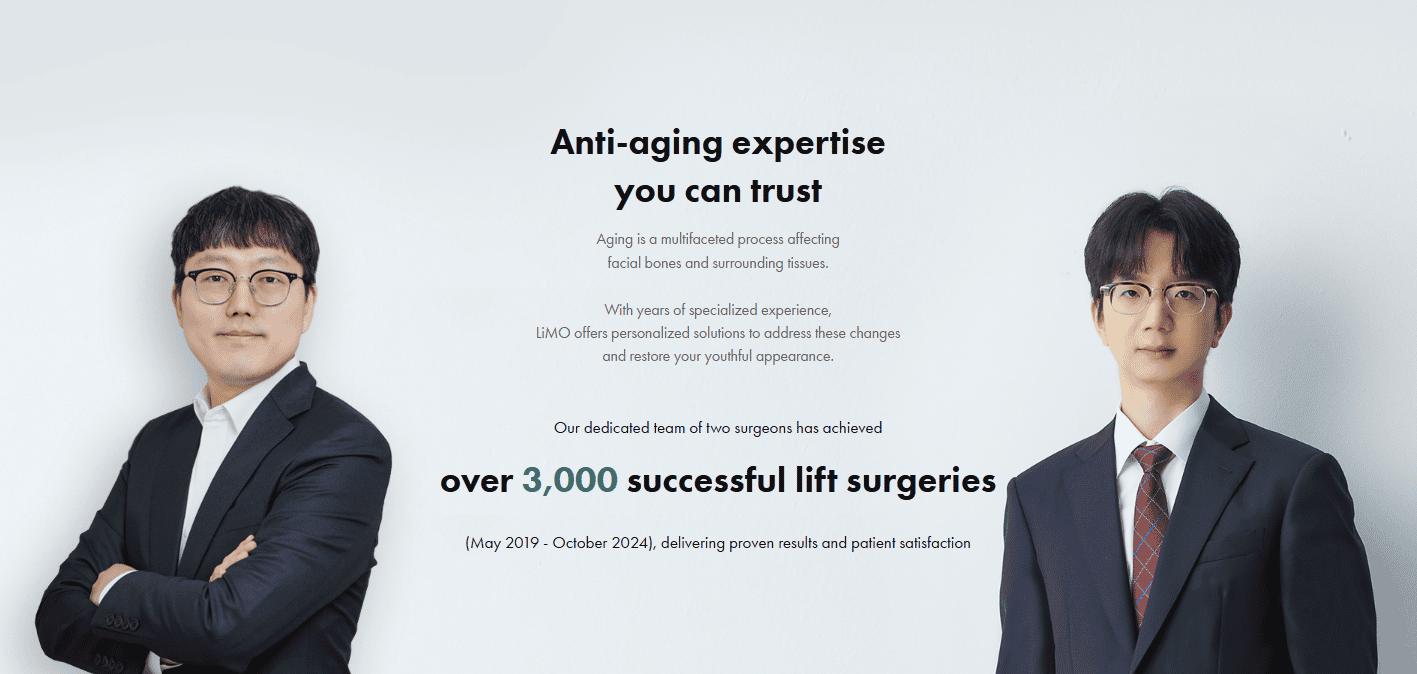
| LiMO multi-procedure mommy makeover package | $33,142 | The page describes a broad combination including face/neck lifting, eyelid procedures, breast surgery and abdominoplasty. | A multi-operation plan should be assessed for total operating time, anesthesia exposure, recovery burden and whether staging procedures would be medically preferable. |
What Korean Plastic Surgery Tour Packages Include, Exclude and Hide?
There is no universal definition of an “all-inclusive” Korean plastic surgery package. One quote may bundle the surgeon, operating room, anesthesia and several follow-up visits. Another may show mainly the procedure fee, leaving medication, garments, hotel nights and transportation separate. A meaningful comparison requires identical categories on both quotations.
Items a Korean Plastic Surgery Package May Include
- Surgeon consultation and operative planning.
- Procedure and operating-room fees.
- Specified anesthesia services.
- Routine blood tests or basic screening.
- Standard post-operative clinic reviews.
- Suture, splint or drain removal when applicable.
- Interpreter or international-patient coordination.
- Airport-to-clinic transportation in some packages.
- A specified number of hotel or recovery-residence nights.
Korean Plastic Surgery Costs That May Remain Separate
- International airfare and checked baggage.
- Visa-related expenses where applicable.
- Travel or medical-complication insurance.
- CT scans, ECG or specialist clearance.
- Implants, premium materials or graft-related costs.
- Compression garments or additional dressings.
- Hotel extensions and companion expenses.
- Emergency treatment, readmission or revision care.
- Follow-up care after returning to your home country.
How Korean Plastic Surgery Costs Compare With the United States, UK and Australia?
For example, ASPS 2024 statistics list projected U.S. surgeon-fee ranges of $7,500–$12,500 for rhinoplasty, $12,000–$19,000 for facelift and $4,300–$7,500 for liposuction. These figures exclude some facility, anesthesia and related expenses. That makes a direct “Korea is X percent cheaper” claim inappropriate unless the compared quotes contain the same services.
| Comparison | South Korea Example | Home-Market Context | How to Interpret It? |
|---|---|---|---|
| Rhinoplasty | Supplied Seoul package page: $4,000 | U.S. ASPS 2024 projected surgeon fee: $7,500–$12,500 | Not an apples-to-apples total; compare anesthesia, facility, grafts, tests and follow-up. |
| Facelift | Supplied Seoul package page: from $5,100 | U.S. ASPS 2024 projected surgeon fee: $12,000–$19,000 | Technique and neck work can change both Korean and U.S. totals substantially. |
| Liposuction | Supplied Seoul page lists area-based figures from $1,685 to $7,116 | U.S. ASPS 2024 projected surgeon fee: $4,300–$7,500 | Body area, number of areas and garment/anesthesia fees must match before comparing. |
| United Kingdom | Korean quote should be evaluated as a complete travel budget | Private cosmetic prices vary by surgeon, hospital, anesthesia and procedure | Add flights, hotels, time off work and overseas follow-up to the Korean side. |
| Australia | Korean package may combine clinical and logistical services | Healthdirect advises written cost information covering surgeon, anesthetist, facility, tests and possible further care | Compare total care pathways, not only the surgical fee. |
How to Choose a Plastic Surgery Clinic in South Korea?
Start with legal and operational checks before comparing branding, social-media content or before-and-after photographs. South Korea has a registration system for medical institutions and agencies that attract international patients. Medical Korea states that registered medical institutions must satisfy requirements that include relevant specialist staffing and medical-liability coverage.
KAHF is another check you may encounter. It evaluates participating institutions serving foreign patients across international-patient service and patient-safety criteria. KAHF can be an additional indicator, but it should not be interpreted as a guarantee of outcome or as proof that a non-KAHF clinic is automatically unsuitable. Your specific surgeon, anesthesia plan and emergency pathway remain central.
| South Korea Clinic Check | Why It Matters? | What to Request? |
|---|---|---|
| Legal clinic name and registration | Marketing names can differ from the entity responsible for care | Full legal name, address and current registration details |
| International-patient registration | Relevant to institutions actively attracting foreign patients | Current status under Medical Korea's foreign-patient system |
| KAHF if claimed | Evaluates participating institutions for service and safety systems | Current accreditation period and official directory confirmation |
| Anesthesia coverage | Major surgery may require deep sedation or general anesthesia | Anesthesia provider's identity, credentials and monitoring plan |
| Emergency capability | Bleeding, airway problems or other complications can require urgent escalation | Emergency equipment, staff coverage and hospital-transfer arrangement |
| After-hours contact | Problems do not only occur during clinic hours | Who answers clinical concerns overnight or on weekends? |
How to Verify a Plastic Surgeon in South Korea?
Verify the doctor who will actually operate, not only the clinic name. Ask for the surgeon's full legal name in English and Korean where possible, then confirm plastic-surgery specialist status independently. The Korean Society of Plastic and Reconstructive Surgeons provides an English-language member search, which can be one useful verification step.
- Identify the doctor: get the full name before paying a deposit.
- Verify specialty: check plastic-surgery specialist credentials through appropriate Korean professional or regulatory sources.
- Match experience to procedure: ask about case volume for the exact operation, not cosmetic surgery in general.
- Discuss previous surgery: revision cases may involve scar tissue, altered anatomy or limited graft material.
- Ask who performs each step: consultation, incision, structural work, closure and follow-up may involve different clinicians.
- Confirm anesthesia: know who administers and monitors sedation or general anesthesia.
- Ask about complications: request the plan for bleeding, infection, airway issues, blood clots or unexpected admission.
- Read the revision policy: understand waiting periods, surgeon fees, facility fees, travel costs and what is not covered.
Korean Plastic Surgery Risks, Candidacy and Safety Questions
No plastic surgery package is risk-free. General surgical risks can include bleeding, hematoma, infection, delayed wound healing, scarring, anesthesia complications, blood clots, altered sensation and the need for additional treatment. Procedure-specific risks differ. Facelift can involve facial-nerve injury or skin-healing problems; rhinoplasty can affect breathing or require revision; liposuction can cause contour irregularities, fluid problems or thromboembolic complications.
Breast surgery adds device-specific considerations when implants are used. The U.S. FDA states that breast implants are not lifetime devices and that complications can lead to reoperation or implant removal. A surgeon should discuss the device, surface, manufacturer information, monitoring needs and alternatives with you before surgery. Similar caution applies to any permanent or long-term implant used in facial surgery.
| Safety Issue in Korean Plastic Surgery | Possible Concern | Question for Your Surgeon |
|---|---|---|
| Bleeding or hematoma | May require urgent examination or return to the operating room | Where do I go after hours if swelling changes suddenly? |
| Infection | May require medication, drainage or further treatment | What wound changes require immediate review? |
| Blood clot | DVT or pulmonary embolism can become life-threatening | How is my clot risk assessed before surgery and flying? |
| Nerve or sensation change | May be temporary or persistent depending on procedure | Which sensory or motor changes are specific to this operation? |
| Aesthetic difference from expectation | Asymmetry, scar concerns or contour differences can occur | When can the result be judged and what is the revision policy? |
Your candidacy should be assessed individually. Nicotine use, uncontrolled medical conditions, clotting history, previous anesthesia problems and some medicines can change surgical risk. Do not stop prescribed medicines without clinician guidance.
Korean Plastic Surgery Recovery Timeline and Flight Planning
Recovery should determine your travel schedule, not the other way around. A patient having limited eyelid surgery may recover very differently from someone having facial contouring, abdominoplasty or several procedures under one anesthetic. Swelling, bruising, wound checks, drain removal and the ability to walk comfortably can all affect when travel is reasonable.
The CDC notes that surgery and air travel independently increase blood-clot risk and that post-operative travel can add risk because of prolonged sitting. Its 2026 Yellow Book advises specific waiting periods for some operations and notes that facial cosmetic procedures commonly require a waiting interval before flying. Your own surgeon should make the final travel recommendation based on the procedure and recovery.
| Timeframe | Biological or Clinical Process | Patient Sensation | Activity Level | Action Required |
|---|---|---|---|---|
| First 24–72 hours | Inflammation, swelling and early wound healing | Tightness, bruising, fatigue or discomfort | Rest with gentle movement if instructed | Follow wound, medication and emergency instructions |
| Days 4–7 | Early tissue repair continues | Swelling and bruising may remain obvious | Light walking and limited daily activity | Attend scheduled clinic review |
| Days 7–14 | Incisions continue to heal; some sutures or splints may be removed | Residual swelling, numbness or tightness | Gradual increase if cleared | Discuss flight clearance instead of assuming readiness |
| Weeks 2–6 | Scar maturation and swelling reduction | Appearance improves but may not be final | Return to activity gradually | Continue restrictions and remote follow-up |
| Several months | Deeper tissues and scars remodel | Subtle swelling or sensation changes may persist | Often closer to baseline activity | Assess longer-term result with the surgeon |
Who Travels to South Korea for Plastic Surgery? Current Patient Trends
Korea's international-patient sector has grown quickly, but general foreign-patient data should not be mistaken for the demographics of cosmetic-surgery patients alone. KHIDI reported that South Korea received 2,011,822 foreign patients in 2025, up from 1,170,467 in 2024 and 605,768 in 2023. These totals cover all medical specialties.
The latest detailed specialty breakdown publicly identified in the sources reviewed for this article is the 2024 analysis published in 2025. In that report, dermatology represented 56.6% of foreign-patient care, plastic surgery 11.4% and integrated internal medicine 10.0%. Seoul accounted for 85.4% of foreign patients in the 2024 detailed report. The same report said women made up 83.6% of all foreign patients and that patients in their 20s and 30s were prominent overall.
Those age and gender figures are not plastic-surgery-only demographics. They should be used to understand the broader medical-travel environment, not to define who is an appropriate candidate for cosmetic surgery.
South Korea Foreign-Patient Volume, 2023–2025
Sources: KHIDI 2026 announcement for the 2025 total; KHIDI/MOHW reporting for 2024 and 2023 totals. Figures cover all medical specialties.
South Korea Foreign-Patient Specialty Share, Latest Detailed Breakdown
Source: KHIDI 2024 Foreign Patient Attraction Performance Statistical Analysis Report, published in 2025. The specialty data are for foreign-patient care broadly and do not represent plastic-surgery package sales.
Korean Plastic Surgery Travel Planning Before You Book
A medical-tourism trip requires more preparation than a standard holiday. Entry requirements vary by nationality and circumstances, so check current Korean immigration rules before buying non-refundable flights. Medical-tourism visa categories exist for some patients, but not every traveler will use the same route. Confirm the correct option through official channels for your passport.
Korean Plastic Surgery Pre-Travel Checklist
- Confirm passport validity and current Korean entry requirements.
- Obtain the operating surgeon's full name and verify specialist credentials.
- Confirm the clinic's legal name and international-patient registration status where applicable.
- Request the exact procedure names and surgical steps in writing.
- Ask who will provide anesthesia and what monitoring is used.
- Get an itemized quote with inclusions, exclusions and potential extra charges.
- Plan enough accommodation for early post-operative reviews.
- Ask when you may fly and what would delay flight clearance.
- Arrange a follow-up plan in your home country before departure.
- Keep copies of consent forms, operative notes, implant/device details and discharge instructions.
- Know which hospital or emergency service to use if an urgent problem occurs.
If a clinic changes the proposed procedure after the in-person examination, ask for time to understand why, how the risks change and how the price changes. A travel deadline should not force you to consent to a procedure you did not have adequate time to consider.
FAQs
How much does a Korean plastic surgery tour package cost in 2026?
The reviewed Seoul package pages range from about $4,000 for a listed rhinoplasty package to $35,000 for a revision deep-plane facelift package. A multi-procedure mommy makeover page lists $33,142. These are package-page figures, not national averages, and final prices depend on assessment and inclusions.
What is normally included in a Korean plastic surgery package?
A package may include the surgeon, operating room, specified anesthesia, routine testing, scheduled follow-up, interpretation and some local transportation or accommodation. There is no standard definition of “all-inclusive,” so request a written itemized quote showing included, excluded and potentially additional charges before paying.
Are flights and hotels included in Seoul plastic surgery packages?
International flights are usually separate unless a package explicitly says otherwise. Some packages include a limited number of hotel or recovery-residence nights, while others provide booking support only. Confirm accommodation dates, hotel category, distance from the clinic, extension rates and cancellation rules in writing.
How long should I stay in South Korea after plastic surgery?
Selected facial procedures may require roughly 7–14 days in Korea for early reviews, but extensive facial contouring, body surgery, combined procedures or complications can require longer. Your surgeon should determine travel readiness according to wound healing, mobility, clot risk and the specific operation performed.
How can I verify a Korean plastic surgeon before traveling?
Obtain the surgeon's full legal name and independently verify plastic-surgery specialist credentials. The Korean Society of Plastic and Reconstructive Surgeons provides a specialist search resource. Also ask how often the surgeon performs your exact procedure, who performs each surgical step and how complications are managed.
What is KAHF and does a Korean plastic surgery clinic need it?
KAHF is Korea's evaluation and accreditation program for participating medical institutions serving foreign patients. It assesses international-patient services and patient-safety systems. KAHF can be a useful additional check, but it does not guarantee outcomes and should not replace surgeon, registration, anesthesia and emergency-care verification.
Can I combine several plastic surgeries during one Korea trip?
Some operations can be combined, but more procedures may increase operating time, anesthesia exposure and recovery demands. The surgeon should assess whether combining procedures is medically appropriate for your health and surgical goals. Convenience, one airfare or a package discount should not determine the clinical decision.
Why can revision plastic surgery in Korea cost much more?
Revision surgery can involve scar tissue, altered anatomy, removed or weakened cartilage, previous implants and more complex reconstruction. The supplied RNWOOD page currently lists a $35,000 revision deep-plane facelift package, illustrating how revision scope can differ substantially from a first-time facelift package.
Is plastic surgery in Korea cheaper than in the United States?
Some Korean package-page figures are below U.S. surgeon-fee ranges for comparable procedure names, but that does not prove a fixed saving. U.S. fee statistics may exclude anesthesia and facilities, while Korean packages vary in inclusions. Compare complete written totals plus flights, hotels and follow-up.
What happens if I have a complication after I return home?
Before surgery, obtain a written plan explaining remote follow-up, urgent symptoms, local emergency care, revision timing and financial responsibility. Keep your operative report, implant or device information and discharge instructions. You may need treatment from a clinician in your home country before the Korean surgeon can review you.
Should I choose the lowest-priced Korean plastic surgery package?
Price should not be the deciding factor. A lower quote may exclude anesthesia, materials, tests, accommodation or follow-up that another quote includes. Compare the operating surgeon, procedure scope, facility, anesthesia, emergency plan, aftercare, revision policy and complete expected cost before deciding.
Compare Korean Plastic Surgery Options With the Same Questions
PlacidWay can help you request information from providers, compare written package details and organize questions about procedure scope, costs, surgeon credentials and travel planning. Treatment suitability and the final surgical plan should be determined by a qualified clinician after reviewing your individual health and goals.
Disclaimer: This information is for educational purposes only and does not replace professional medical advice. Always consult a qualified healthcare provider before making medical decisions. Prices are planning references and can change according to procedure complexity, medical needs, provider, anesthesia, facility, materials, exchange rates and package inclusions.
References
- Foreign Patients Exceed 2 Million in 2025 – Korea Health Industry Development Institute
- 2024 Foreign Patient Attraction Performance Statistical Analysis Report – Korea Health Industry Development Institute
- Registration Requirements for Foreign-Patient Attraction Institutions – Medical Korea
- Korean Accreditation Program for Hospitals Serving Foreign Patients – Medical Korea
- Plastic Surgeon Member Search – Korean Society of Plastic and Reconstructive Surgeons
- Medical Tourism – CDC Yellow Book 2026
- Medical Tourism: Travel to Another Country for Medical Care – CDC Travelers' Health
- Risks and Complications of Breast Implants – U.S. Food and Drug Administration
.png)
.png)



.jpg)
.jpg)
.jpg)
.jpg)

.png)
.jpg)
.jpg)
.png)








Share this listing