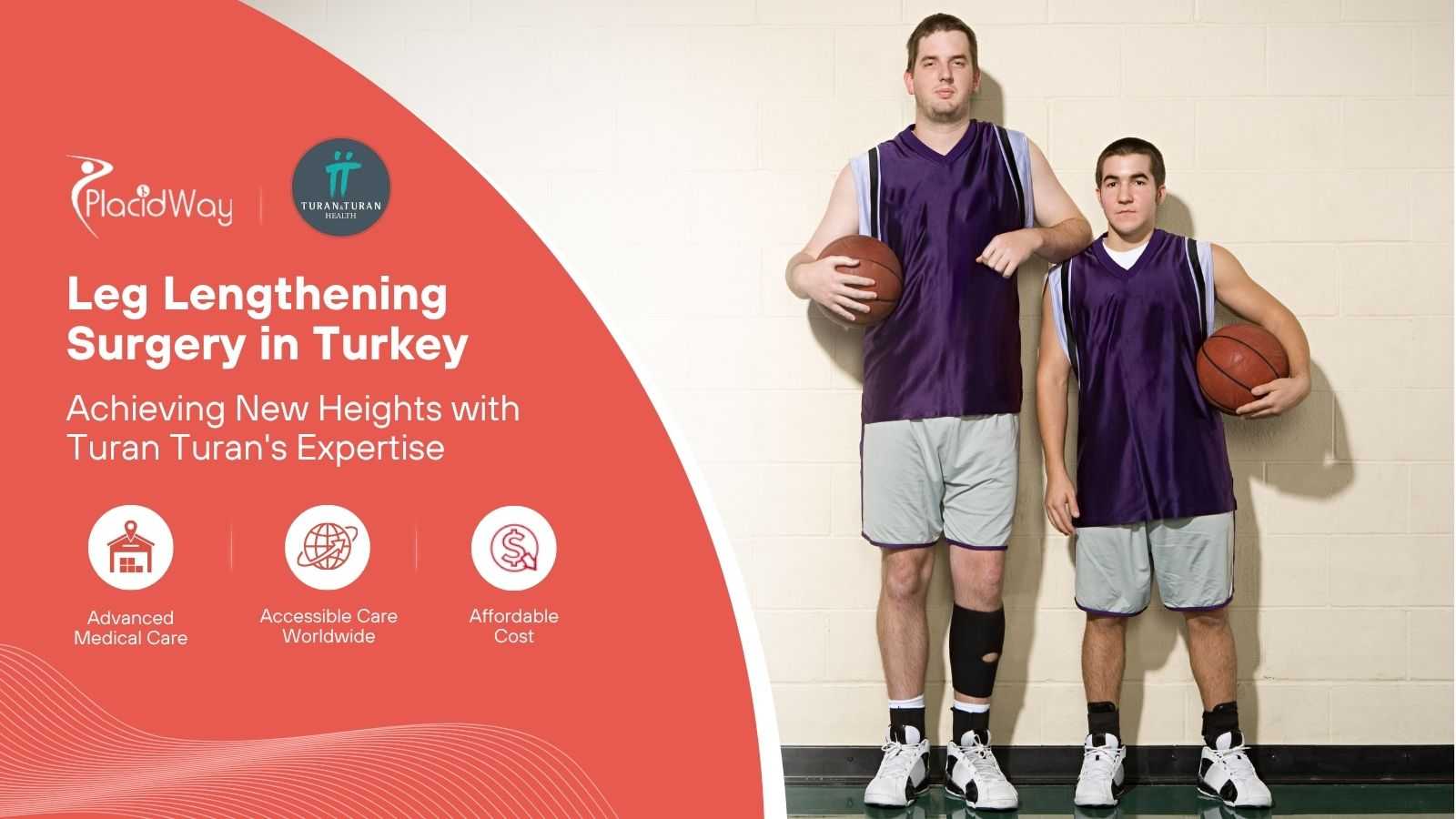
Leg Lengthening Surgery in Turkeyis an advanced orthopedic procedure performed for both cosmetic height enhancement and reconstructive medical indications. Unlike static surgical adjustments, the procedure gradually increases bone length over time through a controlled process of biological distraction and osteogenesis. Today, Turkey has established itself as a major international hub for orthopedic care, with specialized facilities like Turan Turan Health Group offering comprehensive surgical planning, advanced lengthening devices, and dedicated international patient support. This guide explores the techniques, candidacy requirements, costs, recovery timelines, and essential safety considerations.
Quick Summary: Leg Lengthening Surgery in Turkey
Key Aspect
Summary Details
Primary Indications
Cosmetic height enhancement, limb-length discrepancy, congenital or post-traumatic deformities
Target Bone Sites
Femur (thigh bone) or Tibia (shin bone)
Achievable Length Range
Typically 5–8 cm per bone segment (varies according to individual anatomy and safety planning)
Device Options
Internal motorized lengthening nails or external fixator frames (LON, Precice, Ilizarov)
Daily Distraction Rate
Approximately 1 mm per day during the distraction phase
Total Treatment Duration
6 to 12+ months (encompassing surgery, distraction, consolidation, and full weight-bearing rehab)
Destination Hub
Bursa / Istanbul, Turkey (Turan Turan Health Group)
What Is Leg Lengthening Surgery?
Leg lengthening surgery is a highly specialized orthopedic procedure that utilizes the body’s natural ability to regenerate new bone tissue. Rather than inserting synthetic spacers or expanding bone instantly, the surgery relies on the principle of distraction osteogenesis. The process begins with a surgical cut in the bone (osteotomy), followed by the controlled separation of bone segments over time.
How Bone Lengthening Works
When a bone is surgically divided, the body immediately begins a natural healing response to form a soft tissue callus between the separated ends. By applying gradual tension across this gap using a mechanical or motorized lengthening device, new osteocytes and collagen matrix are stimulated to grow. Once the desired distance is reached, the newly formed soft bone calcifies and solidifies into dense cortical bone during the consolidation phase.
Femur vs. Tibia Lengthening
Leg lengthening can be performed on either the femur (thigh bone) or the tibia (shin bone). Femoral lengthening is often preferred for cosmetic height enhancement because the surrounding soft tissue and musculature generally accommodate gradual distraction more comfortably. Tibial lengthening involves two bones (the tibia and fibula) and requires careful management of tight soft tissues around the ankle and calf.
Osteotomy: Creating Controlled Bone Separation
An osteotomy is the precise surgical cut performed by the orthopedic surgeon to divide the bone while preserving the surrounding periosteum (the blood-rich membrane encasing the bone). Maintaining periosteal integrity is vital, as it supplies the nutrients and progenitor cells necessary for new bone tissue generation.
The Role of a Lengthening Device
A specialized mechanical device—either an internal intramedullary nail or an external fixator frame—is placed to stabilize the bone segments and control the daily distraction rate. Internal devices use magnetic or motorized mechanisms operated remotely, whereas external devices use physical pins projecting through the skin to an external frame structure.
How New Bone Forms During the Lengthening Process
During the active distraction phase, the lengthening device expands the osteotomy gap by approximately 1 millimeter per day (typically broken into four 0.25 mm increments). As the gap opens, blood vessels, nerve fibers, and collagen scaffolding develop inside the distraction zone. Over the following months, osteoblasts mineralize this matrix, transforming it into solid, load-bearing bone tissue.
How Much Height Can Leg Lengthening Add?
While a range of 5 to 8 centimeters (approximately 2 to 3.1 inches) per lengthening site is frequently discussed, this represents a potential biological range rather than a uniform guarantee. The maximum safe gain depends on individual bone density, soft-tissue flexibility, nerve sensitivity, and joint alignment. Exceeding safe parameters increases the risk of joint contractures, delayed bone healing, or nerve compression.
Why Do People Consider Leg Lengthening Surgery?
Orthopedic surgeons categorize candidates into two broad groups: those seeking cosmetic height enhancement and those requiring reconstructive orthopedic correction.
Cosmetic Height Enhancement
Individuals seeking to increase overall stature to address severe height dysphoria, body image dissatisfaction, or personal aesthetic goals.
Limb-Length Discrepancy
Correction of asymmetrical leg lengths caused by congenital conditions, developmental growth plate injuries, or bone fractures.
Comprehensive psychological and physiological evaluation ensures patients understand that leg lengthening is a major, months-long medical commitment.
Featured Provider: Turan Turan Health Group
When undergoing complex bone distraction procedures, choosing a specialized orthopedic center equipped with dedicated surgical technology and physical rehabilitation teams is paramount.
Turan Turan Health Group — Robotic Surgery Center & Orthopedic Clinic
Locations: Bursa & Istanbul, Turkey
Turan Turan Health Group is a premier orthopedic center in Turkey specializing in advanced joint surgery, robotic-assisted orthopedics, and complex limb lengthening. The clinic integrates comprehensive preoperative computerized imaging, specialized surgical teams, daily physical therapy protocols, and tailored international patient management services for candidates seeking leg lengthening surgery in Turkey.
Who May Be a Candidate for Leg Lengthening Surgery?
Patient selection requires careful orthopedic, radiological, and clinical screening to ensure safe biological healing and successful rehabilitation:
Physical and Skeletal Maturity: Candidates must have fully closed epiphyseal growth plates (typically verified via X-ray in patients aged 18 and older).
Overall Bone and Joint Health: Normal bone density, healthy joint articulation (hip, knee, ankle), and absence of active bone disease or severe osteoporosis.
Adequate Soft-Tissue Condition: Sufficient muscular flexibility, nerve elasticity, and skin integrity to tolerate gradual physical elongation.
Psychological Readiness: Mental stability and commitment to endure daily lengthening protocols, discomfort, restricted mobility, and intensive physical therapy.
Absence of Impairing Medical Conditions: Non-smokers (nicotine severely impairs bone healing), no unmanaged diabetes, vascular disorders, or chronic immunodeficiencies.
Comprehensive Orthopedic Evaluation: Full-length standing radiograph (telemetric X-rays) to assess mechanical axes, alignment, and proportional ratios.
How Is Leg Lengthening Surgery Performed?
Leg lengthening follows a multi-phase surgical and therapeutic timeline. The process graphic below illustrates the continuous journey from initial surgical preparation to full bone consolidation and functional restoration.
The 8 Major Stages of Leg Lengthening Surgery
The main stages of leg lengthening surgery, from osteotomy and device placement to gradual distraction, bone regeneration, consolidation, and rehabilitation. Source: International Society of Limb Lengthening and Reconstruction Surgery (ILLRS).
Internal vs. External Leg Lengthening Devices
Orthopedic surgeons choose between internal intramedullary devices and external fixators based on patient anatomy, budget, desired lengthening length, and lifestyle factors:
Feature
Internal Device (e.g., Motorized Nail)
External Fixator (e.g., Frame / LON)
Device Location
Inside the marrow canal of the bone
Outside the limb, attached via transfixing pins/wires
Requires daily pin-site cleaning to prevent infection
Patient Comfort
Higher post-op comfort and easier clothing wear
Bulkier; requires modified clothing and sleep positioning
Suitability
Sufficient bone canal diameter required
Applicable for complex deformities & narrow bones
Does Robotic Technology Play a Role in Leg Lengthening Surgery?
Robotic-assisted orthopedic tools and navigation systems have advanced surgical precision in reconstructive procedures. However, understanding their exact clinical scope is vital:
Surgical Planning & Mapping: Robotic navigation allows surgeons to map three-dimensional bone geometry, identifying optimal osteotomy locations and precise axial alignment.
Preserving Mechanical Axes: Computerized guidance assists in ensuring that controlled bone distraction maintains the natural weight-bearing axis connecting the hip, knee, and ankle.
The Surgeon's Central Role: Robotic tools assist during execution, but surgical expertise, soft-tissue balancing, and clinical judgment remain entirely led by the orthopedic team.
Realistic Perspective: Advanced technology enhances accuracy, but it does not accelerate natural biological bone consolidation or eliminate standard surgical risks.
Why Consider Leg Lengthening Surgery in Turkey?
Turkey has emerged as an internationally recognized destination for specialized orthopedic procedures, combining clinical expertise with structured medical tourism infrastructure:
Orthopedic Focus
High surgical volumes and specialized surgical teams dedicated to limb reconstruction and deformity correction.
Competitive healthcare pricing for surgery, hospital stay, and long-term physical rehabilitation compared to Western nations.
Patient Logistics
Dedicated international departments providing airport transfers, multi-lingual coordinators, and long-stay arrangements.
Leg Lengthening Surgery at Turan Turan Health Group
At Turan Turan Health Group, leg lengthening procedures are approached with a multidisciplinary clinical framework tailored to both local and foreign patients:
Orthopedic Expertise: Specialized surgeons with extensive experience in bone deformity correction and distraction osteogenesis.
Individualized Treatment Planning: Detailed preoperative biomechanical analysis to select between internal intramedullary nails or external fixators based on patient anatomy.
In-House Rehabilitation Units: Dedicated physical therapy teams that guide patients through daily range-of-motion exercises from early post-operative days.
International Patient Services: End-to-end support including consultation, translation, accommodation planning, and remote post-discharge tracking.
How Much Does Leg Lengthening Surgery Cost in Turkey?
The total financial investment for leg lengthening surgery depends on multiple clinical variables. Because leg lengthening involves extended rehabilitation, hardware costs, and surgical complexity, overall pricing is established following individual orthopedic evaluation.
Primary Cost Determinants
Device Technology: Premium internal motorized nails (e.g., Precice) generally carry higher hardware costs than combination or external fixator systems (e.g., LON or Ilizarov).
Anatomical Site: Lengthening the femur, tibia, or both simultaneously (quadrilateral lengthening).
Hospital Stay Duration: Inpatient days required for immediate recovery, pain management, and mobility training.
Physical Therapy Requirements: Frequency and duration of specialized, hands-on physical rehabilitation sessions.
Hardware Removal Procedures: Subsequent minor surgery to remove internal nails or external frames after full consolidation.
Important Pricing Note: Medical costs vary depending on the chosen device system, surgical complexity, and required length of stay in Turkey. Patients should request an individualized medical evaluation and itemized quote prior to booking travel.
How Long Does Leg Lengthening Recovery Take?
Recovery from leg lengthening is a prolonged process divided into distinct clinical phases. Timelines vary based on biological response, age, bone density, and compliance with physical therapy.
Recovery Phase
Approximate Timeline
Primary Clinical Focus
Inpatient Acute Phase
Days 1 to 7 post-surgery
Wound care, pain management, early passive range-of-motion, transfer training
Active Distraction Phase
Weeks 2 to 8–12
Daily ~1 mm device distraction, intensive physical therapy, serial X-ray tracking
Consolidation Phase
Months 3 to 6–9
Hardening of regenerated soft bone, gradual weight-bearing progression
Full Functional Rehabilitation
Months 9 to 12+
Full unassisted weight bearing, gait retraining, strength rebuild, high-impact restriction
What Is Rehabilitation Like After Leg Lengthening?
Physical therapy is mandatory for a successful outcome. Because bone is elongated faster than soft tissues naturally adapt, muscles, tendons, and nerves experience significant tension:
Targeted isometric and isotonic exercises preserve quadriceps, hamstring, and calf muscle mass during partial weight-bearing periods.
Gait Retraining
Progressive weight-bearing under physical therapist supervision ensures normal walking mechanics once bone consolidation is achieved.
What Are the Potential Risks of Leg Lengthening Surgery?
As a major orthopedic intervention, leg lengthening carries potential surgical, biological, and mechanical risks that must be carefully discussed prior to proceeding:
Infection
Pin-site infections in external fixators or rare deep bone infections (osteomyelitis) with internal nails.
Nerve & Vessel Tension
Nerve stretch injuries leading to numbness, tingling, or temporary motor weakness if lengthening exceeds biological tolerance.
Poor Healing
Delayed union or non-union where regenerated bone mineralizes too slowly or fails to solidify fully.
Joint Stiffness
Muscle tight-band contractures restricting knee flexion or ankle extension requiring intensive stretching or tendon release.
Leg Lengthening Surgery in Turkey: What International Patients Should Plan For
Medical Record Evaluation: Sending full-length X-rays, bloodwork, and health history for preliminary surgeon review before traveling.
Virtual Teleconsultation: Detailed discussion with the surgical team regarding expectations, candidate eligibility, and device selection.
Length of Stay: Planning to remain in Turkey for at least 4 to 8 weeks during the initial surgery and active distraction phase, or arranging certified local physical therapy back home.
Post-Discharge Rehabilitation: Ensuring daily access to professional physical therapy throughout the distraction and early consolidation phases.
Long-Term Follow-Up: Coordinating routine X-ray submissions with the Turkish medical team every 2 to 4 weeks until bone healing is complete.
10 FAQs About Leg Lengthening Surgery in Turkey
1. What is leg lengthening surgery?
Leg lengthening surgery is an orthopedic procedure that uses distraction osteogenesis to gradually expand the length of the femur or tibia, allowing new bone to form in the gap.
2. How many centimeters can leg lengthening surgery add?
Most patients can safely achieve between 5 to 8 centimeters (2 to 3.1 inches) per bone segment, depending on individual soft-tissue flexibility and orthopedic safety limits.
3. Is leg lengthening surgery performed on the femur or tibia?
It can be performed on either bone. Femur lengthening is often preferred for cosmetic stature enhancement, while tibia lengthening is also common for limb discrepancies and deformities.
4. How does the bone grow longer after surgery?
The device separates the surgical osteotomy by about 1 mm per day. The body fills this gap with fresh soft bone matrix (osteoid), which gradually mineralizes into solid bone.
5. What devices are used for leg lengthening?
Techniques include internal motorized intramedullary nails (e.g., Precice), external fixators (e.g., Ilizarov), or combination methods like Lengthening Over Nail (LON).
6. How long does recovery from leg lengthening surgery take?
Total recovery spans 6 to 12+ months, encompassing active lengthening (1–3 months), consolidation (3–6 months), and rehabilitation to achieve full unassisted walking.
7. Is leg lengthening surgery painful?
Patients experience post-operative pain and soreness during distraction due to nerve and muscle stretching. Pain management protocols and physical therapy help control discomfort.
8. What are the risks of leg lengthening surgery?
Potential risks include pin-site or deep bone infections, delayed bone union, joint stiffness, nerve tension, muscle contractures, and hardware complications.
9. How much does leg lengthening surgery cost in Turkey?
Pricing depends on the device type (internal vs. external), target bone, length of hospital stay, and physical therapy package. An individualized medical assessment is required for exact quotes.
10. How can I find out whether I am a candidate for leg lengthening surgery at Turan Turan?
Interested individuals can submit recent standing X-rays, medical records, and physical goals for preliminary evaluation by the orthopedic team at Turan Turan Health Group.
Is Leg Lengthening Surgery in Turkey Right for You?
Deciding to undergo leg lengthening surgery requires balancing personal goals with a realistic understanding of the medical journey. Prospective candidates should carefully weigh:
The primary motivation (cosmetic stature vs. reconstructive discrepancy)
The commitment required for several months of daily physical therapy
The financial investment covering surgery, accommodation, and rehab
Potential surgical risks and biological healing variability
Take the Next Step With Turan Turan Health Group
Considering Orthopedic Surgery in Turkey? Contact PlacidWay Medical Tourism to learn more about treatment options at Turan Turan Health Group, discuss your goals, and request an individualized medical evaluation and treatment quote.
Disclaimer: The information provided in this guide is for educational and informational purposes only and does not constitute formal medical advice, diagnosis, or treatment recommendations. Leg lengthening surgery is a major surgical procedure carrying inherent medical and biological risks. Individual surgical suitability, achievable height increase, and recovery timelines vary significantly per patient. All treatment decisions must be made in consultation with a qualified orthopedic surgeon following comprehensive clinical and radiological evaluation.
OverviewExplore leg lengthening surgery in Turkey at Turan Turan, including procedures, recovery, costs, risks, and what international patients should know.
Request your Free Quote
×
Trusted Medical Tourism Platform Since 2007
60+
Countries
2k+
Clinics
19.5k+
Reviews
2.5k+
Qualified Doctors
1.1M+
Patients Served Since 2007
Unlock the Best Orthopedic/Knee Surgery Packages Just for You
Discover the ultimate Orthopedic/Knee Surgery packages designed to meet your health and wellness goals. Choose the perfect fit for your journey.
Group Florence Nightingale Hospitals in Istanbul Turkey
Orthopedic/Knee Surgery
Istanbul, Turkey
Orthopedic/Knee Surgery Solutions Near You: Explore Top Medical Centers
Discover how Orthopedic/Knee Surgery is transforming lives at leading medical centers in , Turkey. Dive into center profile, specialties, doctors, reviews, etc. and explore the best options tailored to your needs in this region.
Transformative Orthopedic/Knee Surgery Experiences: Dive into Procedure Insights
Discover the power of Orthopedic/Knee Surgery through compelling patient experiences. Uncover detailed insights into procedures, recovery journeys, and life-changing results.
Explore Orthopedic/Knee Surgery: Stories, Testimonials, and Procedures
Watch in-depth videos covering everything from Orthopedic/Knee Surgery success stories to detailed procedure explanations. Learn what to expect and hear from real patients.
Hi, this is Alice 😊, your PlacidWay Virtual Assistant.
Thanks for visiting PlacidWay. Before we get started, I'd like to gather a few details so we can stay connected and better assist you throughout your healthcare journey.























Share this listing