

When joint pain affects your sleep, work, mobility, and independence, waiting can feel more costly than the surgery itself. Many Canadians explore hip and knee replacement in Mexico for faster access to private care and competitive provider-listed pricing, with hip replacement packages typically ranging from approximately $8,500 to $16,715 and knee replacement packages from $7,380 to $15,000. Before choosing a provider, review the surgeon's experience, the hospital's credentials, the implant options, and the services included in the treatment package, including rehabilitation and follow-up care.
Quick Summary: Hip and Knee Replacement in Mexico
- Estimated self-pay cost: Total hip replacement in Mexico typically costs between $8,500 and $16,715, while total knee replacement typically ranges from $7,380 to $15,000. Final costs vary depending on the implant, hospital, surgeon, case complexity, and package inclusions.
- Why Canadians consider Mexico: Private scheduling may be faster than a public wait pathway, and a written package can combine hospital, surgeon, anesthesia, implant, tests, and early rehabilitation.
- Who may qualify: Adults with advanced joint damage, persistent pain, reduced function, and inadequate relief from appropriate non-surgical care may be evaluated for replacement.
- Credentials to verify: COFEPRIS authorization for surgical services, the facility’s current national certification status when applicable, the surgeon’s specialist cédula, and current CMOT certification.
- Recovery: Walking usually begins early with assistance, but safe flying, stair use, work, driving, and full rehabilitation depend on your health, procedure, wound, mobility, and surgeon’s clearance.
- Main caution: Provincial health coverage and ordinary travel insurance may not pay for planned surgery abroad, complications, rehabilitation, or medical evacuation. Confirm coverage in writing before booking.
Why Canadians Consider Hip and Knee Replacement in Mexico
The main attraction is not that Mexico offers a different operation. It offers a different access pathway. In Canada, medically necessary joint replacement is generally publicly funded for eligible residents, but patients may face months of assessment, imaging, specialist review, optimization, and surgical scheduling. Mexico is usually a private, self-pay route where a suitable patient can request a remote review and receive a proposed surgery date sooner.
Current Canadian data also shows strong demand. The Canadian Institute for Health Information reported 175,242 hip and knee replacements in 2024–2025, including 79,346 hip procedures and 95,896 knee procedures. National volumes have recovered beyond pre-pandemic levels, yet the six-month benchmark remains important because a meaningful share of patients still waits longer. Faster access can be appealing when pain is worsening, mobility is declining, or a long delay threatens employment and independence.
Common reasons to travel
- Earlier private scheduling
- Predictable bundled quotes
- Direct access to an orthopedic team
- Choice of city, hospital, and implant
- Coordinated airport and hotel logistics
What Mexico does not remove
- Surgical and anesthesia risks
- Need for months of rehabilitation
- Possibility of infection or revision
- Travel-related blood-clot risk
- Need for care after returning home
Important context: No authoritative Canadian or Mexican dataset publicly counts how many Canadians travel specifically to Mexico for hip or knee replacement. The access reasons described here reflect documented medical-tourism motivations and current joint-replacement pressures, not a quantified cross-border migration rate.
What Hip and Knee Replacement Surgery in Mexico Involves
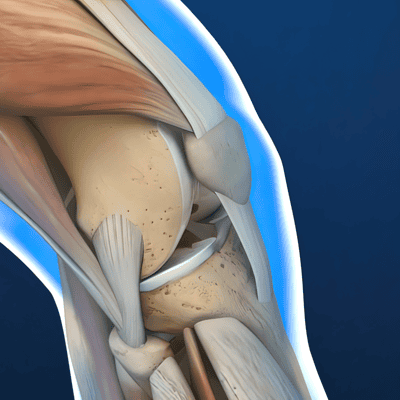
Joint replacement removes damaged joint surfaces and replaces them with artificial components designed to reduce pain and restore movement. The operation is called arthroplasty. The surgical principles are broadly similar in Canada and Mexico, but the implant brand, fixation method, surgical approach, anesthesia plan, and rehabilitation pathway can differ by hospital and surgeon.
| Procedure | What is replaced | Typical reason | Key question for your surgeon |
|---|---|---|---|
| Total hip replacement | The femoral head and damaged socket surface | Advanced osteoarthritis, osteonecrosis, or selected fractures | Which approach, bearing surface, and fixation method suit my anatomy? |
| Partial hip replacement | Usually the femoral head while retaining the natural socket | More often used for selected hip fractures than routine osteoarthritis | Why is partial replacement preferable to total replacement in my case? |
| Total knee replacement | Damaged surfaces of the femur and tibia; the patella may also be resurfaced | Advanced arthritis affecting several knee compartments | Which implant design and alignment method will be used? |
| Partial knee replacement | Only the damaged knee compartment | Localized arthritis with suitable ligaments and joint anatomy | What findings make me a partial rather than total replacement candidate? |
“Minimally invasive,” “robotic,” and “computer-navigated” describe techniques or tools, not guaranteed outcomes. Ask how often the surgeon uses the proposed method, whether it changes the incision or bone preparation, what backup plan exists if the technology cannot be used, and whether it adds cost without clear benefit for your specific case.
Who May Be a Candidate for Joint Replacement in Mexico
A suitable candidate usually has substantial joint damage, persistent pain, reduced mobility, and inadequate improvement after appropriate non-surgical treatment. Your X-rays matter, but the decision should also reflect your symptoms, daily limitations, general health, and realistic recovery goals. Surgery should not be recommended from a short sales call or a single photograph of an X-ray.
Factors that may support surgery
- Pain during walking, stairs, sleep, or basic daily activities
- Advanced arthritis or joint damage on weight-bearing imaging
- Loss of motion, deformity, or instability
- Limited benefit from exercise, therapy, weight management, injections, or suitable medication
- Medical fitness for anesthesia and rehabilitation
Reasons surgery may be postponed
- Active infection, untreated dental infection, or open skin wound
- Poorly controlled diabetes, severe anemia, or unstable heart or lung disease
- High clotting risk without a safe prevention plan
- Nicotine use or nutrition problems that increase wound risk
- No reliable caregiver, physiotherapy, or follow-up plan
Before accepting a date, expect a proper medical review. This may include current X-rays, a medical history, medication list, allergies, blood tests, electrocardiogram, and specialty clearance when necessary. Tell the team about prior blood clots, sleep apnea, diabetes, kidney disease, heart disease, immune-suppressing treatment, previous joint infection, and any metal sensitivity concerns.
Patient-safety rule: A clinic should be willing to say that you are not ready for surgery. Immediate approval without reviewing your health risks is not a convenience; it is a warning sign.
Hip and Knee Replacement Costs in Mexico for Canadians
Mexico is a self-pay option for most Canadians. Current private-market package quotes reviewed for 2026 commonly place total hip replacement near $10,500–$16,000 USD and total knee replacement near $11,500–$15,000 USD. These are planning ranges, not guaranteed prices. A complex deformity, revision surgery, premium implant, longer admission, medical comorbidity, or bilateral procedure can increase the total substantially.
| Pathway or procedure | Estimated patient cost in USD | What the figure means | Main trade-off |
|---|---|---|---|
| Canada public pathway | Usually $0 for the insured hospital and physician service when eligible and medically necessary | Provincial coverage rules apply; medications, private physiotherapy, travel, equipment, and lost income may still create costs | Lower direct surgical cost, but timing and provider choice may be limited |
| Partial hip replacement in Mexico | $9,000–$12,500 | Used for selected indications; not a cheaper substitute for total replacement when the socket is diseased | Faster private access but requires careful indication review |
| Total hip replacement in Mexico | $10,500–$16,000 | Often includes hospital, surgeon, anesthesia, and standard implant; inclusions vary | You pay privately and must organize Canadian aftercare |
| Total knee replacement in Mexico | $11,500–$15,000 | Commonly quoted as a bundled single-knee package | Rehabilitation is demanding and continues after travel |
| Revision or complex replacement | Individual quote required | May require special implants, more operating time, cultures, bone graft, or staged treatment | Higher risk, longer recovery, and less predictable cost |
What should be itemized in a Mexico joint replacement quote?
| Cost component | Ask for written confirmation | Possible extra charge |
|---|---|---|
| Surgeon and assistant | Names, fees, and postoperative rounds | Extra procedure time or second specialist |
| Hospital and operating room | Number of nights and room type | ICU, extra nights, blood products, or readmission |
| Implant | Manufacturer, model, materials, and components | Premium, constrained, revision, or custom components |
| Anesthesia | Anesthesiologist fee and planned technique | Extended monitoring or medical consultation |
| Tests and medication | Pre-op labs, imaging, inpatient medicine, discharge supply | Additional imaging, cultures, specialist clearance |
| Rehabilitation and travel | Number of physiotherapy sessions, transfers, hotel nights, mobility aids | Extended stay, caregiver room, flight changes, local imaging |
Ask which currency controls the contract, whether a deposit is refundable, what happens if you are medically declined, and who pays if the surgeon changes the planned implant during surgery. Never rely on a headline package price without a patient-specific written quote.
How to Choose a Hospital for Joint Replacement in Mexico
Start with legal authorization, not hotel quality or social-media popularity. In Mexico, COFEPRIS regulates health risks and identifies a specific sanitary licence process for establishments where surgical procedures are performed. Ask the hospital for its current Licencia Sanitaria or equivalent authorization and verify that the licence covers surgical services at the exact address where your operation will occur.
Mexico’s Consejo de Salubridad General also maintains a list of certified medical-care establishments. National certification can be a useful quality signal, but it should not be treated as the only marker of safety. A licensed hospital may operate without international accreditation, and international accreditation does not replace local legal authorization.
| Hospital check | Evidence to request | Why it matters |
|---|---|---|
| Legal surgical authorization | Current COFEPRIS sanitary licence details and facility address | Confirms the site is authorized for the relevant health service |
| National certification | Current status in the Consejo de Salubridad General listing, when applicable | Adds an independent national quality signal |
| Emergency capability | 24/7 physician coverage, ICU or transfer agreement, blood availability, imaging, laboratory | Joint replacement can require rapid response to bleeding, clots, heart events, or infection |
| Infection prevention | Sterilization policy, surgical-site infection tracking, antibiotic stewardship, room cleaning process | A deep implant infection can require major revision surgery |
| Implant traceability | Manufacturer labels, lot and serial numbers, implant stickers, operative record | Your Canadian clinicians need precise implant information later |
| Aftercare | Written schedule, wound contact, physiotherapy plan, and remote follow-up process | Complications often develop after hospital discharge |
Useful question: “Who is responsible for me at 2 a.m. if I develop shortness of breath, severe swelling, wound drainage, or uncontrolled pain after discharge?” A safe program should answer with a person, number, facility, and escalation plan.
How Canadians Can Verify an Orthopedic Surgeon in Mexico
A surgeon should hold a Mexican professional licence as a physician and a specialist licence for orthopedics or orthopedics and traumatology. Ask for both cédula numbers and verify the exact name. Then check current specialty certification through the Consejo Mexicano de Ortopedia y Traumatología, commonly called CMOT. CMOT states that it is recognized through Mexico’s CONACEM framework to certify and renew the certification of orthopedic specialists.
Board certification does not tell you how many hip or knee replacements a surgeon performs. Ask for procedure-specific experience, annual case volume, revision experience, infection and readmission tracking, and the surgeon’s threshold for refusing high-risk patients. You should also meet the operating surgeon by video before paying a non-refundable deposit.
Verify identity and authority
- Full legal name
- General medical cédula
- Orthopedic specialist cédula
- Current CMOT certification
- Hospital privileges at the named facility
Verify joint-replacement experience
- Hip versus knee case volume
- Primary versus revision experience
- Partial replacement selection criteria
- Preferred implant systems
- Management of infection and blood clots
Verify communication
- Direct preoperative consultation
- English or French interpretation
- Written consent before arrival
- Accessible operative and implant records
- Remote follow-up after Canada return
Be cautious when a coordinator refuses to share the surgeon’s licence numbers, substitutes membership in a professional association for certification, promises a specific result, or cannot explain who will operate if the named surgeon becomes unavailable.
Planning Hip or Knee Replacement Travel From Canada to Mexico
Medical travel should be planned like surgery, not like a holiday. The Government of Canada advises patients to discuss the procedure with a Canadian health professional, research the provider and facility, arrange comprehensive coverage, obtain written agreements, and plan follow-up before departure. It also warns that provincial plans and ordinary travel policies may provide little or no coverage for planned treatment abroad.
| When | Medical task | Travel and financial task |
|---|---|---|
| Before choosing a provider | Confirm diagnosis, obtain current weight-bearing X-rays, discuss alternatives, identify medical risks | Check current Canadian travel advisory for the exact destination and compare at least two written plans |
| Four to eight weeks before | Complete tests, optimize chronic conditions, address infection risks, plan blood-clot prevention | Confirm passport, flexible flights, accessible hotel, caregiver, ground transport, and insurance exclusions |
| One to two weeks before | Review medication instructions directly with clinicians; do not stop prescribed drugs independently | Carry records, prescriptions, emergency contacts, quote, consent documents, and payment receipts |
| Before flying home | Obtain surgeon clearance, wound review, mobility assessment, and clot-prevention instructions | Arrange assistance, aisle access when possible, mobility equipment, medication documentation, and a flexible return date |
| After returning to Canada | Begin the planned rehabilitation and attend wound and medical follow-up | Give Canadian providers the discharge summary, operative report, imaging, culture results, and implant labels |
Records you should bring back to Canada
- Operative report
- Discharge summary
- Implant manufacturer and component labels
- Pre- and post-operative imaging
- Medication and allergy list
- Laboratory and culture results
- Blood-clot prevention plan
- Physiotherapy and weight-bearing instructions
- Emergency contact and revision policy
- Invoices and payment records
Travel safety: Canada currently advises travellers to exercise a high degree of caution in Mexico because risks vary by region. Review the latest advisory for your city and state shortly before booking and again before departure.
Hospital Stay, Rehabilitation, and Flying Home After Surgery
Recovery begins on the day of surgery or soon afterward, depending on your condition and the clinical pathway. The team usually focuses on pain control, clot prevention, wound care, safe transfers, walking with an aid, and basic exercises. A short hospital stay does not mean that the joint has healed. Bone, soft tissue, strength, balance, and endurance continue recovering for weeks to months.
| Timeframe | Biological or clinical process | What you may feel | Typical activity level | Action required |
|---|---|---|---|---|
| First 24–48 hours | Inflammation and early wound healing begin | Pain, swelling, fatigue, stiffness, nausea, or dizziness | Assisted standing, transfers, and short walks when cleared | Follow medication, breathing, circulation, and mobility instructions |
| Days 3–14 | Wound seals while bruising and swelling may remain prominent | Variable pain, tightness, sleep disruption, reduced stamina | Frequent short walks and prescribed exercises with an aid | Attend wound review, monitor infection signs, and obtain travel clearance |
| Weeks 2–6 | Soft tissues strengthen and movement control improves | Gradual improvement with lingering swelling and fatigue | Progressive walking, home activity, and structured physiotherapy | Do not abandon therapy because the incision looks healed |
| Weeks 6–12 | Strength, balance, gait, and joint function continue improving | Less pain, but stiffness or muscle weakness may persist | More independent daily activity as cleared | Review progress and address slow recovery early |
| Three to twelve months | Functional recovery and tissue adaptation continue | Increasing confidence; occasional swelling after activity may occur | Low-impact exercise and daily activities based on medical advice | Keep long-term follow-up and retain implant records |
There is no universal safe flight date after hip or knee replacement. Surgery and prolonged sitting both increase blood-clot risk, and individual risk varies. Your surgeon should base clearance on the wound, mobility, oxygen needs, medical stability, flight duration, clot history, and prevention plan. A package’s standard departure date is not a substitute for medical assessment.
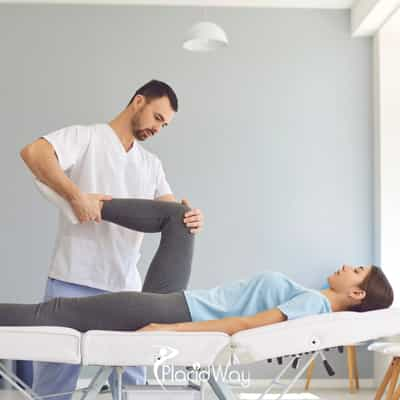
Arrange physiotherapy in Canada before leaving. Confirm whether you need a referral, how soon treatment should begin, whether the therapist accepts overseas surgical records, and who will assess you if swelling, stiffness, wound problems, or increasing pain appears after your return.
Risks of Hip and Knee Replacement Abroad and Warning Signs
Hip and knee replacement abroad can improve mobility and quality of life, but complications can occur in any country. Medical travel adds distance, unfamiliar systems, insurance limits, and handover challenges. Infection, blood clots, dislocation after hip replacement, stiffness after knee replacement, fracture, nerve or vessel injury, bleeding, implant problems, and medical complications should be discussed before consent.
| Risk | Risk-reduction questions | Urgent warning signs |
|---|---|---|
| Infection | How are patients screened, antibiotics selected, instruments sterilized, and infections tracked? | Fever, increasing redness, pus, drainage, worsening wound pain, or opening |
| Deep-vein thrombosis or pulmonary embolism | What prevention plan fits my history, and how does the flight affect it? | New calf pain, one-sided swelling, sudden shortness of breath, chest pain, fainting |
| Hip dislocation or instability | Which movements should I avoid, and for how long? | Sudden severe pain, deformity, inability to bear weight, or leg shortening |
| Knee stiffness or poor motion | What motion goals and therapy schedule are expected? | Rapid loss of movement, escalating swelling, or inability to participate in therapy |
| Implant or fracture problem | Which implant is planned, and how are unexpected bone findings managed? | New inability to bear weight, fall with severe pain, deformity, or mechanical instability |
| Medical complication | Who evaluates heart, lung, kidney, diabetes, anemia, and sleep-apnea risks? | Confusion, severe weakness, fainting, breathing difficulty, persistent vomiting, or uncontrolled pain |
Seek urgent medical care: Sudden chest pain, shortness of breath, fainting, new severe one-sided leg swelling, uncontrolled bleeding, rapidly worsening wound drainage, or sudden loss of limb function should not wait for an email reply from an overseas coordinator.
Canadian Joint Replacement Demographics and Recent Procedure Trends
Canadian data helps describe the population most likely to be evaluating joint replacement, although it does not identify who travels to Mexico. In 2024–2025, women accounted for 56.5% of hip replacements and 58.0% of knee replacements in Canada. Most patients were age 65 or older. Osteoarthritis was the leading diagnosis for primary procedures, especially knee replacement.
The national volume of both operations increased markedly from 2020–2021 to 2024–2025. That growth reflects system recovery and rising demand, but it also explains why access remains a central patient concern.
Line graph: Canadian hip and knee replacement volumes
CIHI surgery episodes or day-surgery visits, fiscal years 2020–2021 to 2024–2025.
Histogram: age distribution of female knee replacement patients
Canada, 2024–2025. This describes Canadian procedures, not Canadians who travelled abroad.
For a Canadian considering Mexico, the practical implication is straightforward: many candidates are older adults who may also have cardiovascular, metabolic, respiratory, or mobility-related risks. The program must therefore assess the whole patient, not only the painful joint.
A Decision Checklist Before Booking Joint Replacement in Mexico
A reasonable decision balances timing, health, provider quality, cost, travel, and aftercare. Mexico may be appropriate for a well-evaluated patient with a qualified surgeon, licensed hospital, transparent quote, and reliable follow-up. It is a poor fit when the decision is driven by urgency alone, medical risks are not controlled, or the program cannot manage complications.
Proceed to deeper review when
- Your diagnosis and surgical indication are clear
- A Canadian clinician has reviewed your travel fitness
- The surgeon and licences are verifiable
- The hospital’s surgical authorization is current
- The implant and quote are itemized
- You have a caregiver and aftercare plan
- Complication and evacuation costs are financially manageable
Pause before paying when
- You have not met the operating surgeon
- The quote does not name the implant or hospital
- The coordinator promises guaranteed results
- You are told rehabilitation is optional
- No one discusses blood clots or infection
- The return flight is fixed regardless of recovery
- Canadian follow-up has been left until after surgery
Bottom line: The safest “fast” surgery is still one that allows enough time to verify credentials, optimize your health, understand the implant, arrange rehabilitation, and prepare for complications.
Frequently Asked Questions About Hip and Knee Replacement in Mexico
How much does hip replacement in Mexico cost for a Canadian patient?
A total hip replacement in Mexico commonly falls near $10,500–$16,000 USD in current private package quotes. The final amount depends on the implant, hospital, surgeon, complexity, tests, length of stay, and included rehabilitation. Request an itemized patient-specific quote before paying.
How much does knee replacement in Mexico cost for Canadians?
A single total knee replacement commonly falls near $11,500–$15,000 USD. Bilateral, revision, or complex procedures require individual pricing. Confirm whether the quote includes the implant, anesthesia, hospital nights, inpatient medicines, physiotherapy, mobility aids, hotel, and transfers.
Is hip or knee replacement in Mexico safe?
Safety depends on the patient, surgeon, hospital, infection controls, implant, anesthesia, rehabilitation, and complication response. Mexico has qualified orthopedic teams, but standards vary. Verify local authorization, current surgeon credentials, emergency capability, implant traceability, and aftercare rather than relying on destination reputation.
Will my provincial health plan pay for joint replacement in Mexico?
Coverage for planned non-emergency care outside Canada is generally limited and may require prior approval. Rules differ by province or territory. Contact your health ministry before booking and obtain the decision in writing. Do not assume later reimbursement for surgery, complications, rehabilitation, or evacuation.
Does normal travel insurance cover planned surgery in Mexico?
Many ordinary policies exclude planned treatment, expected complications, pre-existing conditions, or medical evacuation related to elective surgery. Ask the insurer specific written questions about the procedure, complications, readmission, extended stay, flight changes, and evacuation before paying for treatment.
How long should I stay in Mexico after hip or knee replacement?
The stay should be individualized. Many programs plan roughly 10–14 days, but this is not a universal medical standard. Your departure should depend on wound healing, mobility, medical stability, blood-clot risk, flight length, and surgeon clearance, with flexibility to remain longer.
Can I fly home soon after joint replacement surgery?
Flying too soon may add blood-clot and mobility risks. No single interval is safe for everyone. Your surgeon should assess the wound, walking ability, clot history, prevention plan, medical condition, and travel duration before clearing you to fly.
How do I verify a joint replacement surgeon in Mexico?
Ask for the surgeon’s full legal name, general medical cédula, orthopedic specialist cédula, and current CMOT certification. Confirm hospital privileges and procedure-specific experience. Meet the surgeon by video and discuss the operation, implant, risks, alternatives, and aftercare directly.
What hospital certification should I look for in Mexico?
First verify current COFEPRIS authorization for surgical services at the exact facility. You may also check national certification through the Consejo de Salubridad General. International accreditation can add information, but it does not replace Mexican legal licensing or procedure-specific capability.
Which hip or knee implant brand should I choose?
There is no single best implant for every patient. Suitability depends on anatomy, bone quality, age, activity, surgeon experience, fixation, and revision options. Ask for the manufacturer, exact system, materials, regulatory status, expected availability in Canada, and complete implant labels.
Is robotic joint replacement better in Mexico?
Robotic assistance can help with planning or component positioning, but it does not guarantee less pain, faster recovery, or a longer-lasting implant. Ask about the surgeon’s experience with the system, why it is useful for your anatomy, added cost, and the non-robotic backup plan.
What happens if I develop a complication after returning to Canada?
You may need assessment through your Canadian primary-care, urgent-care, or emergency pathway. Bring complete operative and implant records. Before surgery, clarify who pays for tests, readmission, revision, or return travel and how the Mexican surgeon will communicate with Canadian clinicians.
Compare Joint Replacement Options in Mexico
PlacidWay can help you compare providers, understand package inclusions, request treatment information, and prepare credential and safety questions. A coordinator cannot determine whether surgery is medically appropriate; that decision belongs to qualified clinicians who review your case.
Request Treatment InformationDisclaimer
Disclaimer: This information is for educational purposes only and does not replace professional medical advice. Always consult a qualified healthcare provider before making medical decisions.






















Share this listing