


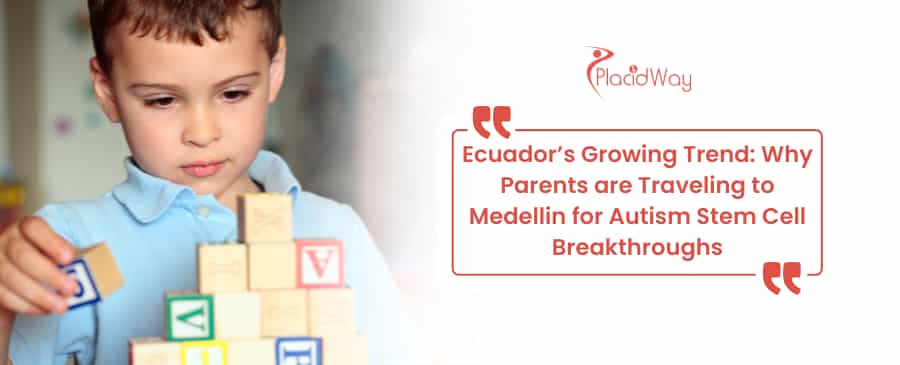
In recent years, an increasing number of families from Ecuador have begun looking beyond their national borders for advanced supportive therapies for children diagnosed with Autism Spectrum Disorder (ASD). The emotional and physical dedication required to support a neurodivergent child often leads parents to explore innovative medical pathways. Among these emerging options, regenerative medicine has captured significant attention due to ongoing research into cellular repair and immunomodulation.
This pursuit has positioned neighboring Colombia as a prominent hub, specifically drawing attention to medical tourism in Medellin. The city offers a unique combination of advanced medical infrastructure, highly trained specialists, and rigorous regulatory standards. For Ecuadorian parents, the geographical proximity and shared language remove many of the traditional barriers associated with international medical travel, allowing them to focus entirely on their child's healthcare journey.
According to global medical travel insights, Colombia ranks among the top destinations in Latin America for advanced healthcare services, attracting thousands of international patients annually for specialized procedures.
Understanding How Stem Cell Therapy for Autism Works
The core concept behind this regenerative approach involves the use of Mesenchymal Stem Cells (MSCs), which are typically sourced from ethical, highly regulated umbilical cord tissue. Researchers believe these specific cells possess strong anti-inflammatory and immunomodulatory properties. When administered intravenously, MSCs theoretically travel through the bloodstream, identifying areas of inflammation within the body and brain to promote a healing response.
It is vital for parents to understand that this intervention is not a cure for ASD. Instead, the therapy aims to address underlying physiological issues, such as neuroinflammation or immune system dysregulation, which are sometimes present in autistic individuals. Most patients experience varying degrees of response, and medical professionals generally position the therapy as a complementary tool designed to enhance the effectiveness of traditional behavioral and speech therapies.
Mesenchymal Stem Cells (MSCs) are known as "multipotent," meaning they have the unique ability to develop into several different types of cells, making them highly versatile in regenerative medicine research.
Why Medical Tourism in Medellin is Booming for Regenerative Medicine
The steady rise of medical tourism in Medellin is driven by the city's commitment to modernizing its healthcare sector and fostering medical innovation. Over the past decade, substantial investments have been made to build state-of-the-art laboratory facilities and clinical environments that meet rigorous international benchmarks. The medical professionals in the region frequently undergo specialized training globally, bringing advanced regenerative techniques back to South America.
For Ecuadorian families, this means accessing top-tier medical care without the need for intercontinental travel to Asia or Europe. The cultural affinity, similar time zones, and short flight durations make the entire process significantly less stressful for children with sensory sensitivities. Consequently, Medellin has transformed from a regional healthcare provider into a highly sought-after destination for complex regenerative interventions.
Flight times from Quito or Guayaquil to Medellin average less than two hours, making it an incredibly accessible medical tourism destination for Ecuadorian families requiring specialized pediatric care.
Stem Cell Therapy for Autism Cost in Medellin vs. Ecuador
Financial accessibility is a primary factor driving the decision to travel abroad. The Stem Cell Therapy for Autism cost in Medellin represents a significant value proposition for families facing the heavy financial burdens of lifelong developmental care. While specialized regenerative clinics are scarce in Ecuador, seeking these treatments in North America often proves prohibitively expensive due to high overhead costs and complex insurance landscapes.
In contrast, Colombia offers a highly favorable exchange rate and lower operational costs, allowing world-class facilities to offer competitive pricing without compromising on safety or cell quality. Parents can typically expect to pay a fraction of the cost they would in the United States, allowing them to allocate their remaining budget toward continuous at-home therapies, nutritional support, and educational interventions.
| Procedure / Service | Average Cost in Medellin (USD) | Comparison Cost (USA / Limited Ecuadorian Markets) |
|---|---|---|
| Comprehensive MSC Autism Protocol | $5,000 - $9,000 | $15,000 - $25,000 (USA) |
| Pre-treatment Medical Evaluation | Included or $200 - $400 | $800 - $1,500 |
| Post-Therapy Follow-up Care (Virtual) | Included in Package | $200 - $500 per session |
What to Expect from Stem Cell Therapy for Autism Clinics in Medellin
Navigating international healthcare can be daunting, but the premier Stem Cell Therapy for Autism clinics in Medellin are meticulously designed to provide a welcoming, stress-free environment for international patients. Upon arrival, families are usually greeted by multilingual care coordinators who guide them through every step of the clinical process. The facilities themselves are modern, hygienic, and often incorporate child-friendly elements to reduce pediatric anxiety.
The standard treatment protocol typically begins with a thorough medical evaluation, including blood tests and a review of the child's complete medical history. Once the medical team confirms the patient's eligibility, the actual stem cell infusion is generally performed intravenously. The procedure is typically minimally invasive and takes a few hours, allowing the child to return to their accommodation on the same day under parental supervision.
Always ask potential clinics about their specific cell sourcing and processing standards. High-quality clinics will transparently provide documentation regarding the viability, cell count, and ethical procurement of their mesenchymal stem cells.
Safety Protocols and Regulatory Standards in Colombia
Safety is unequivocally the highest priority for any parent considering medical intervention for their child. In Colombia, medical facilities offering regenerative medicine are subject to strict oversight by the National Institute for Food and Drug Surveillance (INVIMA), which acts similarly to the FDA in the United States. This regulatory framework ensures that the laboratories cultivating the stem cells adhere strictly to Good Manufacturing Practices (GMP).
Reputable clinics employ specialized immunologists, pediatric neurologists, and highly trained nursing staff to administer the treatments safely. Before any procedure is approved, the child undergoes rigorous screening to rule out contraindications. Most patients experience a smooth procedure, and clinical staff are fully equipped with emergency protocols, providing peace of mind to Ecuadorian families traveling for care.
Regenerative medicine treatments are generally safe when performed by certified professionals; however, parents must ensure that the chosen clinic is fully licensed by local health authorities to avoid unregulated practitioners.
The Journey: Traveling from Ecuador for Autism Treatments
Logistical simplicity is a major advantage of choosing Colombia. Ecuadorian citizens typically do not require specialized medical visas to enter the country for short-term treatments, simplifying the administrative burden. Families can fly directly into José María Córdova International Airport and take a short, scenic drive into the heart of Medellin.
Understanding that travel can disrupt a neurodivergent child's routine, many medical tourism facilitators assist in organizing clinic appointments during quieter hours to minimize sensory overload. The climate in Medellin—often referred to as the "City of Eternal Spring"—provides a comfortable and pleasant atmosphere, allowing families to relax and focus entirely on the medical and recovery process.
Medellin has developed an extensive network of specialized medical transport services, ensuring that patients traveling from the airport to clinics experience safe, reliable, and comfortable journeys.
Evaluating the Potential Benefits of Stem Cell Therapy for Autism
Parents researching this intervention often encounter a spectrum of reported outcomes. It is crucial to maintain grounded expectations and understand that clinical responses are highly individualized. While some children may show subtle behavioral shifts, others might demonstrate more noticeable developments in areas of concern. These improvements are believed to stem from the reduction of neuroinflammation and the balancing of the immune system.
Commonly reported benefits from parents post-treatment occasionally include better sleep cycles, enhanced capacity for sustained eye contact, improved digestion, and a slight reduction in hyperactive behaviors. However, medical professionals strictly emphasize that there are no guarantees in regenerative medicine. The therapy is typically viewed as a supportive measure designed to clear physiological roadblocks, potentially allowing the child to absorb standard educational therapies more effectively.
Research into stem cells for autism often focuses on the "bystander effect," where the introduced cells secrete therapeutic factors that encourage the body's own cells to repair tissue and reduce inflammation.
Comprehensive Care and Multidisciplinary Approaches in Medellin
Leading specialists in Colombia operate under the philosophy that stem cell therapy should never be a standalone solution. The most successful clinical strategies involve a multidisciplinary approach that integrates regenerative medicine with comprehensive neurodevelopmental support. Clinics often collaborate with pediatric neurologists, nutritionists, and behavioral therapists to create a holistic care plan tailored to the child's specific diagnosis.
By assessing dietary needs, metabolic function, and cognitive challenges alongside the cellular therapy, medical teams provide a well-rounded foundation for potential progress. When Ecuadorian parents return home, they are typically equipped with detailed medical reports and recommendations, ensuring that local therapists in Ecuador can continue to support the child seamlessly.
Clinical studies observing stem cell applications in autism suggest that patients who actively engage in intensive behavioral therapies post-infusion often demonstrate better long-term developmental tracking than those who do not.
Preparing Your Child for Stem Cell Treatments Abroad
Preparation is vital for a smooth medical journey, particularly when traveling with a neurodivergent child. Parents are encouraged to begin discussions about the trip well in advance, utilizing visual schedules and social stories to familiarize the child with airports, doctors, and new environments. This proactive approach helps mitigate anxiety and builds a sense of predictability.
On a practical level, parents must compile comprehensive medical dossiers, including recent blood work, diagnostic reports, and current medication lists, to present to the Colombian medical team. Maintaining a calm demeanor is also essential; children often mirror parental stress, so remaining positive and organized can significantly impact the child's overall comfort during the clinic visits.
Pack your child's favorite sensory toys, noise-canceling headphones, and familiar snacks from Ecuador. Having recognizable, comforting items can drastically reduce stress during travel and waiting room times.
Real Experiences: Ecuadorian Families Seeking Autism Interventions
The decision to pursue regenerative medicine is highly personal, yet many families find immense comfort in community support and shared experiences. Word-of-mouth within Ecuadorian autism support groups has been a major catalyst for this growing trend. Parents frequently share their journeys, detailing both the challenges of the decision-making process and their experiences within the Colombian healthcare system.
While acknowledging that every child's biological makeup is different, these shared stories help demystify the process. They highlight the professionalism of the medical staff in Medellin and provide realistic insights into the post-treatment timeline. Below are summaries of experiences reflecting typical parent journeys.
A Step Forward in Focus
A family from Quito reported that a few months after visiting Medellin, their son seemed more grounded during his local speech therapy sessions. While the changes were gradual, they noticed an increased ability to maintain focus on simple tasks.
Improved Sleeping Patterns
Parents of a young girl with ASD traveled from Guayaquil seeking help for severe sleep disturbances. Post-treatment, they noted a gradual settling in her night routine, which significantly lowered the stress levels for the entire household.
Support for Digestive Health
Many children with autism face gastrointestinal issues. One Ecuadorian mother shared that the immunomodulatory effects of the therapy appeared to alleviate some of her child's digestive discomfort, making daily nutritional management easier.
A Welcoming Medical Environment
A recurring theme among families is the warmth of the clinical staff. One family emphasized how the doctors in Medellin took the time to explain the entire procedure without rushing, creating a deeply reassuring environment for their child.
Managing Expectations and Post-Treatment Care for Autism
It is essential for parents to understand that regenerative medicine works on a biological cellular level, meaning changes do not happen overnight. If a child responds positively to the intervention, subtle differences typically begin to surface between three to six months post-procedure. Doctors stress the importance of extreme patience and detailed tracking during this critical integration period.
Upon returning to Ecuador, the real work continues. The therapy is fundamentally designed to create an optimal physiological environment for learning and development. Therefore, maintaining a strict routine of local occupational, behavioral, and speech therapies is paramount. Continuous collaboration between the local therapists in Ecuador and the remote medical team in Colombia generally yields the best supportive care structure.
Many specialized clinics provide parents with specific post-treatment journals to meticulously track daily behaviors, sleep duration, and emotional regulation, aiding doctors in remote follow-up evaluations.
Affordable Stem Cell Therapy for Autism in Medellin
Ultimately, the search for supportive care is driven by a deep desire to provide the best possible quality of life for neurodivergent children. Finding affordable Stem Cell Therapy for Autism in Medellin allows families to explore scientifically advanced options without facing catastrophic financial strain. The combination of high ethical standards, modern laboratory environments, and accessible pricing creates a compelling case for this medical journey.
As this trend continues to grow in Ecuador, it highlights the importance of thorough independent research and informed decision-making. By asking the right questions, preparing adequately, and partnering with verified medical professionals, parents can navigate the landscape of regenerative medicine with confidence, safety, and cautious optimism.
How PlacidWay Assists Your Stem Cell Therapy for Autism Medical Tourism Journey in Medellin
Navigating the global healthcare landscape requires a reliable partner who understands the complexities of medical travel. PlacidWay connects Ecuadorian families with highly vetted, internationally recognized medical centers, ensuring that your pursuit of regenerative medicine is safe, structured, and expertly guided.
Our commitment is to simplify the process of connecting with medical professionals, allowing you to focus entirely on your child's health. PlacidWay offers dedicated assistance through the following values:
- Providing direct connections to certified and stringently vetted medical clinics in Colombia.
- Facilitating the collection and transfer of your child's medical records to international specialists for initial evaluations.
- Assisting with transparent cost estimates and comprehensive treatment quotes directly from the healthcare providers.
- Offering access to dedicated patient coordinators who speak your language and understand the specific needs of pediatric care.
- Helping families arrange secure, direct communication with treating physicians to address all medical concerns prior to travel.
Frequently Asked Questions (FAQ)
What is stem cell therapy for autism?
Stem cell therapy for autism typically involves the intravenous administration of mesenchymal stem cells (MSCs). These cells are researched for their potential to reduce inflammation and modulate the immune system in the body and brain.
Is stem cell therapy a cure for autism?
No, stem cell therapy is not a cure for Autism Spectrum Disorder. It is generally considered a supportive intervention aimed at improving quality of life, managing symptoms, and enhancing the effectiveness of other therapies.
Why are Ecuadorian parents traveling to Medellin for this procedure?
Medellin offers highly regulated regenerative medicine facilities at a fraction of the cost found in North America. The close geographical proximity and cultural similarities make it an ideal destination for families from Ecuador.
How much does the procedure cost in Colombia?
The Stem Cell Therapy for Autism cost in Medellin generally ranges between $5,000 and $9,000 depending on the specific protocol. This is significantly more affordable compared to prices in the United States or private facilities elsewhere.
Are the clinics in Medellin safe?
Reputable Stem Cell Therapy for Autism clinics in Medellin adhere to strict protocols and are typically regulated by INVIMA, Colombia's national regulatory agency. Many facilities also hold international healthcare accreditations.
What improvements do parents typically report?
While results vary widely, some parents report improvements in their child's eye contact, sleep patterns, and reduced hyperactivity. It is important to remember that these potential benefits are not guaranteed.
How long does the treatment process take?
The active treatment phase usually takes a few days, involving medical evaluations, the infusion process, and initial monitoring. However, families are generally advised to stay in the city for about a week for comprehensive follow-up.
Are there side effects to the therapy?
Most patients experience mild and temporary side effects, such as low-grade fever, fatigue, or mild discomfort at the injection site. Severe complications are rare when performed by qualified medical professionals in clinical settings.
Do Ecuadorian citizens need a visa for medical travel to Colombia?
Citizens of Ecuador typically do not need a visa to enter Colombia for short-term medical visits. A valid passport or national ID card is generally sufficient for entry, making travel logistics straightforward.
How long does it take to see potential results?
If a patient responds to the therapy, potential changes are generally observed gradually over three to six months following the procedure. Continuous local therapy in Ecuador is highly recommended to support this process.
Ready to explore advanced regenerative options for your child? Let PlacidWay connect you with world-class medical facilities in Medellin today.
Medical Disclaimer: This article is for informational purposes only and is not medical advice. Always consult a qualified healthcare provider before any medical decisions. Results may vary. Read Full Disclaimer here.
References
- Centers for Disease Control and Prevention (CDC). Treatment and Intervention Services for Autism Spectrum Disorder. https://www.cdc.gov/autism/treatment/index.html
- ClinicalTrials.gov. Efficacy and Safety of Stem Cell Therapy for Autism Spectrum Disorders. https://clinicaltrials.gov/
- World Health Organization (WHO). Autism Profile and Global Guidelines. https://www.who.int/news-room/fact-sheets/detail/autism-spectrum-disorders
- Frontiers in Neurology. Immunomodulatory Properties of Stem Cells in Pediatric Neurological Conditions. https://www.frontiersin.org/journals/neurology






.png)

.png)

.png)









Share this listing