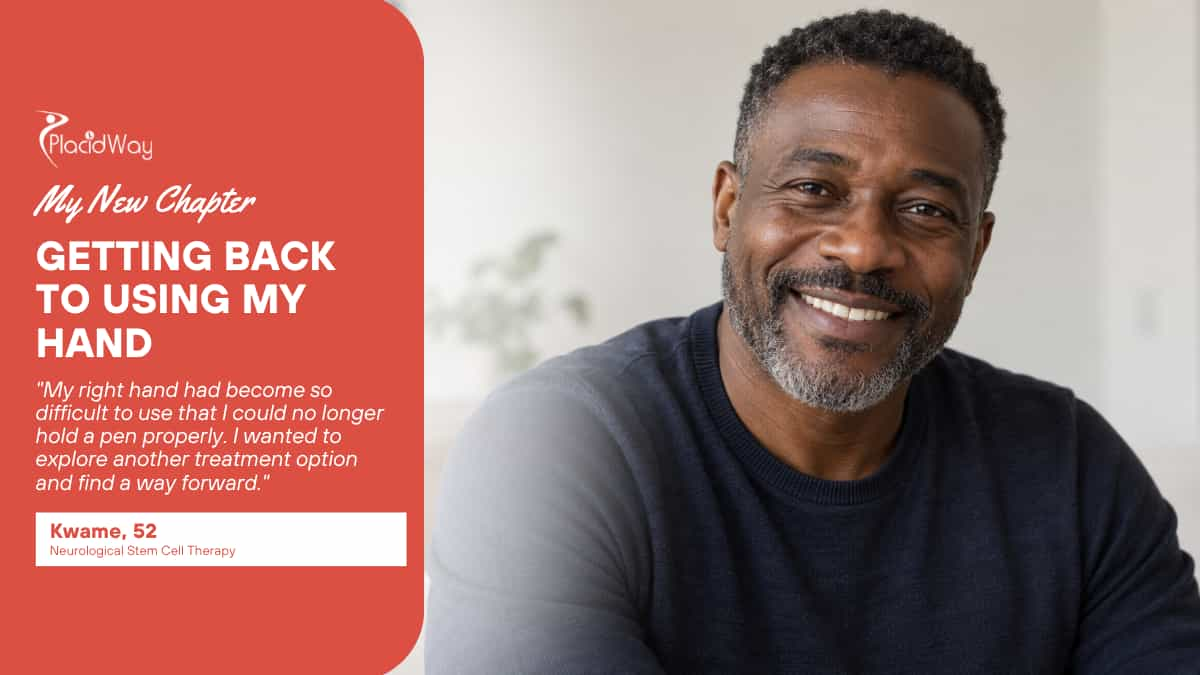
Kwame Mensah’s Right Hand Could No Longer Hold a Pen: A Ghanaian Patient’s Neurological Stem Cell Therapy in Mumbai

Publish date: Modified date: Medically reviewed by: Dr. Alejandro Fernando on Sep 14, 2026 Author: Pinki Sharma

Ghanaian Patient’s Neurological Stem Cell Therapy in Mumbai 

Patient Profile

Name: Kwame Mensah

Age: 52

Condition: Progressive neurological decline (Parkinson's Disease / Spinal Cord Injury)

Treatment: Stem Cell Therapy

Destination: Mumbai, India

Journey at a Glance

Main problems: Progressive tremor, rigidity, loss of independent mobility, and rapid functional decline threatening his career and autonomy.

Previous care: Multiple diagnostic consultations across West Africa resulting only in symptomatic management and years-long waitlists for specialized regenerative care.

Travel driver: Exhaustion of local options and the need for a defined treatment protocol to halt or slow decline.

Treatment explored: Autologous stem cell therapy targeting neuroinflammation.

Personal goal: Maintain independence, resume writing and driving, and reduce the heavy caregiving burden on his family.

You learned to type with your left hand first.

Then you stopped wearing shirts with small buttons.

You started parking closer to the office entrance.

You began delegating the physical presentation of documents to junior staff.

You quietly sold the manual transmission car.

You stopped holding your grandchild while standing up.

You accepted that dinner requires a heavier spoon.

You pretended not to notice the way people watch your right arm.

You listen politely when a colleague mentions their new fitness routine.

"Just use your other hand for now."

"Let me carry that for you."

"You just need some rest, my love."

Your physical world has quietly become smaller.

You have learned the quietest lesson of all:

You already know that the hardest part of a progressive neurological condition is not the physical loss itself, but the endless waiting in rooms that offer no answers.

The slow erosion of a fiercely independent life.

Kwame Mensah is not a real patient on our registry.

He is a composite profile built from the deeply private struggles, financial calculations, and medical dead-ends experienced by middle-income families across East and West Africa.

At 52, he works as a senior commercial banker in Lagos.

He spent thirty years building a career that required absolute precision, firm handshakes, and a commanding presence in boardrooms.

He funded his children's university tuitions, managed his extended family's disputes, and directed capital across the continent.

Now, he sits in his study watching a tremor travel from his wrist to his shoulder.

The escalation of his symptoms was not sudden.

He explained it away for a year as stress, then as poor sleep, and eventually as a trapped nerve.

Different specialists.

Same tests.

New medications.

Increased dosages.

Diminishing returns.

Standard care for progressive neurodegenerative disorders in sub-Saharan Africa typically relies on symptomatic management through dopamine agonists like levodopa or muscle relaxants like baclofen. These pharmacological interventions are prescribed to stabilize motor function and manage rigidity, but they do not alter the underlying cellular degradation of the central nervous system .

The Lagos consultant finally delivered the verdict without looking up from the file.

"We will just have to manage the symptoms as they progress."

When?

The medical system sees a demographic rather than a person.

In West Africa, the ratio of neurologists to the general population remains critically low, with current estimates suggesting there is approximately one specialist for every three million citizens in some regions .

Public diagnostic pathways are deeply fragmented, forcing families to self-fund repetitive consultations merely to confirm what the previous doctor already suspected.

But Kwame does not experience the Lagos medical system as a national statistic.

He experiences it when he cannot hold his coffee cup steady enough to drink.

He experiences it when he cannot hold his coffee cup steady enough to drink.

"Can you button this for me?"

He experiences it when his foot drags across the tiles of his own hallway.

"I dropped the keys again."

He experiences it when his wife takes over driving without asking.

"Just rest your eyes going home."

He has already tried to be intensely patient.

The assumption that patients seeking care abroad are simply impatient consumers looking for shortcuts is profoundly inaccurate.

Kwame has followed every rule.

He endured three diagnostic confirmations in Lagos and one in Accra.

He took the levodopa exactly as prescribed, tracking his brief windows of mobility on a notepad.

He paid private physiotherapists for home sessions that left him exhausted.

He quietly drank the bitter herbal remedies a well-meaning uncle brought from the village.

He inquired about local academic research trials, only to find the waitlists stretched years into the future.

He reached a quiet conclusion:

"I have done everything they asked."

"I am still getting worse."

His internal calculation slowly shifts from "Can I tolerate this?" to a much heavier reality:

His internal dialogue has fundamentally shifted.

"How much of my life am I prepared to organise around it?"

The conventional domestic option demands an unacceptable compromise.

Continuing entirely within the domestic framework means accepting that a cane will become a walker, and a walker will become a chair.

It requires his wife to transition permanently from a partner into a full-time medical caregiver.

The conventional route is not failing because local doctors lack skill; it fails because the infrastructure to halt neurological decay simply does not exist in his postal code.

He sits at the kitchen table reviewing the private physical therapy invoices.

He reached a quiet conclusion:

"We are spending a fortune just to slow down."

"But we are still moving backward."

The problem is no longer the tremor itself:

The problem is no longer the tremor itself:

It is the permanence.

He isn't searching for experimental regenerative medicine yet.

Nobody begins their journey looking to fly across the Indian Ocean.

His early midnight research was simple and localized.

Why is my hand shaking when I rest?

Nigerian neurologists specializing in movement disorders.

How long does levodopa work before it stops?

New treatments for Parkinson's disease 2024.

Stem cell therapy neurological disorders cost.

Best hospitals in India for nerve repair.

When Mumbai first appears in a WhatsApp group for families managing neurological conditions, his immediate reaction is protective skepticism.

"I am not going abroad just because it is cheaper."

That instinct is entirely correct.

A lower price should never answer a complex medical question.

Why does a specific district in India keep appearing?

Mumbai hosts dozens of specialized facilities operating under the regulatory oversight of the Indian Council of Medical Research, which mandates strict protocols for the collection and processing of cellular material .

The region has developed a highly specific clinical corridor for African patients, complete with familiar medical visa processing and established flight routes from Lagos and Nairobi.

But Kwame realizes the central premise of medical travel requires a profound mental shift.

Countries do not practice medicine.

Surgeons do, specialized hospital wings do, and dedicated clinical teams do.

The question is never whether India is good at stem cell therapy, but whether a specific physician at a named facility has a verifiable track record in treating his exact motor deficits.

Global health advisories strictly recommend that patients considering regenerative therapies abroad verify the institutional accreditation of the laboratory processing the cells, rather than relying on the clinic's marketing materials alone .

He learned a difficult truth about neurology in West Africa:

Access is just geography.

His first question was predictably about the financial burden.

An indicative cycle of stem cell treatment in Mumbai commonly ranges from USD 12,000–18,000, driven largely by the complexity of the cell expansion process, the length of inpatient neurorehabilitation, and the requirement for advanced post-procedure neuroimaging .

He compares this against the U.S. and European quotes sitting in his email inbox, which start at fifty thousand dollars before flights are even booked.

"You never buy a complex machine without reading the manual."

"What exactly am I getting?"

Twelve things the advertised price may or may not cover.

Does that figure include the initial bone marrow aspiration?
Is the laboratory expansion of the cells performed in-house or outsourced?
How many specific injections into the spinal fluid are scheduled?
Does the cost cover the necessary pre-treatment MRI scans?
Are the daily physiotherapy sessions included in the baseline package?
Will I be charged extra if my blood pressure spikes during the infusion?
Is the accommodation for my wife inside the hospital or in a nearby hotel?
Who pays for the airport transfers in a specialized vehicle?
Are my anti-tremor medications provided by the clinic during the stay?
Does the quote cover translation services if the nursing staff only speaks Hindi or Marathi?
What happens financially if the cells fail to cultivate properly in the lab?
Will I receive a detailed English-language discharge summary for my doctor in Lagos?

The advertised price is only the beginning of a much longer logistical conversation.

What does the cellular extraction process actually involve?

Autologous stem cell therapy for neurological disorders involves harvesting mesenchymal stem cells from the patient's own bone marrow or adipose tissue, expanding them in a laboratory over several days, and reinfusing them via intravenous or intrathecal methods to target neuroinflammation. The primary medical objective is not to immediately regenerate dead brain tissue, but rather to alter the inflammatory microenvironment in the central nervous system to protect surviving neurons. This approach remains under continuous clinical evaluation by global health authorities, requiring rigorous patient selection and sustained post-treatment physical therapy to yield functional improvements .

The procedure itself is highly technical, but the immediate aftermath is surprisingly mundane.

"Wait. Does that mean we stay a month?"

The parts the promotional brochures rarely put on the front page.

Regulatory bodies note that the timeline for regenerative therapies varies significantly widely across jurisdictions, and this inherent lack of standardization dictates that patients must plan for extended recovery windows far beyond the actual day of infusion .

This constraint must be factored into the absence from work before committing to a non-refundable deposit.

Possibly, depending on the severity of the neurological deficit upon arrival.

Who will manage the stairs at the guest house?

Can the local diet accommodate his existing digestive issues caused by the levodopa?

How reliable is the Wi-Fi for video calls with the family back in Nigeria?

Is the clinic equipped with backup generators for the laboratory freezers?

Will the physiotherapists push him harder than he is used to?

How long is the commute through Mumbai traffic from the hotel to the clinic?

What is the emergency protocol if he develops a fever in the middle of the night?

Are the bathrooms in the recovery suite fitted with appropriate grab bars?

Who packs his specialized orthopedic shoes for the flight?

How will he manage the ten-hour return flight if his rigidity temporarily worsens?

The brochure misses the most important detail:

You are not a tourist.

His wife isn't just coming along as a spectator.

The invisible second participant in medical travel carries a profound weight.

She will be the one holding the passports, the medical files, and the medication schedule.

She will be the one interpreting the doctor's nuanced tone when the translator summarizes a ten-minute explanation into two brief sentences.

She will be the one navigating a foreign pharmacy at dusk.

Standard travel insurance policies routinely exclude complications arising from planned medical procedures, meaning a companion must clearly understand the financial protocols for securing emergency local admission if required .

She is not just a passenger on this journey.

She is an integral component of the clinical care system.

Then comes the uncomfortable conversation about physical risk.

Any procedure involving lumbar punctures or intravenous cellular infusions carries inherent risks of central nervous system infection, immune rejection, or severe neuroinflammation .

Kwame learns to immediately close any website that uses certain phrases.

Completely safe. No risk. Guaranteed success.

True informed consent means understanding that the procedure might fail to yield any noticeable improvement, leaving the physical decline unchecked and the bank account depleted.

She finally asks the only question that matters:

What if it doesn't work?

Kwame's questions become sharper as the reality sets in.

He no longer asks if stem cell therapy is broadly effective.

He asks highly specific questions during the preliminary video consultation.

How many patients with my exact stage of progression have you treated this year?
What objective metrics do you use to measure functional improvement?
If the lumbar puncture is complicated by my spinal arthritis, what is your secondary approach?
Who is legally responsible if the harvested cells are contaminated during laboratory expansion?
Can I review the informed consent document in English before booking my flight?
How will your physical therapy team adapt to my existing fatigue levels?
Will you coordinate directly with my prescribing neurologist in Lagos?
Do you expect this therapy to halt the decline, or merely buy me a few years?
Are you tracking long-term outcomes, or just immediate post-discharge data?
What specific complication would make you cancel the infusion on the day of the procedure?

He does not want a doctor who is merely willing to perform the procedure.

He wants a doctor who is confident enough to refuse it if the clinical markers are poor.

Have I actually exhausted all my options at home?

Patients possess fundamental rights to request independent case reviews, access their full diagnostic imaging files, and seek cross-border referrals within the African Union healthcare framework before resorting to private intercontinental travel .

Before booking any flights, Kwame sits with his Lagos specialist one last time.

Are there any clinical trials opening in Nigeria within the next six months?
Is my current medication dosage truly at its maximum safe threshold?
Have we explored all surgical options like deep brain stimulation locally?
Will you support my post-treatment monitoring if I receive cellular therapy abroad?
What specific blood markers should we check before I travel?

Stem cell therapy should be compared with Kwame's real alternatives, not with a worst-case assumption about the domestic system.

The night before the decision feels heavier than the rest.

The kitchen table is covered entirely in paper.

The printed emails from the clinic coordinator. The medical visa application forms. The bank transfer authorization slips. The local MRI reports detailing his substantia nigra degradation.

"Are you sure this is the right path?"

"What else are we supposed to do?"

They realize what they are actually purchasing:

The right to try.

The intense weeks of medical research did not make them more afraid; the rigorous questioning made them highly capable of making a complex adult decision.

What Kwame actually wants isn't a medical procedure at all.

His brother asks him what he hopes to achieve by spending the money.

The expected answer is a biological explanation about neurogenesis and cellular repair.

The real answer is holding a steering wheel without thinking about it.

He wants to sign a bank draft with a steady hand.
He wants to walk through the airport without looking for the nearest chair.
He wants to stop watching his wife watch him.
Not the stem cells. Not the hospital room in Mumbai. Not the physical therapy package. Not the medical visa.

Control.

And underneath that:

Dignity.

International treatment might be the answer, but it might not be.

Do not travel if your primary motivation is simply escaping a slow local waitlist.

Do not travel if your local neurologist advises that your specific condition is unresponsive to cellular therapies.

Do not travel if you cannot afford the possibility of the procedure failing.

Do not travel if you are unwilling to manage the rigorous daily rehabilitation required afterward.

Do not travel if the clinic refuses to answer your most uncomfortable questions.

Do not travel if you are medically unstable for a long-haul flight.

If none of those constraints apply, stepping onto the plane is a reasoned, calculated risk undertaken by an informed adult.

Any of those paths can be a valid, informed decision.

The goal is not to persuade you to board a flight to Mumbai, but to ensure that exhaustion and frustration do not make the decision for you.

Where does this leave you?

Maybe you have already had the difficult conversation with your employer.

Maybe you have watched the tremor adapt to every new pill you swallow.

Maybe you are tired of doctors who view your decline as an inevitable baseline.

Maybe you are holding a folder of printed research you barely understand.

Maybe you just want someone to look at your scans and offer a proactive strategy.

You do not need to decide today.

What exactly is degrading in my nervous system?

What is the realistic upper limit of improvement I can expect?

Who is overseeing the laboratory cultivating the cells?

How will we manage the logistics of a month in India?

What is our strict financial ceiling for this endeavor?

Who will coordinate my physiotherapy when I return home?

Are we doing this for me, or to make my family feel less helpless?

You are not merely comparing prices across borders.

You are comparing paths forward.

Hope is a strategy built on hard facts.

Hope is not ignoring a diagnosis.

Hope is not believing an online advertisement without verifying the credentials.

Hope is not expecting a single infusion to reverse five years of neurological damage.

Hope is gathering enough objective information to make a choice that actually feels like yours.

You can ask the difficult questions. You can demand to speak to previous patients from your region. You can scrutinize the laboratory accreditations. You can decide to walk away if the answers are vague. You can take control of the remaining timeline.

The dialogue in your mind shifts quietly.

From "I suppose I'll just have to keep waiting."

To:

"What other informed options do I have?"

PlacidWay — Your Way to Hope.

We help families navigate the complex logistics of international medical travel, connecting you with accredited regenerative clinics so you can compare protocols, understand exact costs, and prepare the right questions. We do not provide clinical advice or recommend specific medical treatments. For families managing progressive decline, traveling abroad is not a guaranteed promise, but rather one rigorously evaluated route worth understanding.

Your Way to Hope.

Medical disclaimer

This article is entirely educational and does not recommend that any individual undertake stem cell therapy or travel abroad for medical care. Individual medical suitability and physical risk require thorough professional assessment. The reader should always consult their own primary clinician or neurologist, independently verify the current regulatory status of any overseas clinic, and obtain appropriate travel and medical complication insurance before making healthcare decisions.

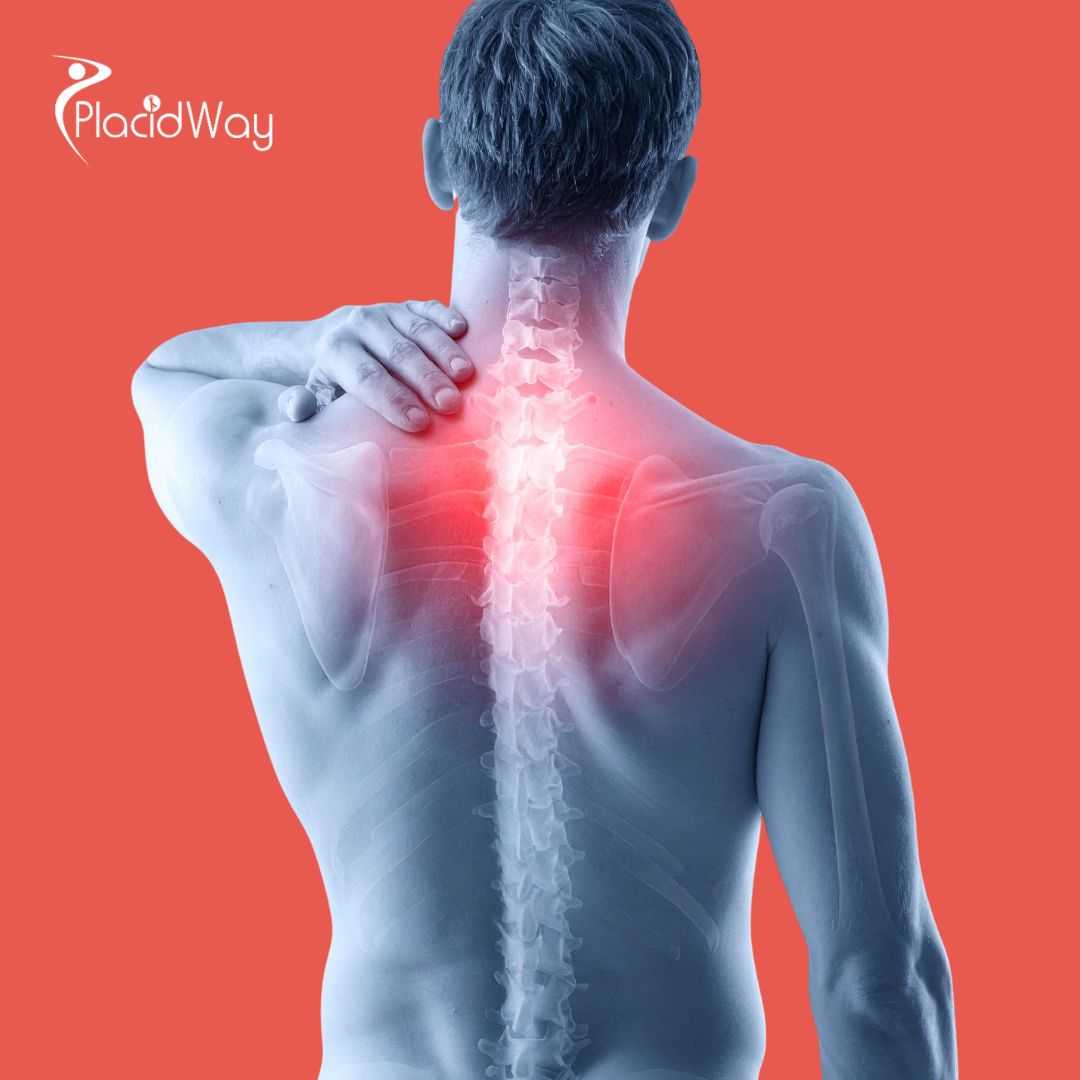
Kwame Mensah’s Right Hand Could No Longer Hold a Pen: A Ghanaian Patient’s Neurological Stem Cell Therapy in Mumbai

About Article

  • Treatment: Stem Cell Therapy
  • Country: India
  • Overview Tremor, rigidity and reduced mobility are eroding Kwame Mensah’s ability to write, drive and work independently. After symptomatic care and limited specialist access across West Africa, Mumbai becomes part of his search for neurological stem cell therapy. Evidence should be specific to his diagnosis, and any protocol must be reviewed for cell source, regulatory status, realistic outcomes, rehabilitation needs and coordination with his existing neurologist.

Trusted Medical Tourism Platform Since 2007

60+
Countries
2k+
Clinics
19.5k+
Reviews
2.5k+
Qualified Doctors
1.1M+
Patients Served Since 2007