
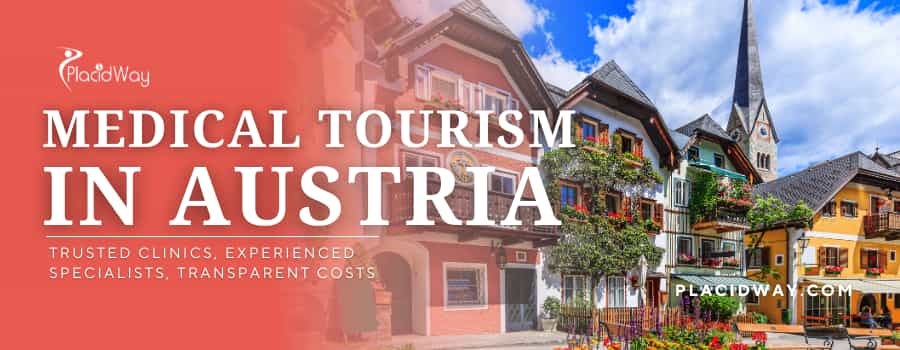
Evaluating Medical Tourism in Austria: Finding the Right Path for You
A construction executive in Canada sits at his kitchen table, staring at a two-year waitlist for orthopedic surgery. He knows his mobility is declining daily, and the local timeline simply does not work for his career or his family. He is looking across borders for immediate, highly precise surgical intervention.
A family in the Middle East gathers around a laptop, carefully reviewing oncology treatment protocols late into the night. They are searching for advanced robotic surgery options that their regional hospitals cannot yet provide. The stakes are incredibly high, and their decision window is heavily restricted.
A professional athlete in the UK reviews a local discharge plan that offers only basic physical therapy twice a week. She requires intensive, daily rehabilitation to return to peak performance safely. She is researching alpine facilities abroad that treat physical recovery as a full-time, multidisciplinary commitment.
All three of these people are exploring medical tourism in Austria. However, their actual journeys, practical decisions, and physical experiences will differ significantly.
"How do I evaluate which Austrian specialist and facility realistically aligns with my exact diagnosis, timeline, and travel constraints?"
Understanding Your True Motivation for Traveling for Care
Reframing your mindset is the most crucial first step in any medical journey. You are not simply buying a flight or booking a room. You are transferring your physical wellbeing into an unfamiliar healthcare system.
Maybe you are facing a local waitlist that stretches far beyond what your physical condition can comfortably endure. The daily pain has shifted from a mere inconvenience to a strict barrier preventing you from living normally.
Perhaps you have received a complex diagnosis requiring advanced robotic surgery that is unavailable in your region. You need precision technology guided by highly experienced specialists who perform these procedures weekly.
Maybe you are exploring stem cell therapy under strict European regulatory frameworks. You want to ensure the clinic operates with transparent safety protocols rather than unregulated, sweeping promises.
Perhaps your previous treatments have left you needing extensive, specialized rehabilitation. You require a dedicated environment where physical recovery is the primary focus of every single day.
Maybe you are managing an oncology treatment plan that demands immediate access to multidisciplinary tumor boards. You are seeking a facility where oncologists, surgeons, and radiologists collaborate seamlessly under one roof.
Which sounds most like you?
"I need a highly specific robotic surgery, and I need a surgeon who performs it regularly."
This reader is prioritizing verified capability and technical expertise over proximity or convenience. They are likely willing to manage complex travel logistics for access to sub-specialized surgical experience.
"I cannot wait two years to walk without pain, even if it means paying out of pocket."
This reader is balancing the high upfront cost of private international care against the long-term deterioration caused by waiting. Speed of access and immediate functional outcomes are their primary driving factors.
"We need a comprehensive oncology plan where every specialist is in the same building."
This reader is prioritizing standardization, seamless communication, and integrated care over fragmented local options. They are looking to reduce the heavy administrative burden of coordinating multiple different doctors themselves.
"I want a rehabilitation environment that takes me away from daily stress so I can just focus on healing."
This reader values the recovery environment just as much as the clinical intervention. They are prioritizing personalized, ongoing support and are willing to invest significant time away from home.
This is why choosing medical tourism in Austria should begin with your situation, not a generic ranking, slogan, or price comparison.
One Destination. Several Different Real-World Paths.
Austria is heavily regulated by bodies such as the Austrian Federal Ministry of Social Affairs, Health, Care and Consumer Protection. However, healthcare delivery here involves genuinely different pathways, environments, and experience models. A private boutique clinic operates very differently from a public university hospital with a private international wing.
Official guidance notes that medical standards remain consistently high across the country, but administrative workflows vary greatly. Private clinics often provide streamlined concierge services and faster admission for international patients. Larger university hospitals may offer broader multidisciplinary support but require navigating more complex administrative processes.
Capability, quality, timing, and support can differ substantially depending on the exact facility you select. A clinic specializing in orthopedic surgery will have entirely different follow-up protocols than a center focused on stem cell therapy. These infrastructural differences dictate how your daily care is managed, who translates your documents, and how emergencies are handled.
This is a planning consideration, not a guarantee of a flawless experience. Moving between healthcare systems always introduces logistical friction regarding medical records and aftercare.
Here is what those differences can feel like in real life.
Orthopedic Surgery: When Mobility Demands Immediate Attention
Consider a patient who has spent months modifying their entire life around severe joint pain. They decide to fly into Vienna for a private knee replacement, expecting a swift procedure and premium care. The clinic provides rapid scheduling, advanced implant technology, and English-speaking surgical teams.
This option attracts individuals who view waiting as a higher risk than traveling for surgery. It solves the problem of local bottlenecks and creates an expectation of immediate, personalized attention. Austrian orthopedic centers are globally recognized for precision engineering and rigorous post-operative infection control.
However, the reality of joint replacement involves significant physical limitations during the immediate days following surgery. Boarding a long-haul flight with a brand-new artificial joint requires meticulous planning, medical clearance, and specific seating arrangements. Deep vein thrombosis (DVT) is a serious risk that requires strict adherence to medication and mobility guidelines during transit.
Before you decide, ask:
- How many days must I remain in Austria for clinical observation before I am legally cleared to fly?
- Who handles the immediate coordination if a post-surgical complication arises before my flight?
- Does my local orthopedic surgeon agree to take over my ongoing physical therapy and monitoring upon my return?
- What specific mobility aids will I need during airport transfers, and who provides them?
- Are my prescribed Austrian pain medications legally permitted through customs in my home country?
Same procedure. Completely different recovery environments.
Oncology Treatment: When Complexity Requires Multidisciplinary Teams
A family lands in Austria carrying translated medical files and heavy emotional burdens. They are seeking a specialized tumor board that can deploy advanced robotic surgery and targeted therapies simultaneously. They expect a highly coordinated environment where decisions are made swiftly by a panel of leading experts.
This route attracts patients whose local systems lack the integrated technology required for complex cancer care. It provides hope through access to cutting-edge diagnostics and precision interventions. Austrian university hospitals are heavily embedded in European research networks, offering protocols that may be restricted elsewhere.
Yet, international oncology care is rarely a single, swift event. Treatment often requires prolonged stays, fluctuating schedules, and periods of severe physical exhaustion for the patient. Managing visas, accommodation, and remote work responsibilities while supporting a severely ill family member is a massive logistical undertaking.
What matters here isn’t simply the hospital architecture.
- Will I have a dedicated, English-speaking patient coordinator available outside of standard clinical hours?
- How are my treatment schedules adjusted if my blood work requires a delay in therapy?
- If my treatment extends by several weeks, how easily can I extend my medical visa?
- Who is responsible for translating the final, highly technical discharge summary for my local oncologist?
- What is the exact escalation pathway if the patient experiences acute distress in the middle of the night?
Advanced technology can make the treatment more precise. It cannot replace the necessity of clear communication across time zones.
Rehabilitation: When Healing Requires a Dedicated Environment
Think of someone recovering from severe trauma who transfers directly to an alpine rehabilitation center. They swap sterile hospital rooms for specialized facilities designed to rebuild physical strength and neurological function. The daily schedule is filled with intense physical therapy, robotic-assisted movement training, and controlled rest.
This option appeals to those who recognize that surgery is only the first fraction of true recovery. It solves the problem of fragmented outpatient therapy by providing an immersive, full-time healing environment. Austria’s natural landscape and historical spa culture have deeply influenced its modern, high-tech approach to intensive rehabilitation.
However, intensive rehabilitation is exhausting, unglamorous work that requires immense mental resilience. Progress is often slow, and language barriers can make complex psychological support challenging. The financial commitment is substantial, as these stays often last for several weeks or even months without guarantee of full functional return.
Before committing to a long-term stay, ask:
- Are the daily physical therapists fully fluent in my language, or is communication managed through a translator?
- What exact robotic rehabilitation technologies will be used for my specific condition?
- If my progress stalls, how is the financial agreement adjusted?
- Can my primary caregiver stay in the same room, and are their meals included in the daily rate?
- What happens if I require acute medical readmission to a traditional hospital during my rehabilitation?
The most scenic location is not always the best option. The best option is the one with the most capable, communicative multidisciplinary team.
The Person Beside You Has a Role Too
There is often another person missing from guides like this. The companion, family member, or caregiver carrying the bags and managing the paperwork is an active participant. Their presence fundamentally changes the safety and logistics of the medical journey.
They are often the ones tracking medication schedules while the patient sleeps. They navigate foreign pharmacies, arrange specialized transport, and process complex medical information during highly stressful meetings. They are the frontline advocates when something feels wrong or communication breaks down.
A responsible provider must support companions just as clearly as they support patients. Companions need to know exactly who to call in an emergency and how to access secure hospital grounds after hours. They need clear boundaries to maintain their own physical and mental wellbeing during an exhausting process.
Better decisions consider everyone affected, not only the person making the purchase or receiving the treatment. Healing is rarely a solo endeavor.
Shifting From "Who is the Best?" to "Who is Right for Me?"
It is entirely natural to search for the "best hospital in Austria." However, that broad question fails to capture the complexity of international medical care. A facility might be world-renowned for oncology but poorly equipped to manage the travel logistics of international orthopedic patients.
A simple answer is misleading because healthcare capability is highly specific to the physician, not just the building. Instead of looking for a universal ranking, you must evaluate how a facility aligns with your specific risk profile. Ask targeted research questions that reveal operational realities.
- Does this surgeon have verifiable experience with my exact sub-diagnosis?
- How many international patients does this specific department process annually?
- Is the promised stem cell therapy actively approved by Austrian regulatory bodies, or is it an experimental trial?
- Does the facility use proprietary software that will lock my local doctor out of my digital records?
- Who legally owns the liability if a surgical revision is required?
Different patients require completely different answers. A local Austrian resident needs a good doctor; an international patient needs a good doctor supported by a flawless logistical framework.
Moving Beyond Glossy Brochures
Attractive marketing often masks a lack of independent accountability. Trust must come from identifiable responsibility and verifiable evidence.
"We offer world-class, premium treatments with guaranteed success rates."
Instead of accepting this, ask: "Where is this clinic’s current quality assurance certificate from ÖQMed, and is the attending specialist registered with the Austrian Medical Chamber (Ärztekammer)?" You must verify the credentials of the individual doctor, not just rely on the hospital's historical reputation.
Before you commit, try the 4-Point Austrian Healthcare Reality Test
- The Friday Evening Test: If I experience severe pain at 8 PM on a Friday, do I call my surgeon directly, or am I routed to a general public emergency room?
- The Local Handoff Test: Will my hometown physician accept the Austrian discharge summary, or will they refuse to provide aftercare due to liability concerns?
- The Language Barrier Test: Can the nursing staff explain my pain medication dosage in my native language, or only the senior doctor?
- The Flight Clearance Test: Who makes the final legal determination that I am safe to board a commercial aircraft, and what happens if they say no?
That is the medical tourism reality test.
Show the Topic Through Different Reader Eyes
"I am looking for experimental stem cell therapy to treat a chronic joint condition."
Best research direction: Investigate only clinics that transparently list their compliance with the Austrian Federal Office for Safety in Health (BASG).
Key factor to investigate: Whether the treatment is classified as standard care or an unproven clinical trial.
Warning: Do not assume that a high price or a luxurious clinic interior equals scientific validity.
"I am an independent senior citizen traveling alone for a hip replacement."
Best research direction: Facilities that offer entirely in-house recovery, meaning you do not have to arrange separate hotel transfers post-surgery.
Key factor to investigate: The availability of full-time, dedicated nursing assistance for daily tasks like dressing and showering.
Warning: Do not underestimate the severe physical difficulty of navigating large international airports alone during your return journey.
"I am coordinating oncology care for my spouse and need to work remotely."
Best research direction: University hospital international departments that provide dedicated medical concierge services.
Key factor to investigate: The exact geographic distance between the treatment center, your long-term accommodation, and essential amenities.
Warning: Do not rely on ad-hoc translation; insist on receiving all scheduling and medical updates in writing in your language.
"I am seeking intensive robotic rehabilitation after a neurological injury."
Best research direction: Specialized inpatient rehab centers in the Austrian regions known for long-term recovery infrastructure.
Key factor to investigate: The daily ratio of active, machine-assisted therapy hours versus passive resting time.
Warning: Do not assume that an initial deposit covers unexpected extensions if your recovery pace is slower than projected.
Same destination. Four completely different research journeys.
Looking Beyond the Initial Treatment Estimate
Eventually, almost everybody asks.
It is entirely reasonable to want a clear price for a medical procedure before booking flights. However, focusing solely on the surgical quote obscures the financial reality of international healthcare. A low initial estimate is dangerous if it excludes essential post-operative care.
What will the whole journey cost?
- The upfront: Pre-surgical consultations and remote medical file reviews.
- The procedure: Surgeon fees, anesthesiologist fees, and operating room charges.
- The hardware: Specific costs for orthopedic implants or specialized robotic disposables.
- The facility: Daily inpatient room rates, which vary wildly between private and semi-private rooms.
- The logistics: Medical visas, medical translation services, and premium flight classes required for physical comfort.
- The companion: Accommodation, daily meals, and transport for the person supporting you.
- The unexpected: Extra days in the hospital due to minor complications or delayed flight clearance.
- The return: Specialized airport transfers, local physical therapy upon returning home, and remote follow-up consultations.
The cheapest provider may not create the cheapest total experience.
What Medical Tourism Actually Feels Like
Waiting for a delayed flight while holding a thick folder of translated medical scans.
The sterile, unfamiliar smell of a foreign clinic lobby.
Signing consent forms in an office that overlooks snow-capped mountains.
Waking up from anesthesia and momentarily forgetting which country you are in.
The profound relief of a successful robotic surgery, tempered by the sharp pain of early recovery.
Relying on a translation app to ask a night nurse for an extra blanket.
Watching your caregiver quietly handle billing disputes at the admission desk.
The slow, careful steps onto a commercial airplane, hoping the artificial joint triggers no alarms.
That is still medical care. Just a very different kind.
The Questions That Emerge After the Flight
"I wish I’d known that Austrian pharmacies cannot legally fill the prescription written by my hometown doctor."
"I wish I’d checked if the private clinic had an intensive care unit on-site for sudden complications."
"I wish we’d planned for the sheer exhaustion of navigating a massive airport in a wheelchair."
"I wish I’d asked for my complete medical file on a physical USB drive before I checked out."
"I wish I’d known that my local health insurance would refuse to cover the physical therapy needed after my foreign surgery."
"I wish we’d verified exactly which surgeon was operating, rather than just trusting the clinic's brand name."
"I wish I’d planned for how isolating recovery can feel when you are thousands of miles from home."
"Enjoy a stress-free medical vacation in the heart of Europe."
Real-life questions provide better guidance than promotional messages because they address the friction points that actually disrupt recovery. A vacation is stress-free; surgery is always a serious medical event requiring rigorous preparation.
Understanding Your Personal Fit and Boundaries
Medical tourism in Austria may be worth investigating when:
- You require a highly specific procedure, such as advanced robotic oncology surgery, unavailable locally.
- You have the financial capacity to absorb unexpected travel delays or extended hospital stays.
- You are accompanied by a capable, resilient companion who can manage complex logistics.
- Your local physician supports your decision and is willing to manage your long-term follow-up care.
- You have independently verified the credentials and regulatory compliance of the Austrian provider.
Who Should Think Especially Carefully?
Medical tourism in Austria—or any comparable option—may make less sense when:
- Your condition is highly unstable, making long-haul air travel medically dangerous.
- You are stretching your budget to afford the absolute cheapest quote, leaving no emergency buffer.
- The clinic refuses to provide written communication or transparent doctor credentials.
- You are seeking experimental stem cell therapies that lack clear regulatory approval.
- You will have zero clinical support or physical therapy options once you return home.
- You are traveling completely alone for a major invasive surgery.
"I'm not comfortable proceeding."
A responsible decision process should make it easier to recognize when stopping is the safest choice.
What brings you here?
I am on an unbearable waitlist for joint surgery.
Focus on private orthopedic clinics, but demand exact timelines for post-operative flight clearance before booking.
I need advanced oncology treatments not available in my country.
Research university hospital international wings, prioritizing facilities with established, multidisciplinary tumor boards.
I require intensive, long-term physical recovery.
Explore specialized alpine rehabilitation centers, but verify language support for daily physical therapy sessions.
I am seeking specific robotic surgical interventions.
Request data on the specific surgeon’s annual volume for that exact robotic procedure, not just the hospital's overall statistics.
I am looking into regenerative treatments.
Cross-reference the clinic's claims with the Austrian Federal Office for Safety in Health to ensure regulatory compliance.
That is not simply a destination guide. It is a decision environment.
Navigating Your Healthcare Decision
Maybe you will decide the logistical burden of flying to Vienna is simply too high, choosing to navigate the waitlist at home instead. You realize that recovering in your own bed surrounded by local support outweighs the speed of a foreign clinic.
Perhaps you and your family will sit down, map out the costs, and determine that the advanced oncology care in Austria is your best available path forward. You prepare the medical visas, organize the translated documents, and brace for the journey.
Maybe you are still uncertain, balancing the promise of state-of-the-art robotic surgery against the reality of navigating an unfamiliar healthcare system. You decide to request a remote consultation first, testing the communication before committing to travel.
Medical care abroad cannot be reduced to simple promises of saving money, instantly transforming your life, or finding the undisputed "best" option. It is a complex reality involving individual risk, extensive verification, and long-term consequences.
The best medical journey is not the one with the most luxurious hospital room.
It is the one where the right clinical expertise, the right verifiable provider, the right logistical support, and a realistic path to safe follow-up care can come together for your particular situation.
"Where is healthcare in Austria easiest and fastest?"
"What is the next informed step that realistically fits my situation?"
Your Way to Hope
Healthcare decisions are rarely simple, especially when crossing borders. At PlacidWay, we understand that beneath every medical inquiry is a person seeking clarity, healing, and a path forward.
Maybe medical tourism is the right choice for your family. Maybe it isn’t. Our goal is not to push a procedure, but to help you gather the verified information necessary to make a truly informed choice.
Are you ready to explore your options with practical support and realistic expectations?
Explore Your Healthcare OptionsDisclaimer: This content is for informational purposes only and does not constitute medical, legal, or financial advice. Medical tourism involves inherent risks, including travel complications and variations in care standards. Always consult with a qualified local healthcare professional before making international treatment decisions, and independently verify all provider accreditations, legal liabilities, and regulatory compliance.
References
- Austrian Healthcare System Overview – Federal Ministry of Social Affairs, Health, Care and Consumer Protection
- Medical Doctor Registry and Verification – Austrian Medical Chamber (Österreichische Ärztekammer)
- Quality Assurance in Medical Care – ÖQMed (Österreichische Gesellschaft für Qualitätssicherung in der Medizin)
- Regulations on Clinical Trials and Advanced Therapies – Federal Office for Safety in Health (BASG)
- Patient Safety and Travel Risks for Medical Tourism – Centers for Disease Control and Prevention (CDC)
.png)


-(3)-(1).png)























Share this listing