

A total knee replacement surgery in Tijuana, Mexico with Dra. Brenda Delangel starts from $11,200 USD and is intended for appropriately selected patients whose knee damage causes significant pain, stiffness, or difficulty with daily activities. The procedure replaces damaged joint surfaces with artificial components to improve function and reduce pain when less invasive treatment has not provided enough relief.
International patients should generally plan a recovery buffer of about 10–14 days or longer in the destination, although the actual hospital stay, local recovery period, eligibility, travel clearance, and final price must be determined after medical assessment. Think of the package price as the starting point, the more important number is the fully itemized quote after your surgeon has reviewed your knee and medical history.
Key Insights for Knee Replacement Patients Traveling to Tijuana
- Starting package price: $11,200 USD. Final pricing can change after imaging, implant selection, medical testing, and individual surgical planning.
- Credential check: Before booking, request the surgeon's current Mexican professional license or cédula profesional and applicable orthopedic board-certification information, such as certification through the Mexican Council of Orthopedics and Traumatology (CMOT).
- Facility verification: Ask where surgery will be performed and verify the hospital's current operating license, infection-control standards, emergency capabilities, and any certification it claims, including Consejo de Salubridad General certification where applicable.
- Typical candidates: Patients generally considered for total knee replacement have substantial joint damage, persistent symptoms, and reduced function despite appropriate nonsurgical treatment.
- Recovery starts early: Walking assistance and rehabilitation often begin soon after surgery, but progress varies significantly between patients.
- Plan the return trip carefully: Knee surgery and prolonged sitting can both contribute to blood-clot risk. Do not book an inflexible flight home until the treating physician has discussed your recovery and cleared you for travel.
How Much Does Total Knee Replacement in Tijuana Cost?
The starting price provided for this Tijuana knee replacement package is $11,200 USD. Your final quote should identify the implant, surgeon and anesthesia charges, hospital services, postoperative care, and any services that can generate additional fees.
Knee Replacement Cost Comparison With International Markets
The knee replacement cost comparison below is for context rather than a like-for-like quotation. International figures are 2022 median inpatient claims costs reported in the 2024 iFHP/HCCI comparison study, while the Tijuana figure is the starting package amount supplied for this treatment. Insurance systems, implant costs, hospital billing, physician fees, and included services differ considerably by country.
| Country / Market | Cost Benchmark | How to Read the Figure |
|---|---|---|
| Tijuana, Mexico | $11,200 starting from | Package starting amount; final written quote depends on assessment and confirmed inclusions. |
| United States | $26,340 | 2022 median inpatient claims benchmark, not a current cash-price quote. |
| United Kingdom | $15,216 | 2022 median inpatient claims benchmark converted to USD in the study. |
| Australia | $13,609 | 2022 median inpatient claims benchmark; coverage arrangements vary. |
Estimated Package Cost Breakdown to Confirm Before Booking
A provider-specific itemized allocation was not supplied, so individual charges should not be invented. Ask for a written breakdown covering each item below before paying a deposit.
| Procedure Item | Estimated Cost | What to Confirm |
|---|---|---|
| Preoperative orthopedic assessment | Confirm in quote | Medical review, examination and surgical planning. |
| Surgeon's professional fee | Confirm in quote | Primary surgeon and assistant fees, if applicable. |
| Knee prosthesis / implant | Confirm in quote | Brand, model, fixation method and implant cost. |
| Anesthesia services | Confirm in quote | Anesthesiologist, medicines and monitoring. |
| Operating room and hospital services | Confirm in quote | Facility, nursing, operating room and routine supplies. |
| Routine postoperative medicines | Confirm in quote | Pain control and other prescribed hospital medicines. |
| Initial rehabilitation | Confirm in quote | Number of physiotherapy sessions included, if any. |
| Total Starting Package | $11,200 USD | Subject to medical assessment and written confirmation. |
What Is Included in the Knee Replacement Package?
Only the overall starting price has been provided; a verified inclusion list was not. Before booking, request written confirmation showing whether the following services are included rather than assuming they are part of the $11,200 amount.
- Orthopedic surgeon and surgical assistant fees
- Anesthesiologist and routine anesthesia medicines
- Total knee prosthesis and implant components
- Operating room and hospital facility charges
- Routine nursing care during admission
- Standard preoperative laboratory testing
- Postoperative X-rays when clinically required
- Routine inpatient medicines and dressings
- Walking aid such as crutches or walker, if provided
- Initial physiotherapy or rehabilitation sessions
- Postoperative orthopedic review before travel
What Expenses May Be Outside the Knee Replacement Price?
Exclusions can differ between providers. Ask specifically about these common additional expenses:
- International or domestic airfare
- Hotel or extended accommodation outside hospital admission
- Meals, personal expenses and companion costs
- Passport, visa or border-related expenses
- Airport or cross-border transportation unless specifically included
- Tests requested because of previously unknown medical conditions
- Specialist consultations outside the standard orthopedic pathway
- Additional hospital days beyond the agreed package
- Treatment of unexpected complications or readmission
- Extended physiotherapy after leaving Mexico
- Revision surgery or future implant-related procedures
Who May Be Suitable for Total Knee Replacement in Tijuana?
Knee replacement is generally considered when knee damage substantially affects mobility or quality of life and reasonable nonsurgical options have not provided enough relief. Age alone does not determine eligibility; the surgeon evaluates your symptoms, imaging, general health, expectations, and ability to participate in rehabilitation.
- Persistent knee pain or stiffness that limits walking, stairs, work, sleep, or daily activities
- Advanced osteoarthritis or another condition causing significant joint destruction
- Symptoms that continue despite appropriate medication, exercise, physiotherapy, injections, or activity modification
- Knee deformity or substantial loss of movement associated with joint damage
- Medical fitness for anesthesia and major orthopedic surgery
- Ability to follow rehabilitation, wound-care and blood-clot-prevention instructions
What Medical Records Are Needed Before Knee Replacement?
Sending complete records early can help the surgeon decide whether an in-person assessment is appropriate and identify tests that may be needed before travel.
- Recent standing knee X-rays, including both knees when available
- MRI or CT images if previously performed
- Orthopedic consultation notes and diagnosis
- Previous knee surgery or arthroscopy reports
- Current medication and supplement list
- Medication, latex and other allergy information
- Relevant medical history, including heart, lung, kidney or clotting conditions
- Recent laboratory reports if available
- ECG, cardiology assessment or medical clearance when clinically indicated
- History of previous blood clots, infections or anesthesia complications
How Is Total Knee Replacement Surgery Performed?
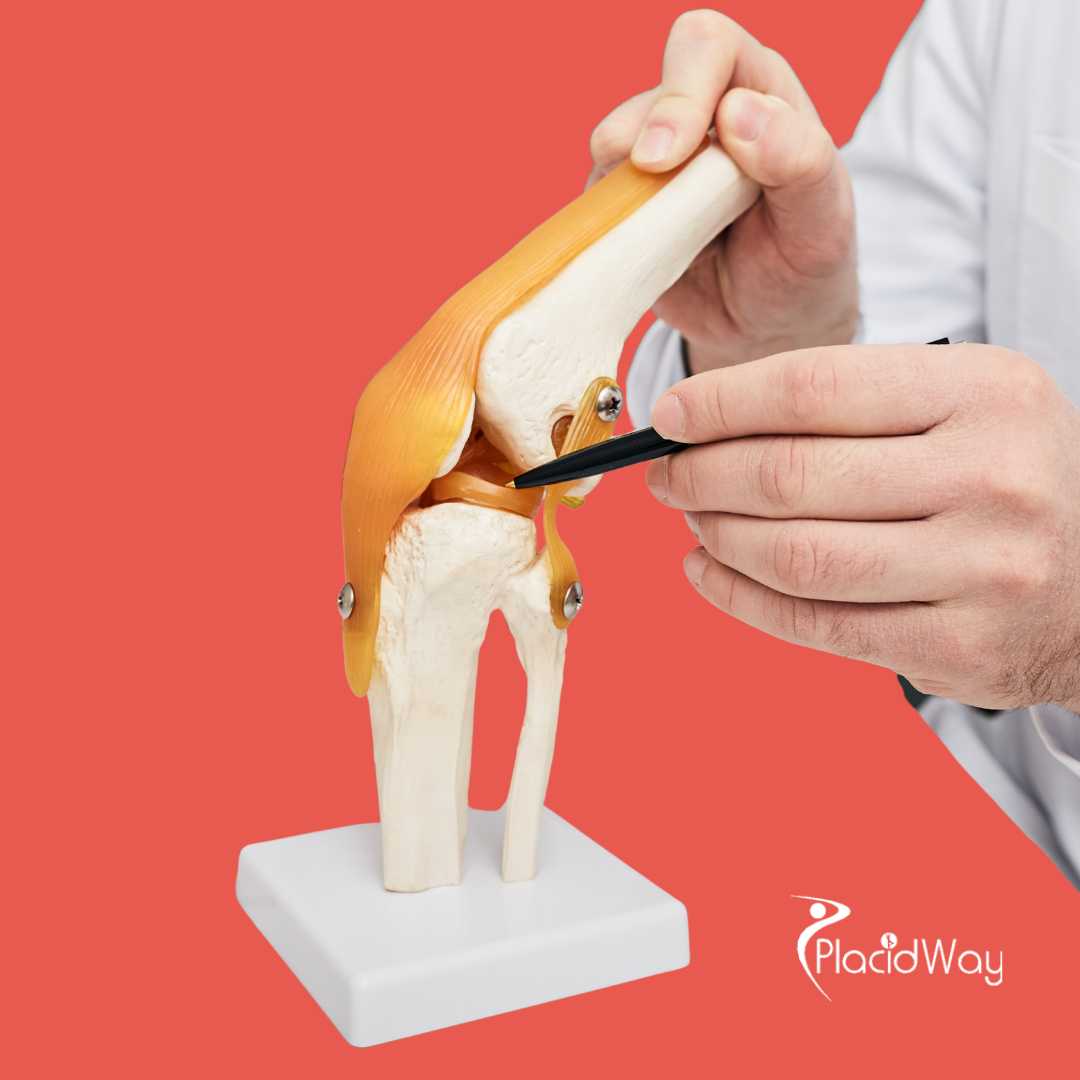
Total knee replacement does not usually mean replacing the entire knee with one mechanical joint. Instead, the surgeon removes damaged surfaces at the ends of the thighbone and shinbone and fits carefully sized artificial components, usually with a durable plastic spacer between them.
- Final assessment: Your surgeon reviews imaging, health history, medications and examination findings and confirms the surgical plan.
- Anesthesia: The anesthesia team chooses an appropriate technique based on your health and planned operation.
- Joint exposure: An incision is made over the knee so the damaged joint surfaces can be safely accessed.
- Bone preparation: Damaged cartilage and small amounts of underlying bone are removed using measured surgical cuts.
- Implant placement: Artificial components are positioned on the prepared bone surfaces, and a plastic spacer helps create smooth movement between the components.
- Alignment and movement check: The surgeon evaluates stability, alignment and range of motion before closing the incision.
- Recovery: You are monitored after anesthesia, and rehabilitation begins according to your clinical condition.
Total Knee Replacement Treatment Timeline for International Patients
2–4 weeks before travel: Send records and imaging, discuss medications, medical conditions, implant options, estimated charges, and postoperative plans.
1–2 days before surgery: Attend an in-person assessment and complete any required examination, blood tests, imaging, anesthesia review or medical clearance.
Surgery day: The knee replacement is performed, followed by monitoring and pain management.
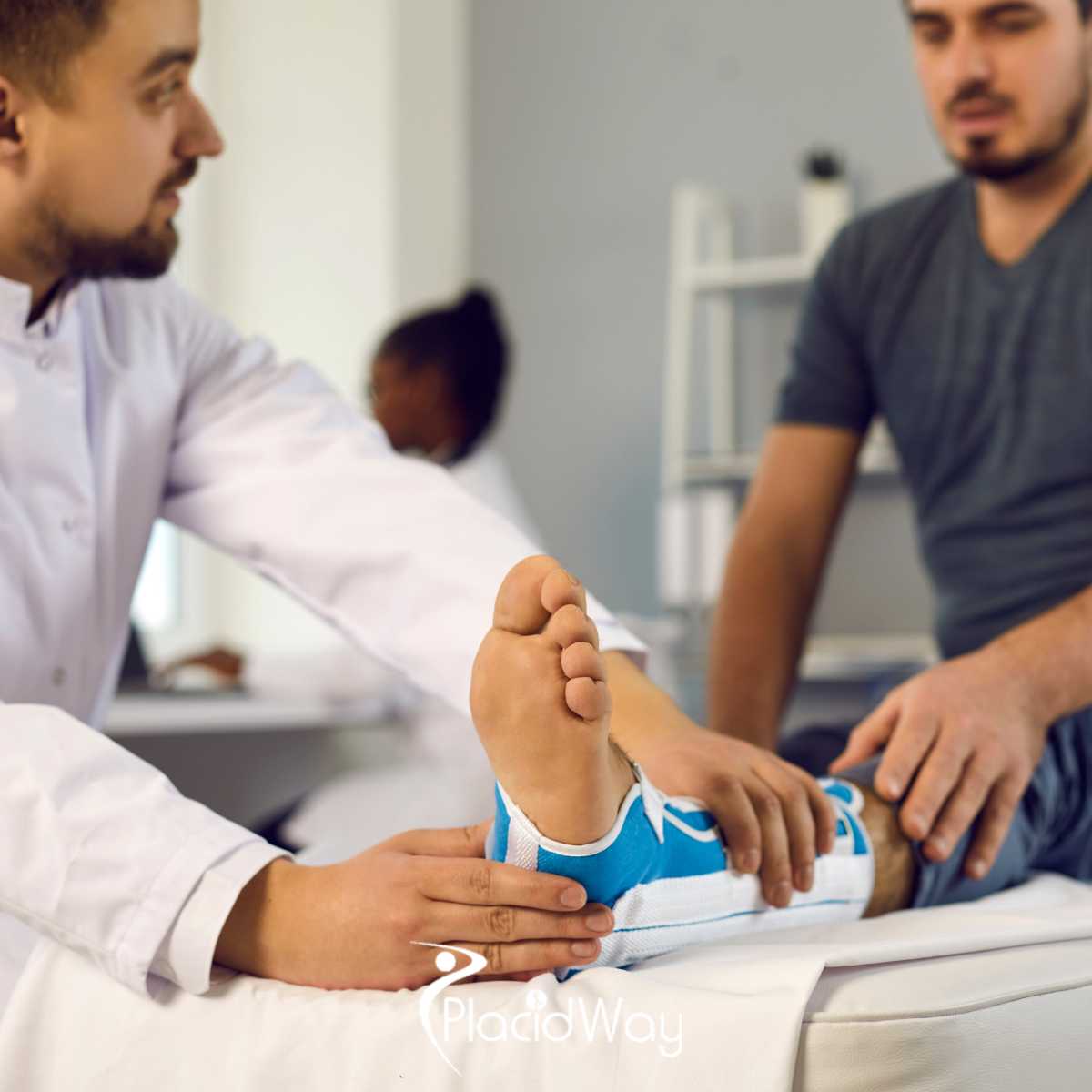
First 1–2 postoperative days: Many patients begin assisted standing, walking and basic rehabilitation while the clinical team monitors the wound and circulation.
Following days: Rehabilitation focuses on safe mobility, knee movement, exercises, swelling control and preparation for discharge.
Before returning home: The surgeon reviews the incision, mobility, medication plan and blood-clot precautions and decides whether further local recovery is needed before travel.
How Long Should You Stay in Tijuana After Knee Replacement?
For international planning, allowing roughly 10–14 days or longer in the destination can provide a practical recovery buffer, but this is not a universal medical clearance rule. Your surgeon may recommend a shorter or substantially longer stay depending on wound healing, mobility, clot risk, other medical conditions and travel distance.
- Do not choose your return flight solely around the advertised package duration.
- Use flexible or changeable travel arrangements where possible.
- Ask who will manage postoperative problems after you return home.
- Long-distance travelers should discuss DVT prevention and mobility during travel with the treating doctor.
- Travel clearance should come from the treating physician after reviewing your actual recovery.
Recovery and Rehabilitation After Total Knee Replacement
First 24–48 Hours
The clinical team focuses on pain control, wound monitoring, circulation and safe movement. Assisted standing and walking may begin early when medically appropriate.
First Two Weeks
Swelling, bruising, fatigue and stiffness are common during early recovery. Exercises and physiotherapy focus on movement, muscle activation and safe use of a walker or other support.
Weeks 3–6
Many patients gradually become more independent with routine activities. Progress depends on preoperative health, pain control, muscle strength, wound healing and adherence to rehabilitation.
Following Months
Strength, balance and comfortable movement often continue improving for months rather than days. Your surgeon and physical therapist should guide the timing of driving, work, exercise and higher-impact activities.
What Are the Risks of Total Knee Replacement?
Every major operation carries risks, and this list is not exhaustive. Your orthopedic surgeon and anesthesia team should explain how your age, health conditions, medications and travel plans affect your individual risk.
- Wound or deeper joint infection
- Deep vein thrombosis (DVT) or pulmonary embolism
- Bleeding or need for additional treatment
- Knee stiffness or limited range of movement
- Persistent or new pain
- Nerve or blood-vessel injury
- Anesthesia-related complications
- Instability or problems with implant positioning
- Implant loosening or wear over time
- Fracture around the implant
- Need for additional or revision surgery
Seek urgent medical attention for symptoms your care team identifies as warning signs, such as increasing wound drainage, worsening redness, severe unexplained leg swelling, chest pain, sudden shortness of breath, or other rapidly worsening symptoms.
What Results Can You Expect After Knee Replacement?
The main goals are usually to reduce arthritis-related pain, improve useful knee movement and help you return to everyday activities more comfortably. Results vary, and an artificial knee should not automatically be expected to feel identical to a healthy natural knee.
- Pain during routine daily activities may decrease substantially.
- Walking and functional mobility may become easier as rehabilitation progresses.
- Knee stiffness may improve, although final range of motion varies.
- Muscle strength typically requires continued rehabilitation after surgery.
- Some kneeling, high-impact sports or demanding activities may remain uncomfortable or unsuitable.
- Long-term results depend on implant factors, body weight, activity, health, rehabilitation and future joint problems.
Frequently Asked Questions About Knee Replacement in Tijuana
1. Is the $11,200 knee replacement price final?
No. It is a starting amount. Your final quote can change after the surgeon reviews your imaging, health history, implant requirements, laboratory testing and any additional medical needs.
2. How do I know whether I really need a total knee replacement?
The decision should be based on symptoms, examination, imaging, functional limitations and response to previous treatment. An orthopedic surgeon should also discuss reasonable alternatives before surgery.
3. Which knee implant will be used?
Ask for the implant manufacturer, model, fixation method and whether the quoted price changes with implant selection. Keep the implant documentation for your future medical records.
4. How many nights will I stay in the hospital?
Hospital duration varies according to the surgical pathway and your recovery. Discharge should be based on medical stability, pain control, mobility and the surgeon's judgment rather than a fixed tourism itinerary.
5. When can I walk after surgery?
Assisted movement often starts early when clinically safe. Initially you may need a walker or other support, and your physical therapist will progress activity based on strength and stability.
6. When can I fly home after knee replacement in Mexico?
There is no single safe flying date for every patient. Major orthopedic surgery and prolonged sitting both affect blood-clot risk, so your surgeon should assess wound healing, mobility and personal risk before clearing you for air travel.
7. Should someone travel with me?
A companion can be useful during early recovery because luggage, transfers, bathing, medication schedules and mobility can be harder immediately after surgery. Discuss your level of assistance with the care team.
8. What happens if I develop a complication after returning home?
Ask for a written follow-up and emergency plan before surgery. Know whom to contact in Mexico, what records will be provided, and which orthopedic or emergency service will care for you at home if a problem develops.
9. Can I choose knee replacement based mainly on price?
Price is only one part of the decision. Compare surgeon credentials, hospital capabilities, implant information, infection-control practices, complication management, rehabilitation, follow-up arrangements and the exact written inclusions.
10. What should I ask for before paying a deposit?
Request your proposed treatment plan, surgeon information, hospital name, implant details, itemized price, inclusion and exclusion list, cancellation terms, expected hospital stay, postoperative plan and instructions for handling unexpected complications.
Review Your Knee Replacement Options Before You Travel
If knee pain is limiting your daily life, you can start by sharing your imaging, health history and treatment goals for an individualized review. Compare the complete written plan—including the implant, hospital, recovery arrangements and final cost—before deciding whether treatment in Tijuana is appropriate for you.
Request Free QuoteMedical Disclaimer
This content is provided for general informational and educational purposes only and does not replace an individualized diagnosis, treatment recommendation or medical advice from a licensed physician.
Eligibility, surgical risks, travel timing, recovery expectations and final pricing must be determined through an individual clinical assessment.




























Share this listing