


Deep Brain Stimulation for Parkinson's Disease: Mrs. Qerime's 17-Year Journey to Recovery
Living with Parkinson’s disease is a marathon that tests the limits of human endurance, and for Mrs. Qerime, that marathon lasted 17 long years. As a progressive neurological disorder, Parkinson’s often starts with subtle tremors but eventually evolves into a condition that dictates every second of a patient's life. When traditional medications lose their efficacy and daily activities become insurmountable hurdles, modern medicine offers a beacon of hope: Deep Brain Stimulation (DBS).
In this compelling case study from Liv Hospital Istanbul, we witness the transformative power of stereotactic neurosurgery. After searching across Europe for solutions, Mrs. Qerime found her turning point in Turkey. Watch the incredible restoration of her mobility and learn why this multidisciplinary approach is changing the global standard for movement disorder treatments.
Video Chapters & Quick Navigation
The 17-Year Struggle: Understanding Mrs. Qerime’s Parkinson’s Progression
As Assoc. Prof. Muhittin Emre Altunrende notes at [00:00], Mrs. Qerime faced Parkinson's disease for nearly two decades. Parkinson’s is not just a disease of tremors; it is a condition of diminishing control. Over 17 years, the brain gradually loses its ability to produce dopamine, leading to a breakdown in communication between neurons responsible for movement.
For Mrs. Qerime, the last five years were particularly devastating. At [00:13], we learn that despite seeking help in various medical centers across Europe, her symptoms had progressed to a point where daily activities were no longer possible independently. This "medical wall" is common in advanced Parkinson's, where oral medications like Levodopa either stop working effectively or cause debilitating side effects like dyskinesia.
When Medication Fails: The Window for Surgery
Many patients believe that surgery is a last resort, but in modern neurology, Deep Brain Stimulation is considered a "mid-stage" intervention. When a patient experiences "off" periods—times when medication wears off and they become rigid or frozen—they may be the ideal candidate for DBS.
| Symptom | Impact on Quality of Life | DBS Potential Effect |
|---|---|---|
| Resting Tremor | Difficulty eating, writing, or dressing. | Significant reduction or elimination. |
| Bradykinesia | Extremely slow movement; "shuffling" gait. | Improved speed and fluidity. |
| Rigidity | Stiffness causing pain and lack of range. | Muscle relaxation and ease of motion. |
What is Deep Brain Stimulation (DBS)? The "Brain Pacemaker"
At [00:19], the surgical team explains how they restored Mrs. Qerime’s health using electrodes placed on both sides of her brain. This procedure is often referred to as a "brain pacemaker" because it involves a device that sends regulated electrical impulses to specific targets within the brain—typically the subthalamic nucleus (STN) or the globus pallidus interna (GPi).
The system consists of three main components:
- The Leads: Thin, insulated wires (electrodes) that are surgically implanted into the brain.
- The Extension: A wire that runs under the skin from the head, down the neck, to the stimulator.
- The Neurostimulator (IPG): A small, battery-powered device usually placed under the collarbone that generates the electrical pulses.
By stimulating these areas, the "misfiring" signals that cause Parkinsonian symptoms are blocked or overridden, allowing for smoother, more controlled movement as seen in Mrs. Qerime's post-op footage [00:27].
The Multidisciplinary Approach: Neurosurgery Meets Neurology
One of the most critical insights from the video [00:32] is the collaboration between different medical specialties. Deep Brain Stimulation is not just a surgical task; it is a neurological journey. Assoc. Prof. Altunrende highlights the invaluable support of Prof. Hülya Ayd?n Güngör, the team’s neurologist.
At Liv Hospital, the process follows a strict multidisciplinary protocol:
1. Pre-Surgical Evaluation
The neurologist determines if the patient is "L-Dopa responsive." If the patient’s symptoms improve with medication, they are much more likely to benefit from DBS. Neuropsychological testing is also performed to ensure the patient's cognitive health is stable enough for the procedure.
2. Surgical Mapping
Using advanced MRI and CT imaging, the neurosurgeon maps the exact coordinates for the electrode placement. This is a game of millimeters, where precision is the difference between a life-changing result and no effect at all.
3. Post-Operative Programming
As Prof. Hülya explains [00:46], the surgery is only the beginning. Once the stimulator is implanted, the neurologist must "program" the device. This involves fine-tuning the voltage, frequency, and pulse width to maximize symptom control while minimizing side effects.
The Neurology of Parkinson’s: Role of Dopamine Replacement
Prof. Hülya Ayd?n Güngör provides a masterclass in the pathophysiology of Parkinson's starting at [00:46]. She clarifies that Parkinson’s is essentially a "dopamine deficiency" disease. In the early stages, dopamine replacement therapy (tablets or patches) works wonders.
However, as the disease progresses, the "therapeutic window" narrows. The patient might go from feeling fine to being completely immobile in minutes. Prof. Güngör notes at [01:44] that DBS helps bridge this gap. It provides a constant, steady "background" stimulation that smooths out the peaks and valleys of medication, often allowing patients to significantly reduce their daily drug dosage.
Life-Changing Results: Mrs. Qerime’s Post-Operative Transformation
The most moving part of the video is the visual evidence of Mrs. Qerime’s recovery. At [02:23], we see a "Before and After" comparison. Before the surgery, Mrs. Qerime is confined to a wheelchair, her body hunched and rigid, her face showing the strain of 17 years of illness. She required constant assistance for even the simplest movements.
After the DBS procedure at Liv Hospital, the change is breathtaking. We see Mrs. Qerime sitting upright, using her hands with dexterity, and most importantly, smiling and laughing with her family. At [02:28], she waves to the camera—a gesture that would have been impossible just weeks prior. The surgeons report that over 70% of their patients achieve similar levels of significant improvement in their daily living activities [02:07].
Why Patients Choose Liv Hospital Istanbul for Parkinson's Treatment
Mrs. Qerime’s journey from Europe to Turkey highlights a growing trend in global healthcare: the rise of Istanbul as a center of excellence for neurosurgery. Patients often choose Liv Hospital for several key reasons:
- Advanced Technology: Liv Hospital utilizes the latest stereotactic frames and intraoperative monitoring to ensure electrode placement is accurate to within a fraction of a millimeter.
- Experienced Specialists: Surgeons like Assoc. Prof. Muhittin Emre Altunrende have performed hundreds of neuromodulation procedures, bringing a level of expertise often unavailable in regional hospitals.
- Holistic Care: As mentioned by the doctors, the "holistic treatment" [01:52] approach ensures that from the moment a patient arrives, their neurology, surgery, and rehabilitation are all managed under one roof.
- Accessibility and Cost: High-quality care that is often 50-70% more affordable than similar treatments in the US or UK, without compromising on medical standards or safety protocols.
For those struggling with Parkinson's, Mrs. Qerime's story is a reminder that the diagnosis is not the end of the road. With the right team and the right technology, mobility can be restored, and independence can be reclaimed.
Ready to Reclaim Your Mobility in Turkey?
PlacidWay Medical Tourism connects you with top-rated neurosurgery clinics in Turkey, offering world-class Parkinson's care at unbeatable prices. Let us handle the details while you focus on your recovery.
GET A FREE QUOTE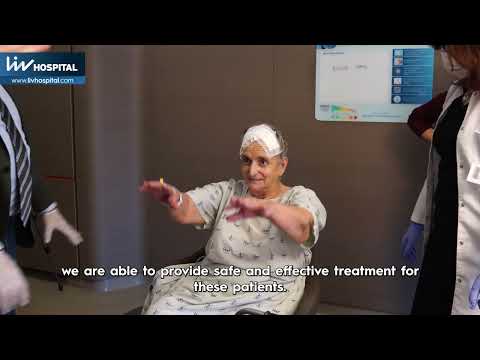



.png)

















Share this listing