
About this guide: For decades, individuals relying on glasses and contact lenses have dreamed of waking up with crystal-clear vision. The evolution of refractive surgery has turned this dream into reality, moving from traditional bladed procedures to highly advanced, all-laser techniques. If you are exploring options for laser vision correction, you have likely encountered the term FemtoLasik—a state-of-the-art procedure renowned for its precision, safety, and rapid recovery times.
However, achieving perfect vision is not as simple as walking into a clinic and requesting surgery. The foundation of any successful refractive outcome lies in strict, meticulous patient selection. Not everyone is an ideal candidate for laser eye surgery. By thoroughly understanding the specific medical, anatomical, and lifestyle characteristics required for FemtoLasik, you can make an informed, confident decision about your optical health. This comprehensive guide will walk you through the exacting criteria evaluated by top-tier ophthalmologists to ensure optimal, long-lasting visual results.
Video Chapters & Quick Navigation
The Foundation of Success: The Preoperative Evaluation
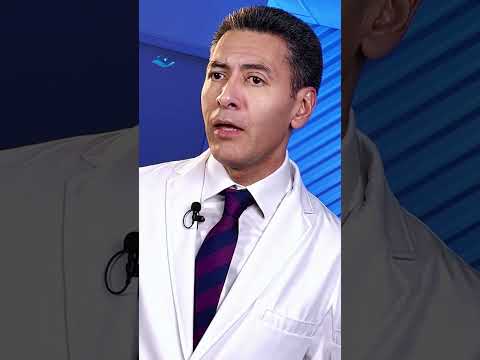
The journey to visual freedom does not begin in the operating room; it begins in the consultation chair. As highlighted by leading ophthalmic surgeons, the success of a FemtoLasik procedure is overwhelmingly determined before the surgery even takes place [00:17]. Advanced diagnostic technology allows eye care professionals to map the unique topography of your eye, ensuring that every microscopic detail is accounted for.
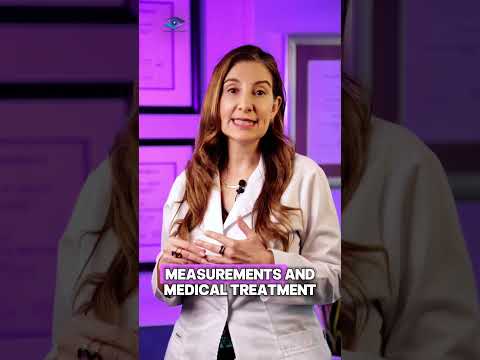
During a comprehensive evaluation, patients undergo a battery of optometric and ophthalmologic tests. These include high-resolution corneal mapping, wavefront analysis to detect higher-order visual aberrations, tear film assessments, and detailed measurement of intraocular pressure. This data is fed into sophisticated surgical planning software to create a highly customized ablation profile, ensuring the laser reshapes the cornea with micron-level accuracy.
It is crucial to note that the human eye is a dynamic, living organ that can change over time. Because of this, preoperative studies have a strict validity period of six months [00:34]. If a patient completes their exams but decides to delay the surgery beyond this timeframe, the entire suite of diagnostic tests must be repeated. This strict protocol guarantees that the surgical plan perfectly matches the patient's current ocular anatomy, prioritizing safety above all else.
Requirement 1: Exceptional Ocular Health
The absolute most important criterion for undergoing any type of laser vision correction is having fundamentally healthy eyes [00:48]. FemtoLasik is an elective procedure designed to correct refractive errors (how the eye bends light), not to cure underlying eye diseases. Therefore, the presence of certain ocular conditions can temporarily or permanently disqualify a candidate.
Conditions That May Affect Candidacy
Severe dry eye syndrome is one of the most common hurdles for prospective patients. The laser reshaping process can temporarily disrupt the corneal nerves responsible for tear production. If a patient already suffers from compromised tear film, surgery could exacerbate the condition. Surgeons will often prescribe medicated eye drops, punctal plugs, or specific omega-3 supplements to rehabilitate the tear film before approving the patient for surgery.
Additionally, patients must be free from active eye infections, severe cataracts, and advanced glaucoma. Systemic autoimmune diseases, such as rheumatoid arthritis or lupus, are also carefully evaluated because they can severely impede the body’s natural healing process, increasing the risk of postoperative inflammation or infection.
Requirement 2: Adequate Corneal Thickness
To understand why corneal thickness is a vital requirement, one must understand the mechanics of laser eye surgery. FemtoLasik works by fundamentally remodeling the clear front surface of the eye. The excimer laser literally sculpts the corneal tissue to alter its curvature, flattening it to correct myopia or steepening it to correct hyperopia. This reshaping is achieved at the expense of corneal tissue [00:58].
Every diopter of prescription correction requires the removal of a specific amount of microscopic tissue. The cornea must possess sufficient inherent thickness so that, after the tissue is removed, the remaining structural base (known as the residual stromal bed) is strong enough to withstand the natural pressure inside the eye. If the cornea is naturally very thin, removing tissue could compromise its structural integrity, leading to a serious condition known as corneal ectasia, where the cornea bulges outward and distorts vision.
During the preoperative exam, a device called a pachymeter takes precise measurements of corneal thickness. If the ophthalmologist determines that the cornea is too thin to safely accommodate the required degree of correction, FemtoLasik will be ruled out. Fortunately, having a thin cornea is not the end of the road. Patients in this category are often excellent candidates for alternative refractive procedures, such as PRK (Photorefractive Keratectomy) or the insertion of Phakic Intraocular Lenses (ICL), which do not require the creation of a corneal flap.
Requirement 3: Optimal Pupil Size in Dim Light
An often-overlooked factor in laser eye surgery requirements is the size of the patient's pupils, particularly in dim lighting conditions. The pupil expands and contracts to regulate the amount of light entering the eye. During FemtoLasik, the laser applies treatment to a specific circular area on the cornea, known as the optical zone.
If a patient has naturally very large pupils that dilate beyond the diameter of the surgically treated optical zone in low-light environments, they are at a higher risk for experiencing post-surgical visual disturbances [01:34]. When the edge of the pupil expands past the treated area, untreated light rays scatter as they enter the eye. This scattering manifests as frustrating side effects like halos around streetlights, starbursts, and poor night vision.
Advanced diagnostic tools measure scotopic (dark-adapted) pupil size to ensure it aligns safely with the capabilities of the excimer laser. If the pupils are significantly larger than average, the surgeon may need to adjust the treatment profile, or in some extreme cases, advise against the procedure entirely to protect the patient's quality of night vision.
Requirement 4: Prescriptions Within Treatable Limits
While modern laser technology is incredibly advanced, it is bound by the laws of physics and biology. The prescription of your glasses or contact lenses must fall within certain safely treatable parameters [01:45]. Extremely high degrees of myopia (nearsightedness), hyperopia (farsightedness), or astigmatism require the removal of a massive amount of corneal tissue.
- Myopia (Nearsightedness): Generally, FemtoLasik can comfortably treat up to -8.00 to -10.00 diopters, highly dependent on the patient's original corneal thickness.
- Hyperopia (Farsightedness): Treating farsightedness involves steepening the cornea rather than flattening it. The safe upper limit for hyperopic correction is typically around +4.00 to +5.00 diopters.
- Astigmatism: Modern lasers excel at smoothing the irregular football-like shape of an astigmatic eye, usually effectively treating up to 4.00 or 5.00 diopters of astigmatism.
If your prescription drastically exceeds these limits, standard laser eye surgery may leave you under-corrected, or it might be deemed medically unsafe. In these scenarios, your surgeon will analyze the data to determine what percentage of your vision can be safely corrected, or they will pivot to recommending Implantable Collamer Lenses (EVO ICL), which can permanently correct massive prescriptions without altering the cornea's natural shape.
Requirement 5: Minimum Age and The Aging Eye
Age plays a critical role in the timing and efficacy of refractive surgery. The universally accepted minimum age for undergoing FemtoLasik is 18 years old [02:14]. Throughout childhood and adolescence, the human body is in a constant state of growth, and the eyes are no exception. The shape of the eye can elongate during the teenage years, which continuously shifts the optical prescription.
Performing surgery on an eye that is still growing is counterproductive. While there is no official upper age limit for laser eye surgery, the efficacy and longevity of the results change as a patient enters their 40s and 50s. Around age 40, a natural age-related condition called presbyopia begins to set in, causing the eye's natural lens to lose its flexibility and making up-close reading difficult.
Patients over 40 must understand that while FemtoLasik can flawlessly correct their distance vision, they may still eventually require reading glasses for close-up tasks. Alternatively, older patients might explore options like "Monovision" LASIK—where one eye is corrected for distance and the other for near vision—or a Refractive Lens Exchange (RLE) to address both distance vision and presbyopia simultaneously.
Requirement 6: A History of Refractive Stability
Perhaps the most frustrating scenario for a patient is undergoing a successful surgery, enjoying perfect vision for a year, and then feeling as though the surgery "wore off" as blurriness returns. In reality, laser eye surgery does not wear off. If vision deteriorates shortly after the procedure, it is usually because the patient's eyes were actively changing at the time of the surgery.
To prevent this, candidates must prove that their vision is stable. There should be no significant change in the patient's eyeglass or contact lens prescription for a minimum of 12 consecutive months prior to the evaluation [02:36]. Bringing outdated glasses or previous optometric records to the consultation is highly recommended, as it allows the surgeon to accurately plot the historical trajectory of your visual health.
Furthermore, patients who wear contact lenses must strictly adhere to preoperative instructions regarding lens removal. Hard or soft contact lenses temporarily warp the natural shape of the cornea. To capture an accurate topographic map of the eye, patients must stop wearing their contacts for a specified number of weeks before their consultation, allowing the cornea to relax back into its true, unaltered anatomical shape.
The Individualized Approach: Your Vision, Your Blueprint
The overarching theme of any responsible refractive surgery practice is that no two eyes are identical. Every patient presents a unique combination of corneal curvature, tissue thickness, pupil dynamics, and lifestyle demands. As medical experts emphasize, a patient must be fully aware that individual results can vary, and the surgical plan must be completely tailored to their specific case [03:02].
It takes only one comprehensive consultation to determine if you are a candidate, precisely how effective the surgery will be for your specific refractive error, and what long-term visual longevity you can expect. It is also important to remember that candidacy is not a lifetime guarantee. A person who is a perfect candidate at age 25 may lose their eligibility by age 35 if they develop new health issues or ocular conditions.
Today, finding affordable, world-class eye care is easier than ever. Medical tourism hubs, particularly state-of-the-art clinics in regions like Tijuana, offer North American patients the ability to access top-tier, board-certified ophthalmologists and the latest excimer laser technology at highly competitive rates. By prioritizing thorough preoperative screening and rigorous adherence to safety standards, these centers ensure that your journey to visual freedom is both incredibly successful and profoundly life-changing.
Ready to Achieve Crystal-Clear Vision?
PlacidWay Medical Tourism connects you with top-rated ophthalmology centers, offering world-class laser eye surgery at unbeatable prices. Let us help you facilitate your consultation and travel details so you can focus on a future without glasses.
GET A FREE QUOTE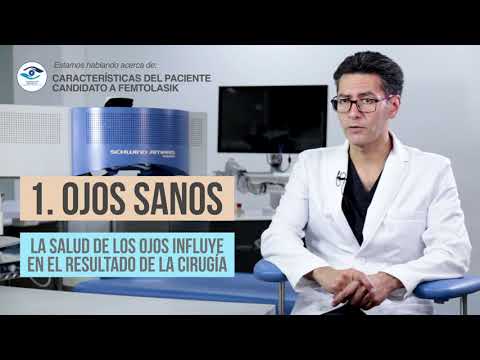



.png)
.png)

.png)
.jpg)
.jpg)
.jpg)









Share this listing