
Advanced Eye Surgery in Turkey: Faiza Rage's Vision Restoration Journey
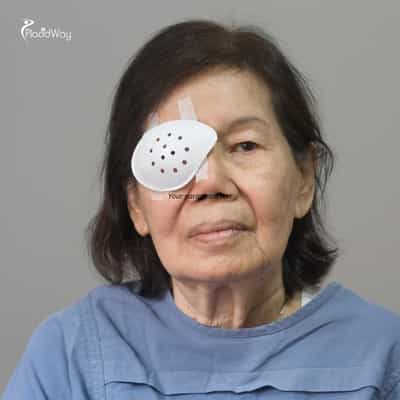
The gift of sight is often taken for granted until the world begins to fade into a blur of shadows and light. For Faiza Rage, a patient from Somalia, the struggle with vision loss was not just a medical challenge but a profound life hurdle. Suffering from a complex combination of cataracts, glaucoma, and complications from diabetes, she found herself on the brink of total blindness after having already lost sight in one eye due to a previous infection elsewhere. This narrative is not just about a medical procedure; it is a testament to the life-changing impact of high-quality ophthalmology in Turkey.
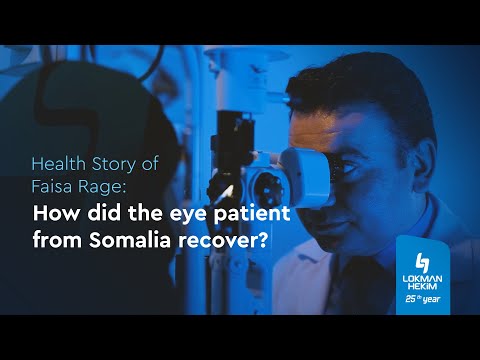
Turkey has emerged as a global sanctuary for those seeking affordable yet world-class medical interventions. By combining cutting-edge diagnostic technology with a compassionate approach to patient care, institutions like Lokman Hekim Hospital in Ankara are rewriting the stories of patients who thought their vision was lost forever. Watch as we explore the intricate details of Faiza's journey, the complexities of multi-pathology eye conditions, and why Turkey is the leading destination for restorative eye surgery.
Video Chapters & Quick Navigation
The Burden of Chronic Vision Loss
Vision loss is rarely an isolated event. For many patients like Faiza, it is the result of years of cumulative health challenges. At [00:04], we learn that she had been suffering from a cataract complaint in her left eye for a significant amount of time. This wasn't just a minor clouding of the lens; it had progressed to the point where it caused severe vision loss, impacting her daily independence.
The psychological weight of losing one's sight is immense. When the right eye is already lost due to prior medical errors or infections, as Faiza experienced, the remaining eye becomes the patient's entire world. The fear of total darkness drives many to seek specialized care beyond their borders, looking for experts who can handle cases that others might deem too risky.
Restorative eye surgery is not simply a mechanical fix. It involves a deep understanding of the patient's history, including systemic issues like diabetes that can complicate healing and surgical outcomes. Turkish specialists are trained to look at the patient holistically, ensuring that every variable is managed before the first incision is made.
Why Turkey is the Gold Standard for International Eye Care
Turkey has positioned itself as a global leader in medical tourism, specifically in the field of ophthalmology. Patients travel from as far as Somalia, the USA, and Western Europe to access treatment in cities like Ankara and Istanbul. But what makes Turkey so special? It is a combination of infrastructure, education, and economic accessibility.
At [00:35], Faiza highlights the logistical support provided by Turkish institutions. Lokman Hekim Hospital assisted her with the visa process and welcomed her right at the airport. This "concierge" style of medical care reduces the stress of international travel, allowing the patient to focus entirely on their recovery.
| Feature | Turkey (e.g., Lokman Hekim) | Typical Western Facilities |
|---|---|---|
| Wait Times | Minimal (Often within 1 week) | Months (for specialists) |
| Technology | Latest FDA/CE approved lasers & 3D Imaging | High quality, but often higher cost |
| Patient Support | Airport pickup, translation, visa help | Self-managed logistics |
| Cost Advantage | 40% to 70% Savings | Premium pricing |
The Triple Threat: Cataract, Glaucoma, and Uveitis
In the video, Dr. Mehmet explains that Faiza’s condition was far more complex than a standard cataract. As noted at [01:02], she was suffering from a combination of four distinct eye diseases. This is what medical professionals call a "complicated case," where treating one condition might exacerbate another if not handled with extreme precision.
1. Cataracts: The Clouded Lens
A cataract is a clouding of the normally clear lens of your eye. For most, it's like looking through a frosty or fogged-up window. While common with age, it can be accelerated by diabetes. In Faiza's case, the cataract was advanced, significantly reducing her vision to about 10% in her only functional eye [01:52].
2. Glaucoma: The Silent Thief of Sight
Glaucoma is a group of eye conditions that damage the optic nerve, the health of which is vital for good vision. This damage is often caused by abnormally high pressure in your eye. It is particularly dangerous because it often has no symptoms in its early stages, slowly eroding peripheral vision until it's too late.
3. Uveitis and Diabetic Complications
Uveitis is a form of eye inflammation. It affects the middle layer of tissue in the eye wall (uvea). Combined with diabetic eye disease (retinopathy), this creates a volatile environment for surgery. Dr. Mehmet wisely suggested starting medication before the surgery to stabilize the inflammation and ensure a higher success rate [01:14].
Lokman Hekim Hospital: A Beacon of Hope in Ankara
Located in the heart of Turkey's capital, Lokman Hekim Hospital has become a cornerstone for international medical tourism. The hospital is known for its multidisciplinary approach, which was essential for a patient like Faiza who required both an ophthalmologist and an endocrinologist to manage her diabetes.
The patient’s journey began with a meeting with Dr. Mehmet [00:43], followed by an exhaustive battery of tests. This level of scrutiny is what differentiates high-end Turkish hospitals; they do not rush to the operating room. Instead, they build a comprehensive roadmap of the patient's ocular and systemic health.
The hospital's commitment to patient safety is visible in its use of sterilized environments and modern surgical suites. For a patient who previously lost an eye due to infection [01:41], the rigorous hygiene protocols at Lokman Hekim provided much-needed peace of mind.
Diagnostic Precision: The Foundation of Success
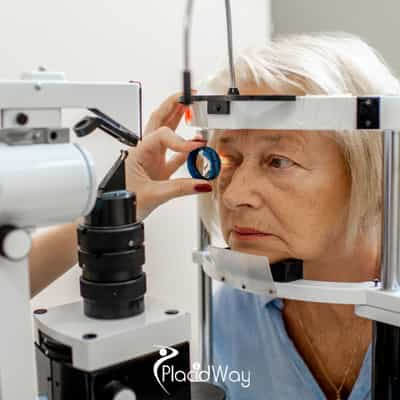
Modern ophthalmology relies heavily on imaging. At [00:52], we see the advanced diagnostic tools used to map Faiza's eye. This includes Optical Coherence Tomography (OCT), which allows doctors to see each of the retina's distinctive layers, and tonometry to measure intraocular pressure.
- Comprehensive Analysis: Doctors identified that the vision loss wasn't just the cataract; the glaucoma and uveitis were contributing factors that needed simultaneous management.
- Customized Treatment Plans: Every eye is unique. By using high-resolution imaging, Turkish doctors can customize the intraocular lens (IOL) used during cataract surgery to provide the best possible visual outcome.
- Early Detection: As Dr. Mehmet mentions at [02:28], early diagnosis and timely treatment are the primary factors in preventing permanent blindness.
Managing Diabetes and Eye Health
Diabetes is one of the leading causes of preventable blindness globally. High blood sugar levels can damage the tiny blood vessels in the retina, leading to diabetic retinopathy. Faiza mentioned she was using insulin injections for her diabetes [00:31].
Managing a diabetic patient through surgery requires a careful balance. If blood sugar is too high, the risk of infection and poor wound healing increases. The team at Lokman Hekim coordinated her insulin management with her surgical schedule, a level of care that ensures the body is as ready as the eye for the procedure.
The success of her treatment was seen within just one week [01:21]. This rapid turnaround is typical for patients who receive early and correct intervention, even when their case is complicated by chronic conditions like diabetes.
The Road to Recovery: Successful Treatment Outcomes
The results of Faiza's journey were transformative. When she arrived, her vision was nearly non-existent. After the expert intervention by Dr. Mehmet and his team, her vision was significantly restored. At [02:40], the doctor commends her for her strict compliance with the treatment plan.
Patient compliance is a two-way street. The medical team provides the expertise, but the patient must follow the post-operative drops and follow-up schedules. This synergy is what leads to the high success rates reported by Turkish eye clinics. Faiza’s case serves as a model for how international patients can achieve life-changing results by trusting a proven system.
Logistics and Support for International Patients
Traveling for surgery can be daunting, especially when dealing with vision impairment. However, the Turkish medical system is designed to handle these challenges. From the moment a patient expresses interest, platforms like PlacidWay help bridge the gap between the patient and the hospital.
Steps in the International Patient Journey:
- Initial Consultation: Sharing medical records and current vision tests via digital platforms.
- Visa Assistance: Official invitation letters from the hospital to speed up the process.
- Arrival and Pickup: Personalized welcome at the airport to ensure safe transport to the hospital or hotel.
- Translation Services: Ensuring that the doctor and patient understand every detail of the treatment.
- Recovery: A structured follow-up schedule before the patient returns home.
Ready to Restore Your Smile in Egypt?
PlacidWay Medical Tourism connects you with top-rated dental clinics in Egypt, offering world-class care at unbeatable prices. Let us handle the details while you focus on your new smile.
GET A FREE QUOTEView Full Video Transcript
[00:00] (Video begins with a close-up of eye examination equipment and a light shining into the patient's eye.)
[00:04] I had a cataract complaint in my left eye for a long time.
[00:13] It also caused my vision loss.
[00:18] Faiza Rage Hikayesi.
[00:23] May Allah's peace and mercy be upon you. My name is Faiza Rage.
[00:28] I came from Somalia for my left eye. I was using insulin injections because of my diabetes.
[00:35] Lokman Hekim Hospital helped me to get a visa to come to Turkiye and welcomed me at the airport.
[00:43] I meet with Doctor Mehmet. Many tests and analyzes were done.
[00:53] Doctor Mehmet found that I have other complaints in my eyes. He said that I have glaucoma and uveitis apart from cataract.
[01:14] My doctor suggested that I start medication before the surgery. Thanks to Allah, I was able to get results within a week.
[01:28] (Doctor Mehmet speaking) Our patient Faize came from Somalia. She came to Turkey for treatment.
[01:32] She had a history of diabetes-related eye disease. In other words, she had a problem in her eyes as a result of diabetes.
[01:41] She had previously lost her right eye due to an infection that developed after an injection in the past... and she came to our country for the treatment of her left eye.
[01:50] When she first came to us, she could not see at all in her right eye, and her left eye's vision was about 10 percent.
[01:56] She had a very complicated condition in her eye examination. There was a pathology in which four different eye diseases coexisted.
[02:03] In other words, she had uveitis, glaucoma, diabetes-related eye disease and cataract.
[02:10] Uveitis, glaucoma, diabetic eye disease and cataract are among the most important diseases that cause blindness worldwide.
[02:22] In our patient, all of these four diseases existed and the situation was quite complicated.
[02:28] The patient is a good example in terms of showing how good results can be obtained with early diagnosis, timely and correct treatment.
[02:40] The patient's strict compliance with the treatment we recommended also increased the success of the treatment.
[02:46] We are grateful to her for allowing us to share her story. We thank her for cooperation and wish her a healthy life from now on.














Share this listing