
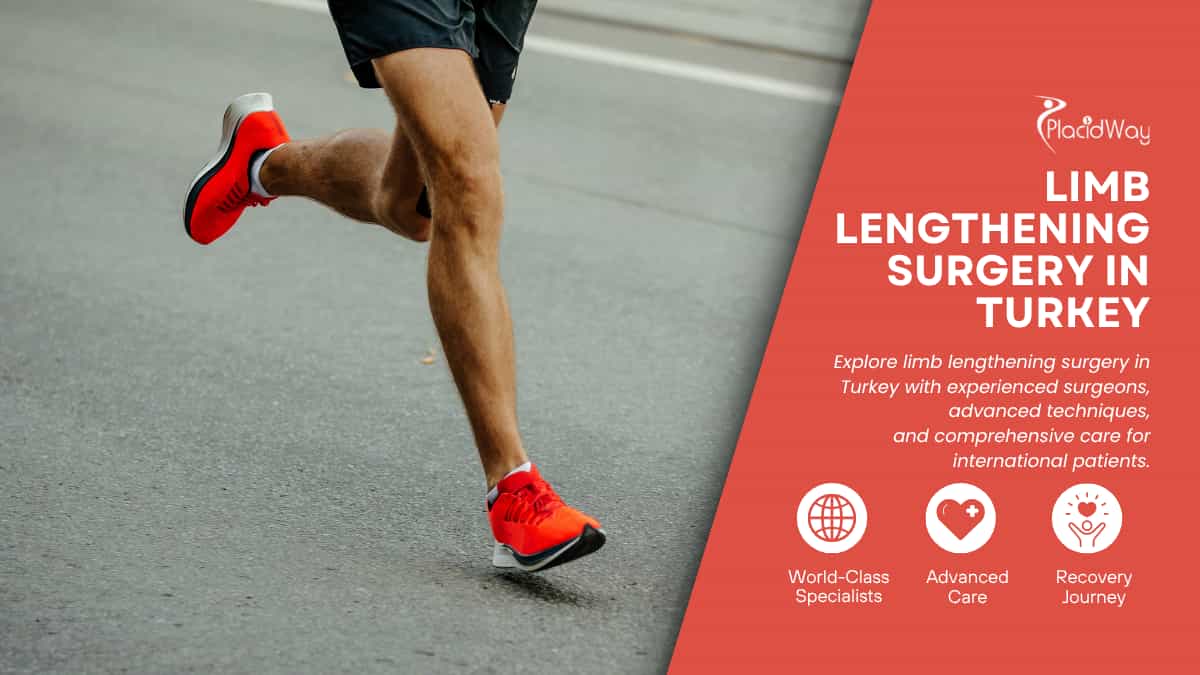
Adding several centimetres to your height involves far more than one operation. Limb lengthening requires controlled bone separation, frequent X-rays, intensive physiotherapy, mobility assistance, several months of healing, and a medical team capable of responding quickly when the bone, nerves, muscles, joints, or implant do not progress as planned.
Current provider-listed packages for limb lengthening surgery in Turkey generally range from approximately $15,000 to $55,000, depending on the surgical method, implant system, hospital, and services included. Before choosing a provider, review the surgeon's experience, the hospital's credentials, the implant system used, and the details of the treatment package.
Quick Summary: Limb Lengthening Surgery in Turkey
- Current pricing: Estimated costs by surgical method are approximately US$15,000–22,000 for external fixation, US$18,000–28,000 for lengthening over nail (LON), and US$35,000–48,000 for the PRECICE 2 system.
- Published evidence: A 2025 systematic review of 760 patients reported a weighted average length gain of approximately 67 mm, or 6.7 cm.
- Main methods: Turkish providers may offer external fixation, LON, other combined methods, or fully internal motorized nails such as PRECICE 2 and FITBONE, subject to availability and regulatory status.
- Candidate profile: Suitable patients generally require closed growth plates, adequate bone and joint health, realistic goals, stable medical health, and the ability to complete prolonged rehabilitation.
- Recovery commitment: The distraction phase may last several weeks or months, followed by a longer consolidation phase while the new bone becomes strong enough for increased weight-bearing.
- Turkey provider check: Confirm Ministry of Health authorization, the hospital’s TÜSKA accreditation status or plan, and the surgeon’s registration through the Doctor Information Bank.
- Travel planning: International patients may need to remain in Turkey through much of the distraction phase or establish reliable orthopedic, X-ray, physiotherapy, and emergency support at home.
- Important caution: Complications are not rare inconveniences. Infection, joint contracture, delayed bone formation, nerve symptoms, malalignment, hardware failure, and additional surgery are recognized risks.
What Is Limb Lengthening Surgery in Turkey?
Limb lengthening surgery gradually increases the length of a bone through a biological process called distraction osteogenesis. The surgeon cuts the bone in a controlled operation called an osteotomy and stabilizes it with an external frame, an internal nail, or a combination of both.
After an initial healing period, the two bone segments are separated in small daily increments. The body produces new bone inside the expanding gap while muscles, tendons, skin, blood vessels, and nerves must gradually adapt to the increased length.
Medical Limb Lengthening
May correct a congenital difference, post-traumatic shortening, deformity, bone loss, growth disturbance, or another medically documented problem.
Cosmetic Stature Lengthening
Is requested by a skeletally mature person who wants to increase height without a medically significant limb-length discrepancy.
Femoral Lengthening
Lengthens the thigh bones and has different muscle, joint, nerve, implant, and weight-bearing considerations from tibial treatment.
Tibial Lengthening
Lengthens the shin bones and requires particular attention to ankle movement, Achilles tendon flexibility, alignment, and nerve function.
The operation does not provide immediate final height. The process includes surgery, gradual distraction, bone consolidation, rehabilitation, and sometimes another operation to remove internal hardware or external fixation components.
How Much Does Limb Lengthening Surgery Cost in Turkey?
Limb lengthening surgery cost in Turkey of approximately $36,450 based on provider quotes. The displayed price range extends from $4,900 to $68,000, reflecting differences in surgical techniques, implant systems, hospitals, and treatment packages.
A more meaningful comparison is by surgical technique. External fixation typically ranges from approximately $15,000 to $22,000, lengthening over nail (LON) from $18,000 to $28,000, and the PRECICE 2 system from approximately $35,000 to $48,000.
| Limb Lengthening Method | Estimated Turkey Cost | Main Cost Characteristics |
|---|---|---|
| Ilizarov or external fixation | $15,000–$22,000 | Lower device cost, prolonged external-frame care, pin-site management, and possible later procedures |
| LON method | $18,000–$28,000 | Combines an internal nail with temporary external fixation and usually requires frame removal |
| PRECICE 2 internal nail | $35,000–$48,000 | Higher implant cost, no external frame, strict device-specific weight-bearing restrictions |
| FITBONE internal nail | Personalized quotation required | Availability, implant price, licensing, and package scope differ between hospitals |
| Complex deformity or medical reconstruction | Personalized quotation required | May involve unilateral surgery, deformity correction, bone grafting, nerve treatment, or staged reconstruction |
Price warning: A quote below the usual method-specific range may cover only one leg, one implant, an initial operation, or a limited hospital service. Confirm whether the price is bilateral, whether both nails are included, and whether rehabilitation, accommodation, X-rays, hardware removal, and complication care are separate.
Current Limb Lengthening Provider Quotes in Turkey
| Listed Provider | Location | Listed Price | Patient Interpretation |
|---|---|---|---|
| Turan Turan Robotic Surgery Center and Orthopedic Clinic | Bursa, Turkey | $18,000 | Request the exact method, bilateral scope, implant, stay, and rehabilitation details |
| Medical Park Hospitals Group | Istanbul, Turkey | $22,000 | Confirm which hospital, operating surgeon, device, and package exclusions apply |
| Optimed International Hospital | Istanbul, Turkey | $24,197 | Verify the method, lengthening target, local stay, therapy frequency, and device-removal plan |
| Lokman Hekim Health Group | Istanbul, Turkey | $68,000 | A higher quote may reflect an internal device or broader package, but this must be confirmed |
These provider figures are current listing snapshots rather than recommendations or guaranteed package prices. Each patient requires a written treatment plan after clinical and imaging review.
Estimated Limb Lengthening Cost Progression by Method
The graph compares range midpoints for orientation only. It does not predict an individual patient’s price or establish that a more expensive method is clinically better.
Which Limb Lengthening Methods Are Used in Turkey?
Each method creates new bone through distraction osteogenesis, but the hardware, infection exposure, comfort, weight-bearing rules, scarring, cost, and additional-operation requirements differ.
The surgeon should recommend a method because it suits your anatomy, bone quality, target, joints, lifestyle, and risk profile—not simply because it is the package being promoted.
| Turkey Limb Lengthening Method | How It Works | Possible Advantages | Important Limitations |
|---|---|---|---|
| Ilizarov external fixation | A circular frame connects to the bone through pins or wires and is adjusted gradually | Lower implant cost and flexibility for alignment correction | Pin-site infections, scars, frame discomfort, daily cleaning, and prolonged external hardware |
| LON | An internal nail supports the bone while an external fixator produces gradual lengthening | May reduce the time spent in an external frame compared with traditional fixation | Still involves pin sites, external hardware, infection risk, and another procedure to remove the frame |
| LATN | Lengthening occurs with an external device, followed by placement of an internal nail | Can shorten external-fixator time in selected treatment plans | Requires staged surgical planning and carries external and internal hardware risks |
| PRECICE 2 internal nail | A telescopic internal nail is gradually extended using an external magnetic controller | No pin sites or external frame, less visible hardware, and controlled adjustments | Higher cost, strict weight-bearing limits, implant-size requirements, and later removal may be recommended |
| FITBONE internal nail | A motorized internal system lengthens gradually through an implanted mechanism | Avoids external fixation and allows controlled internal lengthening | Availability, device support, weight-bearing limits, cost, and removal plans must be verified |
Device safety notice: Do not accept “PRECICE STRYDE” or “Stryde” as a current weight-bearing internal-nail option without independent regulatory verification. The system was recalled and remains listed by the FDA as off the market.
Who Is a Candidate for Limb Lengthening Surgery in Turkey?
A suitable candidate requires more than a desire to be taller. The orthopedic team should evaluate bone maturity, alignment, joint movement, nerve function, bone density, circulation, general health, rehabilitation capacity, expectations, and psychological motivation.
Cosmetic stature lengthening is elective and exposes a healthy person to major orthopedic risk. Careful counselling should explore whether the expected height change is realistic and whether the patient understands the possibility of pain, delayed recovery, scars, restricted mobility, complications, and further surgery.
| Candidate Assessment | What the Turkey Limb Lengthening Team Should Review | Possible Effect on Treatment |
|---|---|---|
| Skeletal maturity | Growth-plate closure and adult bone development | Cosmetic surgery is generally delayed until growth is complete |
| Bone and alignment | Bone diameter, density, mechanical axis, deformity, and previous injury | Influences method, nail size, osteotomy level, and correction plan |
| Joint mobility | Hip, knee, ankle, muscle, and tendon flexibility | Limited movement may increase contracture risk or restrict the planned gain |
| Medical health | Heart, lungs, circulation, clotting history, diabetes, nutrition, infection, and anesthesia risk | May require optimization, another care setting, or postponement |
| Nicotine use | Smoking, vaping, and other nicotine exposure | Can impair bone and wound healing and may make surgery inappropriate |
| Psychological readiness | Motivation, expectations, body image, coping ability, and mental health | May identify unrealistic expectations or a need for further support |
| Recovery support | Caregiver availability, accessible housing, finances, employment, and therapy access | Determines whether the patient can complete treatment safely |
A Candidate May Be Suitable When
- Growth plates are closed
- Bone and joint health are adequate
- The requested increase is medically realistic
- Expectations include the full rehabilitation burden
- A caregiver and accessible accommodation are available
- The patient can attend frequent therapy and imaging
Surgery May Be Delayed or Declined When
- There is active infection or poor circulation
- A medical condition is uncontrolled
- Bone quality is inadequate
- The patient uses nicotine and cannot stop
- The requested height increase is unsafe
- Rehabilitation or psychological readiness is insufficient
How Much Height Can Limb Lengthening Surgery Add?
Published cosmetic limb-lengthening studies have reported meaningful increases, but the average result should not become an individual target. The 2025 systematic review found mean lengthening values between 62 and 87 mm, with a weighted average of approximately 67 mm.
The safe amount for you depends on whether the femur or tibia is treated, bone dimensions, muscle and tendon flexibility, nerve response, joint movement, body proportions, new-bone formation, alignment, and complications during distraction.
Patient-centred goal: The lengthening target should remain adjustable. Your surgeon may slow, pause, or stop distraction when X-rays, pain, nerve symptoms, joint movement, muscle tightness, or bone formation raise concern.
Published Aesthetic Limb Lengthening Patient Profile
Source: 2025 systematic review of 12 studies. The evidence consisted mainly of retrospective case series and should not be interpreted as a guaranteed patient outcome.
How to Choose a Limb Lengthening Surgeon and Hospital in Turkey
A general orthopedic title does not establish expertise in distraction osteogenesis. Look for an orthopedic and traumatology specialist with focused experience in limb reconstruction, deformity correction, external fixation, internal lengthening nails, and management of failed or complicated lengthening.
The hospital should appear on the Turkish Ministry of Health list of facilities authorized to treat international health-tourism patients. Hospitals and medical centres operating under this framework must complete TÜSKA accreditation by December 31, 2026.
| Turkey Provider Check | Evidence to Request | Why It Matters |
|---|---|---|
| International-patient authorization | Hospital name on the Ministry’s authorized healthcare-provider list | Confirms that the facility is legally authorized for international health tourism |
| TÜSKA status | Current accreditation certificate or written 2026 accreditation status | Shows how the hospital is meeting the updated national requirement |
| Surgeon registration | Full registered name and verification through the Ministry Doctor Information Bank | Confirms recognized medical and specialist registration |
| Limb-reconstruction training | Fellowship, formal training, publications, teaching, and exact device experience | Distinguishes relevant expertise from general orthopedic practice |
| Procedure volume | Annual femoral, tibial, cosmetic, medical, primary, and revision cases | Shows how often the surgeon personally performs comparable treatment |
| Complication reporting | Personal rates for infection, contracture, delayed union, nonunion, malalignment, device failure, and reoperation | Provides more useful information than general testimonials |
| Emergency capability | Twenty-four-hour orthopedic access, imaging, laboratory, ICU, vascular support, and infection services | Complications may require urgent investigation or surgery |
| Rehabilitation team | Named physiotherapists, therapy frequency, movement measurements, and escalation criteria | Joint and tendon complications require active prevention and early response |
Questions to Ask a Limb Lengthening Surgeon in Turkey
- How many cosmetic and medical limb lengthening operations did you personally perform last year?
- How many involved the same bone, method, implant, and target proposed for me?
- Why do you recommend the femur or tibia for my treatment?
- What finding would make you reduce or stop my planned lengthening?
- Who reviews my X-rays and authorizes each change in distraction speed?
- How do you manage equinus deformity, knee contracture, nerve irritation, and delayed bone formation?
- What is your rate of unplanned surgery and device failure?
- Which implant manufacturer and exact model will be used?
- When and where will the implant or hardware be removed?
- Who provides emergency and follow-up care after I leave Turkey?
Limb Lengthening Treatment Timeline in Turkey
The total treatment process usually extends across several months. The lengthening stage is followed by consolidation, when the newly formed bone becomes denser and stronger.
Dates should remain flexible because distraction may be slowed or paused when joint movement, nerve symptoms, muscle tightness, pain, alignment, or bone formation becomes concerning.
| Turkey Limb Lengthening Stage | What Happens | Patient Responsibilities |
|---|---|---|
| Remote evaluation | The team reviews history, standing X-rays, previous surgery, goals, and medical conditions | Provide complete records and obtain an independent orthopedic opinion |
| In-person assessment in Turkey | Clinical examination, alignment measurements, imaging, laboratory testing, and anesthesia review | Do not proceed when the in-person plan differs materially without time to reconsider |
| Operation and hospitalization | Osteotomy, device placement, pain control, circulation checks, and early mobilization | Learn transfer techniques, wound care, device use, and emergency signs |
| Latency period | The bone and surrounding tissues begin early healing before active lengthening | Follow the prescribed mobility, medication, and therapy plan |
| Distraction phase | The device gradually separates the bone segments while new bone forms | Complete daily adjustments, therapy, stretching, and scheduled X-rays |
| Consolidation phase | Lengthening stops while the new bone matures and hardens | Continue therapy and increase weight-bearing only after clinical approval |
| Hardware removal | External devices are removed; internal nails may be removed in a later operation | Clarify the timing, country, price, anesthesia, and recovery before the first surgery |
| Long-term recovery | Strength, balance, gait, endurance, and confidence continue developing | Attend follow-up and obtain clearance before running or impact activity |
Recovery and Physiotherapy After Limb Lengthening in Turkey
Physical therapy is a core medical requirement. It helps preserve hip, knee, and ankle motion while the bones lengthen and the surrounding soft tissues remain under increasing tension.
Patients may need therapy several times each week, daily stretching, repeated joint measurements, strength work, gait training, and adjustments to the distraction plan. Missing therapy can increase the risk of stiffness, contracture, abnormal walking, and loss of function.
| Timeframe | Biological or Clinical Process | Patient Sensation | Activity Level | Action Required |
|---|---|---|---|---|
| First days | Early wound healing and inflammation begin | Surgical pain, swelling, weakness, and fatigue | Assisted transfers and surgeon-directed mobility | Follow wound, medication, circulation, and movement instructions |
| Early distraction | New bone begins forming as the gap gradually increases | Muscle tightness, soreness, disturbed sleep, and stiffness may develop | Wheelchair, walker, or crutches according to device restrictions | Complete adjustments, therapy, stretching, and X-ray reviews |
| Later distraction | Soft-tissue tension increases while the bone continues regenerating | Greater tightness, fatigue, altered sensation, or joint discomfort may occur | Restricted weight-bearing and intensive supervised therapy | Report nerve pain, lost movement, deformity, or increasing symptoms promptly |
| Early consolidation | The regenerate bone becomes denser after distraction stops | Stiffness and weakness may persist despite reduced distraction discomfort | Gradual progression based on X-rays and device limits | Continue therapy and avoid unsupported increases in weight-bearing |
| Later consolidation | Bone strength, muscle capacity, gait, and balance develop | Residual weakness, stiffness, or uneven confidence may remain | Increasing walking and functional exercise when cleared | Attend imaging and correct gait or joint deficits before impact activity |
| Long-term recovery | Bone remodelling and muscular recovery continue for many months | Some patients notice prolonged weakness, numbness, scars, or discomfort | Return to work and sport varies by healing and function | Obtain formal clearance before running, jumping, or heavy loading |
Weight-bearing caution: Different nails and external devices tolerate different loads. Do not rely on another patient’s walking video or clinic marketing. Follow the written restriction for your exact device, nail size, bone, X-ray findings, and stage of healing.
Risks of Limb Lengthening Surgery in Turkey
Limb lengthening places sustained mechanical and biological stress on bone, joints, muscles, tendons, nerves, blood vessels, and fixation devices. Complications may prolong treatment, reduce the planned increase, affect function, or require another operation.
The 2025 systematic review could not calculate dependable patient-level complication rates because the included studies used inconsistent definitions and denominators. The complication numbers below represent mentions across studies, not separate patients or precise probabilities.
| Potential Limb Lengthening Complication | Examples | Possible Response |
|---|---|---|
| Joint and tendon problems | Ankle equinus, knee or ankle contracture, Achilles tightness, muscle contracture, valgus or varus deviation | More therapy, slower distraction, splinting, tendon treatment, or corrective surgery |
| Infection | Pin-site infection, wound infection, deep infection, or osteomyelitis | Local care, cultures, antibiotics, drainage, hardware treatment, or further surgery |
| Bone-healing problems | Delayed consolidation, nonunion, premature consolidation, weak regenerate, or deformity | Rate adjustment, bone stimulation, grafting, revised fixation, or prolonged treatment |
| Device or material problems | Broken wire, screw failure, nail bending, mechanical malfunction, or fixation instability | Weight-bearing restriction, device adjustment, replacement, or revision surgery |
| Neurological or vascular problems | Numbness, neurapraxia, weakness, nerve pain, compartment syndrome, or circulation injury | Pause distraction, urgent examination, pressure treatment, nerve release, or vascular intervention |
| Pain and psychological burden | Persistent pain, insomnia, distress, dependence, or difficulty coping with prolonged recovery | Medical reassessment, pain support, psychological care, and treatment-plan modification |
Complication Categories Reported in Published Studies
The review counted mentions because studies reported complications inconsistently. The chart identifies recurring problem categories but cannot tell an individual patient their personal probability.
Seek Urgent Medical Help During Limb Lengthening for
- Sudden or rapidly increasing pain
- New weakness, numbness, burning pain, or loss of movement
- A cold, pale, blue, or unusually swollen foot
- Increasing redness, pus, drainage, fever, or spreading skin changes
- A visible change in alignment or device position
- A broken pin, wire, screw, frame component, or remote-control failure
- New calf swelling, tenderness, or one-sided leg pain
- Sudden chest pain, shortness of breath, fainting, or coughing blood
What Should a Turkey Limb Lengthening Package Include?
The package should cover the entire planned pathway clearly enough that you can identify every likely additional expense. A single total without an itemized scope does not provide meaningful financial protection.
Ask for separate written prices for routine treatment, a delayed return date, additional imaging, prolonged physiotherapy, infection care, device malfunction, bone grafting, revision surgery, and hardware removal.
| Package Component | What to Confirm | Common Exclusion or Hidden Cost |
|---|---|---|
| Surgical fees | Named surgeon, assistant, anesthesiologist, bilateral scope, and planned operations | Additional procedure, frame removal, nail removal, or revision |
| Implants and hardware | Exact manufacturer, model, number, size, controller, frame, pins, and screws | Second implant, replacement hardware, controller deposit, or removal surgery |
| Hospital care | Number of nights, nursing, medication, imaging, blood tests, and emergency access | Extended admission, ICU care, blood products, or specialist consultation |
| Physiotherapy | Frequency, duration, therapist qualifications, transport, and home program | Extended therapy, weekend sessions, equipment, or treatment after returning home |
| X-ray monitoring | Frequency, standing alignment films, remote review, and image transfer | Additional imaging or scans required by delayed healing or alignment concerns |
| Accommodation | Accessible bathroom, lift, wheelchair space, caregiver bed, meals, and distance from hospital | Extended stay, room upgrade, deposits, meals, laundry, and companion expenses |
| Transfers and support | Airport, hospital, therapy, X-ray, interpreter, and emergency transportation | Accessible vehicle surcharge or travel outside scheduled appointments |
| Complication management | Medical and financial policy for infection, delayed union, device failure, or unplanned surgery | Most complication care may fall outside the original package |
Travel Planning for International Limb Lengthening Patients in Turkey
Limb lengthening should be planned as an extended medical stay rather than a short surgical holiday. Some patients remain in Turkey throughout much of the distraction phase, while others return home only after a reliable local follow-up system is established.
Türkiye recognizes medical treatment as a visa purpose. Entry requirements depend on nationality, and passports generally need validity extending at least 60 days beyond the permitted stay. Confirm the correct visa or exemption directly through official Turkish sources.
| International Travel Item | What to Confirm Before Limb Lengthening in Turkey |
|---|---|
| Visa and passport | Nationality-specific entry rules, permitted stay, medical-treatment category, insurance, and passport validity |
| Preoperative records | Standing leg X-rays, medical history, medication list, allergies, previous orthopedic records, and independent opinion |
| Accommodation | Step-free access, reliable lift, accessible bathroom, wheelchair space, caregiver bed, and emergency route |
| Companion or caregiver | Help with transfers, bathing, dressing, meals, medication, appointments, and emergency communication |
| Length of stay | Expected distraction duration, accommodation extension rate, visa limits, and delayed-return policy |
| Return flight | Surgeon clearance, wheelchair service, seating, transfers, blood-clot plan, and flexible ticket |
| Care after returning home | Named orthopedic clinician, physiotherapist, X-ray facility, emergency department, and secure image sharing |
| Insurance and emergency funds | Planned-treatment exclusions, complication coverage, evacuation, extended stay, and payment reserve |
Flying after surgery: Surgery and prolonged immobility independently increase blood-clot risk. There is no universal safe return date for limb lengthening patients. Obtain individualized written clearance based on wounds, mobility, circulation, medication, complications, and flight duration.
Is Limb Lengthening Surgery in Turkey Right for You?
Turkey may offer lower treatment costs and established international-patient programs, but the procedure remains physically demanding regardless of where it is performed. The appropriate decision depends on the quality of the surgical plan, not the destination’s reputation alone.
Turkey May Be Reasonable When
- An independent specialist agrees the plan is reasonable
- The hospital has international-patient authorization
- The surgeon has focused limb-reconstruction experience
- The device and regulatory status are documented
- The full rehabilitation pathway is included or arranged
- You can remain locally as long as medically necessary
- Care and emergency support at home are confirmed
Reconsider or Delay When
- The quote does not identify the operating surgeon
- The clinic promises a guaranteed height or complication-free result
- The implant model or manufacturer is withheld
- The provider pressures you to pay before clinical review
- The return date is fixed regardless of healing
- No qualified physiotherapy program is available
- No clinician at home will participate in follow-up
Decision rule: Do not pay a non-refundable deposit until you have the surgeon’s written procedure plan, method, device, lengthening target, package scope, complication policy, expected stay, and rehabilitation schedule.
Frequently Asked Questions About Limb Lengthening Surgery in Turkey
How much does limb lengthening surgery cost in Turkey?
Method-specific estimates are approximately $15,000–$22,000 for external fixation, $18,000–$28,000 for LON, and $35,000–$48,000 for PRECICE 2. Final prices depend on the bone, device, bilateral scope, hospital, accommodation, rehabilitation, and additional surgery.
How much height can limb lengthening surgery add?
A 2025 review reported a weighted average gain of approximately 67 mm, with study averages ranging from 62 to 87 mm. Your safe target may be lower and should change when joints, nerves, soft tissues, alignment, or bone formation become concerning.
Is limb lengthening surgery in Turkey safe?
It is a major orthopedic procedure with meaningful risks in every country. Safety depends on candidate selection, surgeon experience, hospital authorization, implant quality, sterile technique, X-ray monitoring, physiotherapy, and rapid management of infection, nerve, joint, bone, or device problems.
Which limb lengthening method is best in Turkey?
No single method is best for every patient. External fixation costs less but involves pin sites. LON combines external and internal hardware. Internal nails avoid frames but cost more and have device-specific weight-bearing, sizing, and removal requirements.
Is the PRECICE STRYDE nail available in Turkey?
The PRECICE STRYDE system was recalled and remains listed by the FDA as off the market. Do not accept it as a current treatment option without official written evidence from the manufacturer and relevant regulatory authorities.
How long must I stay in Turkey after limb lengthening surgery?
The required stay depends on your method, lengthening target, mobility, X-rays, physiotherapy, and access to care at home. Some patients remain through much of the distraction phase, while earlier travel requires dependable local orthopedic and rehabilitation support.
How painful is limb lengthening surgery?
Surgical pain, swelling, muscle tightness, therapy discomfort, and sleep disturbance can occur. Sudden, severe, burning, or increasing pain should be medically assessed because it may indicate nerve irritation, infection, compartment pressure, alignment problems, or device failure.
When can I walk after limb lengthening surgery?
Walking rules depend on the device, nail diameter, bone, healing stage, and surgeon’s protocol. Patients commonly use a wheelchair, walker, or crutches. Independent walking should progress only after X-rays and clinical findings support increased loading.
How long does full limb lengthening recovery take?
Recovery takes many months and may extend beyond one year. The distraction phase is followed by consolidation, strength restoration, gait training, and sometimes hardware removal. Infection, contracture, delayed healing, or revision surgery can lengthen the timeline substantially.
Does insurance cover limb lengthening surgery in Turkey?
Cosmetic stature lengthening is usually self-funded. Insurance may consider medically necessary correction of a documented discrepancy, deformity, congenital condition, or injury. Obtain written authorization and confirm whether overseas complications and follow-up care are covered.
Will I need another operation to remove the hardware?
External frames require removal, and internal nails may also be removed after adequate healing. Ask when removal is expected, whether it will occur in Turkey or at home, which surgeon will perform it, and whether the price is included.
Can I fly home during the distraction phase?
Some patients may travel after individualized clearance, but recent surgery, limited mobility, and long flights raise blood-clot and care-continuity concerns. You need accessible travel, medication, X-ray monitoring, physiotherapy, emergency care, and direct communication with the Turkish surgeon.
Compare Limb Lengthening Options in Turkey
PlacidWay can help you request personalized treatment information, compare provider-listed methods and packages, and prepare questions about hospitals, surgeons, implants, rehabilitation, accommodation, and follow-up care.
Request Limb Lengthening InformationMedical Disclaimer
Disclaimer: This information is for educational purposes only and does not replace professional medical advice. Always consult a qualified healthcare provider before making medical decisions.
References
- Aesthetic Lower Limb Lengthening Techniques: Systematic Review – Journal of Orthopaedic Surgery and Research
- Limb Lengthening Surgery: Procedure, Process and Recovery – Cleveland Clinic
- Medical Tourism Risks and Continuity of Care – Centers for Disease Control and Prevention
- Healthcare Providers Authorized by the Ministry – Republic of Türkiye Ministry of Health
- 2026 Health-Tourism Accreditation Requirement – Republic of Türkiye Ministry of Health
- Doctor Information Bank – Republic of Türkiye Ministry of Health and e-Government Gateway
- General Information About Turkish Visas – Republic of Türkiye Ministry of Foreign Affairs
- PRECICE STRYDE Medical Device Recall – U.S. Food and Drug Administration
.png)
.png)





.png)
.png)
.png)


.jpg)
.png)










Share this listing