
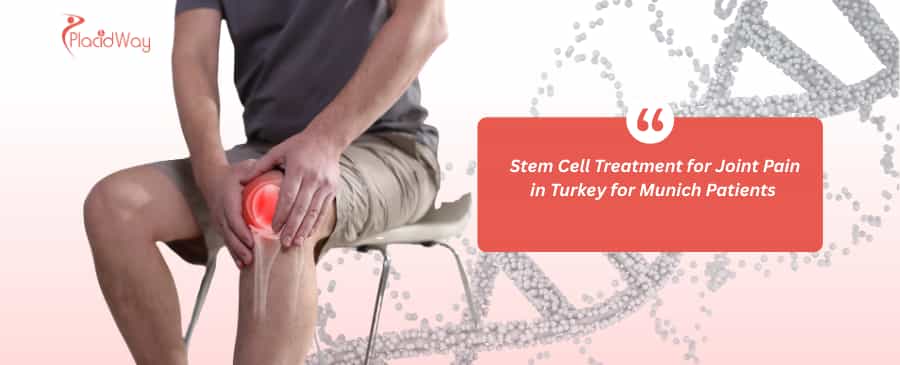
For residents of Munich suffering from chronic osteoarthritis or degenerative joint disease, the search for effective relief often leads to a frustrating crossroads: endure long wait times for statutory insurance treatments or pay exorbitant out-of-pocket fees for regenerative therapies in private German clinics. This dilemma has driven thousands of German patients to look southeast to Turkey, a global leader in regenerative medicine that offers high-quality stem cell treatment for joint pain at a fraction of European prices.
Located just a short flight away, Turkey combines advanced biotechnological infrastructure with JCI-accredited hospitals, providing a viable solution for those seeking to delay joint replacement surgery. By utilizing mesenchymal stem cells (MSCs), Turkish specialists are helping international patients regenerate cartilage and restore mobility, turning a medical necessity into a seamless therapeutic journey from Bavaria to the Bosphorus.
Key Takeaways for Munich Patients
- Significant Cost Savings: Patients from Munich save between 60% and 70% on stem cell therapies in Turkey compared to private German clinics.
- Advanced Cell Protocols: Turkish regulations allow for advanced stem cell expansion and culturing techniques often restricted or prohibitively expensive in the EU.
- Comprehensive Packages: Treatment typically includes VIP airport transfers, 4-star hotel accommodation, translation services, and all medical fees.
- Short Travel Time: Direct flights from Munich (MUC) to Istanbul (IST) take under 3 hours, minimizing travel strain on painful joints.
- Cost Snapshot:
- Turkey: €3,000 – €5,000 (All-inclusive package)
- Germany: €8,500 – €15,000 (Treatment only)
- USA: $12,000 – $25,000 (Treatment only)
Why Munich Patients Choose Turkey for Regenerative Medicine
Turkey has emerged as the premier destination for German patients by resolving the "cost vs. quality" conflict, offering world-class biotechnological care without the premium price tag.
The medical tourism corridor between Germany and Turkey is well-established, but the surge in orthopedic regenerative medicine is relatively recent. For a patient in Munich, the local options for stem cell therapy for knees or hips are often limited to high-end private practices where a single injection cycle can cost upwards of €10,000. Statutory health insurance (GKV) rarely covers these procedures, viewing them as experimental despite growing clinical evidence.
Turkey offers a compelling alternative not just through pricing, but through volume and expertise. Turkish clinics specifically cater to the German market; many orthopedists in Istanbul and Antalya have completed fellowships in Germany and speak fluent German. This eliminates the language barrier, a critical factor for patients discussing complex biological treatments. Furthermore, Turkey's Ministry of Health actively supports the biotech sector, allowing for GMP-certified laboratories to produce high-potency stem cell concentrations that may be difficult to access under stricter EU regulations.
Turkey is one of the few countries in the region with a dedicated legislative framework for stem cell applications. The Ministry of Health grants specific licenses to hospitals for stem cell production and application, ensuring that patients receive verified, viable cells rather than the unverified "cocktails" often found in less regulated medical tourism destinations.
Understanding the Procedure: Types of Stem Cells Used
Effectiveness depends entirely on the source and quality of the cells; Turkish clinics offer a range of autologous and allogeneic options tailored to the severity of joint degeneration.
When you inquire about stem cell treatment for arthritis in Turkey, you will typically be presented with two main categories of treatment. Understanding the difference is vital for comparing quotes and expected outcomes.
Autologous Mesenchymal Stem Cells (Adipose or Bone Marrow)
This is the most common method where the patient is their own donor.
Adipose-Derived (Fat): Doctors perform a mini-liposuction (usually from the abdomen) to harvest fat tissue. This tissue is rich in Mesenchymal Stem Cells (MSCs). The fat is processed to isolate the Stromal Vascular Fraction (SVF), containing a high concentration of regenerative cells, and injected into the joint.
Bone Marrow Aspirate (BMAC): Marrow is drawn from the pelvic bone. While it contains fewer MSCs than fat, it is rich in growth factors and hematopoietic cells that aid tissue repair.
Allogeneic Umbilical Cord Stem Cells
For older patients or those with chronic illnesses whose own stem cells may have reduced potency, Turkish clinics offer allogeneic cells derived from the Wharton's Jelly of healthy, screened umbilical cords. These "Day 0" cells are incredibly potent, have low immunogenicity (no rejection risk), and are expanded in a lab to guarantee a specific cell count (e.g., 50 million cells per knee). This option is often more expensive but can deliver superior results for severe grade 3 osteoarthritis.
"For patients traveling from Munich, the Umbilical Cord Stem Cell option is increasingly popular. Because no extraction is required from the patient (no liposuction or bone marrow draw), the recovery is faster, and the procedure is less invasive. This allows patients to enjoy a day of sightseeing in Istanbul before flying home, turning a medical trip into a mini-vacation."
Detailed Cost Comparison: Turkey vs. Germany vs. UK
A transparent breakdown of costs reveals why medical tourism to Turkey is a financial necessity for many, offering premium care at a fraction of the cost.
| Procedure (Single Joint) | Turkey (Istanbul/Antalya) | Germany (Munich/Berlin) | United Kingdom | What's Included in Turkey? |
|---|---|---|---|---|
| Adipose Stem Cell Therapy | €3,000 – €4,500 | €9,000 – €14,000 | £7,000 – £10,000 | Consultation, Liposuction, Lab Processing, Injection, Hotel (3 nights), Transfers. |
| Bone Marrow (BMAC) | €2,800 – €4,000 | €8,500 – €12,000 | £6,000 – £9,000 | Consultation, Aspiration, Filtration, Injection, Hotel (2-3 nights), Transfers. |
| Umbilical Cord (Allogeneic) | €4,500 – €7,500 | €15,000+ (Restricted) | £12,000+ | 50-100 Million Cells, Lab Cert, 2-3 Nights Hotel, VIP Transfer. |
| Exosome Therapy (Add-on) | €1,000 – €2,000 | €3,000 – €5,000 | £2,500 – £4,500 | High-concentration exosome vial injection. |
*Prices are estimates based on 2024-2025 market averages. Costs in Germany refer to private clinic fees as GKV typically denies coverage.
The Patient Journey: From Munich to Istanbul
Navigating the medical travel process is seamless with structured packages designed specifically for German residents.
The logistics of traveling from Munich to Turkey for medical care are simpler than many patients anticipate. The journey is designed to be stress-free, acknowledging that the patient is likely in pain.
Flight Connectivity
Munich Airport (MUC) is a major hub with multiple daily direct flights to both Istanbul Airport (IST) and Sabiha Gökçen (SAW). Airlines like Turkish Airlines, Lufthansa, and Pegasus operate this route frequently. The flight duration is approximately 2 hours and 45 minutes, which is manageable even for patients with hip or knee stiffness.
Accommodation and Transfers
Unlike standard medical appointments in Germany where you drive yourself and pay for parking, Turkish medical packages include VIP transfer services. A driver meets you at the arrivals gate in Istanbul and transports you to your hotel. Partner hotels are typically 4 or 5-star establishments located close to the clinic, ensuring you don't have to navigate Istanbul traffic on your own.
Step-by-Step Treatment Journey
A typical 4-day itinerary ensures ample time for evaluation, treatment, and immediate recovery monitoring.
- Day 1: Arrival. Land in Istanbul. VIP transfer to the hotel. Rest and settle in.
- Day 2: Consultation & Prep. Meet the orthopedic specialist. Undergo physical examination and fresh imaging (MRI/X-ray) if previous scans are outdated. Blood tests are conducted to ensure safety.
- Day 3: The Procedure.
- Morning: Harvesting of cells (liposuction or marrow draw) under local anesthesia / sedation.
- Mid-day: Laboratory processing (takes 2-4 hours) to isolate and concentrate stem cells.
- Afternoon: Intra-articular injection of stem cells into the knee or hip under ultrasound or fluoroscopic guidance for precision.
- Evening: Return to hotel to rest with ice packs and pain management if needed.
- Day 4: Follow-up & Departure. Final check-up with the doctor to inspect injection sites. Transfer to the airport for the return flight to Munich.
"Don't ignore the importance of rehabilitation. While the stem cell injection in Turkey initiates the repair, the outcomes are solidified by what you do when you return to Munich. We provide every patient with a 6-week physiotherapy protocol to follow at home or with their local German physiotherapist to maximize cartilage regeneration."
Safety, Accreditation, and Regulations
Stringent oversight by the Turkish Ministry of Health ensures that medical tourists receive care that meets or exceeds EU safety standards.
One common misconception among German patients is that lower cost equates to lower safety. In reality, the cost difference is driven by lower labor costs, domestic pharmaceutical manufacturing, and favorable exchange rates, not by cutting corners on safety. Top clinics in Istanbul treating international patients often hold JCI (Joint Commission International) accreditation, the gold standard in global healthcare.
Furthermore, stem cell laboratories in Turkey must adhere to GMP (Good Manufacturing Practice) standards. This is crucial for cell viability. In a GMP lab, particle counts are strictly controlled to prevent contamination, ensuring that the biological material injected into your joint is pure and potent.
Many Turkish hospitals are equipped with "Hybrid Operating Rooms" that combine advanced imaging (CT/MRI) with surgical suites. This allows for pinpoint accuracy during stem cell injections, ensuring the regenerative cells are placed exactly at the site of the cartilage defect, significantly improving the success rate for hip and knee treatments.
Frequently Asked Questions
Answers to the most common queries from Munich patients regarding logistics, safety, and outcomes.
How much does stem cell therapy for knees cost in Turkey compared to Germany?
Stem cell therapy for knees in Turkey typically ranges from $3,000 to $5,000 per joint. In contrast, similar treatments in Munich or other German cities can cost between €8,500 and €15,000, offering patients savings of approximately 60-70%.
Is stem cell therapy in Turkey safe for international patients?
Yes, Turkey enforces strict medical regulations through its Ministry of Health. Many clinics catering to international patients are JCI-accredited and use GMP-certified laboratories for cell processing, ensuring safety standards comparable to or exceeding those in Western Europe.
How long is the flight from Munich to Istanbul for medical treatment?
The flight from Munich (MUC) to Istanbul (IST or SAW) is a direct short-haul trip taking approximately 2 hours and 45 minutes, making it a highly convenient option for patients with joint pain who cannot endure long travel times.
What types of stem cells are used for joint pain in Turkey?
Turkish clinics primarily use Mesenchymal Stem Cells (MSCs) derived from the patient's own adipose (fat) tissue or bone marrow. Allogeneic options using umbilical cord stem cells are also legally available and widely used for their high potency.
Will my German health insurance (GKV) cover stem cell therapy in Turkey?
Generally, German statutory health insurance (GKV) views stem cell therapy for osteoarthritis as an experimental treatment and does not cover it domestically or abroad. However, the out-of-pocket cost in Turkey is significantly lower than private treatment in Germany.
How many days do I need to stay in Turkey for the procedure?
Most patients only need to stay in Turkey for 3 to 5 days. This allows time for the initial consultation, the procedure (which takes a few hours), and a follow-up check before flying back to Munich.
What is the success rate of stem cell injections for knee arthritis?
Clinical data and patient reports from top Turkish facilities indicate a success rate of 75-85% for reducing pain and improving mobility in Grade 2 and 3 osteoarthritis patients, delaying the need for total joint replacement.
Can I walk immediately after stem cell knee injections?
Yes, the procedure is minimally invasive. Patients can typically walk out of the clinic on the same day, though they are advised to avoid strenuous activity or heavy lifting for at least 2 weeks to allow the cells to settle.
Do Turkish doctors speak German or English?
English is widely spoken in medical tourism hubs like Istanbul and Antalya. Furthermore, due to historical ties between the nations, many Turkish specialists have trained in Germany and speak fluent German, ensuring clear communication.
Ready to Restore Your Mobility?
Don't let chronic joint pain limit your life or your finances. PlacidWay partners with the top JCI-accredited hospitals in Turkey to bring you world-class stem cell therapy packages tailored specifically for patients from Munich.
Get a free, no-obligation quote today and speak directly with our medical care team to plan your pain-free journey to recovery.
Get a Quote for Treatment in Turkey

.png)










.png)
.jpg)
.jpg)
.jpg)








Share this listing