

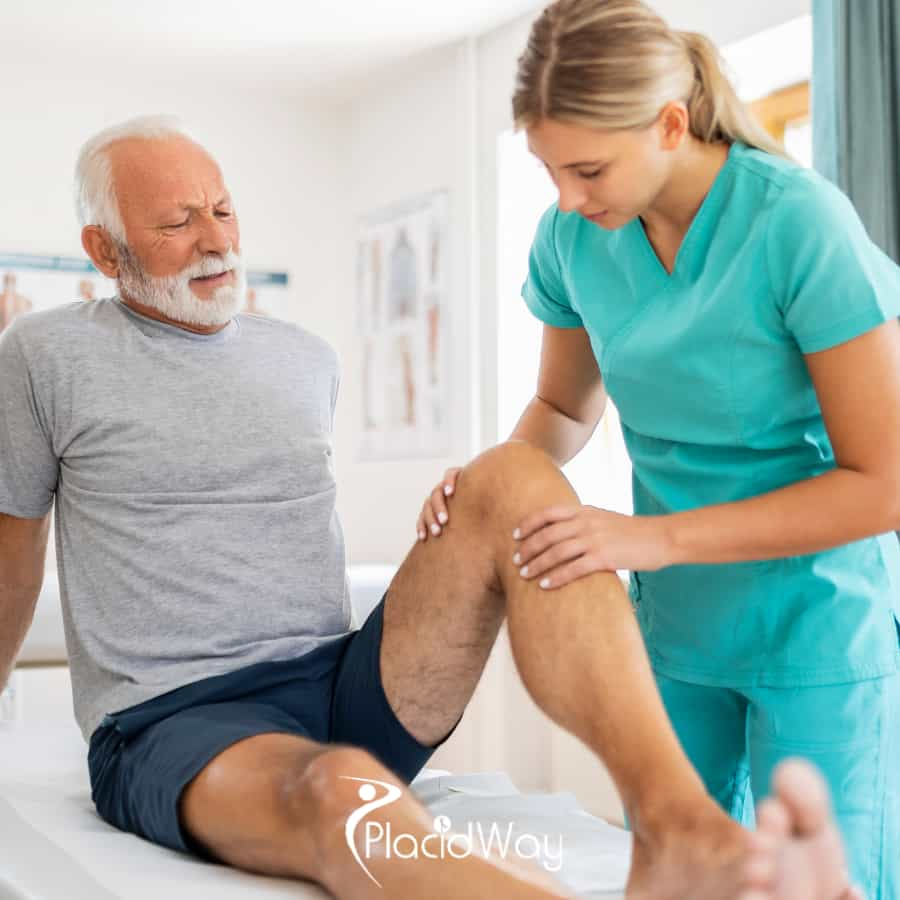
When knee pain affects walking, climbing stairs, or everyday activities, knee replacement may be an option to discuss with an orthopedic specialist. Knee replacement surgery in Poland can be considered by patients exploring treatment abroad, with factors such as the surgical approach, implant, hospital care, rehabilitation, and follow-up to review before booking.
What to Know Before Comparing a Knee Replacement Package
- Starting price: $6,500 is a planning figure, not a guaranteed all-inclusive surgical quote.
- Procedure choice: Partial and total knee replacement are different operations; the surgeon decides which fits your joint damage.
- Cost drivers: Implant brand and design, hospital, surgeon, anesthesia, tests, room type, rehabilitation and extra nights can change the total.
- Expected recovery: Walking usually begins soon after surgery, but strength, swelling and confidence may continue improving for months.
- Poland verification: Ask for the facility’s legal registration, surgeon credentials, implant documentation and infection-control information before paying.
- Travel planning: A treating physician must decide when you are fit to fly; prolonged sitting after surgery can increase clot risk.
How Much Does Knee Replacement Surgery Cost in Poland?
The knee replacement surgery cost in Poland can vary depending on the type of replacement, implant, surgeon and hospital fees, length of stay, rehabilitation, and individual medical needs. Patients should request an itemized quote to confirm what is included in the package and which services may incur additional costs.
| Destination | Illustrative Planning Range | What May Affect the Comparison |
|---|---|---|
| Poland | From $6,500 | Confirm implant, surgeon, anesthesia, hospital days, physiotherapy and follow-up. |
| United States | Often $30,000–$60,000+ without insurance | Hospital, surgeon, facility, anesthesia and rehabilitation may be billed separately. |
| United Kingdom | Often £12,000–£20,000+ privately | Implant system, hospital length of stay and private rehabilitation vary. |
| Germany or Western Europe | Often €15,000–€25,000+ | City, hospital category, implant and post-acute rehabilitation affect the quote. |
| Turkey | Often $7,000–$15,000+ | Compare implant warranty, surgeon fees, hospital care and aftercare rather than headline price. |
These are broad planning estimates, not provider quotes. The final amount can be higher or lower after assessment, and exchange rates may change the amount you pay.
Illustrative Breakdown of the $6,500 Starting Price
This is an estimated budgeting model pending medical assessment. It should not be treated as a confirmed package invoice.
| Procedure Item | Estimated Cost | Short Description |
|---|---|---|
| Orthopedic consultation and surgical planning | $300 | Review of symptoms, imaging, health history and procedure choice. |
| Preoperative tests and anesthesia assessment | $400 | Medical clearance, blood work, imaging and anesthesia review if included. |
| Knee replacement operation and surgeon fee | $3,300 | Partial or total replacement according to the surgeon’s plan. |
| Implant and operating-room charges | $1,600 | Implant system, surgical materials and operating-room use. |
| Hospital recovery and early physiotherapy | $700 | Inpatient monitoring, pain management and early assisted walking. |
| Discharge planning and initial follow-up | $200 | Instructions, medication plan and early contact after discharge. |
| Estimated Total | $6,500 | Final price remains subject to medical assessment and written confirmation. |
What May Be Included in a Poland Knee Replacement Package?
The package title and starting price do not establish a complete provider invoice. Ask the treating facility to confirm each item in writing:
- Remote review of your medical history, X-rays and other records.
- In-person orthopedic examination and a documented surgical plan.
- Preoperative tests, anesthesia assessment and the selected implant system.
- Surgeon, anesthesia, operating-room and hospital charges.
- Postoperative imaging, wound review, medication instructions and early physiotherapy.
- Discharge summary, implant details and a plan for follow-up with a local provider.
Which Expenses May Be Excluded?
- Flights, hotel nights, meals, local transport, visa costs and companion expenses.
- Pre-travel dental clearance, specialist consultations or tests not listed in the quote.
- Premium implant upgrades, robotic assistance, private rooms or extra hospital nights.
- Prescription medicines, compression garments, walking aids and extended physiotherapy.
- Emergency care, readmission, treatment of infection, revision surgery or care after returning home.
- Travel insurance, medical-evacuation coverage and non-refundable travel changes.
Who May Be Considered for Knee Replacement Surgery?
Knee replacement is usually considered when pain and loss of function are linked to advanced joint damage and non-surgical care no longer provides enough relief. A package page cannot determine candidacy; an orthopedic surgeon must review your symptoms, examination and imaging.
- Adults with severe osteoarthritis, inflammatory arthritis, post-traumatic damage or another confirmed cause of joint destruction.
- Patients with persistent pain, stiffness, deformity or reduced walking ability affecting daily activities or sleep.
- People who have discussed exercise, weight management, medicines, injections or other appropriate non-surgical options.
- Patients healthy enough for anesthesia and rehabilitation, with chronic conditions assessed and managed before surgery.
- People who can commit to physiotherapy, wound care, medication instructions and follow-up after returning home.
Which Medical Records Should You Prepare?
- Recent standing knee X-rays and MRI or CT scans when clinically relevant.
- A short history of pain, swelling, stiffness, walking limits, falls and previous injuries.
- Records of physiotherapy, injections, medicines, braces and other prior treatments.
- Medication and allergy lists, including blood thinners, steroids and supplements.
- History of diabetes, heart or lung disease, kidney disease, infections, clotting problems and previous surgery.
- Recent blood tests, dental information and medical-clearance documents requested by the hospital.
- Contact details for your home doctor, physiotherapist and emergency contact.
How Knee Replacement Surgery Is Performed
In a total knee replacement, the surgeon removes damaged joint surfaces and replaces them with metal and plastic components designed to restore smoother movement. A partial replacement treats only the damaged compartment and is suitable for selected patients. The final choice depends on the pattern of arthritis, ligaments, alignment, age, activity and surgeon assessment.
- Preoperative check: The team reviews imaging, medications, infection risks and anesthesia fitness.
- Anesthesia: Regional, general or combined anesthesia may be used according to your medical needs.
- Surgical exposure: The surgeon reaches the knee through an incision and protects surrounding tissues.
- Bone preparation: Damaged cartilage and a small amount of bone are removed to prepare the surfaces.
- Implant placement: Trial components are assessed before the final implant is fixed and the knee is checked for movement and stability.
- Closure and recovery: The incision is closed, pain is managed and you are monitored in a recovery area.
- Early mobilization: A physiotherapist usually helps you stand and begin safe walking with a frame or crutches.
What Is the Treatment Timeline?
- Before travel: Send records, receive surgical advice, request an itemized quote and complete medical clearance.
- Arrival: Attend the final examination, imaging or tests; surgery may be postponed if a concern is found.
- Operation day: Undergo the planned knee replacement and postoperative monitoring.
- Hospital recovery: Begin pain control, walking practice, breathing exercises, wound care and physiotherapy.
- Discharge: Leave when the surgeon confirms that your wound, pain, mobility and general condition are suitable.
- Return home: Travel only after medical clearance, with records, medicines and a plan for local rehabilitation.
- Longer follow-up: Continue physiotherapy and attend wound, X-ray and functional reviews as advised.
How Long May You Need to Stay in Poland?
- Plan for approximately 3–6 nights in hospital or nearby medical accommodation, depending on recovery and the package.
- Many international patients need additional days near the hospital after discharge for wound review and safe mobility.
- Do not treat a fixed travel date as medical clearance; the surgeon controls when you may fly.
- Ask about wheelchair support, airport transfers, stairs, hotel accessibility and help with luggage.
- Arrange a companion if you will need help with bathing, meals, medicines or transport after discharge.
- Check passport, entry, insurance and medication rules before booking non-refundable travel.
Recovery and Rehabilitation After Knee Replacement
Recovery usually happens in stages. In the first days, the focus is pain control, wound protection, safe transfers and walking with support. During the following weeks, physiotherapy works on knee movement, strength, balance and daily activities. Swelling and fatigue may last for months, and full functional recovery varies with health, age, preoperative mobility and rehabilitation participation.
- Use the walking aid and exercises exactly as instructed.
- Keep the incision clean and report drainage, increasing redness or wound opening.
- Take blood-clot prevention and pain medicines only as prescribed.
- Plan local physiotherapy before you return home rather than waiting for pain to improve.
- Return to driving, work, swimming and higher-impact activity only after professional clearance.
Risks and Possible Complications
This list is not exhaustive. Your surgeon and anesthetist should explain individual risks, including those related to your health, implant, travel and rehabilitation access.
- Pain, bruising, swelling, stiffness, numbness or slower-than-expected progress.
- Wound problems, superficial or deep infection and possible additional surgery.
- Bleeding, transfusion, reaction to anesthesia, heart or lung complications.
- Blood clots in the leg or lungs, especially when surgery is followed by prolonged travel.
- Injury to nerves, blood vessels, ligaments or surrounding bone.
- Implant loosening, wear, instability, persistent pain, reduced range of motion or revision surgery.
- Falls, delayed rehabilitation, readmission or difficulty obtaining follow-up care at home.
What Results Should You Reasonably Expect?
- The main goals are usually less arthritis-related pain, improved alignment or stability and better ability to perform daily activities.
- A replacement knee is not the same as a natural knee, and high-impact activities may remain limited.
- Movement, swelling, walking distance and confidence often improve gradually rather than immediately.
- Results vary with implant position, muscle strength, preoperative mobility, body weight, general health and rehabilitation.
- No package can guarantee a specific pain score, range of motion, implant lifespan or return to sport.
What Should You Verify Before Booking in Poland?
No hospital or surgeon is identified in the package information provided for this page, so provider-specific credentials should not be assumed. Ask the coordinator or facility for:
- The hospital’s legal name, address and registration in Poland’s Register of Entities Performing Medical Activities.
- The orthopedic surgeon’s full name, medical registration, specialist training and experience with the planned implant.
- The implant manufacturer, model, regulatory documentation and warranty or revision policy.
- Hospital infection-control procedures, emergency capability and the named contact after discharge.
- Recent outcome data that explain the patient group, follow-up period and definition of success.
- A written plan for complications, readmission, revision and follow-up after you return home.
Frequently Asked Questions About Knee Replacement in Poland
Is $6,500 the final knee replacement price?
Does the package include a total knee replacement?
How long do I need to stay in Poland?
When can I fly after knee replacement?
Will I need physiotherapy after surgery?
What implant will be used?
Can I travel alone for knee replacement?
What happens if I am not medically cleared after arrival?
How long does a knee replacement last?
Can I return to running after knee replacement?
References for Knee Replacement and Medical Travel
- American Academy of Orthopaedic Surgeons: Total Knee Replacement
- National Health Service: How a Knee Replacement Is Done
- National Health Service: Recovering From a Knee Replacement
- National Health Service: Complications of a Knee Replacement
- Centers for Disease Control and Prevention: Medical Tourism and Health Care Abroad
- American Academy of Orthopaedic Surgeons: Activities After Total Knee Replacement
Medical Disclaimer
This page is for general informational and educational purposes only and is not medical advice. A qualified orthopedic surgeon must assess your condition, explain alternatives and decide whether surgery and international travel are appropriate.



























Share this listing