


Overcoming Parkinson’s Disease: Enver’s Life-Changing Deep Brain Stimulation Surgery in Turkey
For millions worldwide, the diagnosis of Parkinson’s disease feels like a slow retreat from the activities they love. When medications like Levodopa begin to lose their efficacy, many patients feel trapped in a body that refuses to obey. Deep Brain Stimulation for Parkinson's has emerged as a revolutionary beacon of hope, offering a technological "pacemaker for the brain" that can dramatically reduce tremors and restore motor function. Watch this incredible success story of Enver Leci, who traveled to Turkey to reclaim his independence through advanced neurosurgical intervention.
Enver's journey from Pristina, Kosovo, to the world-renowned Medical Park in Istanbul highlights the power of modern medical tourism. Under the expert hands of Dr. Sait Ozturk, Enver transitioned from barely being able to walk to standing tall just twenty-four hours after his procedure. This guide explores the intricate details of his recovery and why Turkey has become a global hub for neurological excellence.
Video Chapters & Quick Navigation
Understanding the Parkinson’s Struggle: Beyond the Tremors
Parkinson’s Disease is a progressive neurological disorder that primarily affects the dopamine-producing neurons in a specific area of the brain called the substantia nigra. For many, the first signs are subtle—a slight tremor in a finger or a stiffness in the shoulder. However, as the disease progresses, it robs patients of their ability to perform simple daily tasks.
Enver Leci, diagnosed in 2015 [00:20], experienced a common but debilitating trajectory. Over nine years, his mobility became increasingly restricted. He describes a reality where he was only "normal" for two to three hours a day [00:38]. The rest of his time was a battle against his own motor system, a condition often referred to as "off" periods in Parkinson's management.
Freezing of gait (FOG) is one of the most distressing symptoms of advanced Parkinson's. It feels as if the feet are glued to the floor, making it impossible to take a step despite the brain's commands. For Enver, this meant he could no longer walk on his own whenever he wanted [01:30]. This loss of autonomy is what often drives patients to seek advanced surgical options like Deep Brain Stimulation.
What is Deep Brain Stimulation (DBS) and How Does It Work?
Deep Brain Stimulation is an advanced neurosurgical procedure that involves the implantation of medical devices that send electrical impulses to specific parts of the brain. Often described as a "brain pacemaker," DBS is used to treat a variety of movement disorders, including Parkinson's disease, essential tremor, and dystonia.
The system consists of three main components: the lead (a thin wire with electrodes implanted in the brain), the extension wire, and the neurostimulator (the pulse generator implanted under the skin near the collarbone). By delivering high-frequency stimulation to the subthalamic nucleus (STN) or the internal globus pallidus (GPi), the device can "re-tune" the brain's circuitry, effectively dampening the abnormal signals that cause tremors and rigidity.
Key Benefits of DBS Surgery
- Reduced Dependency on Medication: Many patients can significantly lower their dosage of Parkinson’s drugs, reducing side effects like dyskinesia.
- Extended "On" Time: DBS helps eliminate the "rollercoaster" effect of medication wearing off throughout the day.
- Improved Motor Control: Dramatic reduction in tremors, stiffness, and slow movement (bradykinesia).
Excellence at Medical Park Istanbul: A Global Destination for Neurosurgery
Turkey has rapidly ascended to the top tier of medical tourism, specifically in the field of functional neurosurgery. Medical Park Istanbul stands at the forefront of this movement, offering a combination of state-of-the-art technology and highly skilled medical professionals.
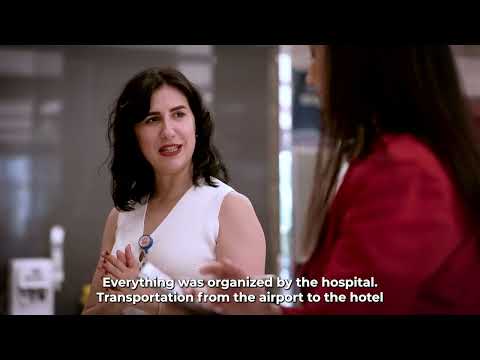
One of the standout features of the Medical Park experience, as Enver noted, is the comprehensive organizational support [00:50]. For international patients, the stress of navigating a foreign healthcare system can be overwhelming. Medical Park mitigates this by handling everything from airport transfers to hotel accommodations and in-hospital logistics.
The multidisciplinary approach at the hospital ensures that patients aren't just seeing a surgeon. They are supported by a full team, including neurologists specializing in movement disorders, dedicated nursing staff, and rehabilitation experts [01:18]. This "patient-first" philosophy is evident in the personalized care Enver received throughout his journey.
Enver Leci’s Patient Testimony: Nine Years of Struggle Ended in One Day
Enver’s testimony is a powerful reminder of why innovation in medicine matters. Born in 1955 [00:14], he spent nearly a decade watching his world shrink due to Parkinson's. He explains that while the disease wasn't very obvious in the first few years, it became increasingly challenging as time passed [00:30].
The turning point for Enver was the realization that he could no longer function independently. Simple actions like buttoning a shirt [00:22] or drinking a glass of water [00:34] were becoming Herculean tasks. His decision to travel to Istanbul was fueled by the desire to regain those "lost hours" of his day.
| Metric | Before DBS Surgery | After DBS Surgery |
|---|---|---|
| Daily "Normal" Time | 2-3 Hours | Full Day Functionality |
| Mobility Status | Freezing of gait; unable to walk alone | Walking almost normally |
| Independence | Highly Dependent | Restored Independence |
| Psychological Impact | Frustration and restriction | Gratitude and hope |
The DBS Surgical Process: Precision and Dedication
While the results often seem miraculous, the surgery itself is a triumph of engineering and neurosurgical skill. It is a delicate procedure that requires pinpoint accuracy. The neurosurgeon uses advanced imaging—such as MRI and CT scans—to map the brain and identify the exact target area [00:03].
In many cases, the patient is awake during the first part of the procedure. This allows the surgical team to monitor brain activity and test the patient's motor responses in real-time as the electrodes are positioned. For Enver, the process was described as difficult and delicate, yet perfectly executed by the medical team [01:45].
The second stage of the surgery involves placing the pulse generator under the skin. This part is typically done under general anesthesia. Once the system is implanted and the incisions heal, the device is "programmed" by a neurologist to find the optimal electrical settings for each specific patient.
Rapid Recovery and Results: Walking Again within 24 Hours
The most striking part of Enver’s story is the speed of his recovery. While some patients take weeks to adjust to the stimulation, Enver showed significant improvement almost immediately. "A day after the surgery, I was able to stand up and walk almost normally," he shares with a smile [01:34].
This rapid return to mobility is a testament to the accuracy of the lead placement and the expertise of the surgical team. Seeing Enver walk down the hospital corridors without the assistance of his wife or a walker serves as a profound proof of concept for Deep Brain Stimulation [01:37].
Recovery doesn't end at the hospital door, however. The "honeymoon period" after surgery is followed by a period of fine-tuning. Patients work closely with their neurologists over the following months to optimize the stimulation levels, ensuring that as the disease progresses, the DBS can be adjusted to continue providing maximum benefit.
Spotlight on Dr. Sait Ozturk: The Hands Behind the Healing
Dr. Sait Ozturk is a renowned neurosurgeon whose work at Medical Park has drawn patients from across the globe. His specialty in functional neurosurgery and stereotactic procedures makes him a leader in treating complex movement disorders. Throughout the video, his calm and professional demeanor with Enver illustrates the strong doctor-patient bond essential for successful outcomes [01:25].
Dr. Ozturk’s approach combines rigorous surgical planning with a compassionate understanding of the patient's daily struggles. He emphasizes that while the surgery is technically challenging, the goal is always simple: to return the patient to their normal life [01:47].
His advice to others struggling with Parkinson's is not to be afraid. The technological advancements in neurosurgery have made DBS a safe and predictable option for those who are good candidates. For Enver, Dr. Ozturk’s skillful hands were the key to overcoming a difficulty that had defined his life for nearly a decade [01:52].
Logistics and International Care: The Medical Park Experience
One of the biggest hurdles for patients considering surgery abroad is the logistics. Medical Park Istanbul has perfected the international patient experience, ensuring that the focus remains entirely on healing. Enver’s wife expressed deep gratitude for the entire process, noting how beautifully and completely the team managed their stay [02:02].
The hospital provides a seamless bridge between the patient's home country and the operating room. This includes specialized translators, assistance with medical records, and a dedicated international patient department that acts as a concierge service. This level of care is why patients from Kosovo, like Enver, and from much further afield, choose Turkey for their medical needs.
Furthermore, the cost-effectiveness of DBS surgery in Turkey is a significant factor. While providing the same high-end technology and surgical expertise found in the US or Western Europe, Turkish hospitals can offer these procedures at a much more accessible price point due to lower overhead costs and government support for medical tourism.
Ready to Reclaim Your Life from Parkinson’s?
PlacidWay Medical Tourism connects you with top-rated clinics in Turkey for advanced Deep Brain Stimulation surgery. Experience world-class care, expert neurosurgeons, and personalized international patient support—all at a more accessible price.
GET A FREE QUOTEView Full Video Transcript
00:00 Before the surgery, I could not walk on my own whenever I wanted.
00:03 [Dr. Sait Ozturk explains the brain mapping on screen]
00:05 But a day after the surgery, I was able to stand up and walk almost normally.
00:07 We come here from far away from Pristina, the capital of Kosovo.
00:13 My name is Enver Leci. I was born in 1955.
00:20 I was diagnosed with Parkinson's disease 9 years ago, in 2015.
00:26 Although Parkinson's disease was not very obvious in the first years, it became more obvious and more challenging as the years passed.
00:38 I started not being able to walk on my own. I was only normal for 2-3 hours a day.
00:48 Everything was organized by the hospital. Transportation from the airport to the hotel and then transportation from the hotel to the hospital.
01:06 We were very pleased with the Medical Park team.
01:13 Transportation, accommodation, nursing and all medical team fully supported us as patient.
01:25 [Dr. Sait Ozturk consulting with Enver]
01:29 Before the surgery, I could not walk on my own whenever I wanted.
01:33 But a day after the surgery, I was able to stand up and walk almost normally.
01:39 [Dr. Ozturk reviewing surgical planning software]
01:42 My advice to people struggling with Parkinson's Disease is not to be afraid.
01:45 The surgery process is really difficult and delicate but thanks to the skillful hands of the doctor, I was able to overcome this difficulty.
01:55 First, we would like to thank our doctor Mr. Sait. I would also like to thank the doctor's medical team and the nursing.
02:02 From the bottom of my heart for completing the entire process so beautifully and completely, I thank you from the heart.
02:07 [Enver and his wife waving goodbye as they leave the hospital]





.png)








Share this listing