


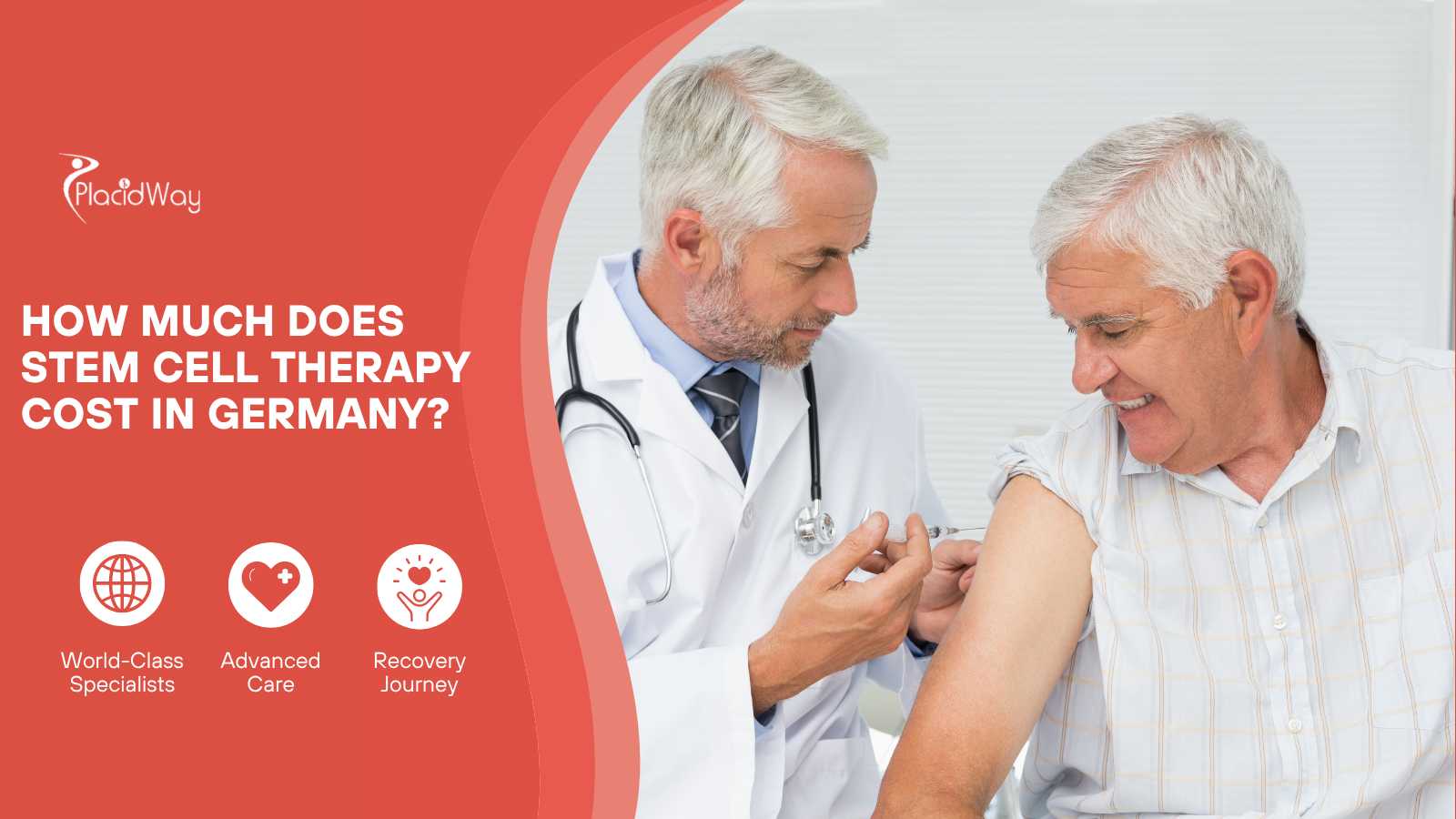
The stem cell therapy cost in Germany generally ranges between $8,000 and $25,000. This estimate varies significantly based on the specific medical condition, the type and volume of cells administered, and the facility's clinical protocols.
Key Takeaways: Regenerative Medicine in Germany
- Prices are reflective of Germany's stringent regulatory standards and advanced laboratory processing techniques.
- The Paul-Ehrlich-Institut heavily regulates biological therapies to ensure high levels of patient safety and cell viability.
- Treatments often focus on orthopedic conditions, sports injuries, and certain neurological protocols, though results vary.
- Procedures primarily utilize mesenchymal stem cells (MSCs) sourced from bone marrow, adipose tissue, or ethically harvested cord tissue.
- Comprehensive pre-treatment screening is mandatory to determine if a patient is a suitable candidate for cellular therapy.
What is included in the average stem cell therapy cost in Germany?
A typical treatment package encompasses the initial physician consultation, cellular harvesting and laboratory expansion, the clinical infusion procedure, and immediate post-treatment observation.
When evaluating the overall stem cell therapy cost in Germany, international patients must carefully review what is—and isn't—included in their quoted price. Because treatment protocols are highly individualized, package inclusions can differ from one facility to another. Transparency in medical billing is a hallmark of reputable institutions, so patients should always request an itemized estimate.
In most instances, the baseline fees cover the extensive laboratory work required to process the biological material. Cultivating cells in clean-room environments under European standards requires specialized equipment and highly trained personnel, which forms a significant portion of the total expense. Furthermore, the cost typically includes the administration of the cells, whether via localized joint injection, intravenous drip, or intrathecal delivery.
Patients should be aware that ancillary expenses are rarely included in the initial quote. Diagnostic imaging (such as advanced MRIs), extended hospital stays, and comprehensive physical therapy regimens often incur additional charges. Travel expenses and local accommodations also need to be factored into the patient's private budget.
| Service Component | Typical Inclusion Status |
|---|---|
| Pre-Therapy Medical Consultation | Included |
| Laboratory Cell Cultivation/Processing | Included |
| Specialized Diagnostic Imaging (MRI/CT) | Usually Additional |
| Post-Treatment Physiotherapy | Usually Additional |
Which medical conditions are often treated with stem cell therapy in Germany?
Physicians frequently utilize these therapies to address orthopedic issues, such as severe osteoarthritis and sports injuries, alongside specific, heavily monitored protocols for certain neurological or autoimmune conditions.
Patients seeking stem cell therapy in Germany present with a wide variety of medical backgrounds. The most common application of this technology is within orthopedics. Individuals suffering from degenerative joint diseases, such as osteoarthritis of the knees, hips, or shoulders, often seek cellular therapy in an attempt to delay or avoid invasive joint replacement surgeries. In these cases, cells are typically injected directly into the affected joint to potentially reduce inflammation and support local tissue repair.
Another significant area of application involves sports medicine. Professional athletes and active individuals travel for treatments aimed at accelerating the healing of torn ligaments, severe tendonitis, and muscle injuries. The immunomodulatory properties of mesenchymal stem cells may create a more favorable environment for the body's natural healing processes.
It is crucial to note that while some facilities offer treatments for complex neurological conditions (such as Multiple Sclerosis or Parkinson's disease), these applications are often considered experimental. They require rigorous patient screening and are managed under strict institutional guidelines. Regenerative medicine is not universally recognized as a cure for these chronic diseases, and outcomes vary significantly among patients.
How do strict regulations affect a stem cell therapy clinic in Germany?
Stringent oversight by bodies like the Paul-Ehrlich-Institut ensures that clinics maintain exceptional laboratory standards, ethical sourcing, and rigorous patient safety protocols, which contributes to higher treatment costs.
A defining characteristic of choosing a stem cell therapy clinic in Germany is the intense regulatory environment. The country adheres strictly to the advanced therapy medicinal products (ATMP) guidelines set forth by the European Medicines Agency (EMA). Furthermore, the Paul-Ehrlich-Institut (PEI), the German Federal Institute for Vaccines and Biomedicines, oversees the clinical application of biological products.
These regulations mean that clinics cannot legally operate without demonstrating continuous adherence to Good Manufacturing Practices (GMP). Laboratories that handle cellular cultivation are subjected to rigorous, unannounced inspections to verify sterility, cell viability tracking, and proper biomedical waste disposal. This high barrier to entry prevents sub-standard facilities from offering therapies.
While this intense regulation provides a profound layer of safety and quality assurance for the patient, it directly impacts the price. Maintaining certified clean rooms, employing highly specialized biotechnologists, and navigating lengthy compliance audits require significant financial investment from the clinics, which is reflected in the final cost of care.
What variables impact the final price of the procedure?
The final price is heavily influenced by the cell dosage required, the complexity of the harvesting procedure, the necessity of laboratory expansion, and the specific medical specialists involved.
Because no two patients are alike, the stem cell therapy cost in Germany cannot be reduced to a single, flat fee. One of the primary variables is the number of cells needed for the treatment. A minor joint injection may require a relatively small volume of cells, whereas systemic therapies for complex autoimmune disorders may demand millions of cells cultured over several days or weeks.
The method of obtaining the cells also alters the price. Minimally invasive adipose (fat) tissue extraction is generally less complicated than a bone marrow aspiration. If the protocol requires sending the patient's harvested cells to an external, specialized laboratory to multiply them (expansion), the cost increases dramatically due to the time and highly specialized equipment required.
Additionally, the involvement of multidisciplinary medical teams affects the bill. A procedure overseen by a single orthopedic surgeon will cost less than a complex protocol requiring consultations with an endocrinologist, an immunologist, and a specialized anesthesiologist. Facility fees also play a role, as treatment in a private luxury hospital naturally commands a premium over a standard clinical setting.
Are autologous or allogeneic cells preferred for treatments?
Autologous cells (from the patient's own body) are frequently preferred to minimize rejection risks, though allogeneic cells (from healthy donors) may be utilized when a patient's own cells are not medically viable.
When exploring stem cell therapy in Germany, patients will encounter two primary classifications of cellular material. Autologous treatments involve harvesting stem cells directly from the patient usually via a mini-liposuction for adipose tissue or from the iliac crest for bone marrow. Because the biological material belongs to the patient, the risk of an immunological rejection or disease transmission is exceptionally low.
Conversely, allogeneic treatments utilize cells collected from healthy donors, commonly sourced from ethically donated umbilical cord tissue following a healthy birth. These younger cells often possess robust proliferative capabilities. They are rigorously screened for genetic abnormalities and infectious diseases prior to clinical use in a stem cell therapy clinic in Germany.
The choice between autologous and allogeneic therapy is a clinical decision made by the attending physician. If a patient is elderly or suffers from a chronic illness that compromises the quality of their own stem cells, the physician may recommend an allogeneic approach. Both methods have distinct protocols and pricing structures based on the required laboratory processing.
Who is an appropriate candidate for these regenerative procedures?
Appropriate candidates are medically stable individuals with realistic expectations who do not have contraindications such as active malignancies, severe systemic infections, or advanced organ failure.
Before traveling for treatment, patients must undergo stringent medical screening. Not everyone who applies for therapy will be accepted. Ideal candidates are those who have exhausted standard conservative treatments (such as physical therapy or basic medications) but wish to explore alternative options before committing to invasive surgery.
Physicians carefully evaluate a patient's medical history to rule out contraindications. Patients actively undergoing treatment for cancer, those with severe blood clotting disorders, or individuals suffering from active, uncontrolled infections are typically disqualified. The goal is to ensure the body's immune system is in a stable enough state to process and utilize the regenerative cells.
Psychological readiness is also a factor. Medical teams stress that regenerative medicine is not a miraculous, overnight cure. Candidates must possess realistic expectations, understanding that results can take months to manifest and that success rates vary. A commitment to post-procedure lifestyle modifications—such as weight management and targeted physiotherapy is often required.
What does the typical recovery timeline look like?
Immediate recovery is usually brief, allowing patients to travel within a few days, but the biological regeneration process occurs gradually over three to six months following the infusion.
Because the procedures are generally minimally invasive, the acute recovery phase is manageable for most international patients. Following a joint injection or intravenous infusion, patients might experience localized soreness, mild swelling, or general fatigue. These symptoms typically resolve within 24 to 72 hours. Clinics generally advise patients to rest and avoid strenuous physical activity during this immediate window.
Despite the quick initial recovery, the actual biological work is just beginning. Mesenchymal stem cells require time to communicate with the body's immune system, secrete growth factors, and influence cellular repair. Patients rarely feel dramatic improvements in the first few weeks. The modulation of inflammation and potential tissue healing is a slow, methodical process.
Most physicians schedule follow-up assessments at the three-month and six-month marks. During these evaluations, imaging and patient feedback are used to gauge the therapy's effectiveness. Depending on the outcome, some patients may be advised to undergo a localized booster injection to further support the ongoing regenerative process.
How does medical tourism in Germany benefit international patients?
International patients benefit from Germany's globally recognized healthcare infrastructure, access to highly specialized medical expertise, and stringent European safety protocols.
The landscape of medical tourism in Germany is built upon the country's historic reputation for medical and engineering precision. International patients often choose this destination not for the lowest price, but for the highest perceived value regarding safety, technological integration, and physician expertise. German medical specialists undergo some of the most rigorous medical training in the world.
Furthermore, facilities catering to international patients are well-equipped to handle the unique needs of medical travelers. Many renowned clinics maintain dedicated international patient departments. These teams assist with medical record translation, coordinate complex scheduling to minimize the patient's time away from home, and ensure clear communication with English-speaking medical staff.
While the stem cell therapy cost in Germany may be higher than in some developing nations, patients are paying for clinical peace of mind. The assurance that a clinic is strictly monitored by European health authorities provides a level of ethical and medical security that is often the deciding factor for patients seeking complex biological treatments.
Why Choose PlacidWay for your medical journey?
PlacidWay empowers patients by providing a comprehensive platform to research specialized international clinics, review provider credentials, and compare medical options efficiently.
Organizing healthcare across international borders involves careful planning and thorough research. PlacidWay serves as a centralized informational resource, helping patients navigate their options within the global regenerative medicine landscape.
- Extensive Provider Network: Access detailed profiles of clinics specializing in regenerative therapies across Europe and globally.
- Credential Visibility: Review available information regarding facility accreditations and the professional backgrounds of medical staff.
- Price Transparency: Obtain initial cost estimates and tailored quotes to help you build an accurate medical budget.
- Direct Communication: Connect with medical teams directly to ask clinical questions and clarify treatment protocols prior to making any commitments.
- Patient Education: Utilize a wide array of articles and guides designed to help you understand complex medical procedures and international healthcare standards.
Frequently Asked Questions (FAQs)
Is stem cell therapy legal and regulated in Germany?
Yes, regenerative medicine is highly regulated in the country. Facilities must adhere to strict guidelines set by the European Medicines Agency (EMA) and the Paul-Ehrlich-Institut (PEI) to ensure patient safety and biological product quality.
Do international insurance plans cover treatments in Germany?
Most standard domestic or international health insurance plans do not cover regenerative therapies, as they are often classified as elective or experimental procedures. Patients should anticipate paying out-of-pocket.
How long do I need to stay in Germany for the therapy?
The required length of stay varies from 3 to 14 days, depending on whether the cells are harvested from your own body (which requires processing time) or if the protocol utilizes prepared donor cells.
What types of stem cells are most commonly used by German specialists?
Specialists typically utilize adult mesenchymal stem cells (MSCs) sourced from the patient's own bone marrow or adipose (fat) tissue, though ethically sourced umbilical cord tissue may also be used in specific regulated protocols.
Are the results of regenerative medicine permanent?
Results are not guaranteed and vary widely among patients. While some individuals experience long-term relief from inflammation or joint pain, degenerative conditions may require follow-up treatments in the future.
Do I need a visa to receive medical care in Germany?
Citizens of the US, Canada, and many other nations can enter the Schengen Area for up to 90 days without a visa for medical tourism. However, entry requirements strictly depend on your passport nationality.
What happens during the initial consultation?
The physician will review your medical history, analyze recent diagnostic imaging or blood work, discuss your expectations, and determine if you are a medically suitable candidate for the proposed procedure.
Can elderly patients safely undergo these procedures?
Age alone is not necessarily a disqualifying factor, but elderly patients undergo rigorous cardiovascular and systemic health screenings to ensure their bodies can tolerate the cell harvesting and infusion processes safely.
Are there risks or side effects associated with the infusion?
While considered generally well-tolerated, potential risks include infection at the injection site, localized swelling, transient fever, fatigue, or mild immunological reactions. Comprehensive medical screening helps mitigate these risks.
How do I verify the credentials of a German medical facility?
Patients should look for international accreditations (such as ISO or JCI), verify the physicians' board certifications within Germany, and confirm the clinic's compliance with Paul-Ehrlich-Institut regulations.
Take the Next Step in Your Healthcare Journey
Research clinical options, evaluate pricing, and connect directly with verified medical professionals in Germany to discover if regenerative therapy aligns with your health goals.
Request Treatment InformationReferences
- Advanced Therapy Medicinal Products (ATMPs) – European Medicines Agency (EMA)
- Clinical Application of Mesenchymal Stem Cells in Orthopedics – National Institutes of Health (NIH) / PubMed Central
- Patient Safety and Clinical Standards – World Health Organization (WHO)
- Medical Tourism Safety Guidelines – Centers for Disease Control and Prevention (CDC)
.png 1x)

-(7).png)
-(12).png)

-(11).png)
.png)
.png)
.png)

.png)

.jpg)
.png)











Share this listing