


Understanding LASIK Eye Surgery
Before packing your bags and booking a flight, it is essential to understand exactly what LASIK entails. The human eye relies on the cornea (the clear front surface) and the lens to bend and focus light onto the retina. When the cornea is imperfectly shaped, it results in refractive errors—commonly known as myopia (nearsightedness), hyperopia (farsightedness), and astigmatism.
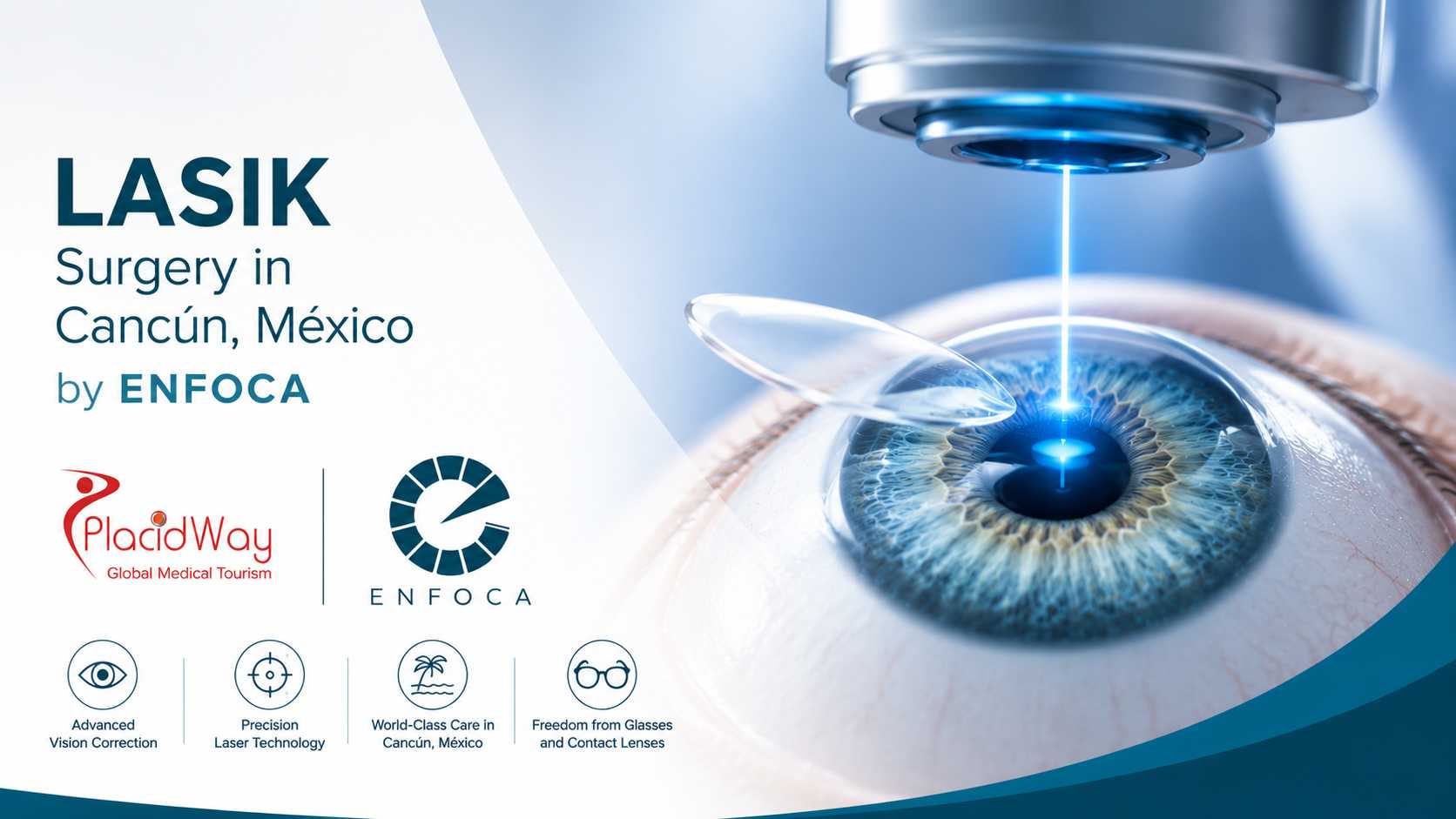
During a standard LASIK procedure, an eye surgeon uses anesthetic eye drops to numb the area. Then, using a highly precise tool (either a microscopic blade or, more commonly today, a cutting-edge femtosecond laser), the doctor creates a thin protective flap in the cornea. An excimer laser is then deployed to painlessly reshape the underlying corneal tissue. This laser permanently alters the curve of the cornea so that light focuses accurately on the retina, restoring sharp visual acuity. Finally, the flap is folded back into place, where it acts as a natural bandage and heals rapidly without stitches.
While the thought of laser eye surgery might seem intimidating, it is remarkably quick. The laser itself usually only works on the eye for 10 to 40 seconds. Patients are awake the entire time, feeling only mild pressure.
Why is Vision Correction So Expensive in the US, UK, and Canada?
When patients see the dramatically lower prices abroad, a common question arises: "Is the quality worse?" The answer, overwhelmingly, is no. The cost disparity has very little to do with the quality of the laser machine or the skill of the doctor, and everything to do with local economic factors.
In the United States, the United Kingdom, and Canada, healthcare is deeply expensive to operate. Eye surgeons face astronomical malpractice insurance premiums, high property rent for clinics, expensive labor costs for nursing and administrative staff, and complex medical billing systems. When you pay $5,000 for LASIK in New York or London, a significant portion of that fee goes toward keeping the lights on in the clinic and paying for insurance, not just the surgery itself.
In contrast, countries with lower costs of living have lower overhead expenses. A top-tier clinic in Turkey or India can afford to purchase the exact same Alcon WaveLight or Carl Zeiss VISUMAX laser machines used in Beverly Hills. Because their operational costs are a fraction of Western costs, they pass those incredible savings directly to the patient.
Global Price Comparison Table (Both Eyes)
To truly understand the savings, look at the estimated average costs for standard bladeless LASIK (for both eyes) across different nations. Note that prices can fluctuate based on the specific type of surgery (e.g., PRK, SMILE, or Custom Wavefront).
| Country | Average Cost (Both Eyes) | Savings vs. USA |
|---|---|---|
| 1. Turkey | $1,100 - $1,600 | Up to 75% |
| 2. Mexico | $1,200 - $1,800 | Up to 70% |
| 3. Azerbaijan | $900 - $1,300 | Up to 80% |
| 4. Armenia | $800 - $1,200 | Up to 80% |
| 5. China | $1,000 - $1,500 | Up to 75% |
| 6. South Korea | $1,200 - $1,700 | Up to 70% |
| 7. India | $600 - $1,100 | Up to 85% |
| 8. Kosovo | $1,000 - $1,400 | Up to 75% |
| 9. Greece | $1,500 - $2,000 | Up to 60% |
| 10. UAE (Dubai) | $1,800 - $2,500 | Up to 50% |
| United States | $4,000 - $6,000 | Baseline |
| United Kingdom | $4,200 - $5,500 | Baseline |
| Canada | $3,500 - $5,000 | Baseline |
The Top 10 Cheapest Countries for LASIK Eye Surgery
Below is a detailed look at the best international destinations for vision correction. These nations have been selected based on their competitive pricing, high medical standards, volume of successful surgeries, and availability of English-speaking staff for international patients.
1. Turkey: The Capital of Medical Tourism
Turkey, particularly Istanbul and Antalya, has aggressively positioned itself as the undisputed leader in medical tourism. It perfectly blends a rich cultural holiday experience with top-tier healthcare. Turkish eye clinics are heavily regulated by the Ministry of Health, and many hold prestigious JCI (Joint Commission International) accreditations.
Ophthalmologists in Turkey perform thousands of surgeries annually, giving them unparalleled experience. Clinics here frequently offer all-inclusive packages that cover the surgery, luxury hotel stays, VIP airport transfers, and post-operative medications. You will find all advanced technologies here, including Femto-LASIK, SMILE, and iLASIK, usually for around $1,100 to $1,600 total.
2. Mexico: Convenience for North Americans
For patients traveling from the United States and Canada, Mexico is the most logical choice due to its geographical proximity. Border cities like Tijuana and tourist destinations like Cancun and Mexico City are home to massive, modern medical facilities catering specifically to foreigners.
Many Mexican eye surgeons have completed fellowships or training programs in the United States and are board-certified by international bodies. Because there are no long flights required, patients can simply drive across the border or take a short flight, have the procedure, and return home quickly. The average price hovers between $1,200 and $1,800 for both eyes, offering exceptional value and convenience.
3. Azerbaijan: The Emerging Eurasian Hub
Located at the crossroads of Eastern Europe and Western Asia, Azerbaijan might not be the first country that comes to mind, but it is rapidly becoming a hidden gem for healthcare. The capital, Baku, boasts sleek, ultra-modern private hospitals funded by the country's booming economy.
Because the medical tourism industry is newer here, clinics offer highly aggressive pricing to attract foreign patients, often charging between $900 and $1,300 for bilateral LASIK. The equipment is brand new, and wait times are practically non-existent.
4. Armenia: Exceptional Value and High Expertise
Armenia has a long-standing tradition of strong medical education. In recent years, private investment has flowed into the healthcare sector in Yerevan (the capital), upgrading clinics with Western European and American optical technology.
What sets Armenia apart is the incredibly low cost of living, which translates to some of the most affordable medical care on the planet. Patients can expect highly personalized care and excellent clinical outcomes for around $800 to $1,200 for both eyes. Many clinics also cater to Russian and European tourists, ensuring multilingual support.
5. China: High-Volume Efficiency and Advanced Lasers
China has one of the highest rates of myopia in the world, which means their refractive surgeons perform a staggering number of eye surgeries every single day. This high volume leads to immense surgical expertise and highly streamlined clinic operations in mega-cities like Shanghai, Beijing, and Guangzhou.
Chinese hospitals are often early adopters of the newest laser technologies, including the Zeiss ReLEx SMILE procedure, which is minimally invasive and excellent for patients with dry eyes. Despite the high-tech environment, government subsidies and economies of scale keep prices low, averaging $1,000 to $1,500.
6. South Korea: The Innovators of Precision Medicine
South Korea is globally renowned for its advanced cosmetic and reconstructive surgery, but its vision correction clinics in Seoul (especially in the Gangnam district) are equally spectacular. The medical culture here places a heavy emphasis on perfection, aesthetic outcomes, and patient safety.
Clinics in South Korea are akin to luxury hotels, offering "factory-like efficiency" without sacrificing personalized care. They are famous for rapid-recovery LASIK techniques and comprehensive 50-point pre-operative eye exams. The cost is slightly higher than India or Turkey but still vastly cheaper than the US, coming in at $1,200 to $1,700.
7. India: The Absolute Lowest Cost
If your primary goal is to find the absolute cheapest country for LASIK eye surgery without compromising on safety, India is the clear winner. Cities like New Delhi, Mumbai, and Chennai are medical hubs filled with highly educated, fluent English-speaking doctors.
Because of the incredibly favorable exchange rate and low operational costs, world-class blade-free LASIK can be performed for as little as $600 to $1,100 for both eyes. Indian ophthalmologists often handle complex cases and have extensive experience treating a diverse array of refractive errors.
8. Kosovo: The European Budget Alternative
For Europeans looking to stay close to home but avoid the high medical costs of the UK or Germany, Kosovo is an intriguing option. Pristina, the capital, has seen a steady rise in private specialty clinics built specifically to cater to diaspora returning for medical care and savvy tourists.
The clinics here import their technology directly from Germany and Switzerland, ensuring Western European standards. A standard refractive surgery procedure here will typically cost between $1,000 and $1,400, offering excellent savings combined with cheap regional flights.
9. Greece: Surgery Combined with a Mediterranean Holiday
Greece offers the perfect "medical holiday." Imagine undergoing a swift 15-minute eye procedure and spending your recovery gazing at the Aegean Sea (with proper UV-blocking sunglasses, of course). Athens and Thessaloniki host superb private eye clinics.
Greek doctors often train in the UK or the US, ensuring they are fluent in English and up-to-date on global medical protocols. While slightly more expensive than Turkey or Eastern Europe at $1,500 to $2,000, it remains less than half the price of the UK, with the added benefit of being within the European Union's strict medical framework.
10. UAE (Dubai & Abu Dhabi): Unmatched Luxury and Technology
The United Arab Emirates isn't usually synonymous with "cheap," but when it comes to medical procedures compared to the US, the UAE offers substantial savings. Dubai Medical City is a free zone completely dedicated to healthcare, hosting branches of famous Western hospitals.
If you want absolute luxury, VIP treatment, English-as-a-first-language staff, and the absolute latest iteration of laser technology (like Custom Wavefront), the UAE is ideal. Costs run around $1,800 to $2,500 for both eyes. It is the most expensive on our "cheap" list, but it still saves a typical American patient around 50%.
What to Consider Before Getting LASIK Abroad
While the financial benefits of traveling for eye surgery are obvious, medical tourism requires careful planning to ensure a safe and successful outcome. Vision correction is life-changing, and finding a trustworthy provider is paramount.
-
Clinic Accreditation: Always look for international accreditations such as the Joint Commission International (JCI) or the International Organization for Standardization (ISO). These badges indicate that the clinic follows strict global safety protocols.
-
Surgeon's Credentials: Ensure your doctor is board-certified in ophthalmology in their respective country. Many top international doctors also hold memberships in the American Academy of Ophthalmology (AAO) or the European Society of Cataract and Refractive Surgeons (ESCRS).
-
Comprehensive Consultations: A reputable clinic will never guarantee you are a candidate for LASIK before examining your eyes. They must measure your corneal thickness, map the surface of your eye, and check for dry eye syndrome.
-
Technology Type: Ensure the clinic uses 100% blade-free, femtosecond lasers for flap creation, and advanced excimer lasers for tissue removal. Outdated microkeratome blade techniques are cheaper but carry higher risks of flap complications.
-
Post-Operative Care: You will need a follow-up appointment 24 to 48 hours after surgery. Plan your travel itinerary so you stay in the destination country for at least 3 to 5 days post-surgery.
Understanding the Risks and Recovery
LASIK has a remarkably high success rate, but it is still surgery. Normal side effects during the recovery phase include dry eyes, mild discomfort, sensitivity to light, and seeing halos or glare around lights at night. These symptoms usually resolve within a few weeks to months. The risk of severe complications, such as infection or permanent vision loss, is incredibly low (less than 1%) when performed by an experienced surgeon in a sterile environment. Always follow your doctor's instructions meticulously, which will include using prescribed antibiotic and steroid eye drops, wearing a protective shield while sleeping, and avoiding rubbing your eyes.




.png)




.png)








Share this listing