The Garden She Could No Longer Tend: Elaine Whitmore’s Rotator Cuff Tear Repair Story from the United Kingdom to Turkey

Publish date: Aug 28, 2026 Medically reviewed by: Dr. Raul Valenzano on Aug 28, 2026 Author: Subham Sarkar

Elaine Whitmore’s Rotator Cuff Tear Repair Story 

Patient Profile

Name: Elaine Whitmore

Age: 58

Condition: Partial or full-thickness rotator cuff tear

Treatment: Arthroscopic or open rotator cuff repair with rehabilitation

Destination: Izmir, Turkey

Journey at a Glance

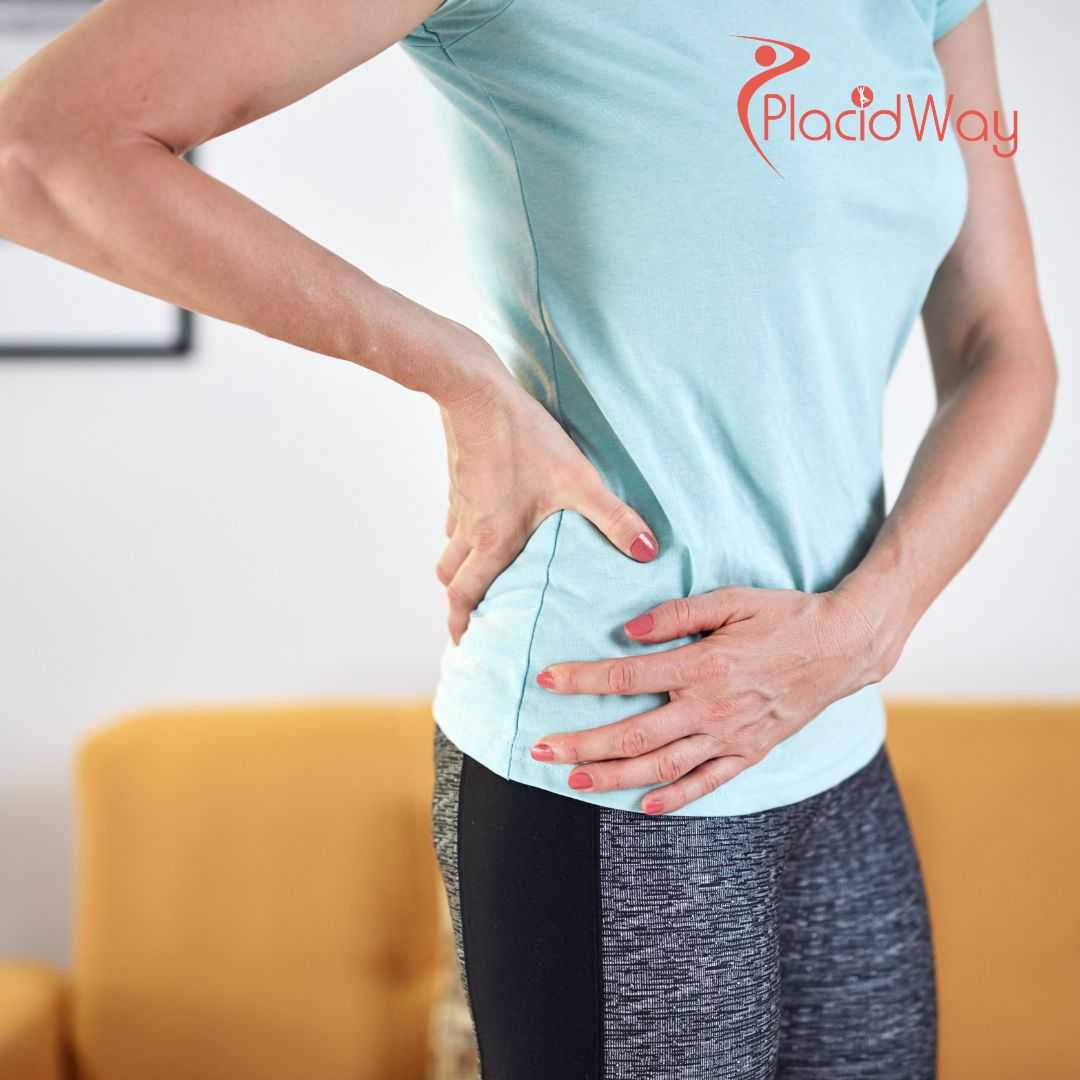
Main problems: Progressive shoulder pain with arm weakness; Loss of range of motion and inability to lift arm overhead; Sleep disruption due to pain; Functional decline: difficulty dressing, reaching, or lifting

Previous care: Multiple GP visits and referrals (3–6 months to see NHS consultant); Physiotherapy courses (6–12 weeks with minimal improvement); Corticosteroid injections (temporary relief only)

Travel driver: Wait time elimination (12–18 months ? 2–4 weeks) + cost efficiency (£4,000–£7,000 savings) + preservation of functional independence during working/active years

Treatment explored: Arthroscopic or open rotator cuff repair with rehabilitation

Personal goal: Return to gardening, driving and comfortable use of the affected arm.

You stopped putting the heavy ceramic plates on the top shelf.

You started buying clothes that do not require reaching behind your back.

You stopped leaning out of the car window to scan parking barriers.

You rearranged the garden shed so the tools sit at waist height.

You learned exactly which angle in bed triggers the sharpest ache.

You stopped volunteering to carry the grandchildren.

You began holding your coffee cup exclusively in your non-dominant hand.

You started wearing slip-on shoes to avoid tying laces.

You hear the same gentle, unbearable phrases from your family every day:

"Let me grab that for you."

"You shouldn't be driving with that arm."

"Just rest it a bit longer."

Your world has quietly become smaller.

The hardest part of this decline is not the pain or the functional loss, but the indefinite, stretching silence of waiting.

This is not a national statistic to Elaine Whitmore.

Elaine Whitmore is not a real PlacidWay patient; she is a fictional composite built entirely from the practical situations and complex questions British patients face today.

She is fifty-eight years old, living in Surrey, and navigating the quiet erosion of her independence.

Before the pain took root, she pruned the heavy oak branches at the back of her garden.

She drove a manual car through dense London traffic without a second thought.

She hoisted her three-year-old grandson onto her shoulders at the park.

The long, quiet escalation of a failing shoulder.

She told herself it was just a severe strain from lifting wet compost bags.

She tried the sensible remedies.

Rest.

Ice.

Ibuprofen.

Paracetamol.

Heat packs.

Wait.

Surgical repair of the rotator cuff is typically considered when conservative treatments fail to restore function after three to six months, particularly for symptomatic full-thickness tears in active individuals.

When the MRI results finally arrived, the verdict was absolute:

"Full-thickness supraspinatus tear."

She asked the consultant the only question that mattered:

When?

According to national tracking data, the median waiting time for non-urgent trauma and orthopaedic surgery in England frequently exceeds fourteen weeks, with many regional trusts reporting surgical lists that stretch well past a year.

But Elaine Whitmore doesn't experience the health system as a national statistic.

She experiences it in the supermarket car park when she cannot lift her right arm to close the heavy car boot.

"I'll do the shopping from now on."

She experiences it at 3:00 AM when accidentally rolling onto her side wakes her with a sickening, hot ache.

"Did it wake you up again?"

She experiences it looking at her golf clubs gathering dust in the hallway.

"We can always just go for a walk instead."

She has already tried to be patient.

It is easy for observers to dismiss patients exploring private alternatives as impatient consumers demanding instant gratification.

Elaine Whitmore followed every rule she was given.

She saw her general practitioner twice.

She waited four months just to secure the initial consultant referral.

She completed twelve weeks of structured physiotherapy that felt like trying to fix a frayed rope by pulling on it.

She took the corticosteroid injection that dulled the pain for exactly five weeks before wearing off completely.

"I just need to give it more time."

"The NHS is under pressure, I have to wait my turn."

But as her shoulder muscles visibly began to atrophy, her internal monologue shifted:

From asking if she could tolerate the pain, to asking:

"How much of my life am I prepared to organise around it?"

The nearer alternative feels financially impossible.

Going private at home seems like the obvious, responsible choice.

She requested a formal quote from a well-regarded private hospital in Surrey.

The estimate for an arthroscopic rotator cuff repair, including the anaesthetist's fee and facility costs, sat between GBP 10,000 and 14,000, heavily dependent on the time spent in theatre.

It is not that Elaine Whitmore and her husband David have no savings.

It is that spending twelve thousand pounds drains the exact safety net they meticulously built to protect their impending retirement.

"We have the money, Maggie, we could just pay it."

"Having it doesn't mean we can afford to watch it vanish."

She isn't searching for Izmir yet.

She sits at the dining table with her laptop, typing quiet, frustrated questions into the search bar:

How to sleep with a torn rotator cuff

What happens if you leave a torn shoulder untreated

Private shoulder surgery cost UK

Cheapest private orthopaedic surgery near me

Rotator cuff repair cost abroad

Izmir enters her algorithm slowly, appearing in patient forums and medical travel directories.

Her immediate reaction is a deeply ingrained British skepticism:

"I'm not going abroad just because something is cheaper."

The instinct she feels in her chest is entirely correct:

Price should never answer a medical question.

Why does Izmir keep appearing in her research?

Turkey has deliberately subsidized and structured its private medical sector to attract international patients, requiring major facilities to maintain international accreditation standards to participate in medical tourism.

But the central question is never whether a country is good at surgery.

Countries do not perform operations.

Consultants do, surgical teams do, and specific clinical facilities do.

There is always something concrete to verify, from Joint Commission International hospital accreditations to specific surgeons holding European Board of Orthopaedics and Traumatology certifications.

The UK government explicitly advises that any decision to travel for medical treatment should involve rigorous independent research and thorough consultation with your domestic healthcare team beforehand.

Her first question is always about the cost.

Indicative packages for rotator cuff repair in Izmir commonly range between EUR 3,500 and 5,500, varying heavily by the exact surgical technique required, the number of suture anchors needed, and the duration of the inpatient stay.

She hears her father's voice echoing in her memory:

"If it sounds too good to be true, it usually is."

"What exactly am I getting?"

Does this estimate include the mandatory pre-operative MRI scan?

Are the bio-absorbable surgical anchors included in this price, or billed per unit used?

Does the consultant use a full arthroscopic approach or a mini-open technique?

Who covers the facility cost if I require an extra night in the hospital?

Is acute physiotherapy provided during the hotel recovery stay?

Are the airport transfers handled by a specialized medical transport vehicle?

Does the quoted package cover the initial round of post-operative pain medications?

What happens financially if the tendon tear is more complex than expected once they look inside with the camera?

How many in-person follow-up consultations happen before I am cleared to fly home?

Who removes my surgical stitches?

Do I receive my comprehensive surgical notes translated into English?

How do I contact the surgical team if I develop a fever two weeks after returning to Surrey?

The heavily advertised package number is only the beginning of a much longer conversation.

What does arthroscopic repair actually involve?

Arthroscopic rotator cuff repair is a minimally invasive orthopaedic procedure where a surgeon uses a small camera and specialized instruments inserted through tiny incisions to reattach the torn tendon securely to the head of the humerus.

Understanding the mechanics of the surgery immediately forces Elaine Whitmore to confront a glaring logistical hurdle:

"How am I supposed to manage a flight with a newly repaired shoulder?"

The part the brochures rarely put on the front page.

The operational reality of international orthopaedic surgery is deeply, profoundly unglamorous.

Commercial airlines maintain conflicting internal guidance regarding how soon a passenger can safely fly after general anaesthesia, with most requiring strict medical clearance for travel after 48 to 72 hours.

The sheer variation in these airline rules is the lesson.

This logistical constraint must be fully integrated into the recovery plan before committing, not frantically researched afterward.

"Wait. Does that mean I'm stuck in a hotel room for a week?"

Possibly, heavily depending on your consultant's specific discharge protocols and your personal deep vein thrombosis risk assessment.

Who helps me dress when I am physically forbidden from moving my dominant arm?

How do I wash my hair without compromising the waterproof wound dressings?

Is the designated recovery hotel bathroom actually equipped with a walk-in shower?

Can I physically manage a plate at the hotel breakfast buffet with one functioning hand?

How heavy is the suitcase going to be, and who is pulling it through the airport?

How do I get my winter jacket on over a bulky abduction sling?

What happens to my pain management schedule if the return flight is delayed by six hours?

Can I safely navigate a crowded departure lounge while taking prescribed post-operative analgesics?

Who handles the passports and retrieves the boarding passes?

Will sudden in-flight turbulence cause sudden, unmanageable spikes in shoulder pain?

The framing of this journey shifts instantly:

This is not tourism in any usual sense of the word.

David isn't just coming along for the trip.

David is the invisible, essential second participant in this medical intervention.

He is the one who will meticulously memorize the complex medication schedule.

He will adjust the wedge pillows at 2:00 AM when the surgical nerve block finally wears off.

He is entirely responsible for carrying every piece of luggage and navigating foreign pharmacy queues.

He needs to know exactly what the agreed emergency protocol is if Elaine Whitmore spikes a high temperature.

Standard UK travel insurance policies routinely and explicitly exclude coverage for complications arising from elective medical procedures sought abroad.

Specialist medical travel insurance is an absolute logistical requirement, not an optional extra.

They are part of the post-operative care system too.

Then comes the uncomfortable conversation about risk.

Every orthopaedic surgical intervention carries inherent, undeniable risk, including deep joint infection, nerve injury, chronic stiffness, and the potential for the tendon repair to fail to heal.

Elaine Whitmore learns to instantly discard international clinics that rely on specific marketing phrases:

Completely safe. No risk. Guaranteed success.

True informed consent means understanding far more than just the hoped-for outcome.

A clinic that deliberately downplays the post-operative risk of frozen shoulder is not protecting you; it is selling to you.

Elaine Whitmore's questions become sharper and better.

She stops asking if the surgery will hurt, and starts asking how the pain will be systematically managed.

What is your personal infection rate for this specific arthroscopic procedure?
How many rotator cuff repairs do you perform monthly?
What specific type of suture anchors do you use, and why do you prefer them?
Will I be seen by a junior doctor or the lead consultant post-operatively?
What is the exact protocol if my shoulder tear requires an open repair instead of an arthroscopic one?
How is the medical handover to my NHS general practitioner formally managed?
What technical documentation will I have for my physiotherapist back in the UK?
Who is legally liable if a surgical instrument fails during the procedure?
Can you provide a patient contract written entirely in clear English?
What would you see on my pre-operative MRI that would make you tell me not to proceed?

They do not only want a surgeon willing to do the operation.

They want a surgeon willing not to.

Have I genuinely exhausted my options at home?

Patients in England legally possess the right to request a transfer to a different hospital if they have waited longer than eighteen weeks for non-urgent consultant-led treatment.

Is there a late-cancellation list I can join today?

Would travelling to a hospital trust in a neighbouring county significantly reduce my wait?

Is there an NHS Right to Choose option for a private provider in my specific region?

Have we explored local community diagnostic centres for a faster updated scan?

Can we fund a one-off private consultation just to have an expert review the existing MRI?

The rule for evaluating this entire endeavour is simple:

Izmir should be compared with Elaine Whitmore's real alternatives, not with a worst-case assumption about the NHS.

The dining table the night before the decision.

The same table where she typed her first frustrated search query is now covered in paper.

Spreadsheets comparing consultant fellowships. Printed direct flight schedules to Izmir Adnan Menderes Airport. A highly detailed draft recovery itinerary. Specialist medical indemnity insurance quotes.

"It feels like a lot of work, doesn't it?"

"It feels like we are actually doing something."

The intense logistical research didn't make them more afraid; it made them significantly more capable of deciding.

What Elaine Whitmore actually wants isn't the surgery.

"Are you looking forward to getting it fixed?"

She nods politely to her friend, but that is not the whole truth.

Get surgery within four weeks and return to gardening and golf within three months.

She wants to reach the top shelf in the kitchen without planning the movement first.

She wants to sleep through the night without a barricade of defensive pillows.

She wants her quiet, competent, unburdened life back.

Not the surgery.

Not the titanium anchors.

Not the all-inclusive hotel package.

Not Izmir.

Not the surgery. Not the titanium anchors. Not the all-inclusive hotel package. Not Izmir.

Mobility.

And underneath that:

Reclamation.

Izmir might be the answer, but it might not be.

She might decide the physical toll of the flight home is simply too daunting to risk.

She might find an NHS cancellation slot magically opens up tomorrow morning.

She might choose to spend the twelve thousand pounds in Surrey after all.

She might delay the operation entirely until winter when the garden is dormant anyway.

She might find a clinical team in Turkey whose credentials perfectly match her specific functional needs.

Any of those paths can represent an informed, rational decision.

The goal here is absolutely not to persuade anyone to board a plane to Turkey.

The goal is to ensure that exhaustion and systemic frustration do not make the decision for them.

The hand-off to your own quiet kitchen table.

Maybe you've stopped picking up your grandchildren.

Maybe you've stopped swinging a golf club.

Maybe you've spent hours scrolling through private hospital websites late at night.

Maybe you've resigned yourself to another year of ibuprofen and profoundly poor sleep.

Maybe you've wondered if there is a safe way out of this holding pattern.

You do not need to decide today.

Are my symptoms physically worsening while I wait for domestic care?

Can my partner realistically support me during a demanding international medical trip?

Am I willing to do the rigorous, unforgiving background checks on a foreign clinic?

Does preserving my retirement savings outweigh the immense convenience of staying home?

What is the functional, daily cost of waiting another twelve months for relief?

Who will directly manage my physical therapy when I return to the UK?

Am I making this choice out of structural clarity, or out of desperate pain?

You are not just comparing prices.

You are comparing paths forward.

Hope isn't the promise that everything will be perfectly fixed.

It is not a glossy brochure of a private hospital overlooking the Aegean Sea.

It is not a discounted price tag on a highly complex medical procedure.

It is not pretending that any surgery is ever entirely free of risk.

Hope is having enough hard information to make a decision that finally feels like yours.

It is knowing exactly what structural questions to ask a consultant.

It is understanding the heavy logistics of post-operative recovery.

It is recognizing that a medical border crossing requires rigorous, unromantic preparation.

It is refusing to let a backlogged system dictate the permanent boundaries of your physical world.

The profound shift in perspective moves away from a stance of passive endurance:

From:

"I suppose I'll just have to keep waiting."

To:

"What other informed options do I have?"

PlacidWay — Your Way to Hope.

We exist to help people explore international medical options, compare facility credentials, understand logistical requirements, and prepare the rigorous questions they need to ask.

We do not provide clinical advice, and we never recommend specific surgical interventions.

For someone like Elaine Whitmore, rotator cuff repair in Turkey isn't a guaranteed promise; it is simply one route worth understanding fully before making a choice.

Your Way to Hope.

Your Way to Hope
Medical disclaimer

This article is for educational purposes only and does not recommend that any individual undertake travel for medical procedures. Individual suitability and surgical risk require professional clinical assessment. Readers should always consult their own primary care clinician or local orthopaedic specialist before considering treatment abroad, independently verify the current regulatory and accreditation status of any foreign facility, and ensure they obtain appropriate specialist medical travel insurance.

The Garden She Could No Longer Tend: Elaine Whitmore’s Rotator Cuff Tear Repair Story from the United Kingdom to Turkey

About Article

  • Treatment: Orthopedic/Knee Surgery
  • Country: Turkey
  • Overview This educational overview follows Elaine Whitmore, a composite British patient exploring Rotator Cuff Repair in Izmir, Turkey. It summarizes daily-life effects, previous care and why treatment abroad is being considered. Candidacy, safety, recovery and follow-up remain central to informed decision-making.

Trusted Medical Tourism Platform Since 2007

60+
Countries
2k+
Clinics
19.5k+
Reviews
2.5k+
Qualified Doctors
1.1M+
Patients Served Since 2007